|
|
ABEL GRIMMER - TOWER OF BABEL - PAGE 5
|
Rothschild - How
International
Bankers Gained
Control |
Master masons |
- You have to ask what's going on in America today and why
are we over our heads in debt?
- Why can't any of these
politicians we've elected bring debt under control?
- Why
are so many people, often both parents, working at lowpaying
deadend jobs and yet still having to make do with less and
less while the 'elites' have more and more?
- You have to wonder what will happen to the economy
and American way of life.
- Why does government continue to
tell us that inflation is low when the buying power of our
paychecks is declining at an alarming rate?
Government debt |
- The problem is that since 1864, we've had a debt-based
banking system.
- All of our money is based on government
debt.
- Unfortunately, we can't extinquish this debt
without extinquishing our money supply.
- That's why
talking about paying off the national debt without reforming
our banking system is an impossibility.
- This means that
the solution does not lie in discussing the size of the
national debt.
- Rather, it lies in reforming our banking
system.
Bank vault |
- The headquarters for the Federal Reserve resides in
Washington DC.
- It has an impressive address on
Constitution Avenue, right across from the Lincoln Memorial.
- But it has nothing to do with 'federal' because it's a
private corporation, not part of our federal government and it
has no 'reserves.'
- The name is a deception and was
created before the Federal Reserve Act was passed in
1913.
- This was to make American's think that our central
bank operates in the public interest.
Private |
- The truth is that the Federal Reserve is private
bank owned by private stockholders and run purely for their
private profit.
- This bank has no actual reserves, at
least no reserves available to back up the Federal Reserve
notes which is our common currency.
- That is to say it had
doubtful reserves and is a private bank that is owned by
member banks and it was chartered under the guise of deceit by
an act of Congress.
- If there is still any doubt that the
Federal Reserve is part of government, check your local
telephone book and you will notice it is not listed in the
blue government pages.
- Instead, it is listed in the
business white pages, right next to Federal Express, another
private company.
Independent bank |
- But more directly, U.S. courts have ruled time and time
again that the Federal Reserve is a private corporation.
-
So why can't Congress do something about the Federal Reserve?
- Most members of Congress don't understand the system, or
they profit from it.
- The few who do understand are afraid
to speak up.
- However, there are some who have spoken up,
one was Republican representative Charles A. Lindbergh from Minnesota in
1923.
- Lindbergh knew that the Federal Reserve Board
administers the finance system by authority of a purely
profiteering group.
|
Congressman Charles A. Lindbergh Sr. ( father of the famous aviator) was a fierce critic of the Federal Reserve Act of 1913, calling it the "most gigantic trust on earth," a legalized "invisible government," and a system that would allow a "money trust" to control the nation's finance for profit, creating panics and burdening citizens through private control of credit, according to his book Lindbergh on the Federal Reserve.
(Assistant)
|
Bank profiteers |
- The system is private, conducted for the sole purpose of
obtaining the greatest possible profits from the use of other
people's money (ours).
- One of the most outspoken critics of the
Federal Reserve, also know as the 'Fed,' was the former
chairman of the House Banking Currency Committee during the
Great Depression.
- This was Lewis T. McFadden, Republican
from Pennsylvania, who said in 1932 that the Fed was one of
the most corrupt institutions the world has ever known.
-
He called it an evil institution that has impoverished the
people of the United States and has practically bankrupted our
government.
- And that the Fed had accomplished this
through the corrupt practices of the moneyed vultures who
control it.
More dangerous |
- Republic Senator Barry Goldwater from Arizona was a
frequent critic of the Fed and he made it known that most
Americans have no real understanding of the operation of the
international moneylenders.
- The accounts of the Federal
Reserve System have to this day, never been audited.
- It
operates outside the control of Congress and manipulates the
credit of the United States.
- Even though the Federal
Reserve is not part of the government, it is more powerful
than the Federal government.
- More powerful than the
president, the Congress and the courts.

Controls your house
payment |
- Many people challenge this, but what the Federal Reserve
does is estimate what the average person's automobile payment
is going to be, what their house payment is going to be, and
whether they have a job or not.
- Whether you believe it or
not, that is total control, the borrower is servant to the
lender.
- The Federal Reserve is the largest single
creditor of the U.S. government.
- What one has to
understand is that from the day the U.S. Constitution was
adopted, right up to current day, the individuals who profit
from privately owned central banks, the money changers, have
fought a running battle for control over who gets to print
American money.
Profit |
- Why is who prints the money so important?
- Think of
money as just another commodity, and realize that if you have
a monopoly on a commodity that everyone needs, everyone wants,
and nobody has enough of, there are lot's of ways to make a
profit.
- At the same time, it can be used by these
racketeers to exert tremendous political influence.
-
That's what this battle is all about because throughout the
history of the U.S., the money power has gone back and forth
between Congress and some sort of privately owned central
bank.
Moving our money |
- The Founding Fathers knew the evils of a privately owned
central bank.
- First of all, they had witnessed how
Britain's privately owned central bank, the Bank of England,
had run up the British national debt to such an extent that
Parliament had been forced to place unfair taxes on the
American colonies.
- In fact, Benjamin Frankin claimed that
this was the real cause of the American Revolution.
- Most
of the Founding Fathers realized the potential dangers of
banking and feared the bankers accumulation of wealth and
power.
|
Thomas Jefferson famously stated, "I believe that banking institutions are more dangerous to our liberties than standing armies," reflecting his deep suspicion of centralized financial power and debt, seeing private banks as threats to republicanism and the people's property, especially compared to the visible threat of a military force. He believed private banks could corrupt the government, control currency, and create perpetual debt, ultimately enslaving future generations, a concern he voiced in letters, particularly to John Taylor, and in opposition to the National Bank.
(Assistant)
|

Return to rightful
owners |
- Thomas Jefferson believed that the issuing power should
be taken from the banks and restored to the people to whom it
belonged.
- This succinct statement of Jefferson is in fact
the solution to all our economic problems today.
- James
Madison, the main author of the Constitution called those
behind the central bank scheme money changers and he strongly
criticized their actions.
- The battle over who gets to
control our money has been the pivotal issue throughout the
history of the U.S.
- Wars are fought over it, depressions
are caused in order for the profiteers to acquire it.
|
History records that the money changers have used every form of abuse, intrigue, deceit, and violent means possible to maintain their control over governments by controlling money and its issuance.
(James Madison)
|
Wars are fought for
profit |
- Yet, after World War I, this battle over the issuing
power of the Federal Reserve was rarely mentioned in
newspapers or history books.
- How did this happen, by
World War I, the money changers with their dominant wealth had
also seized control of most of the nation's media and press.
- Throughout U.S. history, this battle over who gets the power
to issure our money has raged.
- In fact, it's changed
hands, back and forth 8 times since 1764.
- Although this
history has virtually vanished from public view for over 3
generations behind a smokescreen emitted by Fed cheerleaders
in the media.
|
Former Republican representative
Ron Paul famously views the Federal Reserve as detrimental, calling it the "biggest taxer of them all" for devaluing the dollar through money printing, causing artificial booms and busts, and undermining sound money principles, advocating its abolition
(End the Fed) for true capitalism and liberty. He believes the Fed creates economic crises, saying every major downturn traces back to its policies of easy credit and central planning, which ultimately harm the middle class.
(James Madison)
|
Hiding behind
deception |
- In fact, you might say that outspoken critics like Ron
Paul were laughed out of Congress.
- Until we finally stop
talking about deficits and government spending, and start
talking about who controls how much money we have, it's all
just a big shell game.
- A complete and utter deception
because it won't matter if you pass an ironclad amendment to
the Constitution mandating a balanced budget.
- Our
situation is only going to get worse until we root out the
cause and its source.
Theft and deception |
- What's the solution for our national problem?
- First
of all, we need to educate everyone, but secondly, we must
act, we must take back the power to issue our own money.
-
Issuing our own money is not a radical solution.
- It's the
same solution used at different points in U.S. history by our
leaders.
- To sum it up, in 1913, Congress gave an
independent central bank, deceptively named the Federal
Reserve, an undeserved monopoly over the issuence of American
money.
- The debt generated by this quasi private
corporation is what is killing the American economy.
Hazy |
- Though the Federal Reserve is now the most powerful
central bank in the world, it was not the first.
- So where
did this idea come from?
- To really understand the
magnitude of the problem, we have to travel back to Europe.
- So who exactly are these money changers that our Founding
Fathers spoke about?
- As corrupt and 'retranslated' as the Bible is, the only
time 'money changers' were mentioned was when the Jews came to
the temple in Jerusalem to pay their temple taxes.
- They
could only pay it with a special coin, the half shekel of the
sanctuary which was a half ounce of pure silver about the size
of a U.S. dime.
Shekel's required |
- The shekel was the only coin during that time that was
the pure silver assured weight without the image of the
'pagan' emperor such as Julius Caesar.
- Therefore, to Jews, the
half shekel was the only coin acceptable to their God.
- But
these coins were not plentiful, the Jewish money changers had
cornered the market on them.
- Then they raised the price,
just like every other commodity to whatever the market would
bear.
- In other words, money changers were making
exorbitant profits and taxpayers would have to exchange their
assets at the local temple for one of their shekel's because
it was the only currency the money changers would accept.
-
They held a virtual monopoly on money and the Jewish taxpayers
were obligated to pay whatever they demanded.
Back door |
- However, this money changing scam did not originate in
Jerusalem 2,000 years ago, because 200 years prior to that,
Rome was also having trouble with money changers.
- In
fact, two early Roman emperors had tried to diminish the power
of the money changers by reforming usary laws and limiting
land ownership to 500 acres.
- They were both assassinated
and in 48 BC, Julius Caesar took back the power to coin money
from the money changers and minted coins for the benefit of
all.
- With this new plentiful supply of money, Caesar
built great public works projects and by making money
plentiful, he won the love of the common man, but the money
changers hated him.
Caesar's
assassination |
- Some believe that this was an important factor in
Caesar's assassination.
- One thing is for sure, with the
death of Julius Caesar, came the demise of plentiful money in
Rome, and taxes increased as did corruption.
- Just as in
the case of in America today, usury and debased coin became
the rule.
- Eventually, the Roman money supply was reduced
by 90% and as a result, the common people lost their land and
their homes.
- Just as what is happening in America with
the demise of plentiful money, the masses lost confidence in
the Roman government and refused to support it.
- They
stopped paying taxes and Rome plunged into the gloom of the
dark ages.
Directs the money
supply |
- A thousand years later, the money changers, those who
loan out and manipulate the quantity (and quality) of money
were active in medieval England.
- In fact, by acting
together, they could manipulate the entire English economy.
- These were not bankers per se, because the money changers
were typically the goldsmiths.
- They were the first
bankers because they started keeping other people's gold for
safekeeping in their vaults.
- Much the same way the
original Knights Templar would store the gold of pilgrims
visiting Jerusalem and protecting them along the way, they
owned the 'bank' and
became terribly corrupt.
- The first paper money was
merely a receipt for the gold left with the goldsmith.
Demanding their
gold |
- Paper money caught on because it was more convenient
than carrying around a lot of heavy gold and silver coins and
the risk of theft decreased.
- Eventually, these crafty
goldsmiths noticed that only a small fraction of depositors
ever came into their shops and demanded their gold at any one
time.
- Greedy goldsmith's started cheating on the system
and they quickly discovered that they could print more paper
money than they had gold and usually, no one would be the
wiser.
- Next they discovered that they could lend out this
money and collect interest on it.
Fractional reserve
banking |
- This was the birth of fractional reserve banking which
means you are loaning out many times more money than you have
assets on deposit.
- So if $1,000 worth of gold were
deposited with them, they could loan out about $10,000 in
paper money and draw interest payments on it and no one would
ever discover the deception.
- Through this means,
goldsmiths gradually accumulated more and more wealth and used
this wealth to acquire more and more gold.
- Today, this
practice of loaning out more money than there are reserves is
known as fractional reserve banking.

Rush |
- Every bank in the
U.S. is now allowed to lend out at least 10 times more money
than they actually have.
- That's why they get rich on
charging, let's say 8% interest, it's not really 8% per year
which is their income, it's 80% and that's why bank buildings
are always the largest in town.
- And when they talk about
a 'rush' on the bank this happens when people lose trust and
all run to the bank and demand their money at the same time,
which the bank does not have, they only have 10% of it at any
one time.
Forbade interest on
loans |
- But that does not mean that all banking, or all interest
should be illegal.
- In the middle ages, Canon law, the law
of the Catholic Church, forbade charging interest on loans.
- This concept followed the teachings of Greek Aristotle and
St. Thomas Aquinas who taught that the purpose of money was to
serve the members of society.
- In order to facilitate the
exchange of goods needed to lead a virtuous life.
-
Interest in their belief, hindered this purpose by putting an
unecessary burden on the use of money.
- In other words,
interest was contrary to reason and justice.
Crime |
- Reflecting the same beliefs in the Middle Ages, Europe
forbade charging interest on loans and made it a crime called
usury.
- As commerce grew, and therefore opportunities for
investment arose in the late Middle Ages, it came to be
recognized that to loan money there was a cost involved to
loan that money.
- The casheir needed a paycheck and it was
a full-time job.
- For the lender, it was both risk and
lost opportunity and so some charges or fees were allowed, but
not interest per se.
- However, all moralists, no matter
what religion, condemned fraud, oppression of the poor, and
injustice as clearly immoral.
- As we will see, fractional
reserve lending is routed in a fraud, results in widespread
poverty, and reduces the value of everyone else's money.
-
The ancient goldsmiths discovered that extra profits could be
made by controlling the money through easy money versus tight
money.
Expanding business |
- When they made money easier to borrow, then the amount
of money in circulation expanded and money was plentiful.
-
People took out more loans to expand their businesses,
however, then the money changers would tighten the supply.
- They would make loans more difficult to obtain and what
happened next is the same thing that still happens today.
-
A certain percentage of borrowers could not repay their
previous loans and could not take out new loans to repay the
old loans.
- Therefore, they went bankrupt and had to sell
their assets to the goldsmiths for pennies on the dollar.
-
The same thing is still going on today, only today we call
this 'rowing' of the economy, up and down the business cycle.

Money power |
- Like Julius Caesar, in England, King Henry I finally
resolved to take the money power away from the goldsmiths
about 1100 AD.
- Henry I could have used anything as money,
seashells (Caligula), feathers, or even Yak dung, as is often done in
remote Tibetan provinces, but he invented one of the most
unusual money systems in history.
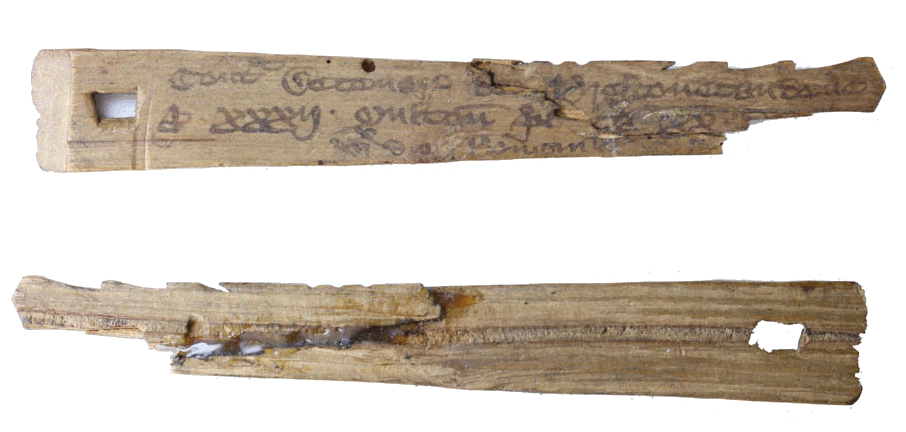
- It was called the
tally stick system, and this form of British money lasted 726
years, until 1826.
- A tally stick was adopted to avoid the
monetary manipulation of the goldsmiths and the sticks were
money fabricated out of sticks of polished wood.
Tally stick |
- Notches were cut along one edge of the stick to indicate
the denominations.
- Then the stick was split lengthwise
through the notches so that both pieces still contained a record of the
notches.
- The king kept one half, to protect against
counterfeiting, then he would spend the other half into the
economy and they would circulate his money.
- A tally stick
was often so large it could represent £25,000.
- One of the
original stockholders in the Bank of England, purchased his
shares with such a stick.
- In other words, he bought
shares in the world's richest and most powerful corporation
with a stick of wood.
Winchester City Council Museums, CC BY-SA 2.0 , via Wikimedia Commons
Tally stick |
- It's ironic that after its formation in 1694, the Bank
of England attacked the tally stick system because it was money
outside the power of the money changers, just as King Henry I
had desired.
- Why do people accept sticks of wood for
money, that's a great question, the same as they accept a
piece of paper, they trusted it.
- Throughout history,
people would trade anything they thought had value and used it
as money, for example the taxpayers at the Jewish temples
would bring chickens and exchange them for shekels.
- So
the secret is that money is only what people agree on to use
as money.
- Like our paper money today, it's really just a
piece of paper, but here's the trick, King Henry I ordered
that tally sticks had to be used to pay his taxes.
- This
built in demand for tally sticks immediately made them
circulate and be accepted as money, and they worked well, in
fact no other form of money has worked as well for so long.
|
A tally stick was an ancient memory aid used to record and document numbers, quantities, and messages. Tally sticks first appear as animal bones carved with notches during the Upper Palaeolithic; a notable example is the Ishango Bone. Historical reference is made by Pliny the Elder (AD 23–79) about the best wood to use for tallies, and by Marco Polo (1254–1324) who mentions the use of the tally in China. Tallies have been used for numerous purposes such as messaging and scheduling, and especially in financial and legal transactions, to the point of being currency.
(Wikipedia)
|
Money circulating |
- Keep in mind, the British Empire was built under the
tally stick system and it succeeded, despite the fact that the
money changers constantly attacked it by offering the money
coin system as competition.
- In other words, metal coins
never went completely out of circulation, but tally sticks
were so successful because they were always good for tax
payment.
Classical Numismatic Group, Inc., CC BY-SA 3.0 , via Wikimedia Commons
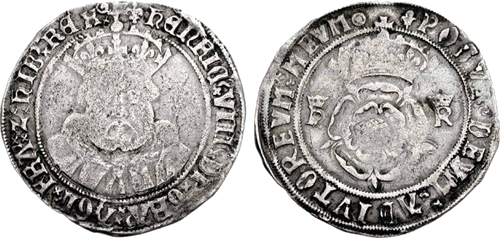
Henry VIII
testoon |
- Finally, in the 1500s, King Henry VIII relaxed
the laws concerning usury, and the money changers wasted no
time reasserting themselves.
- They quickly made their gold
and silver coins plentiful for a few decades.
- Corrupt old
Henry VIII saw the advantage to this and he minted his
'coppernose' coins as silver but it was just a veneer and when
it rubbed off he had a copper nose on the coin and this was
called 'the Great Debasement.'
|
"Coppernose" refers to Henry VIII and his infamous
Great Debasement (1544-1551) in England, a period when
he drastically reduced the silver and gold content in
coins, adding copper to fund wars and lavish spending,
leading to inflation and the nickname because the
silver wore off the nose on his portrait, revealing
the base copper underneath. This policy eroded trust
in the currency and caused economic hardship, only
being reversed later under Edward VI and Elizabeth I.
(Assistant)
|
Queen Elizabeth I
takes the throne |
- However, when Queen Mary took the throne and tightened
the usury laws again, the money changers renewed the practice
of hoarding gold and silver coins, forcing the economy to
plummet.
- When Mary's sister, Queen Elizabeth I took the
throne, she was determined to regain control over English
money, something her father, Henry VIII had lost.
- Her
solution was to issue gold and silver coins from the public
treasury and remove control of the money supply from money
changers.
- Although control of money was not the only
cause of the English Revolution in 1642, religious differences
fueled the conflict, but monetary policy played a major role.
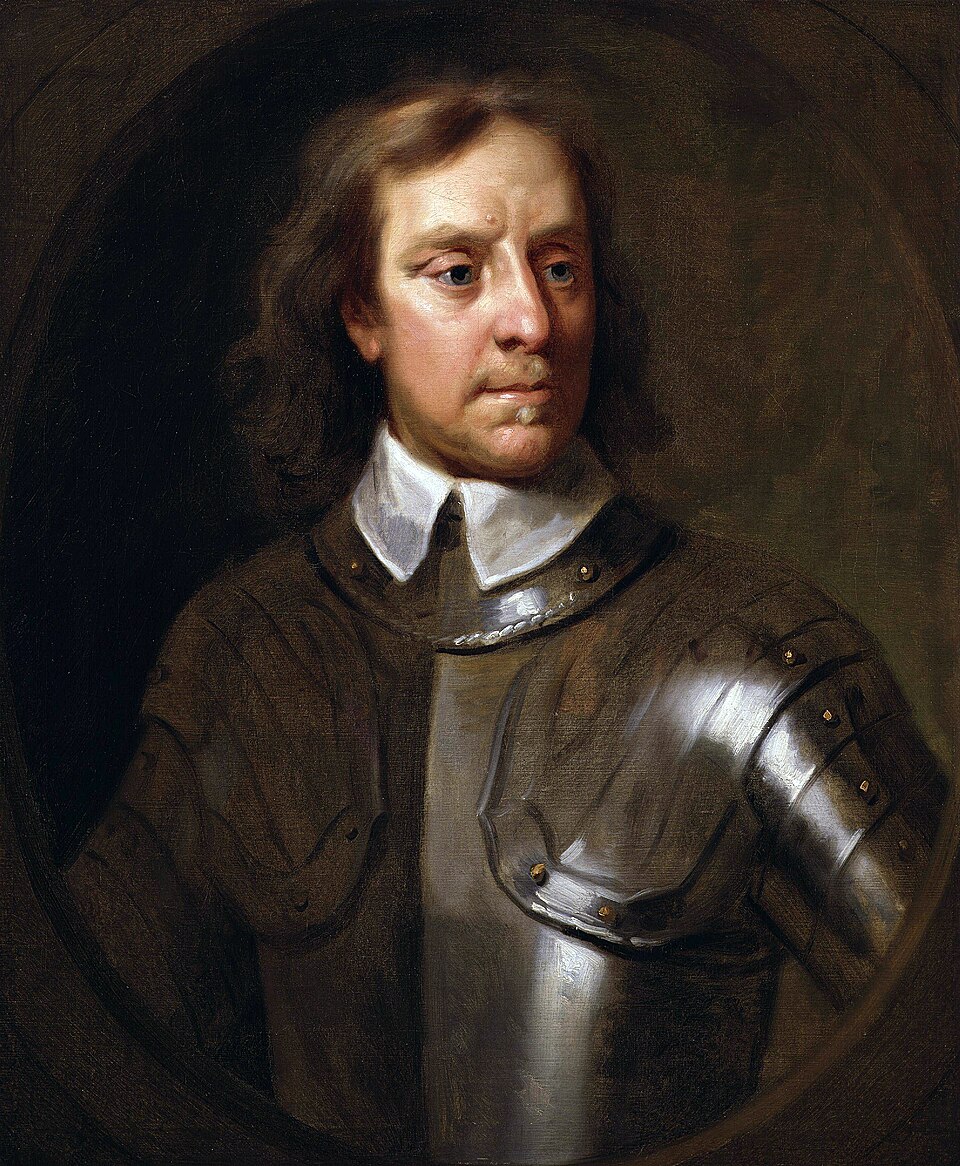
After Samuel Cooper, Public domain, via Wikimedia Commons
Oliver Cromwell |
- Financed by the money changers, Oliver Cromwell finally
overthrew King Charles I, purged the Parliament, and put the
king to death.
- The money changers were immediately
allowed to consolidate their financial power.
- The effect
was for the next 50 years, the money changers plunged Great
Britain into a series of costly wars.
- They took over a
square mile of property in the center of London known as the
City of London and this area today is still recognized as one
of the 3 predominant financial centers of the world.
-
Conflicts with the Scottish Stuart kings, led the money
changers in England to unite with those in the Netherlands to
finance the invasion of King William of Orange, who overthew
the Stuarts in 1688 and took the English throne.
Financial ruin |
- By the end of the 1600s, England was in financial ruin
because 50 years of more or less continuous wars with France
and Holland had exhausted resources.
- Frantic government
officials met with the money changers to beg for the loans
necessary to pursue their political purposes.
- The price
was high, a government sanctioned privately owned bank which could
issue money created out of thin air.
- It was to be the
modern world's first privately owned central bank, the Bank of
England, although it was deceptively named this to make the
general population think it was part of the government, it was
not.
- Like any other private corporation, the Bank of
England sold shares to get started.
City of London |
- The investors, whose names were never revealed, were
supposed to put up £1.4 million in gold coin to buy
their shares in the bank, but only £750,000 was ever received.
- Despite the huge shortfall, the bank was duly chartered in
1694 and began the business of loaning out several times the
money it supposedly had in reserves, all at interest.
- In
exchange, the new bank would loan British politicians as much
of the new currency as they wanted as long as they secured the
debt by direct taxation of the British people.
- So,
legalization of the Bank of England amounted to nothing less
than legal counterfeiting of a national currency for private
gain.
- Unfortunately, nearly every nation now has a
privately controlled central bank, using the Bank of England
as the basic model.
Central bank
control |
- Such is the power of these central banks that they soon
take total control over a nation's economy.
- It quickly
amounts to nothing but a plutocracy ruled by the rich, it
would be like putting control of the nation's army in the
hands of the mafia.
- The danger of tyranny would be
extreme but yes, we need central banks, however, we don't need
them in private hands.
- The central bank scam is really a
hidden tax because the nation sells bonds to the bank to pay
for things it does not have the political will to raise taxes
to pay for.
- But the bonds are purchased with money that
the central bank creates out of nothing and this is called
national debt.
- More money in
circulation, causes your money to be worth less.
|
Plutocracy, oligarchy, and kleptocracy all involve rule by a few, but differ in the basis of power: an oligarchy is rule by a small group (elite, military, etc.); a plutocracy is a type of oligarchy where wealth is the sole basis for power, often through legal policy; while a kleptocracy (rule by thieves) is a corrupt system where leaders use political power to steal state resources for personal enrichment, often secretly and illegally, subverting institutions for illicit gain. Plutocracies can be legalistic, while kleptocracies are defined by outright theft and corruption.
(Assistant)
|
Inflation |
- As a result, the government gets as much money as it
needs and the people pay for it in inflation.
- Sound
familiar?
- The beauty of the plan is that not one person
in a thousand can figure it out because its usually hidden
behind complex sounding economic gibberish.
- You need a
college degree in banking and finance to figure it out.
- With the
formation of the Bank of England, the nation was soon awash in
money, and prices throughout the country doubled.
- Massive
loans were granted for just about any wild scheme.
- One
venture proposed to drain the Red Sea to recover gold
supposedly lost when the Egyptian army drowned pursuing Moses
and Israelites.
Debt |
- By 1698, government debt grew from the initial
£1.4 million to £16 million.
- Naturally, taxes were
increased, and then increased again to pay for all of this.
- With the British money supply firmly in the bank's grip,
the economy began a wild roller coaster series of booms and
depressions, exactly the sort of thing a central bank claims
it is there to prevent.
- Sound familiar?
- There are
two things involved generally in the central bank, first is an
involvement in the formation of monetary policy with the
specific objective of achieving monetary stability.
-
However, since the Bank of England took control, the British
currency has rarely been stable.
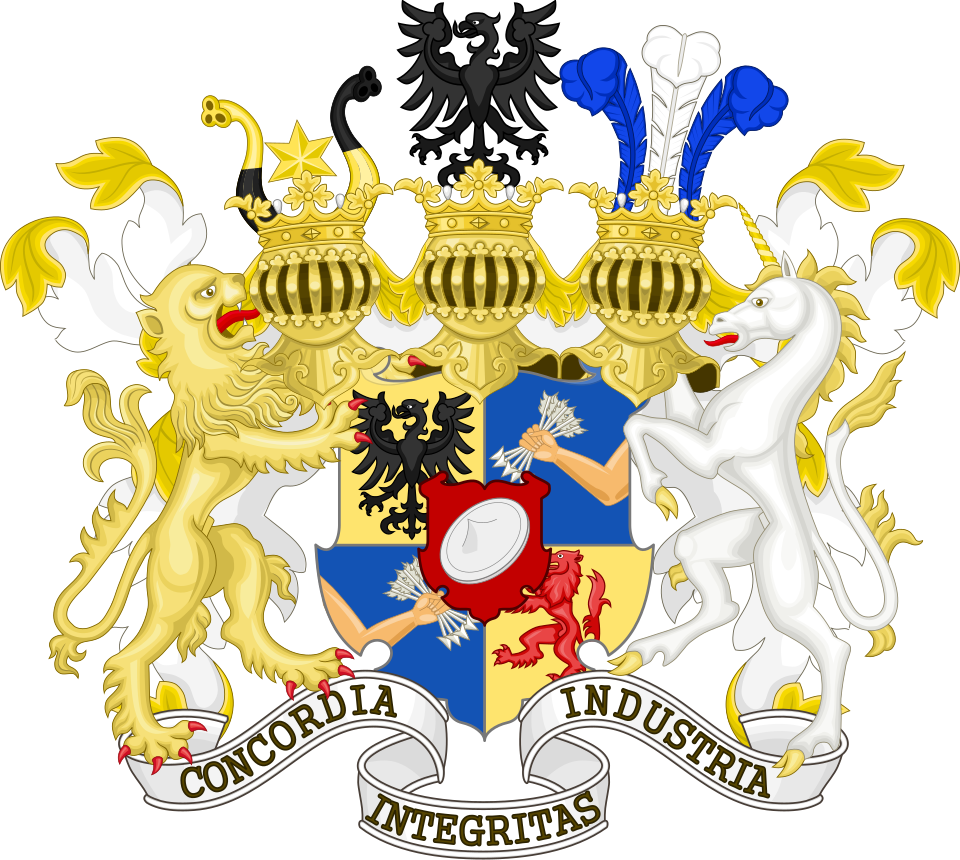
Great coat of arms of Rothschild family |
- Now let's take a look at the Rothschild family,
the family that is said to be the wealthiest in the world.
- The Rothschild family is an Ashkenazi Jewish 'noble' banking family originally from Frankfurt
in Germany.
- The family's documented history starts in 16th-century
Frankfurt; its name is derived from the family house,
Rothschild, built by Isaak Elchanan Bacharach in Frankfurt in
1567.
- The first member of the family who was known to use the name
'Rothschild' was Isaak Elchanan Rothschild, born in 1577.
- Unlike most previous court factors, Rothschild managed to bequeath his wealth and established an international banking family through his
5 sons, who established businesses in Paris, Frankfurt, London, Vienna, and Naples.
|
Ashkenazi refers to Jews of Central and Eastern
European descent, named from the Hebrew word for
Germany, who developed distinct cultural, linguistic
(Yiddish), and religious traditions in the diaspora
after settling in the Rhineland and migrating
eastward. Today, they form a major branch of Judaism,
distinguished from Sephardic (Iberian/Middle Eastern)
or Mizrahi (Middle Eastern/North African) Jews by
unique customs, liturgy, and a shared history,
contributing significantly to global culture, science,
and arts.
(Assistant)
|
Gold miners |
- The family was elevated to noble rank in the Holy Roman Empire and the United Kingdom,
however, the only subsisting branches of the family are the French and British.
- During the 19th-century, the Rothschild family possessed the largest private fortune in the world, as well as in modern world history.
- The Rothschild family dominated international finance in Europe between the 1820s and the 1870s, when their hegemony over European finance was broken by joint stock banks.
- The family's wealth declined over the 20th-century and was divided among many descendants,
however, they remain incredibly wealthy.
- Today, their assets cover a diverse range of sectors, including financial services, real estate, mining, energy, agriculture, and winemaking.
|
Rothschild means "red shield" in German, a name taken from a house sign in Frankfurt's Jewish ghetto by the famous banking dynasty founded by Mayer Amschel Rothschild (1744-1812). The name signifies a wealthy, influential European banking family known for international finance, with branches established by Mayer's five sons in London, Paris, Vienna, Naples, and Frankfurt, becoming synonymous with immense wealth and financial power.
(Assistant)
|
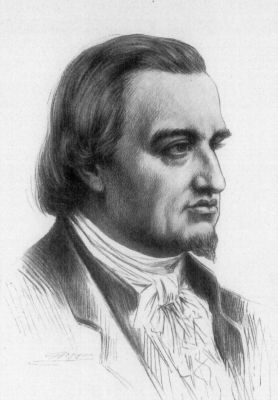
Public domain, via Wikimedia Commons
Mayer Amschel Rothschild |
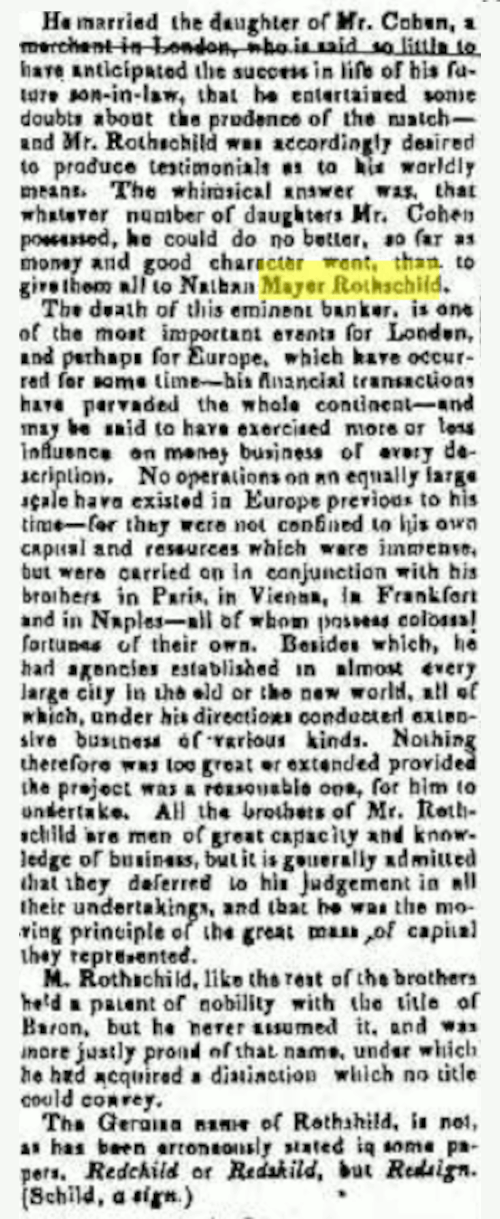
- The family's ascent to international prominence began in 1744, with the birth of
Mayer Amschel Rothschild
(1744-1813) in Frankfurt am Main, Germany.
- He was the
son of Amschel Moses Bower Rothschild (born circa 1710) a money changer who had traded with the Prince of Hesse.
|
The name is derived from the German zum rothen Schild (with the old spelling "th"), meaning "at the red shield", in reference to the house where the family lived for many generations (in those days, houses were designated not by numbers, but by signs displaying different symbols or colours).
(Wikipedia)
|
|
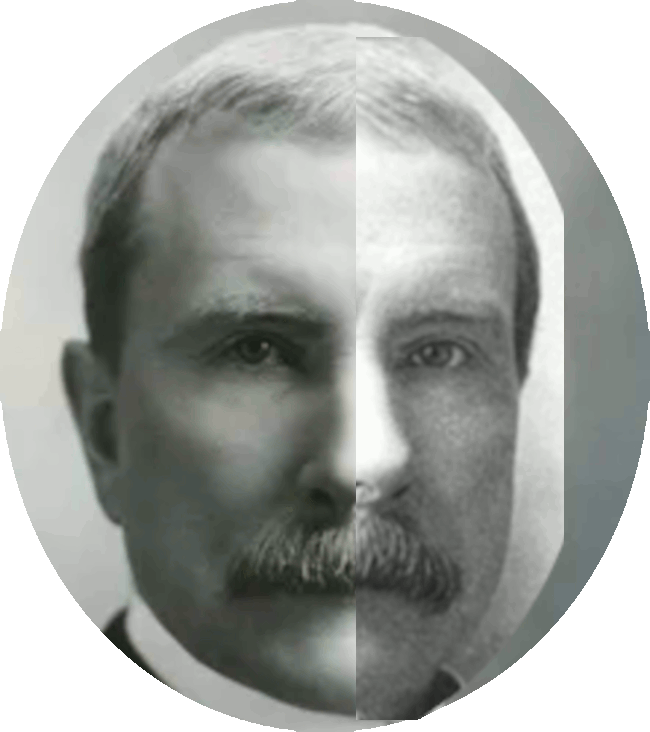
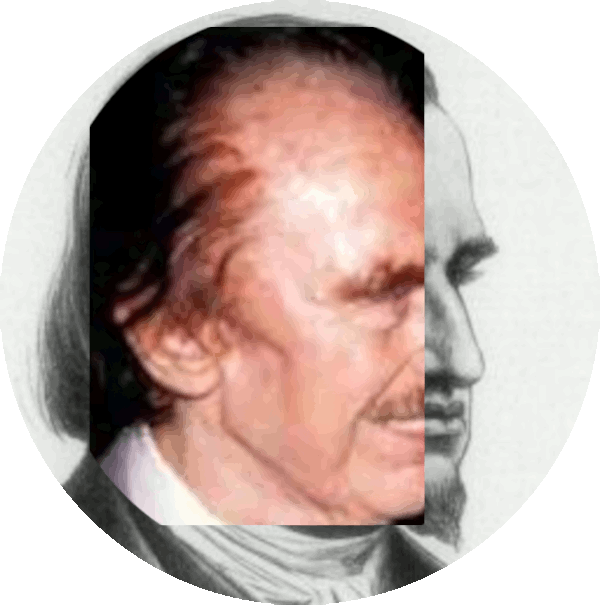
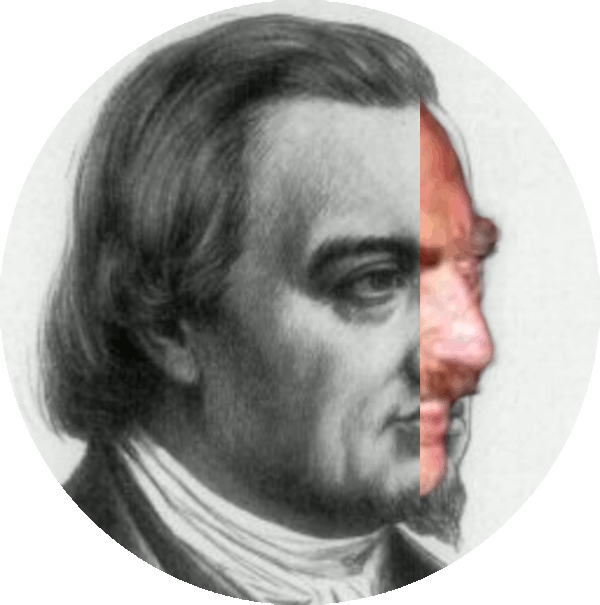
Fred Trump as
Mayer Amschel Rothschild |
 |
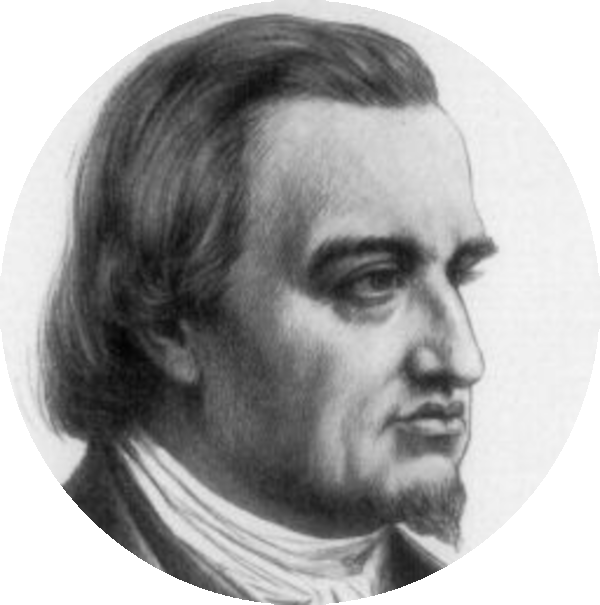 |
Frederick Christ Trump Sr.
1905-1999
10/11 6/25
Real estates |
Mayer Amschel Rothschild
1744-1813
2/23
9/19 |
 |
 |
|
Money changer |
- Some 50 years after the Bank of England opened its
doors, a goldsmith in Frankfurt named Amschel Moses
Bower opened a coin shop, or counting house, in 1743.
-
Over the door he placed a sign depicting a Roman eagle on a
red shield, and the shop became known as the 'Red Shield'
firm, or in German, Rothschild.
- When his son, Amchel
Mayer Bower inherited the business, he decided to change his
name to Rothschild.
- He soon learned that lending money to
governments and kings was more profitable than loaning to
private individuals.
- Not only were the loans bigger, but
they were secured by the nation's taxes.
Shielded |
- In 1785, Amchel Mayer Rothschild moved his entire family to
a larger house in Frankfurt, a 5-story dwelling he shared with
the Schiff family.
- This house was known as the 'Green
Shield,' and both the Rothschild's and the Schiff's would play
a central role in the rest of European financial history, and
of that in the U.S.
- Rothschild had 5 sons and he trained them
all in the skills of money creation, then sent them out to the
major capitals of Europe to open branch offices of the family
banking business.
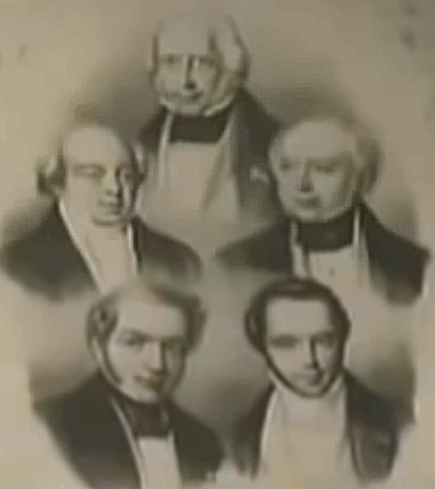
Greedy bankers |
- His 1st son,
Mayer Amschel Rothschild stayed in Frankfurt
to mind the hometown bank.
- The 2nd son, Solomon
Rothschild, was sent to Vienna, while his 3rd son, Nathan
Rothschild, was clearly the most clever and he was sent to
London at age 21 in 1798.
- This was some 100 years after
the founding of the Bank of England.
- His 4th son, Carl
Rothschild, went to Naples, and his 5th son, Jacob Rothschild,
went to Paris.
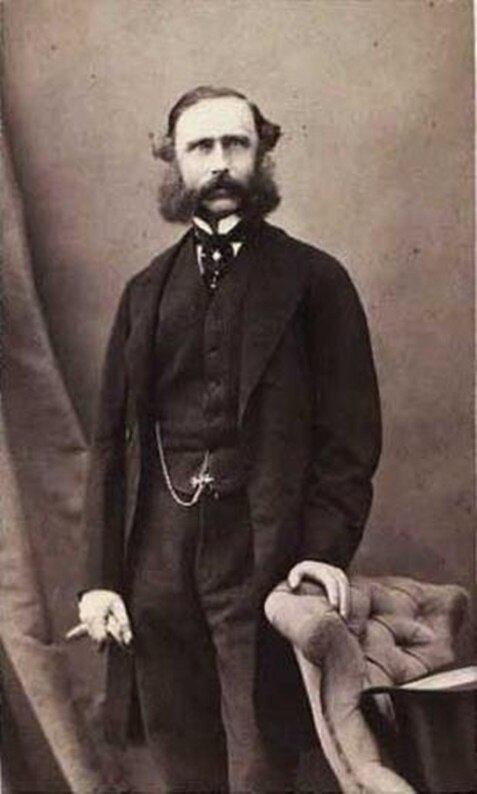
G. Le Gray & Cie, Public domain, via Wikimedia Commons
Frederick William
II of Hesse-Kassel |
- The Rothschild's broke into dealings with European
royalty at Williams Hall, the palace of the wealthiest man in
Germany.
- In fact, the wealthiest monarch in Europe,
Prince William of Hesse-Kassel.
- At first the Rothschild's
were only helping William speculate in precious coins,
however, when Napoleon chased the prince into exile, he sent
£550,000, a gigantic sum at that time, to Nathan Rothschild in
London with instructions to buy 'consoles,' British government
bonds, also called government stock.
- But Rothschild used
the money for his own purposes; with Napoleon on the loose,
the opportunities of wartime investments were nearly
limitless.
|
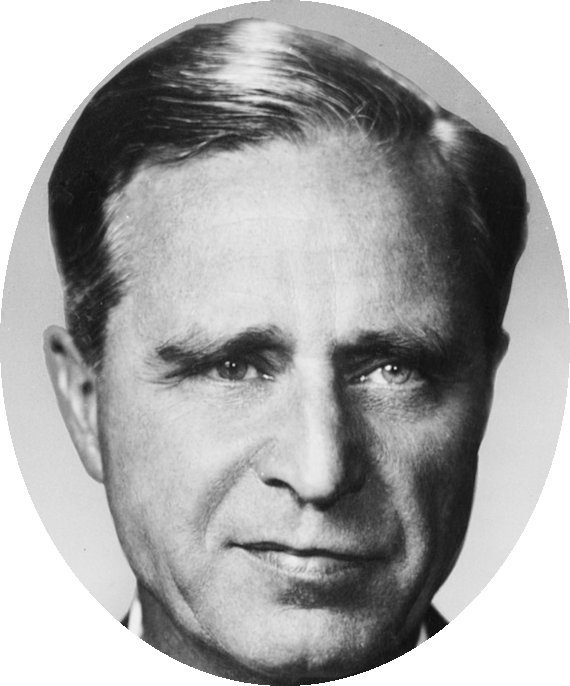
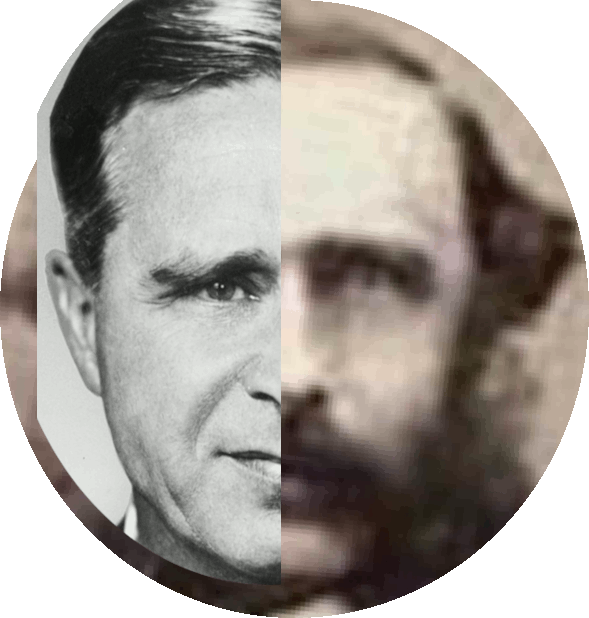
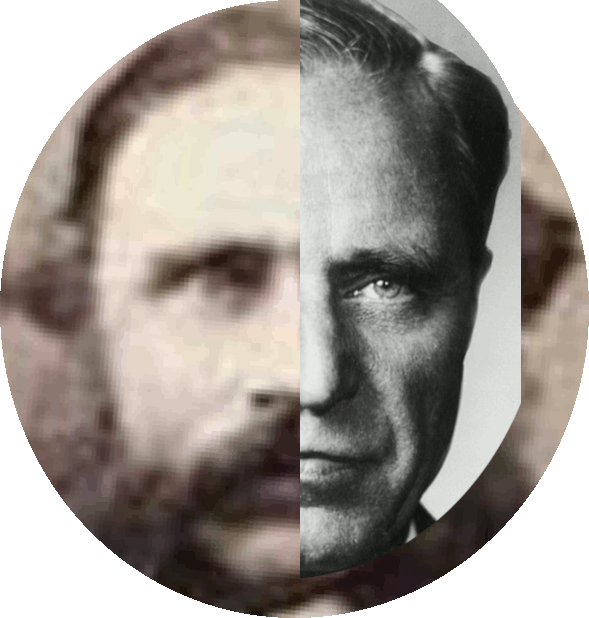
Prescott Bush as Prince William |
 |
 |
Prescott Sheldon Bush
1895-1972
5/15 10/8
Nazi support |
Prince William
1787-1867
12/24
9/5
Hesse-Kassel |
 |
 |
|
Hessian |
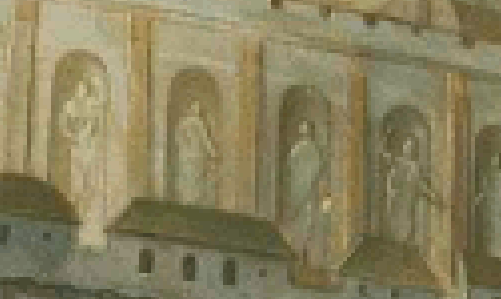
- Prince William returned to his palace sometime prior
to the Battle of Waterloo in 1815 and he summoned Rothschild
and demanded his money back.
European royalty |
- The Rothschld's returned Prince William's money with the
interest the British consoles would have paid him, had the
investment actually been made.
- But the Rothchild's kept
all the past profits they had made using William's money.
-
Nathan Rothschild later bragged that in the 17 years he had
been in Britain, he increased his original £20,000 stake given
to him by his father, some 2,500 times.
- By cooperating
within the family, the Rothschild soon grew unbelievably
wealthy and by the 1800s they dominated all European banking
and were certainly the wealthiest family in the world.
.jpg)
Alexander Bassano, Public domain, via Wikimedia Commons
Cecil John Rhodes -
1890 |
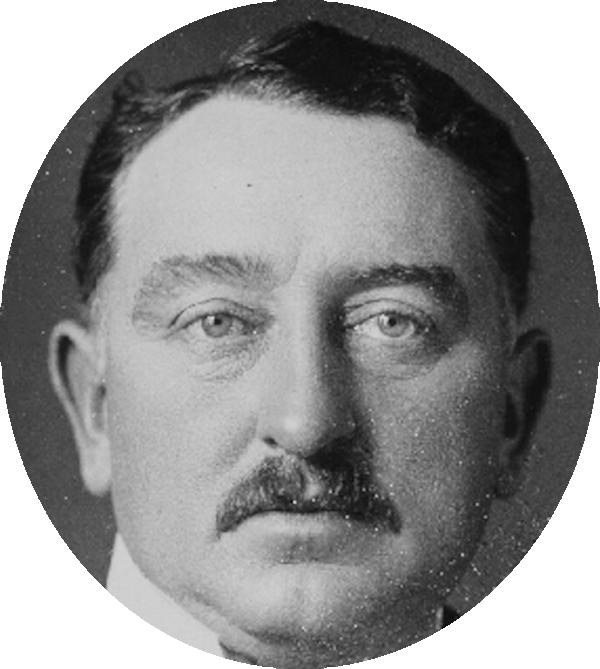
- Cecil John Rhodes (1853-1902) was a British mining magnate and politician in southern Africa who served as Prime Minister of the Cape Colony from 1890 to 1896.
- He and his British South Africa Company founded the southern African territory of Rhodesia (now Zimbabwe and Zambia), which the company named after him in 1895.
- He also devoted much effort to realising his vision of a Cape to Cairo Railway through British territory.
- Rhodes set up the Rhodes Scholarship, which is funded by his estate.
|
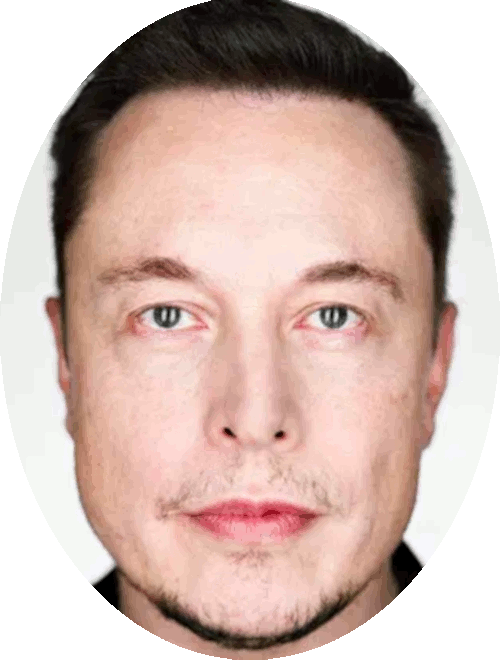
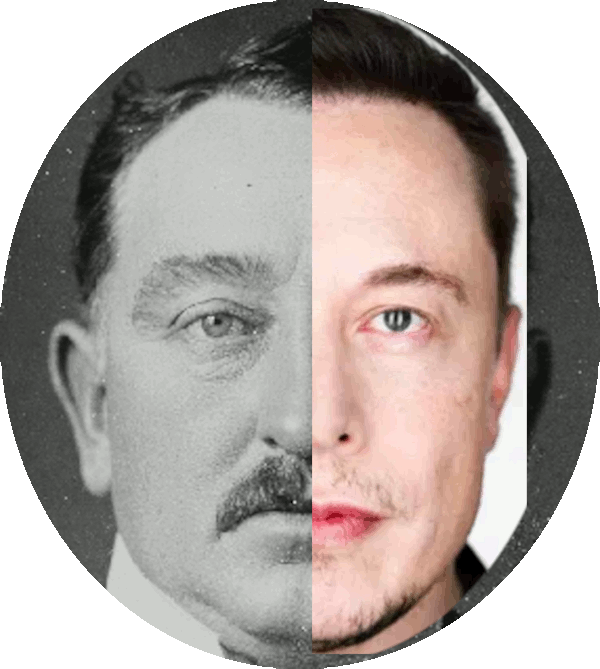
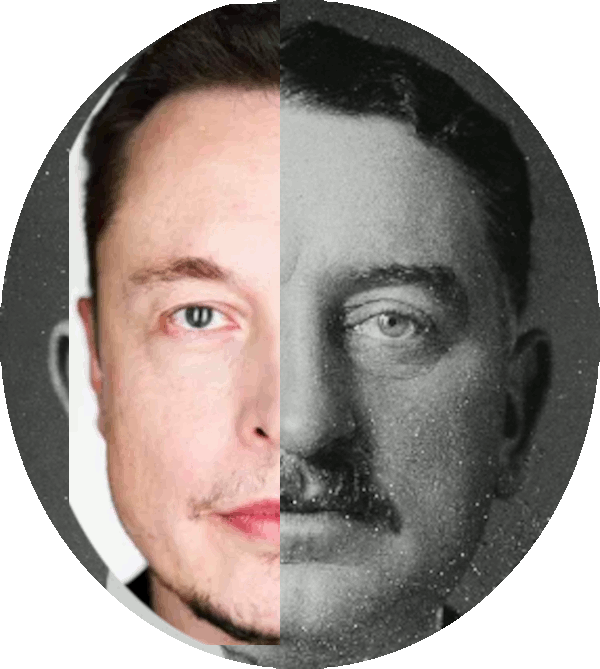
Elon Musk as Cecil Rhodes |
 |
 |
Elon Reeve Musk
1971
6/28
Emeralds |
Cecil John Rhodes
1853-1902
7/5
3/26
Diamonds |
 |
 |
|
Diamonds or Emeralds |
- The Rothschild bank financed Cecil Rhodes which allowed him to
establish a monopoly over the diamond and gold fields of South
Africa.|
- He founded the De Beers company in 1888 after he
was financed by the South African diamond magnate Alfred Beit
and the London-based N M Rothschild & Sons bank.
- Elon
Musk's father Errol Musk, was given an emerald mine by De
Beers for some reason.
- Rhodes set aside billions to
establish a scholarship and secret society that would teach
young white males to be able to come into power and handle a
vast New World Order government.
- In fact that was his
dream, to create a secret society that would be able to
dominate the world behind the scenes with such expertise that
no one would even be granted the knowledge of it.
|
The idea that Elon Musk's father, Errol, owned an emerald mine, possibly given by De Beers, is a persistent but disputed rumor; Errol claims he had access to Zambian emeralds through deals, not ownership, and denies it funded Elon, while Elon has called the mine story "fake," though past interviews show confusion, with Errol saying his son saw the gems and knows the truth, while Elon denies it to portray a harder upbringing.
(Assistant)
|
Great wealth |
- In America, the Rothschild bank financed the Harriman's and the
railroads, and the Vanderbilt's and railroads and the news
press as well as Carnegie and the steel industry, among many
others.
- In fact, during World War I, J.P. Morgan was
thought to be the richest man in America, but after his death,
it was discovered that he was only a lieutenant of the
Rothschild's.
- Once Morgan's will was made public, it was
discovered that he owned only 19% of J.P. Morgan companies.
|
J.P. Morgan wasn't exactly a "lieutenant," but he and his father, Junius Spencer Morgan, had extremely close, mutually beneficial ties with the powerful Rothschild banking dynasty, essentially acting as their American partners, expanding Morgan's firm (J.P. Morgan & Co.) through Rothschild trust, shared deals, and connections, establishing an international financial powerhouse based on trust and collaboration, a model J.P. Morgan expanded globally.
(Assistant)
|
World standing |
- By 1850, James Rothschild, the heir of the French branch
of the family, was said to be worth 600 million French francs,
150 million more than all the other bankers in France put
together.
- He built a mansion near Paris so large that
even Prince William Hesse-Kassel exclaimed, 'Kings couldn't afford this, it
could only belong to a Rothschild.'
- Another 19th-century
French commentator put it this way, 'There is but one power in
Europe and that is Rothschild.'
- There is no evidence that
their predominant standing in European or world finance has
ever changed.
American Revolution |
- It's claimed that the results of what the Bank of
England had produced on the British economy was the root cause
of the American Revolution.
- By the mid-1700s, the British
Empire was nearing its height of power around the world, but
Britain had fought 4 costly wars in Europe, just since the
creation of their privately owned central bank and the cost
had been high.
- To finance these wars, the British
Parliament had borrowed heavily from the bank and by the
mid-1700s, the government's debt was £140 million, a
staggering amount for those days.
- Consequently, the
British government embarked on a program attempting to raise
revenue from their American colonies in order to make their
interest payments to the bank.
The Wild Western
colonies |
- But in America, it was a different story because the
scourge of a privately owned central bank had not yet hit.
- In the mid-1700s, pre-revolutionary America was still
relatively poor and there was a severe shortage of precious
metal coins to trade for goods.
- Because of this, the
early colonists were forced to experiment with printing their
own homegrown paper money.
- Some of these experiments were
successful and Benjamin Franklin was a big supporter of the
colonies printing their own money.
- He owned the printing
presses.
- In 1757, Franklin was sent to London and he
ended up staying for the next 18 years, nearly to the
beginning of the American Revolution.
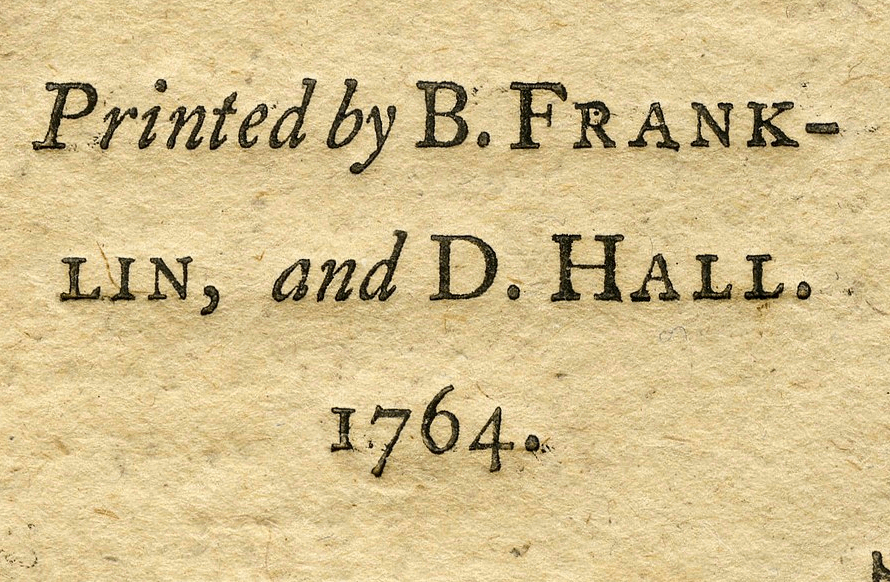
-Pennsylvania-18_Jun_1764.jpg)
Benjamin Franklin and David Hall (printers), Public domain, via Wikimedia Commons |
- During this period, the colonies began to issue their
own paper money called Colonial Scrip.
- The endeavor was
very successful because it provided a reliable medium of
exchange and it also helped to provide a feeling of unity
between the colonies.
- Colonial Scrip was debt-free paper
money printed in the public interest and not backed by gold or
silver coin, in other words, it was a totally fiat
currency.
- Officials at the Bank of England asked Franklin
how he would account for the new found prosperity of the
colonies and without hesitation he told them it was because
the colonies issued their own money.
- Also, that it was
issued in proper proportion to the demands of trade and
industry to make products pass easily from the producers to
the consumers, and because of that, the colonies owed interest
to no one.
|
Fiat currency is a type of money issued by a government and declared legal tender, but which is not backed by a physical commodity like gold or silver. Its value is based entirely on the public's trust and confidence in the issuing government and the stability of the economy, rather than any intrinsic value.
(Assistant)
|
Colonial
Scrip by Franklin |
- This was just common sense to Franklin, but you can
imagine the impact it had on the Bank of England.
- America
had learned the deep secret of money and that genie had to be
returned to its bottle as soon as possible.
- As a result,
Parliament hurriedly passed the Currency Act of 1764
and this prohibited colonial officials from issuing their own
money and ordered them to pay all future taxes in gold or
silver coins.
- In other words, it forced the colonies onto
a gold or silver standard.
- For those who still believe
that a gold standard is the answer for America's current
currency problems, look what happened to America after that.
America |
- Franklin wrote in his autobiography that in one short
year, the conditions were so reversed that the era of
prosperity ended and a depression set in.
- To such an
extent that the streets of the colonies were filled with
unemployed and he claimed that this was the basis for the
American Revolution.
- Britain took away the colonies
money, which created unemployment and dissatisfaction.
-
The inability of the colonists to get power to issue their own
money and keep it out of the hands of George III and the
international banks was the main reason for war.
|
In letters around 1773, Franklin expressed that the small 3-pence tax on tea was "silly" and a poor excuse for a revenue tax, as it was less than the English paid and made tea cheaper in America, but it was kept by Britain to assert their right to tax the colonies, which Franklin felt would provoke more serious conflict over principle, not money, ultimately leading to the Boston Tea Party.
(Assistant)
|
Colonial homes |
- By the time the first shots were fired in Lexington,
Massachusetts, on April 19th, 1775, the colonies had been
drained of gold and silver coin by British taxation.
- As a
result, the Continental government had no choice but to print
money to finance the war.
- At the start of the revolution,
the colonial money supply stood at $12 million but by the end
of the war, it was nearly $500 million.
- And the currency
as a result, was nearly worthless.
- For example, shoes
sold for $5,000 a pair and the whole reason that Colonial
Scrip had worked was because just enough was issued to
facilitate trade.
- As George Washington lamented, 'A wagon
load of money will scarcely purchase a wagon load of
provisions.'
Soapbox |
- Today, those who support a goldbacked currency point to
this period to demonstrate the evils of a fiat currency.
-
But remember, that same currency had worked so well 20 years
earlier during times of peace that the Bank of England had
Parliment outlaw it.
- Toward the end of the revolution,
the Continental Congress meeting at Independence Hall in
Philadelphia, grew desperate for money.
- In 1781, they
allowed Robert Morris, their financial superintendent, to open
a privately owned central bank.
- incidentally, Morris was a
wealthy man who had grown even wealthier during the revolution
by trading war materials.
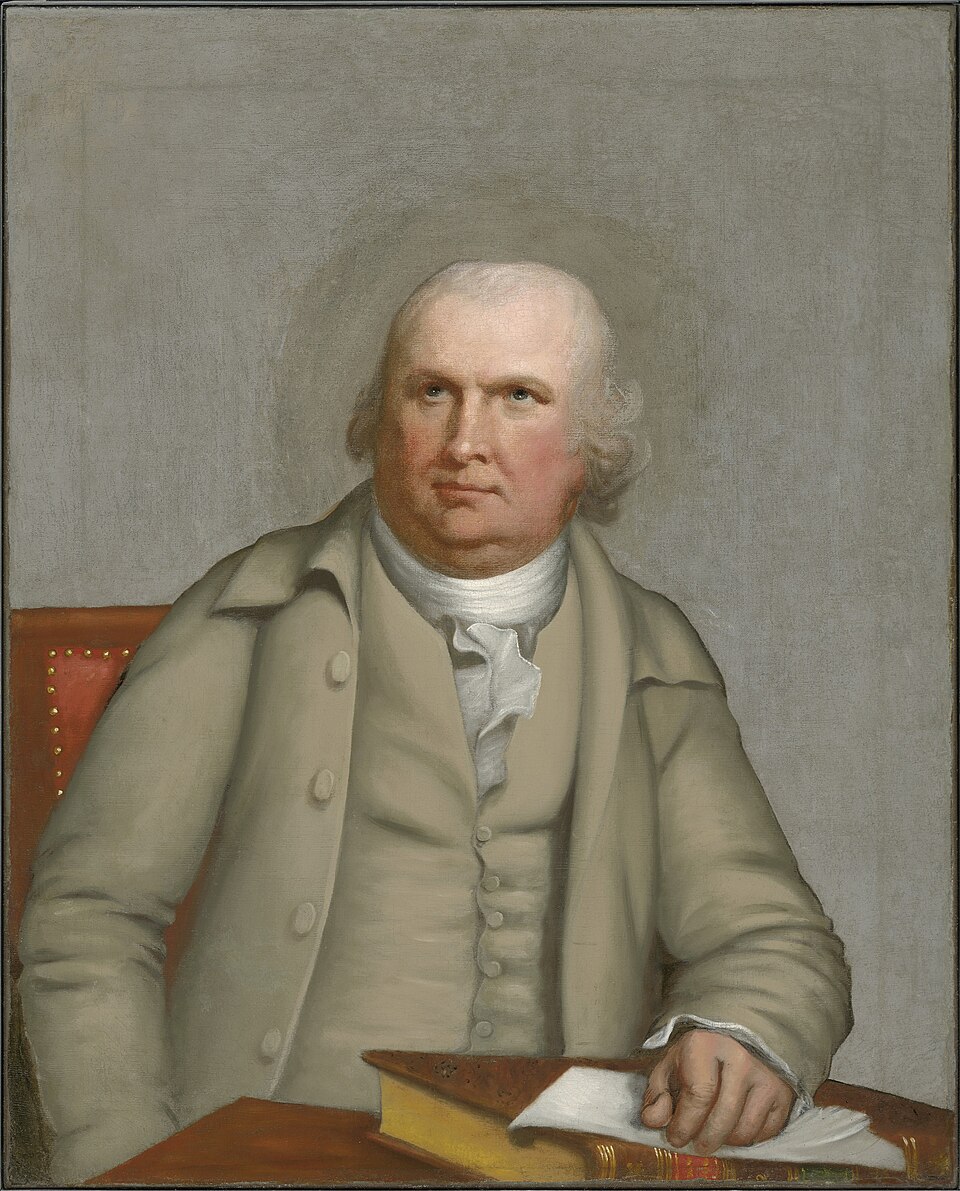
Robert Edge Pine, Public domain, via Wikimedia Commons
Robert Morris |
- Robert Morris Jr. (1734-1806) was a British-born
American merchant, investor, and politician, and one of the Founding Fathers of the United States.
- Morris served in the Pennsylvania legislature, the Second Continental Congress, and the United States Senate.
- He was one of only two individuals (along with Roger Sherman) to sign the
Declaration of Independence, the Articles of Confederation, and the U.S. Constitution.
- From 1781 to 1784, he held the post of Superintendent of Finance of the United States, a role that earned him the title
'Financier of the Revolution.'
|
John D. Rockefeller as Robert Morris |
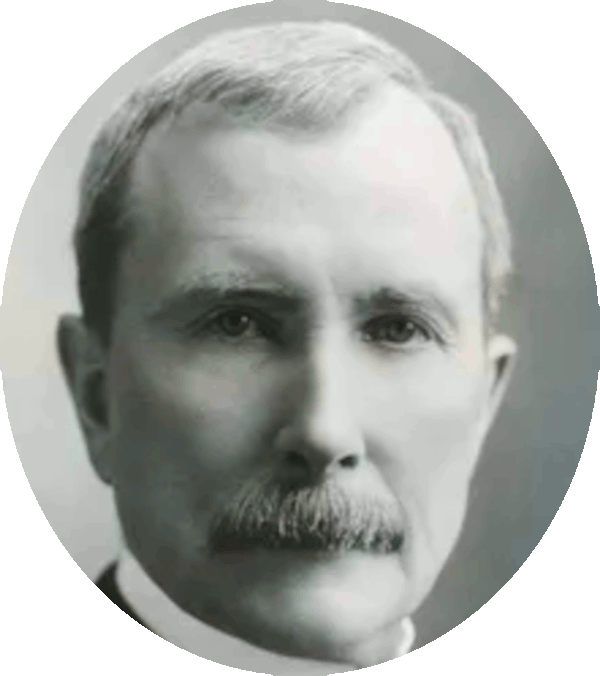 |
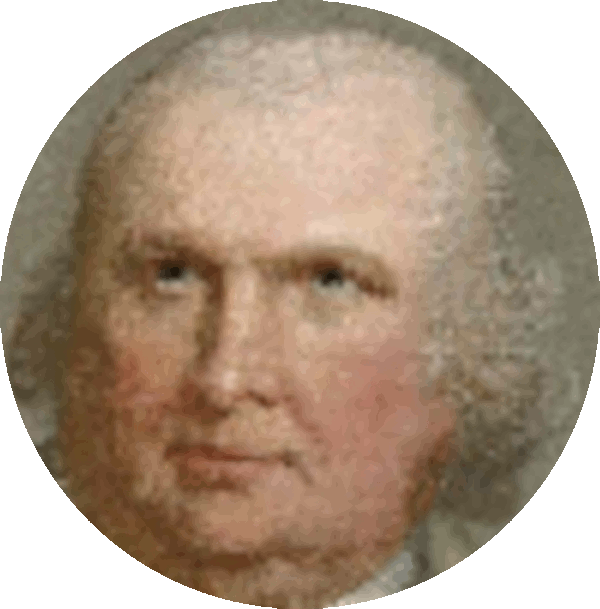 |
John Davison Rockefeller
1839-1937
7/8 5/23 |
Robert Morris Jr.
1734-1806
1/20
5/8
War and money |
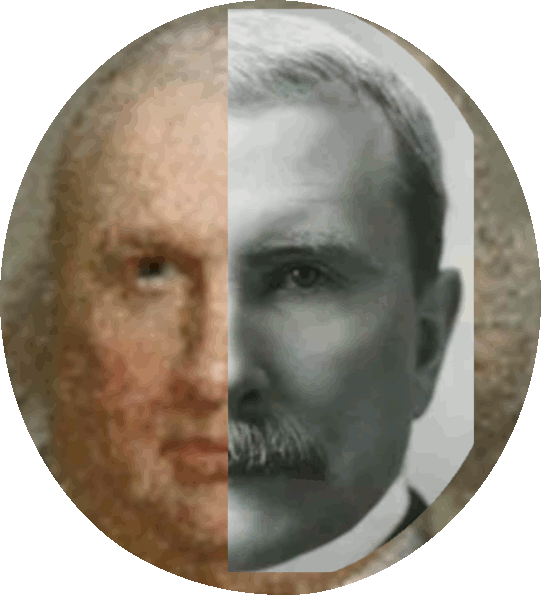 |
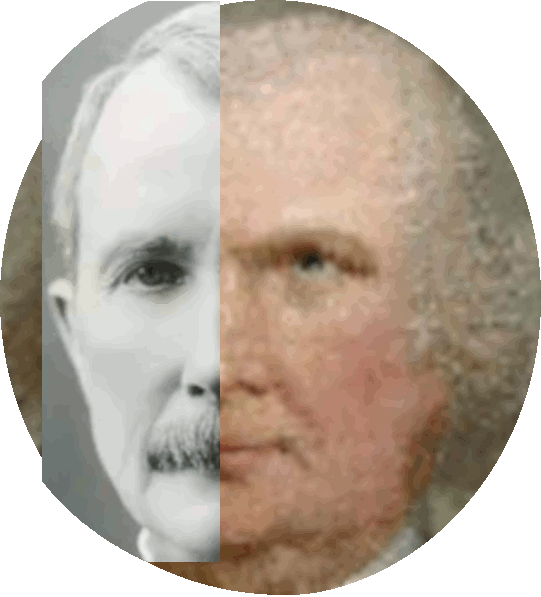 |
|
War debt |
- Alongside Alexander Hamilton and Albert Gallatin, Morris is often regarded as a founder of the financial system of the United States.
- Morris called the entity, the Bank of Northern America and
it was closely modeled after the Bank of England.
- It was
allowed to practice fractional reserve banking, meaning it
could lend out money it didn't have and then charge interest.
- If any of us tried doing that, we would be charged with
fraud, a felony.
Bank of North
America |
- The new banks charter called for private investors to
put up $400,000 worth of initial capital.
- When Morris was
unable to raise the money, he brazenly used his political
influence to have gold deposited in the bank, which had been
loaned to America by France.
- He then loaned this money to
himself and his friends to reinvest in shares of the bank.
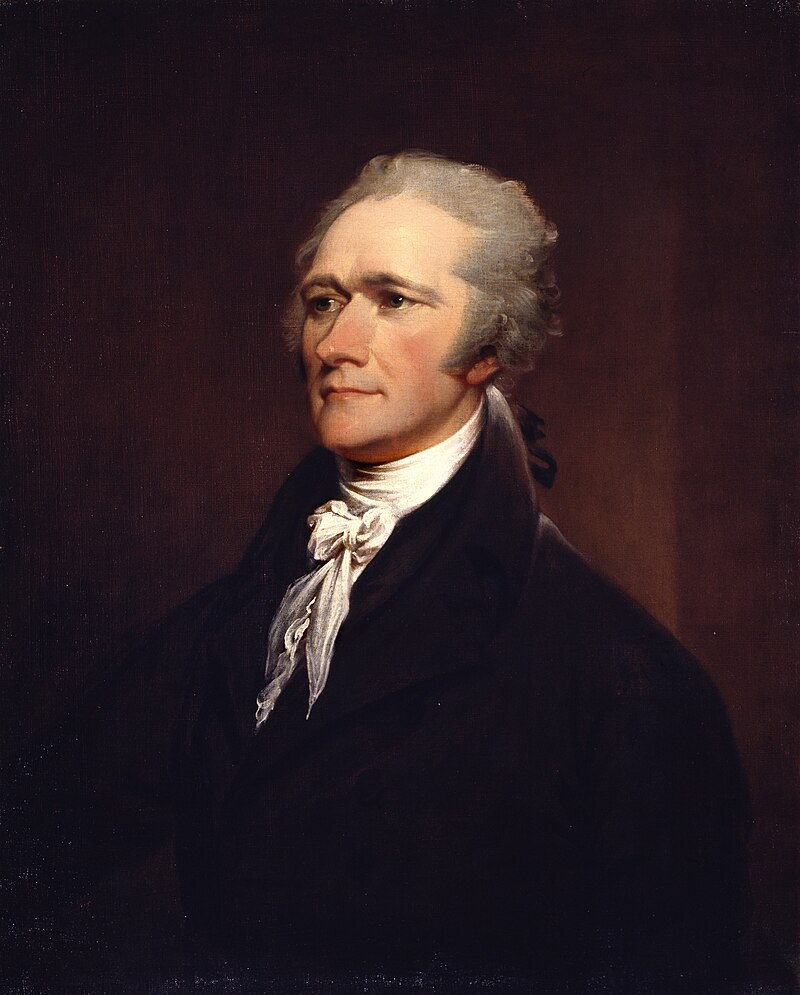
John Trumbull, Public domain, via Wikimedia Commons
Alexander Hamilton
1794 |
|
- Just like the Bank of England, the new bank was given a
monopoly over the national currency.
- Soon the dangers
became clear, the value of American currrency continued to
plummet.
- Four years later, in 1785, the banks charter was
not renewed.
- The leader of the effort to kill the bank,
William Findley of Pennsylvania, explained that 'the
institution had no principle but that of avarice.'
|
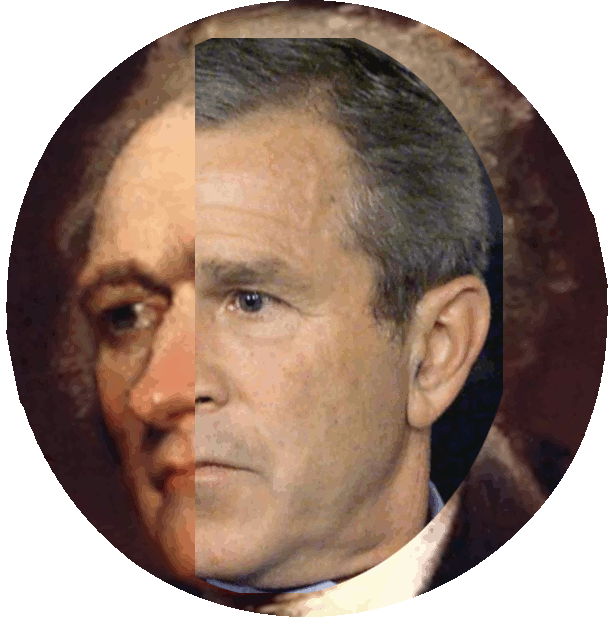
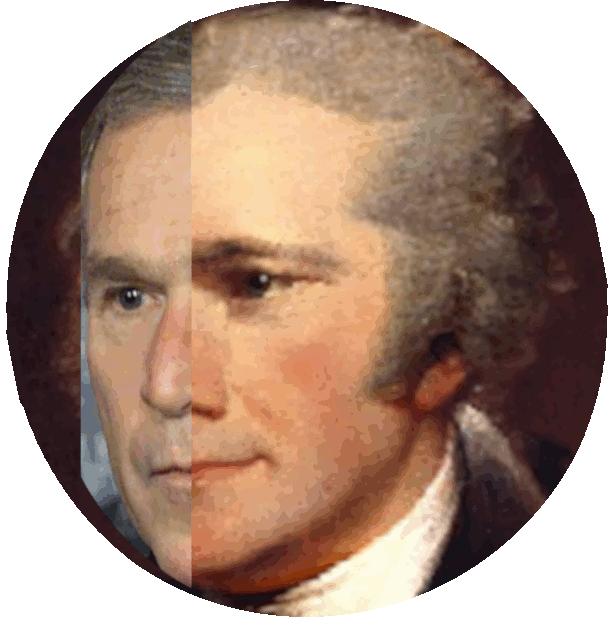
George Bush Jr. as Alexander Hamilton |
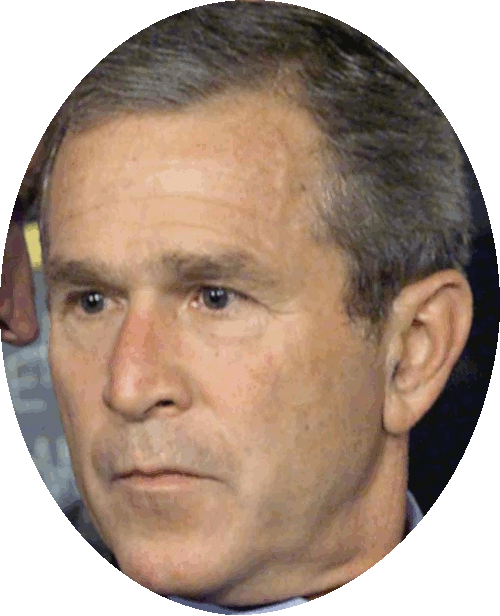 |
 |
George Walker Bush
1946
7/6 |
Alexander Hamilton
1755-1804
1/11
7/12
British spy |
 |
 |
|
Kite steel hit plane |
- Lesson 60 on page 153.
.jpg)
John Wollaston the Younger, Public domain, via Wikimedia Commons
Thomas Willing |
|
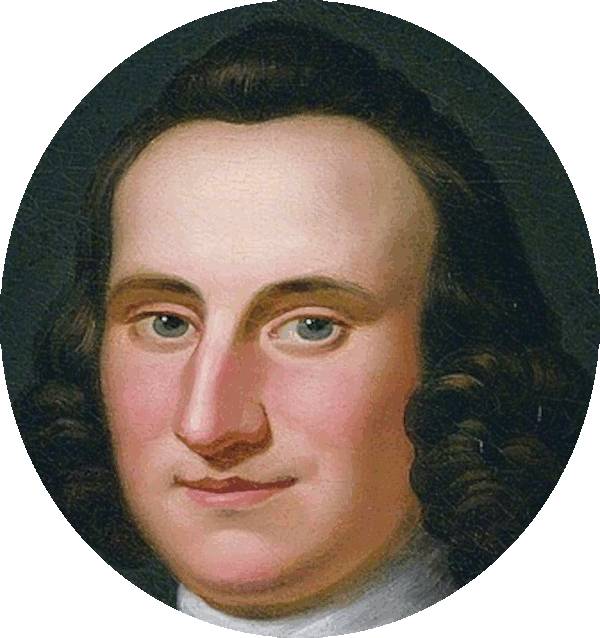
- Thomas Willing (1731-1821) was an American merchant, politician, and slave trader.
- He served as mayor of Philadelphia and as a delegate from Pennsylvania to the Continental Congress.
- He was also the first president of the Bank of North America and later of the First Bank of the United States.
|
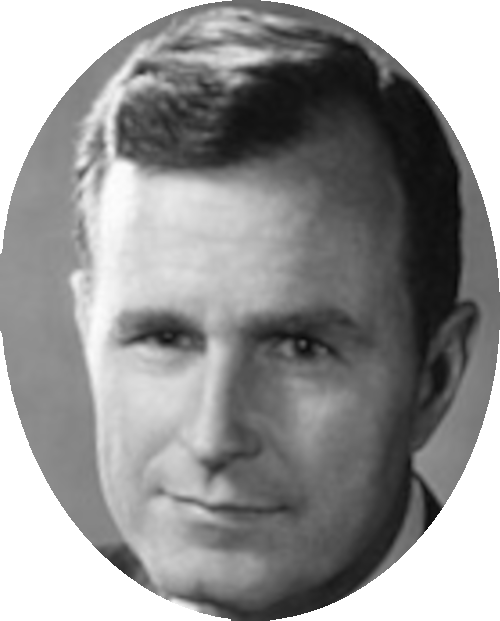
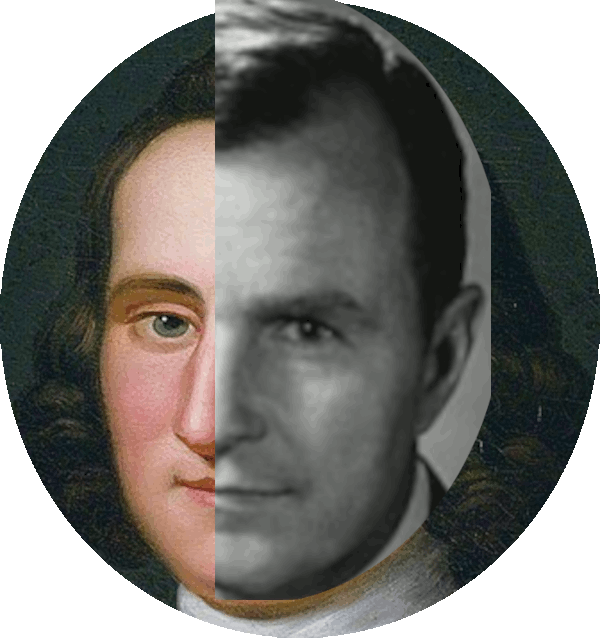
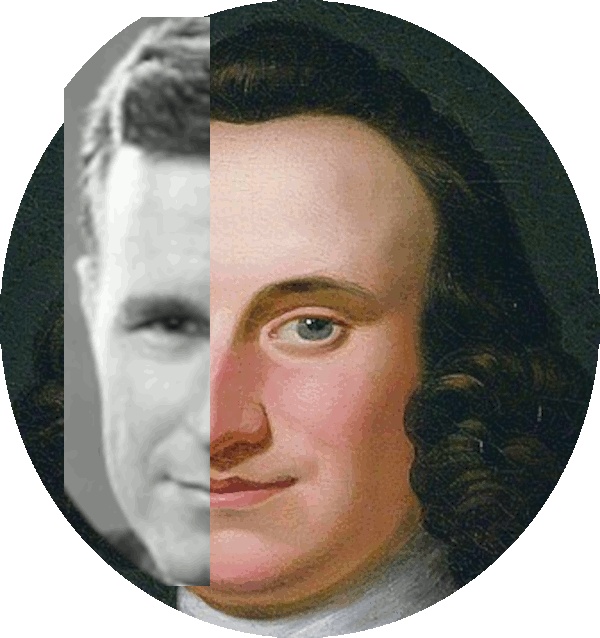
George Bush Sr. as Thomas Willing |
 |
 |
George Herbert Walker Bush
1924-2018
6/12 11/30 |
Thomas Willing
1731-1821
12/19
8/19
Banker |
 |
 |
|
Skull and bones |
- The men behind the Bank of North America, Alexander
Hamilton, Robert Morris, and the bank's president, Thomas
Willing, did not give up.
Assets |
- Only 6 years later, Hamilton,
then Secretary of Treasury, and his mentor, Robert Morris,
were able to ram a new privately owned central bank through
the new U.S. Congress.
- Called the First Bank of the
United States, Thomas Willing again served as the bank's
president.
- The players of the bank were the same, only
the name was changed.
- In 1787, colonial leaders assembled
in Philadelphia to replace the ailing Articles of
Confederation.
- As we saw before, both Jefferson and
Madison were still opposed to a privately owned central bank.
Problems |
- Both men had seen the problems caused by the Bank of
England and they wanted nothing of it.
- During the debate
with the Founding Fathers, Governor Morris castigated the
motivations of the owners of the Bank of North America.
-
Governor Morris was head of the committee that wrote the final
draft of the Constitution.
- He knew the motivations of the
bank well, along with his old boss, Robert Morris, Governor
Morris and Alexander Hamilton were the ones who had presented
the original plan for the bank to the Continental Congress in
the last year of the revolution.
- In a letter he wrote to
James Madison on July 2, 1787, the governer revealed what
was really going on.
- He knew that the rich would strive
to establish their dominion and enslave the rest because
that's what they always did.
|
If the American people ever allow private banks to control the issue of their currency, first by inflation, then deflation, the banks and the corporation which grow up around them will deprive the people of all property until their children wake up homeless on the continent their fathers conquered.
(Thomas Jefferson)
|
Convincing |
- Despite the defection of Governor Morris from the ranks
of the bank, Hamilton, Robert Morris, Thomas Willing and their
European backers were not about to give up.
- They
convinced the bulk of the delegates to the Constitutional
Convention to not give Congress the power to issue paper
money.
- Most of the delegates were still reeling from the
wild inflation of the paper currency during the revolution.
- They had forgotten how well Colonial Scrip had worked before
the war.
- But the Bank of England had not, and they could
not stand to have America printing their own money again.
-
Unfortunately, the Constitution is silent on this
grievous defect and this left the door wide open to the
private bankers, just as they had planned.
Sruck again |
- In 1790, less than 3 years after the Constitution
had been signed, the money changers struck again.
- The
newly appointed first Secretary of the Treasury, Alexander
Hamilton, proposed a bill to Congress calling for a new,
privately owned central bank.
- Conincidentally, that was the
very year that Amschel Rothschild made a pronouncement from
his flagship bank in Frankfurt saying, 'Let me issue and
control a nation's money and I care not who writes the laws.'
- Alexander Hamilton revealed himself to be a tool of the
international bankers and he wanted to create the Bank of the
United States and did so.
Hamilton's national
blessing to whom? |
- Interestingly, one of Hamilton's first jobs after
graduating from law school in 1782, was as aide to Robert
Morris, the head of the Bank of North America.
- In fact,
the year before, he had written Morris a letter saying, 'A
national debt, if it is not excessive, will be to us a
national blessing.'
- After a year of intense debate, in
1791, Congress passed the bill and gave it a 20 year charter.
- The new bank was to be called the First Bank of the United
States (BUS).
- They were granted a monopoly on printing
U.S. currency, even though 80% of its stock would be held by
private investors.
- The other 20% would be purchased by
the U.S. government.
- However, the reason was not to give
the U.S. government a piece of the action, it was to provide
the capital for the other 80% owners.
BUS |
- As with the old Bank of North America and the Bank of
England before that, the stockholders never paid the full
amount for their shares.
- Instead, the U.S. government put
up their initial $2 million in cash.
- Then the bank,
through their old magic of fractional reserve lending, made
loans to its charter investors so they could come up with the
remaining $8 million in capital needed for this 'risk free'
investment.
- Like the Bank of England, the name for the
bank in the U.S. was chosen to deliberately hide that it was
privately controlled.
- And like the Bank of England, the
investors were never revealed.
- Many years later, it was a
common saying that the Rothschild's were the power behind the
old bank of the U.S.
Congressional
security is war |
- The bank was sold to Congress as a way to bring
stability to the banking system and eliminate inflation.
-
So what happened next?
- Over the first 5 years, the U.S.
government borrowed $8.2 million from the Bank of the United
States.
- In the same 5-year period, prices rose by 72%.
- Jefferson, as new Secretary of State watched the borrowing
with sadness and frustration, unable to stop it.
- Also as
one of the Founding Fathers he signed the Constitution
with no provision for any of this?
|
 |
|
Head shape shifting
demon |
- The Secretary of State (U.S.) is the President's chief foreign policy advisor, heading the State Department, managing foreign relations, negotiating treaties, issuing passports, and protecting U.S. citizens abroad; at the state level, they often serve as chief election official, keeper of state records (like the Great Seal),
registrar of businesses, and commissioner of notaries, with roles varying by state.
- So you have to wonder, why Jefferson was unable to stop
it if he's the one in control of registering businesses?
-
He was quoted as saying, 'I wish it were possible to obtain a
single amendment to our Constitution, taking from the federal
government their power of borrowing.'!!!!!
Out on the ledge |
- Millions of Americans want the ability to add an
amendment to the Constitution, so why were the Founding
Fathers so careful not to allow this to happen?
- They
watch in helpless frustration as the federal government
borrows the American economy into oblivion.
- To the point
now they are tearing down the White House without any approval
to build 'ball rooms' to take the scapegoated Edomites to hell for the
Jews crimes.
- Despite being called the First Bank of the
United States, it was not the first attempt at a privately
owned central bank in this country.
- As with the Bank of
North America, the government put up most of the cash to get
this bank going.
- Then the bankers loaned the money to
each other to purchase the remaining stock in the bank.
Public hanging |
- It was a scam, plain and simple, and they wouldn't be
able to get away with it for long.
- We have to travel back
to Europe to see how a single man was able to manipulate the
entire British economy by obtaining the first news of
Napoleon's final defeat.
- The Bank of France was organized
in Paris in 1800, just like the Bank of England.
- But
Nepoleon decided France had to break free of debt and he never
did trust the Bank of France.
- He declared that when a
government is dependent upon bankers for money, the bankers,
not the leaders of the government are in contol.
-
Back in America, unexpected help was about to arrive.
|
The hand that gives is above the hand that takes.
Money has no motherland; financiers are without
patriotism and without decency; their sole object is
gain..
(Napoleon Bonaparte)
|
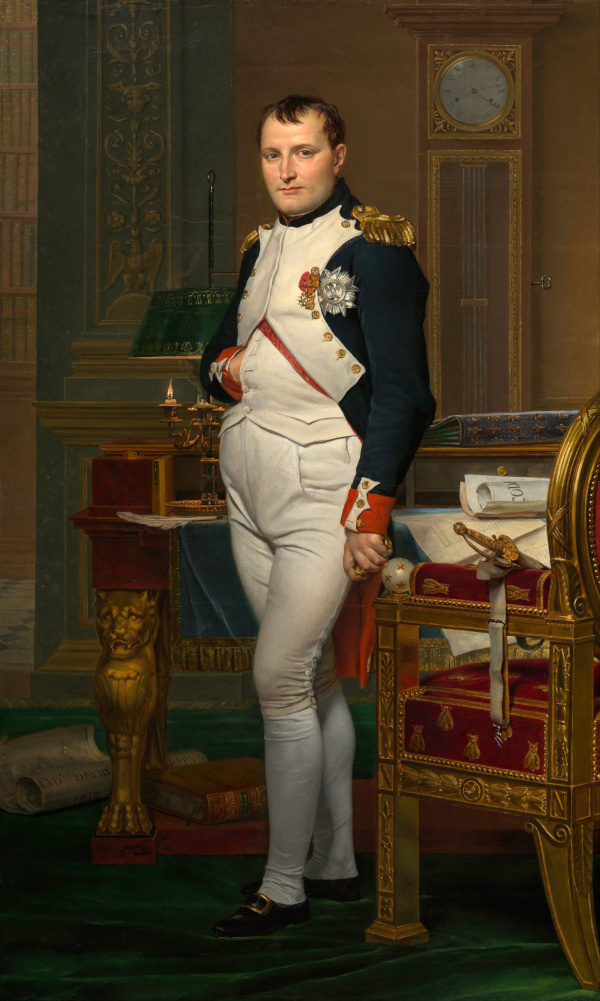
Jacques-Louis David, Public domain, via Wikimedia Commons
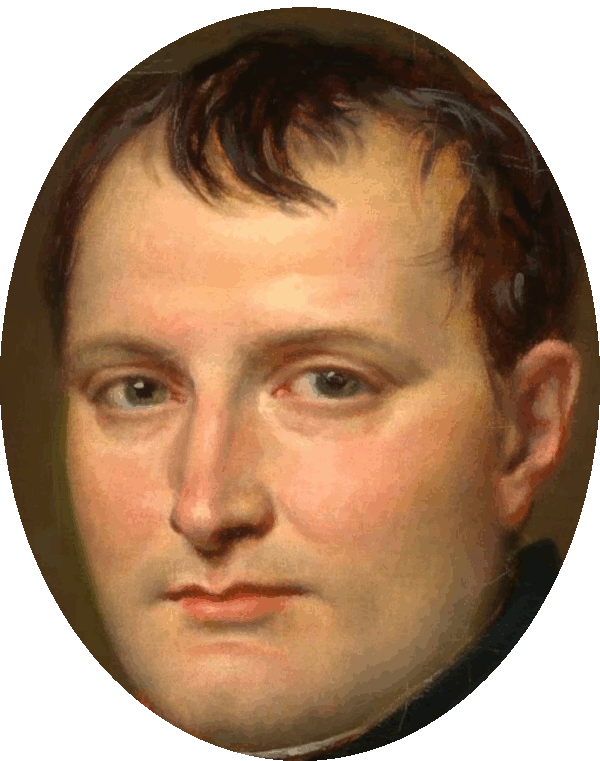
Napoleon Bonaparte |
- In 1800, Thomas Jefferson narrowly defeated John Adams
to become the 3rd president of the U.S.
- By 1803,
Jefferson and Napoleon had struck a deal, the U.S. would give
Napoleon $3 million in gold in exchange for a huge chuck of
territory west of the Mississippi River and this was the
Louisiana Purchase.
- With that $3 million Napoleon quickly
forged an army and set off across Europe, conquering
everything in his path.
- But the Bank of England quickly
rose to oppose him.
Monti-cello |
- They financed every nation in his
path, reaping the enormous profits of war.
- Prussia,
Austria and finally, Russia all went heavily into debt in a
futile attempt to stop Napoleon.
- Four years later, with the main French army in Russia,
30-year-old Nathan Rothschild, the head of the London office
of the Rothschild family, personally took charge of a bold
plan to smuggle a much needed shipment of gold right through
France to finance an attack by the Duke of Wellington that
took place in
Spain.
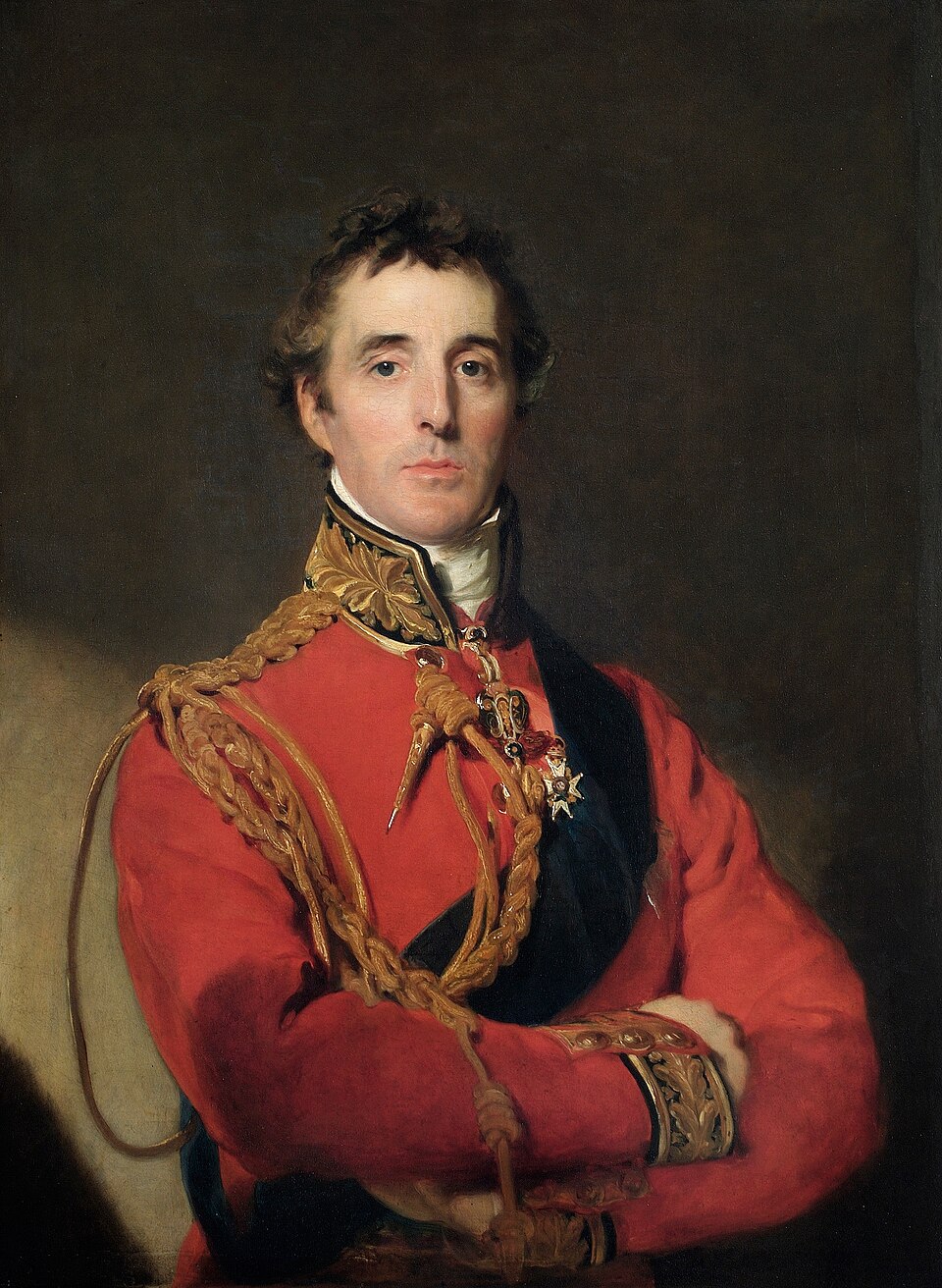
Thomas Lawrence, Public domain, via Wikimedia Commons
The Duke of
Wellington, c.1815 - upper
house
Tory |
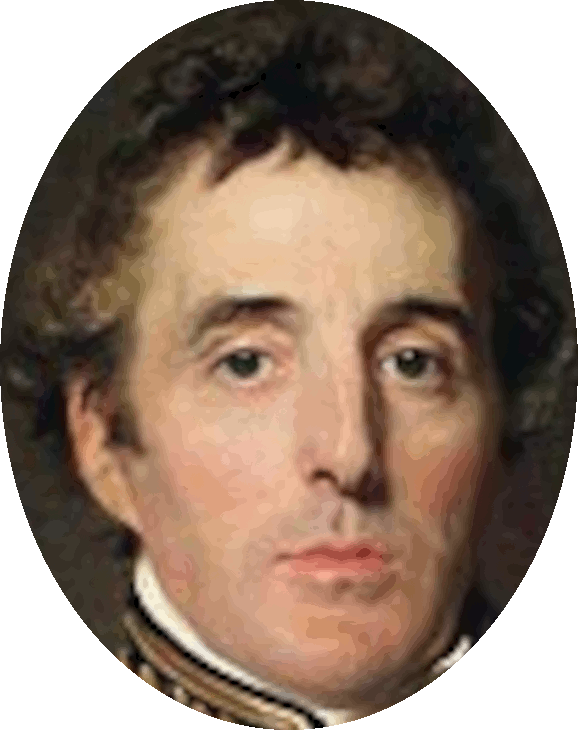
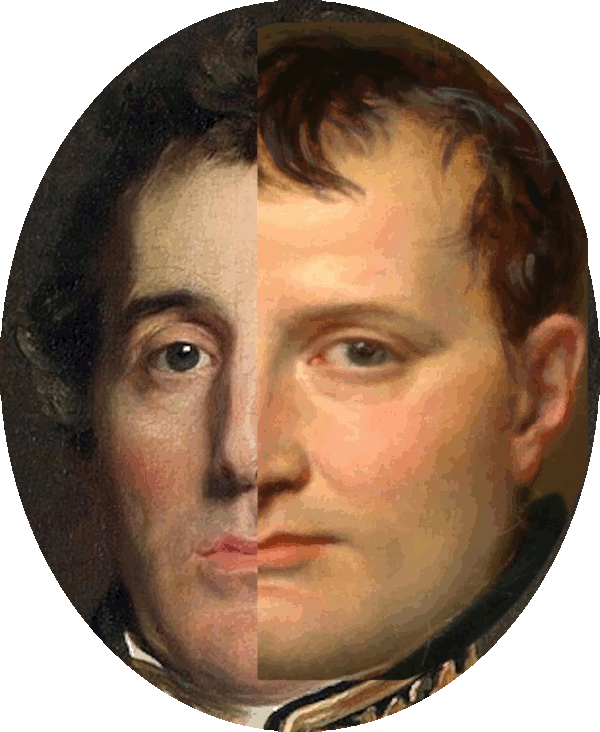
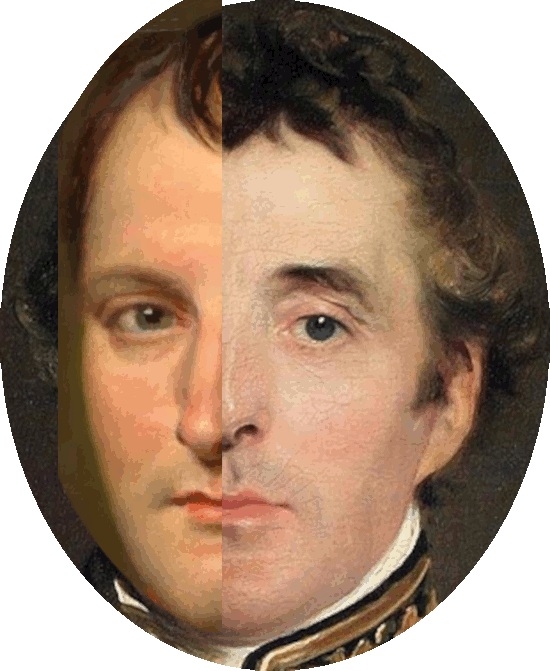
- Field Marshal Arthur Wellesley (1769-1852), 1st Duke of Wellington (né Wesley) was an Anglo-Irish British Army officer and statesman who was one of the leading military and political figures in Britain during the early 19th-century, twice serving as Prime Minister of the United Kingdom.
- He was one of the British commanders who ended the Anglo-Mysore wars by defeating Tipu Sultan in 1799, and among those who ended the Napoleonic Wars in a Coalition victory when the Seventh Coalition defeated Napoleon at the Battle of Waterloo in 1815.
|
Duke of Wellington as Napoleon Bonaparte |
 |
 |
Arthur Wellesley
1769-1852
5/1 9/14
Prime Minister |
Napoleon Bonaparte
11769-1821
8/15
5/5
Emperor |
 |
 |
|
My sore |
- Rothschild later bragged at a dinner party in
London, that it was the best business he's ever done.
-
Little did he know that he would do much better business in
the near future.
- Wellington's attacks from the south and
other defeats eventually forced Napoleon to abdicate and Louis
XVIII was crowned.
Elba |
- Napoleon was exiled to Elba, a tiny island off the coast
of Italy, supposedly exiled from France forever.
- While
Napoleon was exiled and temporarily defeated by England with
the financial help of the Rothschild bank, America was trying
to break free of its central bank as well.
- In 1811, a
bill was put before Congress to renew the charter of the Bank
of the United States.
- The debate grew very heated and the
legislatures of Pennsylvania and Virginia, passed resolutions
asking Congress to kill the bank.
- The press corp of the
day attacked the bank openly calling it a great swindle, a
vulture, a viper and a cobra.
- How nice it would be to
have an independent press again in America.
War bank |
- A congressman named P.B. Porter attacked the bank from
the floor of Congress saying, 'if the banks charter is
renewed, Congress will have planted in the bosom of this
Constitution, a viper, which one way or another, will sting
the liberties of this country to the heart.'
- Prospects
didn't look that good for the bank but some claim that Nathan
Rothschild was quoted as saying that the U.S. would find
itself in the most disastrous war if the banks charter were
not renewed!!
- But it wasn't enough, when the smoke had
cleared, the renewal bill was defeated by a single vote in the
House, and was deadlocked in Senate.
White House |
- By now, America's 4th president, James Madison, was in
the White House and he was a staunch oppenent of the central
bank.
- His vice president, George Clinton, broke a tie in
the Senate and sent the bank into oblivion.
- Within 5
months, England attacked the U.S. and the War of 1812 was on.
- But the British were still busy fighting Napoleon, so the
War of 1812 ended in a draw in 1814.
- Though the money
changers were temporarily down, they were far from out.
-
It would take them only another 2 years to bring back their
bank, bigger and stronger than ever.
Banking house |
- Nothing in history more aptly demonstrates the ingenuity
of the Rothschild than their control of the British stock
market after Waterloo.
- In 1815, a year after the end of
the War of 1812 in America, Napoleon escaped his exile and
returned to Paris.
- French troops were sent out to capture
him, but such was his charisma that soldiers hailed around
their old leader and hailed him as their emperor once again.
- In March of 1815, Napoleon outfitted an army which Britain's
Duke of Wellington defeated less than 90 days later at
Waterloo.
- Some writers claim that Napoleon borrowed £5
million from the Bank of England to re-arm, but it appears
these funds actually came from the Hubbard Banking House in
Paris.
- Nevertheless, from about this point on, it was not
unusual for privately controlled central banks to finance both
sides in a war.
War is debt |
- Why would a central bank finance opposing sides in a
war?
- Because war is the biggest debt generator of them
all because a nation will borrow any amount for victory.
-
The ultimate loser is loaned just enough to hold out the vain
hope of victory, and the ultimate winner is given enough to
win.
- Besides, such loans are usually conditioned upon the
guarantee that the victor will honor the debts of the
vanquished.
- The Waterloo battlefield is located about 200
miles northeast of Paris in what today is Belgium.
- It is
here that Napoleon suffered his final defeat, but not before
thousands of French gave their lives on a summer day in July
1815.
- On June 18, 1815, some 74,000 French troops met
67,000 troops from Britain and other European nations.
-
The outcome was certainly in doubt, in fact, Napoleon had
attacked a few hours earlier, he would have probably won the
battle.
Big bank |
- But no matter who won or lost, back in London, Nathan
Rothschild made plans to use the opportunity to try and seize
control over the British stock and bond market, and possibly,
even the Bank of England.
- Rothschild stationed a trusted
agent, a man named Rothworth on the north side of the
battlefield, closer to the English Channel.
- Once the
battle had been decided, Rothworth took off and he delivered
the news to Nathan Rothschild a full 24-hours before
Wellington's own courier reached England.
- Rothschild
hurried to the stock market and took up us usual position in
front of an ancient pillar.
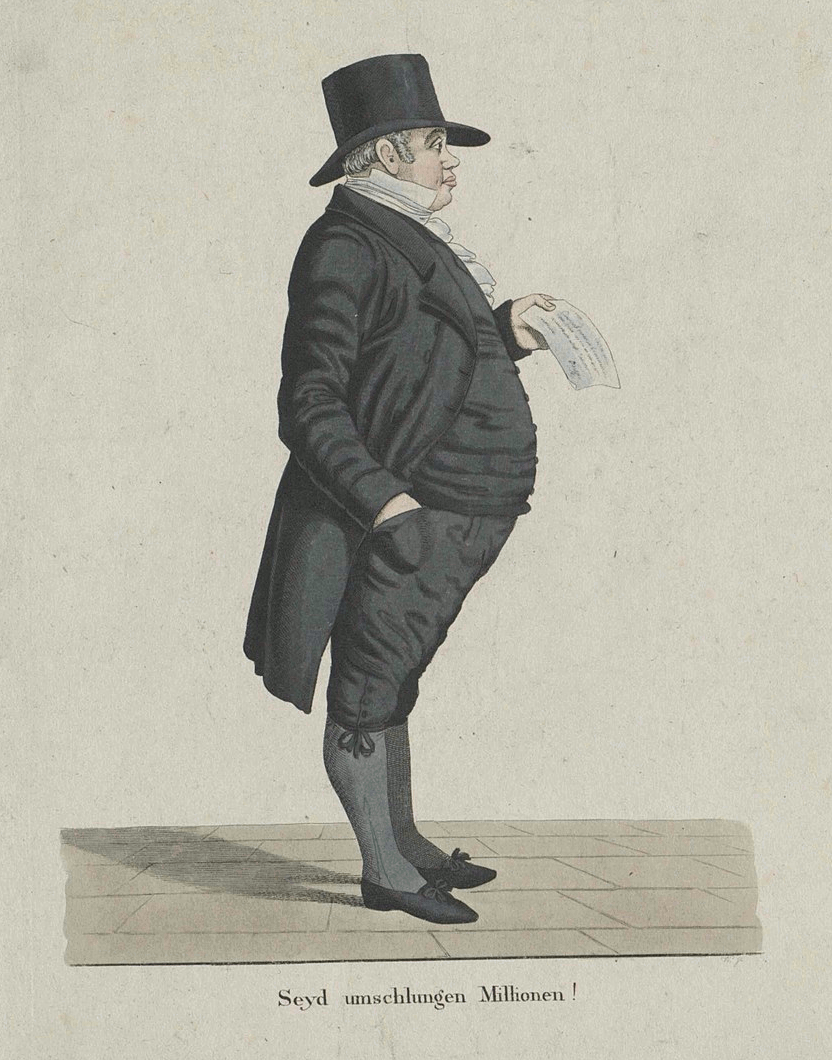
See page for author, Public domain, via Wikimedia Commons
Nathan
Rothschild |
- All eyes were on him because the Rothschild's had an
ancient communications network.
-
If Wellington had been defeated and Napoleon was on the loose
on the continent again, Britain's financial situation would
become grave indeed.
- Rothschild looked saddened and he
stood there motionless with his eyes downcast, then suddenly
he began selling.
- Other nervous investors saw that he was
selling and it could have only meant one thing, Napoleon must
have won and Wellington must have lost.
- The market
plummeted and soon everyone was selling their consoles,
British government bonds, and prices dropped sharply.
-
However, Rothschild started secretly buying up the consoles
through his agents for only a fraction of their worth a few
hours before.
- How perfectly despicable and deceptive.
Soldiers returning |
- Myths, legends, some claim, but 100 years later, the New
York Times ran a story that said that Nathan Rothschild's
grandson had attempted to secure a court order to suppress a
book that had the stock market story in it.
- The
Rothschild family claimed the story was untrue and liabilious,
however, the court denied their request and ordered the family
to pay all court costs.
- What's even more interesting
about this story is that some authors claim that the day after
the Battle of Waterloo, in a matter of hours, Nathan
Rothschild came to dominate not only the bond market, but the
Bank of England as well.
Family logo |
-Whether or not the Rothschild family seized control of
the Bank of England, the first privately owned central bank in
a major European nation and the wealthiest, one thing is
certain.
- By the 1800s. they were the wealthiest family in
the world, bar none.
- They dominated the new government
bond markets and branched into other banks and industrial
concerns.
- In fact, the rest of the 19th-century was known
as the Age of the Rothschild's and it's been estimated that
they controlled half the wealth of the world.
- Despite
this overwhelming wealth, the family has generally cultivated
an aura of invisibility, although the family controls scores
of industrial, commercial, mining and tourist centered
corporations, only a handful bear their name.
- Somehow
since the turn of the century, the Rothschild's have
cultivated the notion that their power has somehow waned, even
as their wealth increases.

Shady business |
- Meanwhile back in Washington in 1816, just one year
after Waterloo and the Rothschild's alleged takeover of the
Bank of England, the American Congress passed yet another bill
permitting yet another privately owned central bank.
- This
bank was called the Second Bank of the United States and the
charter was a copy of the previous banks.
- The U.S.
government would own 20% of the shares of the bank, of course
the federal share was paid by the U.S. Treasury upfront into
the banks coffers.
- Then, through the magic of fractional
reserve lending, it was transformed into loans to private
investors who then bought the remaining 80% of the shares.
- Just as before, the primary stockholders remained a secret.
- However, it is known that the largest block of shares, about
one-third of the total, were sold to foreigners.
Shareholders |
- As one observer put it, that it is certainly no
exaggeration to say that the Second Bank of the United States
was rooted as deeply in Britain as it was in America.
- By
1816, it's claimed that the Rothschild's had taken control
over the Bank of England and had backed a new privately owned
central bank in America as well.
- After 12 years of
manipulation of the U.S. economy on the part of this latest
bank, the American people had had just about enough.
-
Opponents of the bank nominated a dignified senator from
Tennessee, Andrew Jackson, the hero of the Battle of New
Orleans, to run for president.
.jpg)
Ralph Eleaser Whiteside Earl, Public domain, via Wikimedia Commons
Andrew Jackson -
7th president |
- Initially, no one gave Andrew Jackson a chance and the
bank had learned long ago how the political process could be
controlled with money.
- To the surprise and dismay of the
money changers, Jackson was swept into office in 1828.
- He
was determined to kill the central bank at the first
opportunity and wasted no time in trying to do so.
-
However, the banks 20 year charter didn't come up for renewal
until 1836, the last year of his 2nd term, if he could survive
that long.
- During his first term, Jackson contented
himself with rooting out the bank's many minions from
government service.
Capital doings |
- Jackson fired 2,000 of the 11,000 employees of the federal
government.
- In 1832, with his
re-election approaching, the banks struck an early blow,
hoping that Jackson would not want to stir up controversy.
- They asked Congress to pass a renewal bill 4 years early and
naturally Congress complied and sent it to the president to
sign.
- But Jackson weighed in with both feet, Old Hickory,
never a coward, vetoed the bill.
- His veto message is one
of the great American documents as it clearly laid out the
responsibility of American government towards its citizens,
rich and poor.
Citizens should
matter |
- Jackson was angered that 8 million shares
of stock in the bank were owned by foreigners.
- He
questioned what danger to our liberty and independence is
placed in a bank that in its nature has so little to bind it
to our country.
- Jackson stated that foreigners were
controlling our currency, receiving our public moneys, and
holding thousands of citizens in dependence, and felt that was
more formidable and dangerous than a military power of the
enemy.
- He felt that the document that had been placed in
front of him to sign, was a wide and unnecessary
departure from these just principles.
|
The duty of government is to leave commerce to its own capital and credit as well as all other branches of business, protecting all in their legal pursuits, granting exclusive privileges to none.
(Andrew Jackson)
|
Attempt to override
presidential veto
landslide |
- Later that year, in July 1832, Congress was unable to
override Jackson's veto, although they tried.
- Now Jackson
had to stand for re-election so he took his argument directly
to the people.
- For the first time in U.S. history, he
took his presidential campaign on the road.
- Before that,
presidential candidates stayed at home and looked
presidential.
- His campaign slogan was 'Jackson and no
bank.'
- The Republican Party ran Senator Henry Clay
against Jackson, and despite the fact that the bankers poured
over $3 million into Clay's campaign, Jackson was re-elected
in a landslide in November 1832.
Battle only
beginning |
- Despite his presidential victory, Jackson knew the
battle was only beginning.
- The newly elected Jackson
said, 'The hydra is only scotched, not dead.'
- He ordered
his new Secretary of the Treasury to start removing the
governments deposits from the second bank and place them in
state banks.
- However, the Secretary of the Treasury
refused to do so, and Jackson fired him and appointed William
J. Dwayne as the new secretary and he also refused to comply
with Jackson's requests.
- So Jackson fired him as well and
appointed a third man to the office, Roger B. Taney,
-
Taney began withdrawing government funds from the bank
starting on October 1, 1833, and Jackson was jubilant.
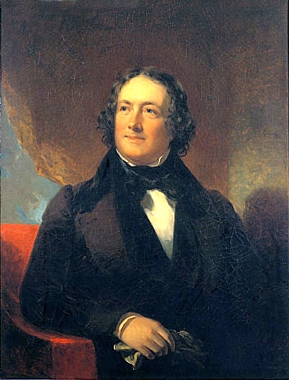
William Inman, Public domain, via Wikimedia Commons
Arrogant banker Nicholas Biddle |
- But the bank was not yet done fighting and the head of
the bank, Nicholas Biddle, used his influence to get Senate to
reject Taney's nomination.
- Then in a rare show of
arrogance, Biddle threatened to cause a depression if the bank
was not re-chartered.
- Biddle made the statement that,
'This worthy president thinks that because he has scalped
Indians and imprisoned judges, he is to have his way with the
Bank and he is mistaken.'
- Next, in an unbelievable fit of
honesty for a central banker, Biddle admitted that the bank
was going to make money scare to force Congress to restore the
bank.
- He claimed it would cause widespread suffering and
that the banks only safety was in pursuing a steady course of
firm restriction and that he had no doubt that such a course
would ultimately lead to the restoration of the currency and
the recharter of the bank.
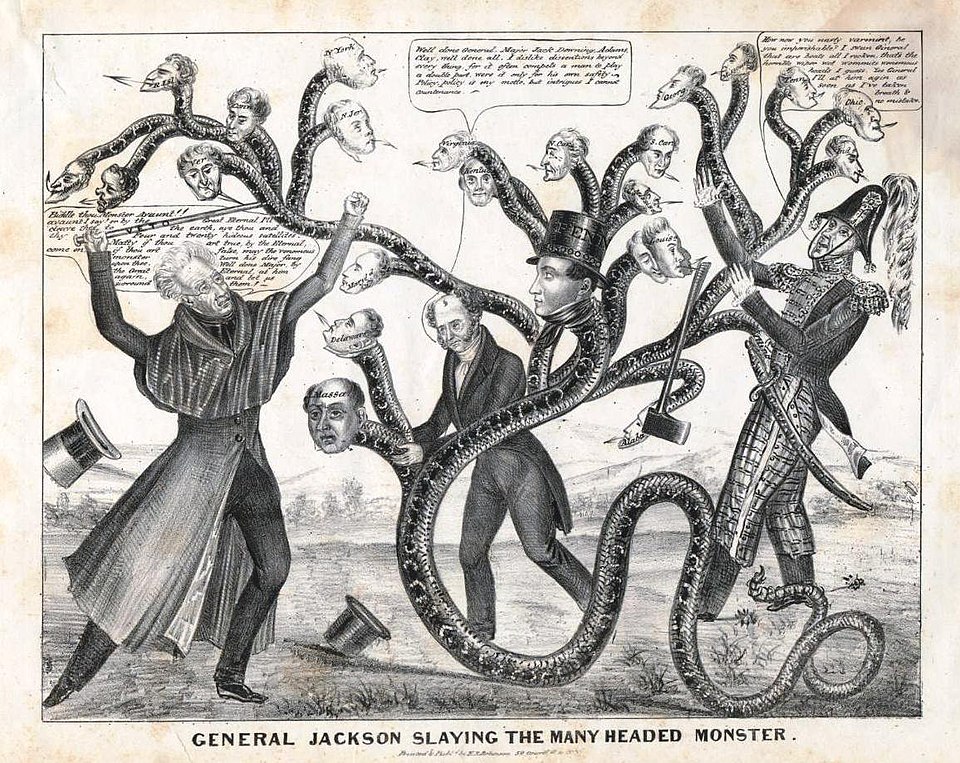
N.Y. : Printed & publd. by H.R. Robinson, 1836; cropped by Beyond My Ken (talk) 07:04, 16 June 2010 (UTC), Public domain, via Wikimedia Commons |
- What a stunning revelation, here was the pure truth
revealed with shocking clarity what these central bankers were
willing to do.
- Biddle intended to use the money
contraction power of the bank to cause a massive depression
until America gave in.
- Unfortunately, this has happened
time and time again throughout U.S. history.
- Biddle made
good on his threat and the bank sharply contracted the money
supply by calling in old loans and refusing to extend new
ones.
- A financial panic ensued, followed by a deep
depression and naturally Biddle blamed Jackson for the crash
saying that it was caused by the withdrawal of federal funds
from the bank.
- Unfortunately, his plan worked well and
wages and prices were depressed, unemployment soared along
with business bankruptcies.
Unemployment soared |
- The nation quickly went into an uproar and newpaper
editors blasted Jackson in editorials.
- The bank
threatened to withhold payments that were made directly to key
politicians for their support.
- Within months, Congress
assembled in what was called the 'Panic Session' and 6 months
after he had withdrawn funds from the central bank, Jackson
was officially censured by a resolution that passed the Senate
by a vote of 26 to 20.
- It was the first time that a
president had ever been censured by Congress and Jackson
lashed out at the bank and called them 'a den of vipers' and
he intended to route them all out.
- America's fate
teetered on a knife edge, if Congress could muster enough
votes to override Jackson's veto, the bank would be granted
another 20-year monopoly, or more, over America's money.
Crashed economy |
- Then a miracle occurred when the governor of
Pennsylvania came out supporting President Jackson and
strongly criticized the bank.
- On top of that, Biddle had
been caught boasting in public about the bank's plan to crash
the economy.
- Suddenly, the tide shifted and in 1834, the
House of Representatives voted 134 to 82 against rechartering
the bank.
- This was followed by an even more lopsided vote
to establish a special committee to investigate whether the
bank had caused the crash.
- When the investigating
committee arrived at the bank door in Philadelphia, armed with
a subpoena to examine the books, Biddle refused to give them
up.
High horse |
- Nor would Biddle allow inspection of correspondence with
congressmen relating to their personal loans and advances he'd
made to them.
- He also refused to testify before the
committee back in Washington.
- On January 8, 1835, Jackson
paid off the final installment of the national debt, which had
been necessitated by allowing the banks to issue currency for
government bonds rather than simply issuing treasury notes
without such debt.
- He was the only president to pay off
the debt.
Charter not renewed |
- A few weeks later, on January 30, 1835, an assassin named
Richard Lawrence tried to shoot Jackson, but by the grace of
God, both pistols misfired.
- Lawrence was later found not
guilty by reason of insanity.
- After he was released, he
bragged that powerful people in Europe had put him up to the
task and promised to protect him if caught.
- The following
year, when it's charter ran out, the Second Bank of the United
States ceased functioning as the nation's central bank.
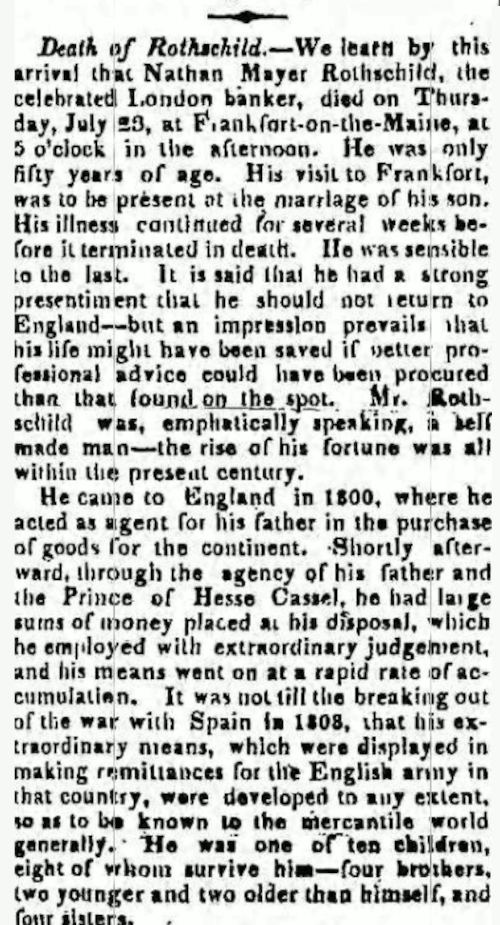
Trumansburg
Advertiser -
September 28, 1836 |
-
Nicholas Biddle was arrested and charged with fraud although
later acquitted, but he died shortly after while still
embroiled in civil suits.
- After his 2nd term, Jackson
retired to his home in Nashville, the Hermitage, and is known
for his determination to kill the bank.
- In fact, he
killed it so bad, it took the money changers 77 years to undo
the damage.
- When Jackson was asked what his most
important accomplishment had been, Jackson replied, 'I killed
the bank' and next up Abraham Lincoln working on the same
problem.
|
How sweet the moonlight sleeps upon this bank!
Shakespeare,
The Merchant of Venice

|