|
|
ABEL GRIMMER - TOWER OF BABEL - PAGE 6
|
Central Bank
Rapes America |
Landslide |
- Unfortunately, even with all the resistance that
President Andrew Jackson devoted to the cause of freeing
Americans from the grips of the demonic international bankers,
he failed to grasp the entire picture and recognize the root
cause.
- Although Jackson had killed the privately owned
central bank, the most isidious weapon of the money changers
fractional reserve banking, remained in use by the numerous
state chartered banks.
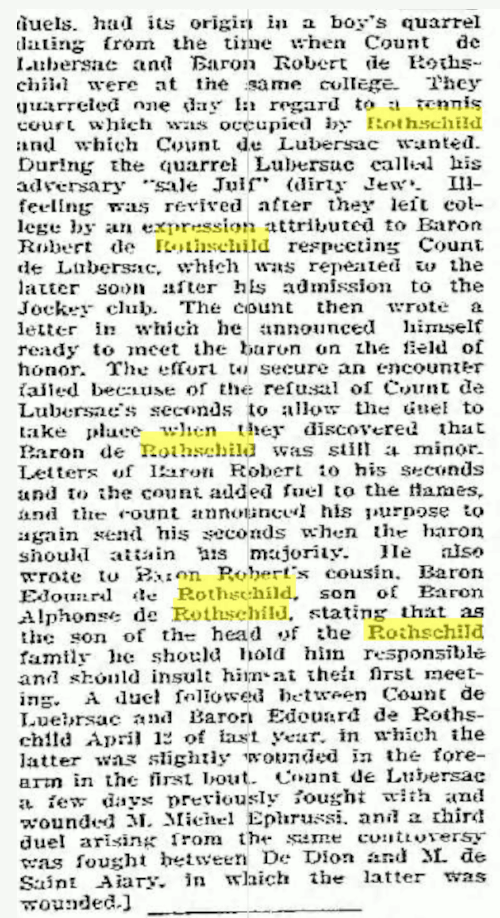
Terre Haute Wabash
Courier
- May 25, 1849 |
- This fueled economic instability
in the years before the Civil War.
- Still, the private
central bankers were out of the game and as a result, America
thrived as it expanded westward.
- During this time, the
principal money changers struggled to regain their lost
centralized power, but to no avail.
|
The duty of government is to leave commerce to its own capital and credit as well as all other branches of business, protecting all in their legal pursuits, granting exclusive privileges to none.
(Andrew Jackson)
|
Slavery |
- Then, finally, they reverted back to the old central
banker's formula; war to create debt and dependency.
- If
they couldn't get their central bank any other way, America
could be brought to its knees by plunging it into a civil war,
just as they had done in 1812 after the First Bank of the
United States was not rechartered.
.jpg)
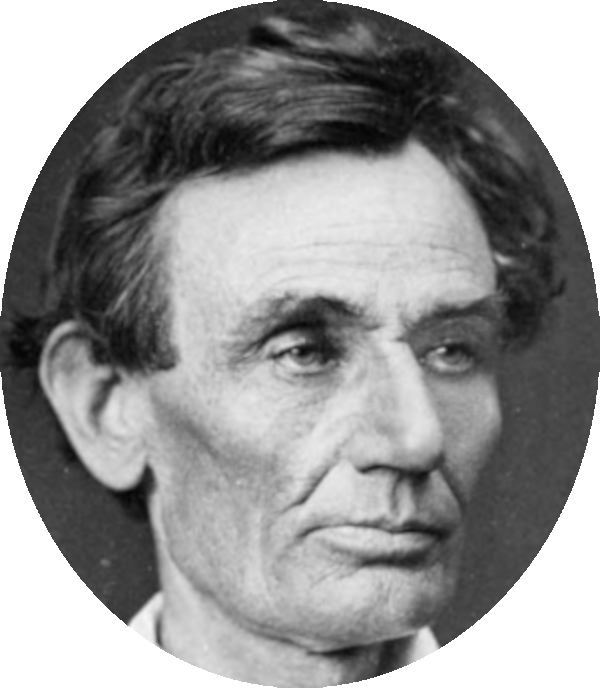
Alexander Gardner, Public domain, via Wikimedia Commons
Abraham Lincoln -
16th president |
- One month after the
inauguration of Abraham Lincoln (1809=1865), the first shots of the
American Civil War were fired at Fort Sumpter in South
Carolina, on April 12, 1861.
- Certainly slavery was a
cause for the war, but not the primary cause.
- Lincoln
knew that the economy of the South depended upon slavery and
so before the Civil War, he had no intention of eliminating
it.
- Lincoln had put it this way in his inaugural address
only one month earlier.
|
I have no purpose, directly or indirectly, to
interfere with the institution of slavery in the
states where it now exists. I believe I have no lawful
right to do so, and I have no inclination to do so.
(Abraham Lincoln)
|
Fort Sumpter |
- Even after the first shots were fired at Fort Sumpter,
Lincoln continued to insist that the Civil War was not about
the issue of slavery.
- He stated that his paramount
objective was to save the Union, and that is was not either to
save or destroy slavery.
- He felt that if he could save
the Union without freeing any slave, he would do that.
-
But what was the Civil War all about, there were many factors
at play.
- Northern industrialists had used protective
tariffs to prevent the Southern states from buying cheaper
European goods.
- Europe retaliated by stopping cotton
imports from the South.
Deep south |
- As a result, the southern states were in a double
financial bind.
- They were forced to pay more for most of
the necessities of life, while their income from cotton
exports plummeted.
- The South was angry, but there were
other factors at work.
- First off, the money changers were
still stung by America's withdrawal from their control 25
years earlier.
- Since that time, America's wildcat economy
had made the nation rich, a bad example for the rest of the
world.
- The central bankers now saw an opportunity to
split the rich new nation, to divide and conquer by war.
-
Was this just some sort of wild conspiracy theory at the time?
- A well placed observer named Otto von Bismarck, Chancellor
of Germany, the man who united the German states a few years
later had entered the debate.
|
The division of the United States into federations
of equal force was decided long before the Civil War
by the high financial powers of Europe. These bankers
were afraid tht the United States, if they remained as
one block, and as one nation, would attain economic
and financial independence which would upset their
financial control over the world. (Otto von
Bismarck)
|
War moves |
- Within months after the first shots were fired at Fort
Sumpter, the central bankers loaned Napoleon III of France,
the nephew of Napoleon who tangled at Waterloo, 210 million
francs to seize Mexico and station troops along the southern
border of the U.S., taking advantage of their war to violate
the Monroe Doctrine and return Mexico to colonial
rule.
- No matter what the outcome of the Civil War, a
weakened America, heavily indebted to the money changers,
would open up Central and South America once again to European
colonization and domination.
- The very thing America's Monroe Doctrine
had forbade in 1823.
- At the same time, Great Britain
moved 11,000 troops into Canada and positioned them menacingly
along America's northern border.
|
The Monroe Doctrine, proclaimed by President James Monroe in 1823, is a foundational U.S. foreign policy that warned European powers against further colonization or interference in the Americas, asserting the Western Hemisphere as a separate sphere of influence for the U.S. and its newly independent neighbors, and pledging U.S. non-interference in European affairs in return, becoming a cornerstone for asserting American hegemony and intervention in Latin America. (Assistant)
|
British fleet |
- The British fleet went to war alert should their quick
intervention be called for.
- Lincoln knew he was in a
double bind and that's why he agonized over the fate of the
Union.
- There was a lot more to it than just differences
between the North and South and that's why his emphasis was
always on Union and not merely the defeat of the South.
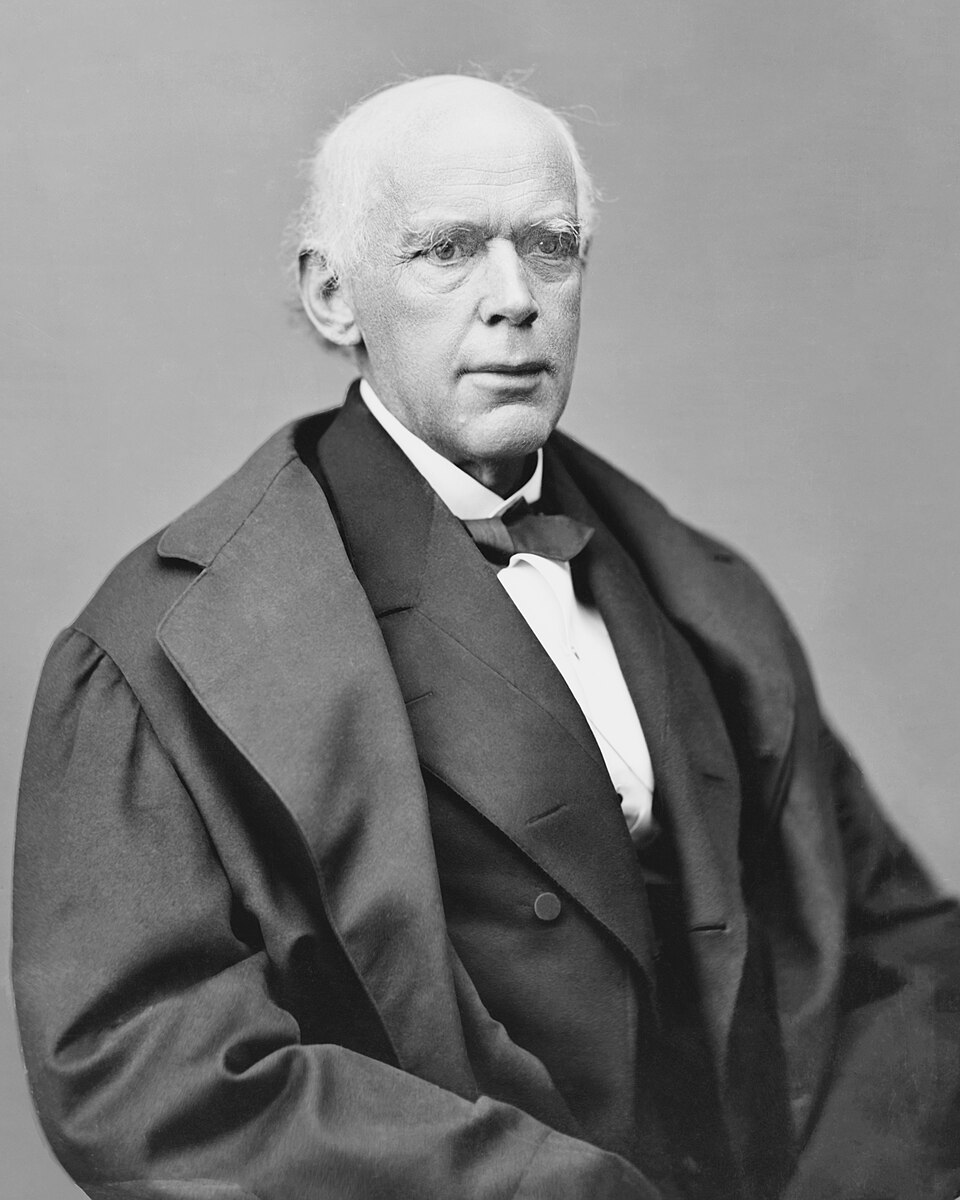
Public domain, via Wikimedia Commons
Salmon Portland Chase |
-
But Lincoln needed money to win and in 1861, Lincoln and his
Secretary of Treasury, Salmon P, Chase, went to New York to
apply for the necessary loans.
- The money changers,
anxious to see the Union fail, offered loans at 24-36%
interest.
- Lincoln told them thanks, but no thanks and
returned to Washington.
|
Salmon P. Chase was a significant rival to Abraham Lincoln, primarily for the 1860 Republican presidential nomination, but he became a vital ally by serving as Lincoln's Secretary of the Treasury during the Civil War, raising crucial funds and advocating for emancipation; later, Lincoln appointed Chase as Chief Justice of the U.S. Supreme Court, where he presided over President Andrew Johnson's impeachment trial and continued his influential career. (Assistant)
|
Public domain, via Wikimedia Commons
Edmund Dick Taylor |
- Abraham Lincoln sent for an old friend, Colonel Edmund Dick Taylor (1804-1891)
who was an American businessman, politician, and soldier from Illinois.
- Lincoln put Taylor on the problem of financing the war.
-
Taylor is remembered as the first person to suggest that the United States should issue paper currency ('Greenbacks') during the American Civil War.
- During one meeting, Lincoln asked Taylor what he discovered
and Taylor advised getting Congress to authorie full legal
tender treasury notes.
- When Lincoln questioned whether
the American people would accept the notes Taylor told him
that the people, or anyone else would not have any choice in
the matter.
|
Why, Lincoln, that is easy; just get Congress to
pass a bill authorizing the printing of full legal
tender treasury notes, and pay your soldiers with them
and go ahead and win your war with them also. (Colonel
Taylor)
|
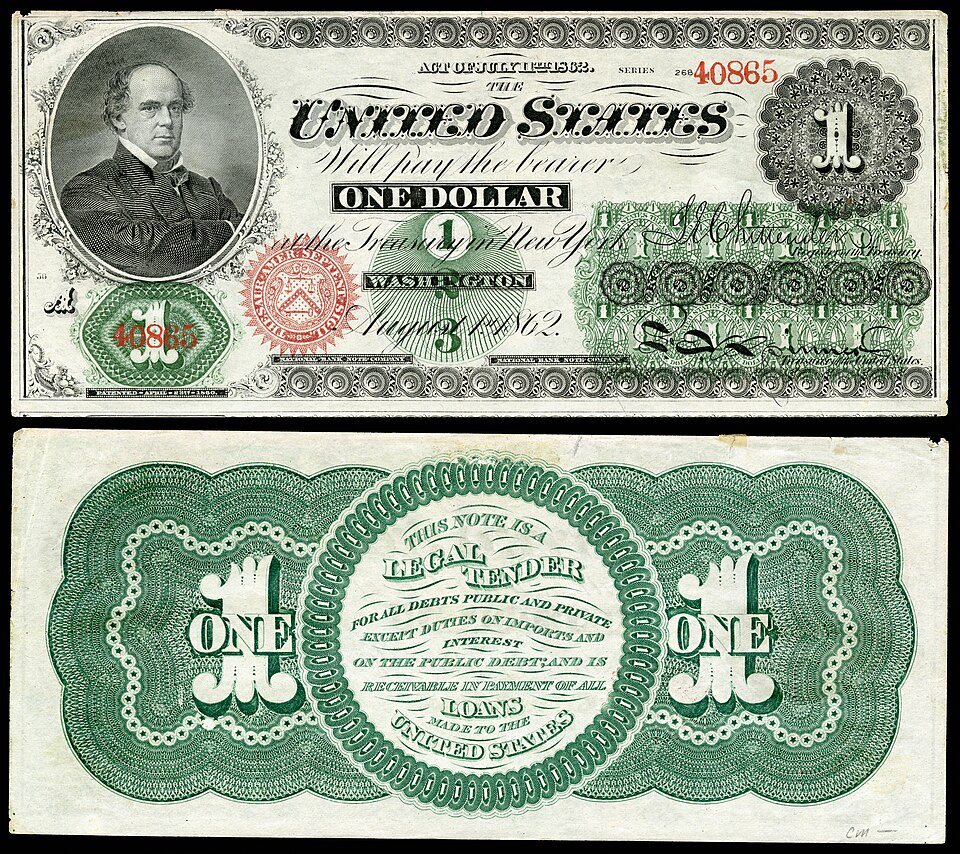
National Numismatic Collection,National Museum of American History, Public domain, via Wikimedia Commons
Image of one dollar "Greenback" first issued in 1862 |
- Taylor believed that if Lincoln made them full legal
tender, they would have the full sanction of the government
and would be just as good as any money because Congress would
have given that express right of the Constitution.
- That's exactly what Lincoln proceeded to do in 1862-63 he
printed up $450 million of the new bills.
- In order to
distinquish them from other bank notes in circulation, he
printed them in green ink on the backside which is why they
were called 'Greenbacks.'
- With this new money, Lincoln
paid the troops and bought their supplies.
- During the
course of the war, nearly $450 million worth of Greenbacks
were printed at no interest to the federal government.
Consumers |
- Lincoln understood who was really pulling the strings
and what was at stake for the American people.
- He
explained his rationale by saying he believed that the
government should create, issue and circulate all the currency
and credit needed to satisfy the spending power of the
government and the buying power of the consumers.
|
The privilege of creating and issuing money is not
only the supreme prerogative of Government, but it is
the Government's greatest creative opportunity. By the
adoption of these principles, the taxpayers wil be
saved immense sums of interest. Money will cease to be
master and become the servant of humanity. (Abraham
Lincoln)
|
Central bank |
- An article in the London Times explained the
central bankers attitude towards Lincoln's Greenbacks.
-
The newspaper described his actions as a 'mischievous
financial policy' with origins in North America.
- It went
on to say that the Government would furnish its own money
without cost and pay off debts and it would become prosperous
without precedent in world history.
- The editor went on to
say that, 'The brains, and wealth of all countries will go to
North America and that America must be destroyed or it will
destroy every monarchy on the globe.'
- What a bunch of
greedy central banker bunk and very telling about who owned
the press in Britain, the Rothschilds.
Gathering for war |
- The bankers scheme was effective, so effective that the
next year, 1863, with federal and confederate troops
beginning to amass for the decisive battle of the Civil War.
- At the same time, the treasury was in need of more
Congressional authority to issue more Greenbacks, Lincoln
allowed the bankers to push through, the National Bank Acts
of 1863 and 1864.
- These acts created a dual currency
system that linked bank notes to government bonds (debt) and
aimed to standardize paper money, however, Greenbacks remained
legal tender for a time.
-
It designated how new national banks would operate under a virtual
tax-free status and collectively have the exclusive monopoly
power to create the new form of currency, banknotes.
-
For years, both Greenbacks and National Bank Notes circulated, creating confusion, but the goal was to phase out the less stable state bank notes and integrate federal debt into the currency.
- But most importantly, from this point on,
the entire U.S. money supply would be created out of debt by
bankers buying U.S. government bonds and issuing them for
reserves for banknotes.
|
The National Bank Acts (1863, amended 1864) created a system of federally chartered banks to provide a stable, uniform national currency, replacing chaotic state banknotes, and to finance the Civil War by selling government bonds, establishing the OCC and a framework for national banks that persists today, though modified by later laws like the Federal Reserve Act. These acts mandated banks hold U.S. bonds to issue currency, creating a federal banking system, but also led to complex preemption rules for state laws, a topic still debated in courts. (Assistant)
|
.jpg)
Public domain, via Wikimedia Commons
Czar Alexander II |
- As historian John Kenneth Gailbraith explained it, 'In
numerous years following the war, the government ran a heavy
surplus, however, it could not pay off its debt, retire its
securities, because to do so meant there would be no bonds to
back the national banknotes; to pay off the debt was to
destroy.'
- Later in 1863, Lincoln got some unexpected help
from Czar Alexander II of Russia.
- Czar Alexander, like
Bismarck and Germany, knew what the international money
changers were up to and had steadfastly refused to allow them
to set up a central bank in Russia.
Headquarters |
- If America survived, and was able to remain out of their
clutches, the Czar's position would remain secure.
-
However, if the bankers were successful at dividing America
and giving the pieces back to Great Britain and France, both
nations under control of their central banks, eventually would
threaten Russia again.
- The Czar gave orders that if
either England or France actively intervened and gave aide to
the South, Russia would consider such action as a declaration
of war.
- He did the same with part of his Pacific fleet
and sent them to port in San Francisco.
- Lincoln was
re-elected the next year in 1864, and had he lived, he would
surely have killed the national bank's money monopoly
extracted from him during the war.
|
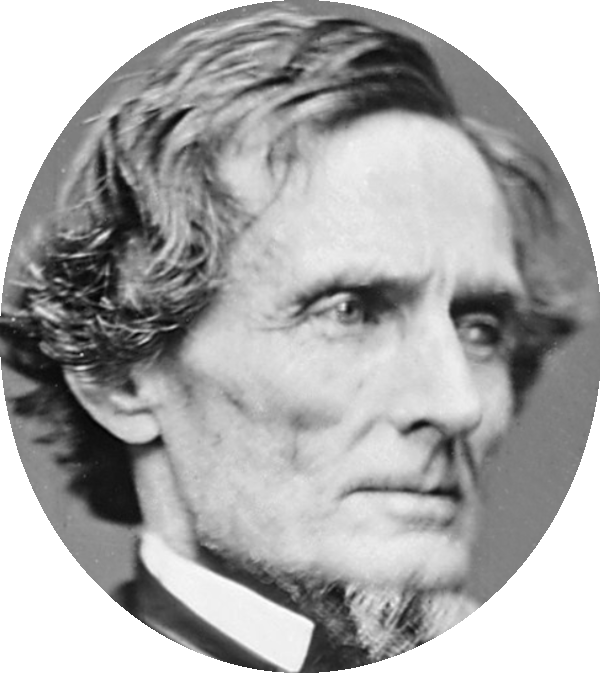
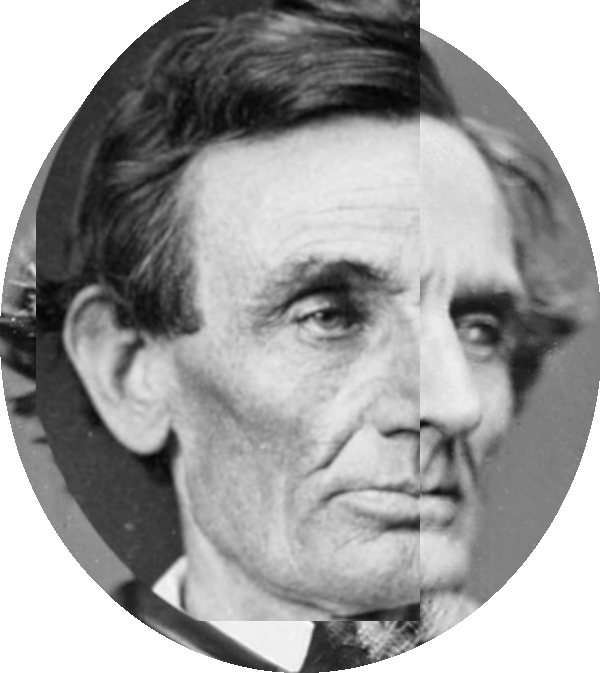
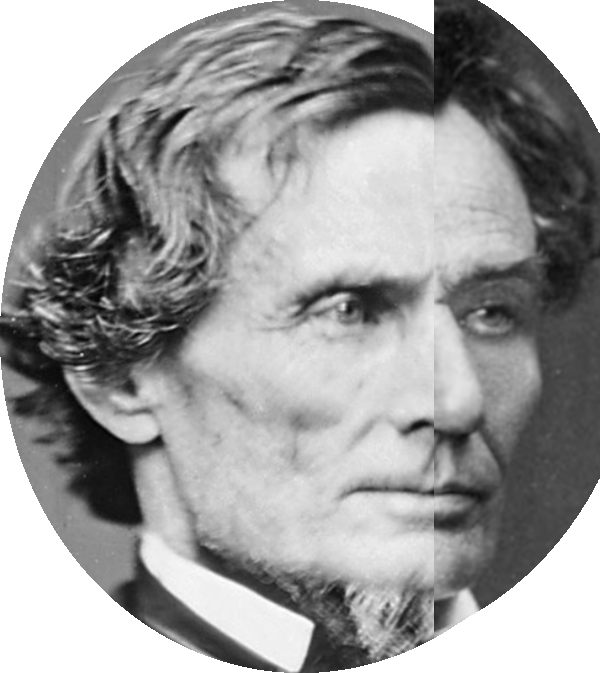
Abe Lincoln
as Jefferson Davis |
Abraham Lincoln
1809-1865
2/12 4/15 |
Jefferson F. Davis
1808-1889
6/3
12/6 |
 |
 |
|
16th president |
-
So far, we know that Lincoln did not really intend to end
slavery and that was his election promise, and that he was the
one who allowed the bankers to push through the National Bank Act.
- But you have to wonder what they were really up to?
Big government |
- When you realize that Alexander Hamilton, who was a
Founding Father, was really working for the bankers and wanted
a private central bank as well as a centralized federal
government instead of states rights.
- And he was not the
only one.
- We sometimes mistake all their lofty words as
something good but are they really, especially since we know
all our history has been rigged?
- Additionally, how
Founding Fathers such as Thomas Jefferson who lamented about
not being able to add amendments to the Constitution, when he
worked on drafting it to make it so.
- Then you wonder how
in the world these men completely left any provisions about
our currency or its control out of the document!!
- Because
that's really a red flag, it's rather hazy and all seems very
handy (for them)?
War machine |
- On
November 21, 1864, Lincoln wrote a friend that, 'The money
power preys upon the nation in times of peace and conspires
against it in times of adversity.'
- Shortly before Lincoln
was murdered, his former Secretary of Treasury, Salmon P.
Chase, bemoaned his role in helping secure the passage of the
National Bank Act only one year earlier.
-
Chase remarked that his agency in passing the act was the
greatest financial mistake of his life because it built a
monopoly which affected every interest in the country.
|
It is more despotic than monarchy, more insolent
than autocracy, more selfish than bureaucracy. (Abraham
Lincoln)
|
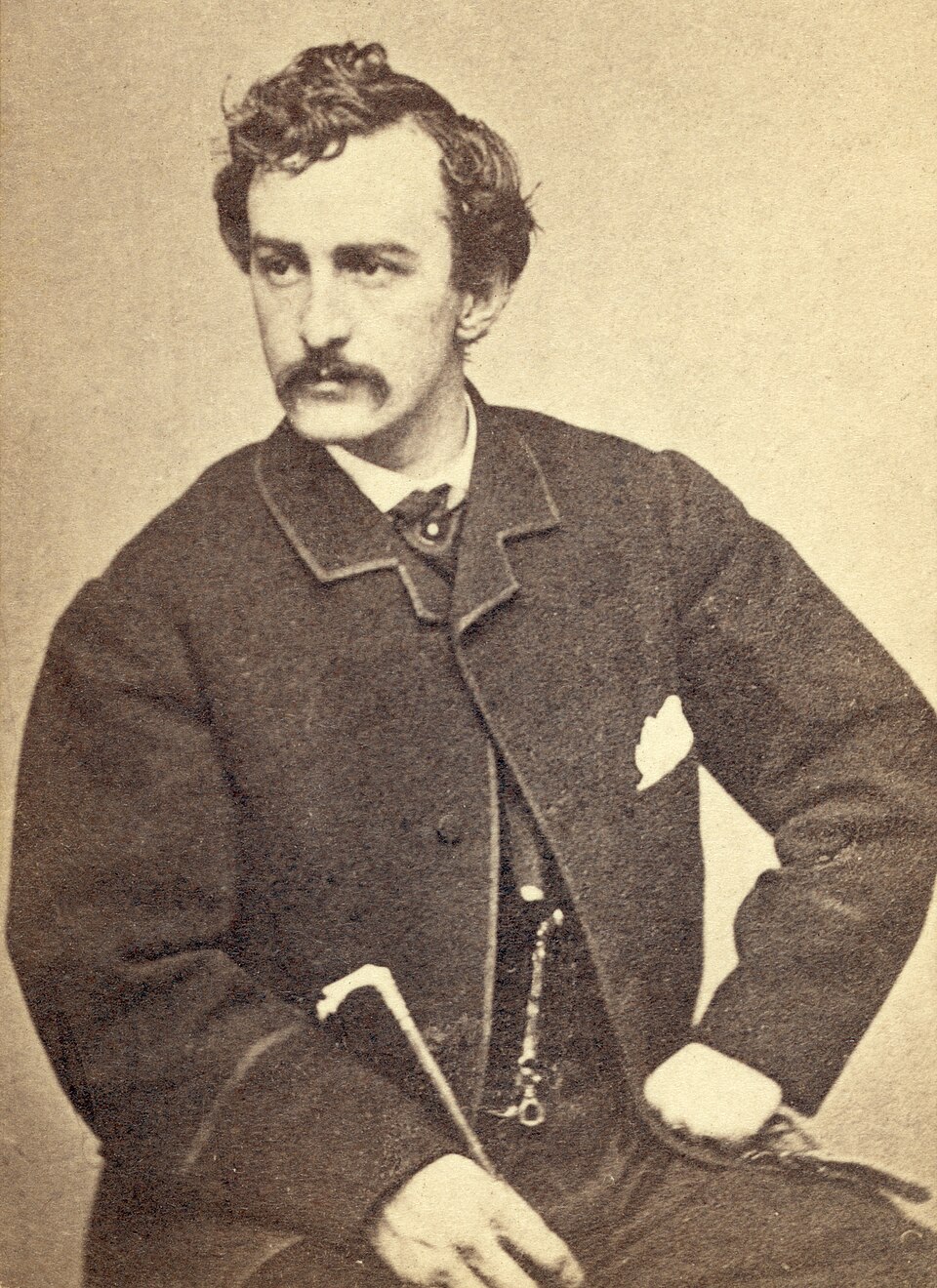
Alexander Gardner, Public domain, via Wikimedia Commons
John Wilkes
Booth |
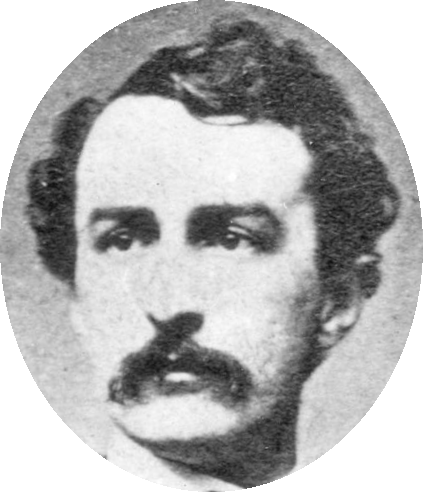
- On April 14, 1865, a short 41 days after Lincoln's 2nd
inauguration, and just 5 days after Lee surrendered to Grant
at Appomattox, Lincoln was assassinated by John Wilkes Booth
at Ford's Theater in Washington.
- Ottot von Bismarck well
understood the money changers plan.
|
The death of Lincoln was a disaster for
Christendom. There was no man in the United States
great enough to wear his boots... I fear that foreign
bankers with their craftiness and tortuous tricks will
entirely control the exuberant riches of America, and
use it systematically to corrupt modern civilization.
They will not hesitate to plunge the whole of
Christendom into war and chaos in order that the earth
should become their inheritance. (Otto
von Bismarck)
|
|
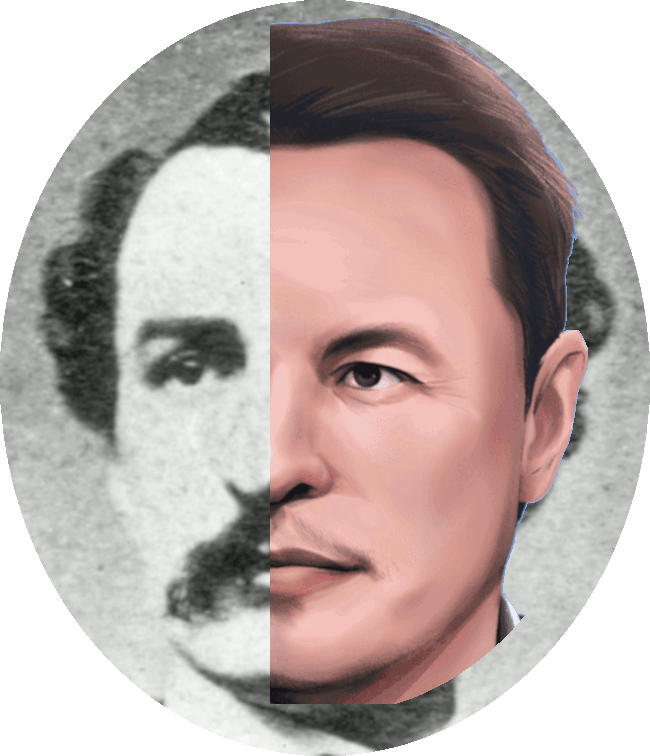
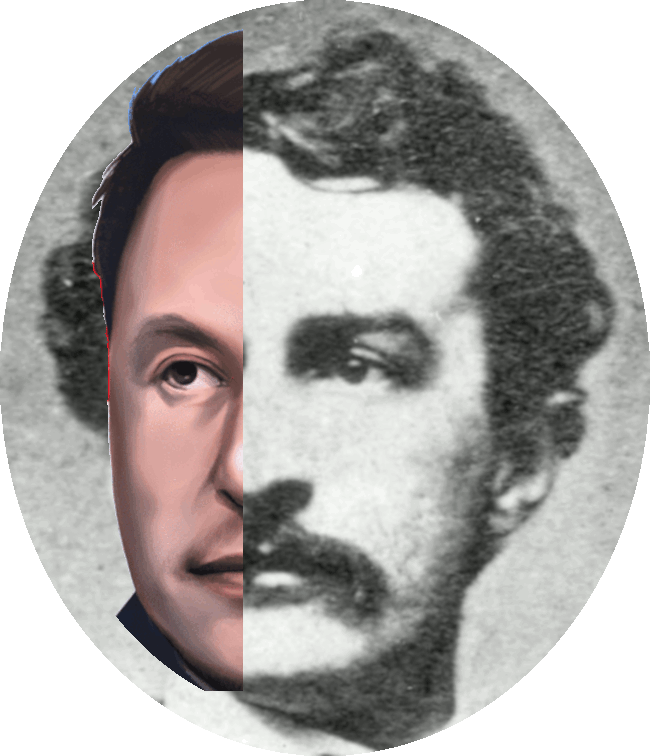
Elon Musk as
John Wilkes Booth |
Elon Reeve Musk
1971
6/28 |
John Wilkes Booth
1838-1865
5/10 4/26 |
 |
 |
|
Mercenary |
- Allegations that international bankers were responsible for
Lincoln't assassination surfaced in Canada 70 years later in
1934.
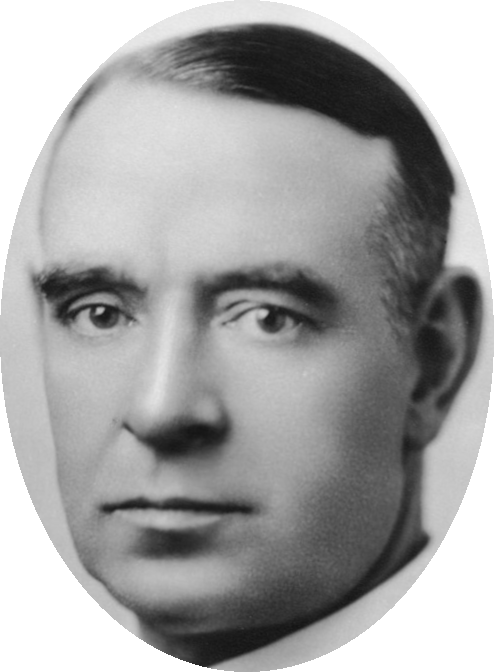
- This happened when Gerald G. 'Gerry' McGeer
(1888-1947), a popular and well-respected Canadian attorney,
revealed a stunning charge in a 5-hour speech before the
Canadian House of Commons blasting Canada's debt-based money
system.
- This happened in 1934, the height of the Great
Depression, which was ravaging Canada as well.
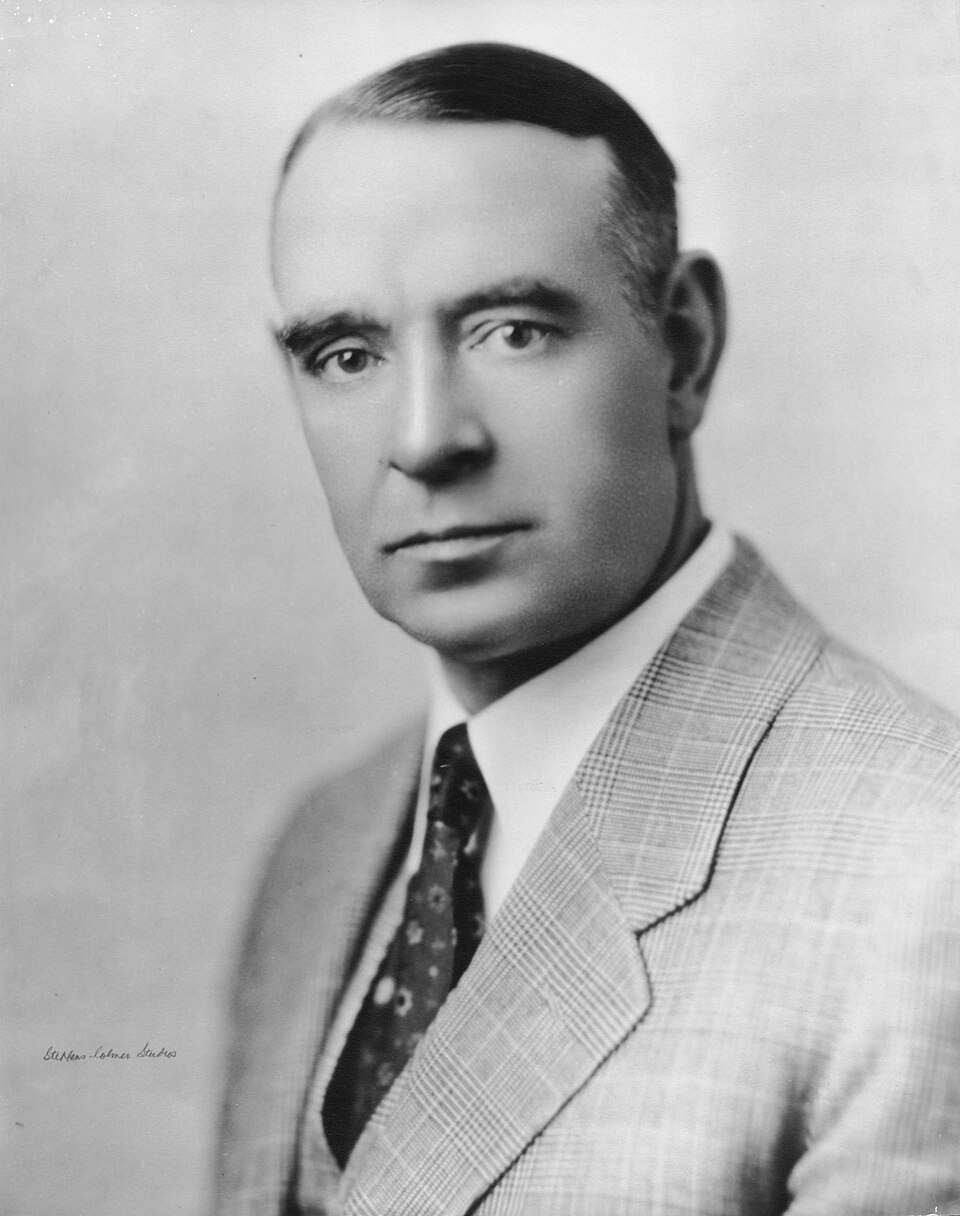
Public domain, via
Wikimedia Commons
Gerry McGeer |
- McGeer had obtained evidence deleted from the public
record provided to him by Secret Service agents at the trial
of John Wilkes Booth after Booth's death.
- The evidence
showed that Booth was a mercenary working for the
international bankers.
- According to an article in the
Vancouver Sun on May 2, 1934, that Lincoln, the martyred
emancipator of the slaves, was assassinated through the
machinations of a group representative of the international
bankers who feared the U.S. president's national credit
ambitions.
- Apparently the plan was hatched in Toronto and
Montreal.
|
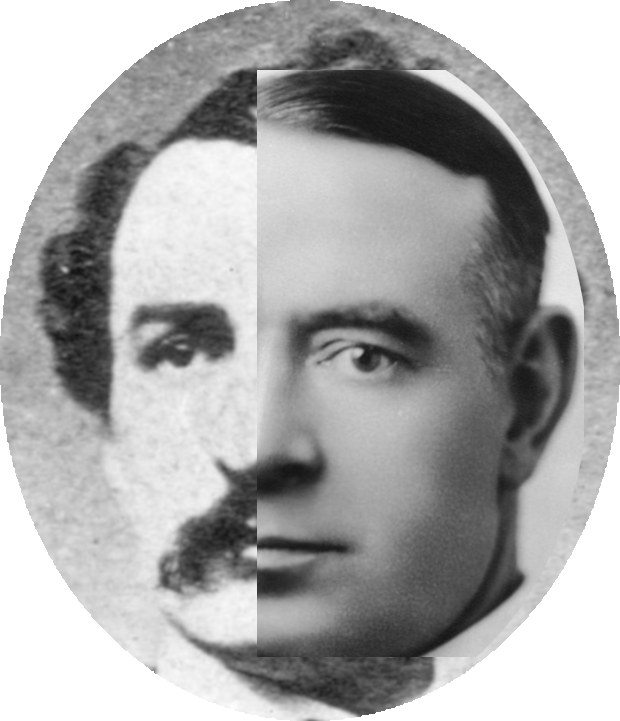
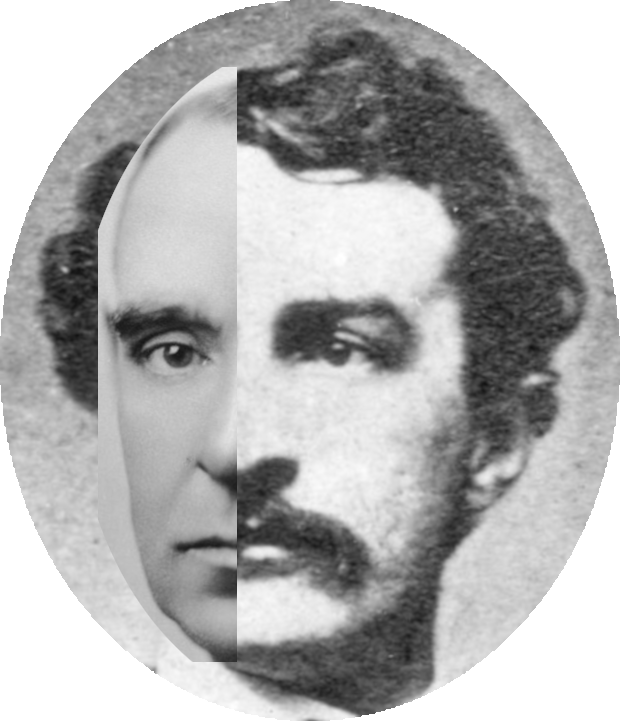
Gerry McGeer as
John Wilkes Booth |
Gerald G. 'Gerry' McGeer
1888-1947
1/6
8/11
Journalist |
John Wilkes Booth
1838-1865
5/10 4/26
Actor |
 |
 |
|
Mayor |
- Always playing both sides of the game.
|
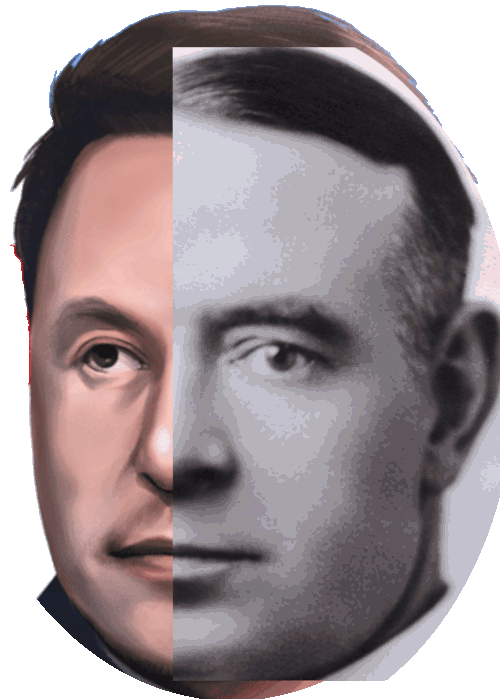
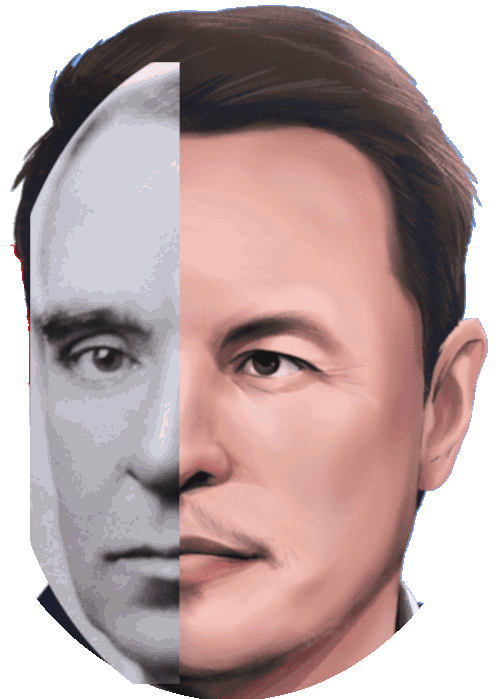
Elon Musk as
Gerry McGeer |
Elon Reeve Musk
1971
6/28 |
Gerald G. 'Gerry' McGeer
1888-1947
1/6
8/11
Journalist |
 |
 |
|
Canadian gold miner |
-
Mercenary |
- There was only one group in the world at that time who
had any reason to desire the death of Lincoln, they were the
men opposed to his national currency program.
- They had
fought Lincoln through the whole Civil War on his policy of
Greenback currency.
- Interestingly, McGeer claimed that
Lincoln was assassinated not only because of international
bankers wanted to establish a central bank in America, but
because they also wanted to base America's currency on gold.
- That is, gold they controlled, in other words, put America
on a gold standard.
- Lincoln had done just the opposite by
issuing U.S. notes, Greenbacks, which were based purely on the
good faith and credit of the U.S.
|
They were the men interested in the establishment
of a gold standard and the right of
the bankers to manage the currency and credit of every
nation in the world. With Lincoln out of the way, they
were able to proceed with that plan and did proceed
with it in the United States. (Gerry
McGeer)
|
Bank machinations |
- Obviously, for many decades following Lincoln's
assassination, central bankers were very involved in creating
currency backed by gold.
- With Lincoln out of the way, the
money changers next objective was to gain complete control
over America's money, however, this was no easy task.
- As
the American West opened, silver was discovered in huge
quantities and on top of that, Lincoln's Greenbacks were
generally popular.
Established
institution |
- Despite the European bankers deliberate attacks on
Greenbacks, they continued to circulate in the U.S.
- In
fact, until not too long ago, according to historian W. Cleon
Skousen, 'Right after the Civil War there was considerable
talk about reviving Lincoln's brief experiment with the
Constitutional monetary system.'
- Had not the European
money-trust intervened, it would have no doubt become an
established institution.
- It is clear that the concept
of America printing her own debt-free currency, sent shock
waves throughout the European central banking elite.
- They
watched with horror as Americans clamored for more Greenbacks.
Support grew |
- They may have killed Lincoln, but support for his
monetary ideas grew but it's unfortunate that he turned the
banks over to the central bankers.
- On April 12, 1866,
nearly one year to the day of Lincoln's demise, Congress went
to work at the bidding of the European Central banking
interests.
- They passed the Contraction Act,
authorizing the Secretary of the Treasury to begin to retire
some of the Greenbacks in circulation and thereby contract the
money supply.
Hardship after the
Civil War |
- Authors Theodore R. Thorne and Richard F. Warner
explained the results of the money contraction in their
classic book on the subject, The Truth in Money Book.
- They believed that the hard times after the Civil War could
have been avoided if the Greenback legislation had continued
as Lincoln had intended.
- Instead, there were a series of
money panics, what we call recessions, which put pressure on
Congress to enact legislation to place the banking system
under centralized control.
Master masons |
- Eventually, the Federal Reserve Act was passed on
December 23, 1913, when most of Congress was away on holiday
break.
- The money changers wanted 2 things; the
reinstitution of a central bank under their exclusive control,
and an American currency backed by gold.
- Their strategy
was twofold, first of all, cause a series of panics to try to
convince the American people that only centralized control of
the money supply could provide economic stability.
-
Secondly, remove so much money from the system that most
Americans would be so desperately poor that they wouldn't
care, or they would be too weak to oppose the bankers.
Bow down to the
banker |
- In 1866, there was $1.8 billion in currency in
circulation in the U.S., or about $50.46 per capita.
- In
1867 alone, about $500 million was removed from the U.S. money
supply and 10 years later in 1876, America's money supply was
reduced to only $600 million.
- In other words, a full
two-thirds of America's money had been called in by the
bankers.
- This left only $14.60 per capita remaining in
circulation and 10 years later, the money supply had been
reduced to only $400 million, even though the population had
boomed.
- The result was that only $6.67 (666) per capita
remained in circulation, a 760% loss in buying power over 20
years.
Recessions and
depressions |
- Now can you see why you feel so poor and our economy
seems to be always in a recession, it's maddening?
-
Especially when you figure out who's holding all our money,
greedy overpaid
Jewish bankers and thieves.
- Today, economists try to sell the idea
that recessions and depressions are a 'natural' part of
something they call the business cycle.
- But that's a
massive lie.
- The truth is, our money supply is
manipulated now just as it was before and after the Civil War.
Sent to bribe
Americans |
- How did this happen, how did money become so scarce?
-
Simple, bank loans were called in, and no new loans were
given.
- In addition, silver coins were melted down.
-
In 1872, a man named Ernest Seyd was given £100,000, about
$500,000 by the Bank of England and sent to America to bribe
necessary congressmen to get silver demonetized.
- Seyd was
told if that was not sufficient, he could draw an additional
£100,000, or as much as necessary.
- The next year,
Congress passed the Coinage Act of 1873 and the
minting of silver dollars abruptly stopped.
Gold Standard |
- Within 8 years after Lincoln's death, silver was
demonetized and the old standard money system set up in the
United States.
- The Coinage Act of 1873 officially ended the U.S. policy of bimetallism (using both gold and silver) by demonetizing silver and effectively putting the U.S. on a gold standard, a move critics called the
'Crime of '73.'
- Representative, Samuel Hooper, who
introduced the bill in the House acknowledged that Ernest Seyd
drafted the legislation.
- This act stopped the free coinage of silver dollars, shifting the monetary system away from silver, which caused economic shifts and political battles.
- Not since Lincoln has the U.S. issued
debt-free U.S. notes.
|
The U.S. formally adopted the gold standard with
the Gold Standard Act of 1900, linking paper currency
directly to gold reserves for stability, but the
country had moved towards it earlier, particularly
after the Coinage Act of 1873 ended bimetallism and
following the Civil War. This system allowed paper
money to be redeemed for gold and lasted until
President Roosevelt suspended gold convertibility for
domestic use in 1933, fully ending the link in 1971. (Assistant)
|
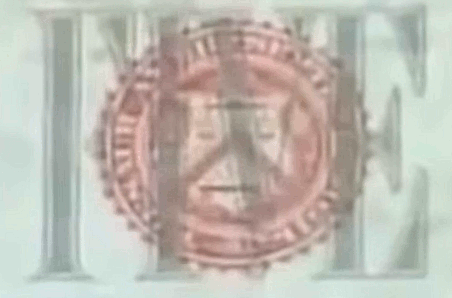
Red sealed noted Red sealed noted/tr>
|
- These red sealed bills, which were
issued in 1963, were not a new issue from President John F.
Kennedy, but merely the old Greenbacks reissued, year after
year.
- Kennedy issued a 1963 directive through Executive
Order 11110 that delegated authority to the Treasury Secretary
to issue silver certificates against silver builion.
- This
was a technical move to help transition away from
silver-backed currency after Congress repealed the Silver
Purchase Act.
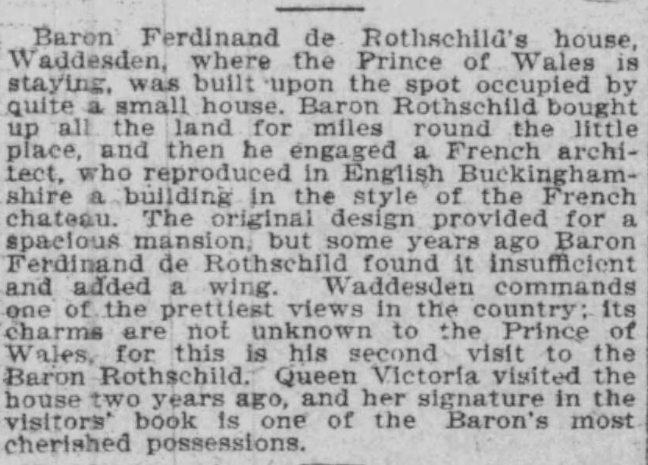
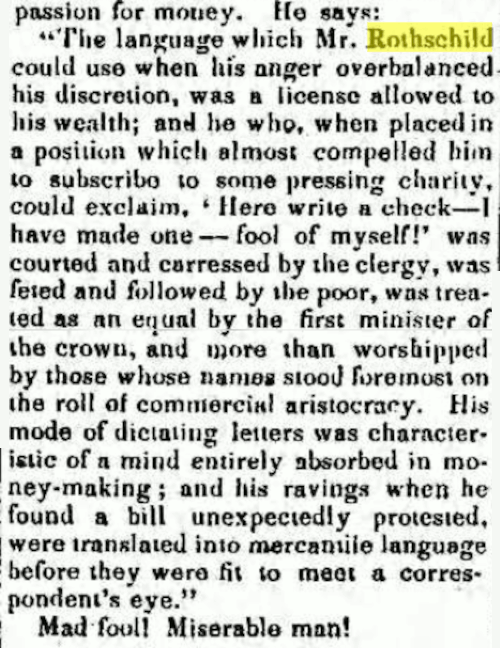
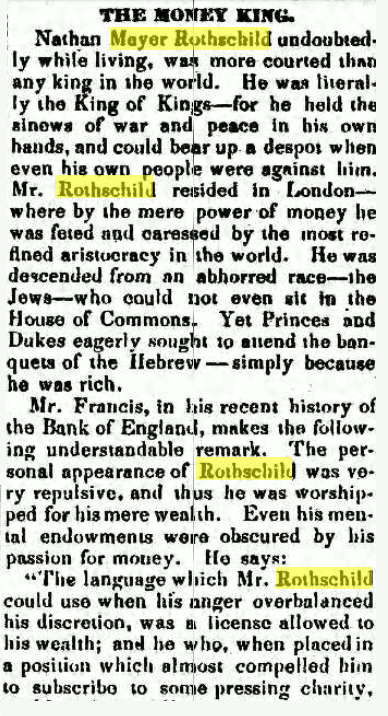
Cincinnati Commercial
Gazette - November 14, 1892 |
- The "red sealed note JFK gold standard" refers to a popular theory linking President Kennedy's assassination to his alleged attempt to challenge the Federal Reserve by issuing silver-backed
U.S. Notes (with red seals) instead of Federal Reserve Notes.
- This was supposedly to return to a gold standard or at least a silver-backed system, enabling silver certificates, thus threatening bankers, though the order actually just transferred some silver certificate authority and notes weren't backed by gold.
Silver |
-
Why was silver bad for the bankers, and silver good?
-
Simple, because silver was plentiful in the U.S. and very hard
to control, while gold was, and always has been scarce.
-
Silver has historically been 15 times more plentiful than
gold.
-
In 1994, Congress pushed through the Riegle-Neal
Interstate Act to allow banks to operate across state
lines.
- This caused a flurry of bank failures and branches
were purchased by larger bank systems such as Wells Fargo in
the 1990s.
|
The Riegle-Neal Interstate Banking and Branching Efficiency Act of 1994, a landmark US law that allowed banks to operate and open branches across state lines, ending restrictive interstate banking bans, and promoting a unified national banking system after years of fragmented state laws. (Gerry
McGeer)
|
Silver scheme |
- It gets even worse, in 1874, Ernest Seyd admitted who
was behind the scheme.
- Seyd claimed that he went to
America in 1872, authorized to secure the passage of a bill
demonetizing silver and it was in the interest of those he
represented, the governors of the Bank of England, to get it
done.
- By 1873, gold coins were the only form of coin
money.
- But the contest over control of America's money
was not yet over.
- Only 3 years later, in 1876, with
one-third of America's workforce unemployed, the population
was growing restless.
Fall of an empire |
- American's were clamoring for a return to the Greenback
money system of Abraham Lincoln, or a return to silver money,
anything that would make money more plentiful.
- That year,
Congress created the U.S. Silver Commission to study the
problem.
- Their report clearly blamed the monetary
contraction on the national bankers.
- The report is
interesting because it compares the deliberate money
contraction by the national bankers after the Civil War to the
fall of the Roman Empire.
- Despite the report from the
Silver Commission, Congress took no action.
|
The disaster of the Dark Ages was caused by decreasing money and falling prices, without money, civilization could not have had a beginning and with a diminishing supply, it must languish, and unless relieved, finally perish. At the Christian era the metallic money of the Roman Empire amounted to $1.8 trillion. By the end of the 15th-century it had shrunk to less than $200 million. History records no other such disastrous transition as that from the Roman Empire. (U.S.
Silver Commission)
|
Riot |
- That next year, 1877, riots broke out from Pittsburgh to
Chicago and the torches of starving vandals lit up the sky.
- The bankers huddled to decide what to do and they decided to
hang on.
- Now that they were back in control to a certain
extent, they were not about to give it up.
- At the meeting
of the American Bankers Association (ABA) that year, they
urged their membership to do everything in their power to put
down the notion to return to Greenbacks.
- The ABA
secretary, James Buell, authored a letter to the members which
blantantly called on the banks to subvert not only Congress,
but the press.
|
It is advisable to do all in your power to sustain
such prominent daily and weekly newspapers, especially
the Agricultural and Religious press, as will oppose
the greenback issue of paper money and that you will
also withhold patronage from all applicants who are
not willing to oppose the government issue of money.
To repeal the Act creating bank notes, or to restore
to circulation the government issue of money will be
to provide the people with money and will therefore
seriously affect our individual profits as bankers and
lenders. (James Buell, ABA)
|
Mounted |
- The ABA went on and urged their members to 'see your
congressmen at once and engage him to support our interests
that we may control legislation.'
- As political pressure
mounted in Congress for change, the press tried to turn the
American people away from the truth.
- The New York
Tribune put it this way on January 10, 1878, 'The capital
of the country is organized at last and we will see whether
Congress will dare to fly in its face.'
- But it didn't
work entirely, on February 28, 1878, Congress passed the
Sherman Law, allowing the minting of a limited number of
silver dollars, ending the 5-year hiatus.
Depression finally
over |
- The Sherman Law did not end gold backing of the
currency, however, nor did it completely free silver.
- Previous to 1873,
anyone who brought silver to the U.S. mint could have it
struck into the silver dollars free of charge.
- This was no longer
allowed, but at least some money began to flow back into the
economy.
- With no further threat to their control, the
bankers loosened up on loans and the post Civil War depression
was finally over.
|
The Sherman Silver Purchase Act of 1890 was a U.S. law requiring the Treasury to buy large amounts of silver (4.5 million ounces monthly) to support struggling farmers and miners during deflation, issuing notes redeemable in gold or silver, but it failed, worsening economic instability and contributing to the Panic of 1893, leading to its repeal in 1893 by President Grover Cleveland, who favored the gold standard. (Assistant)
|
Brady-Handy Photograph Collection., Public domain, via Wikimedia Commons
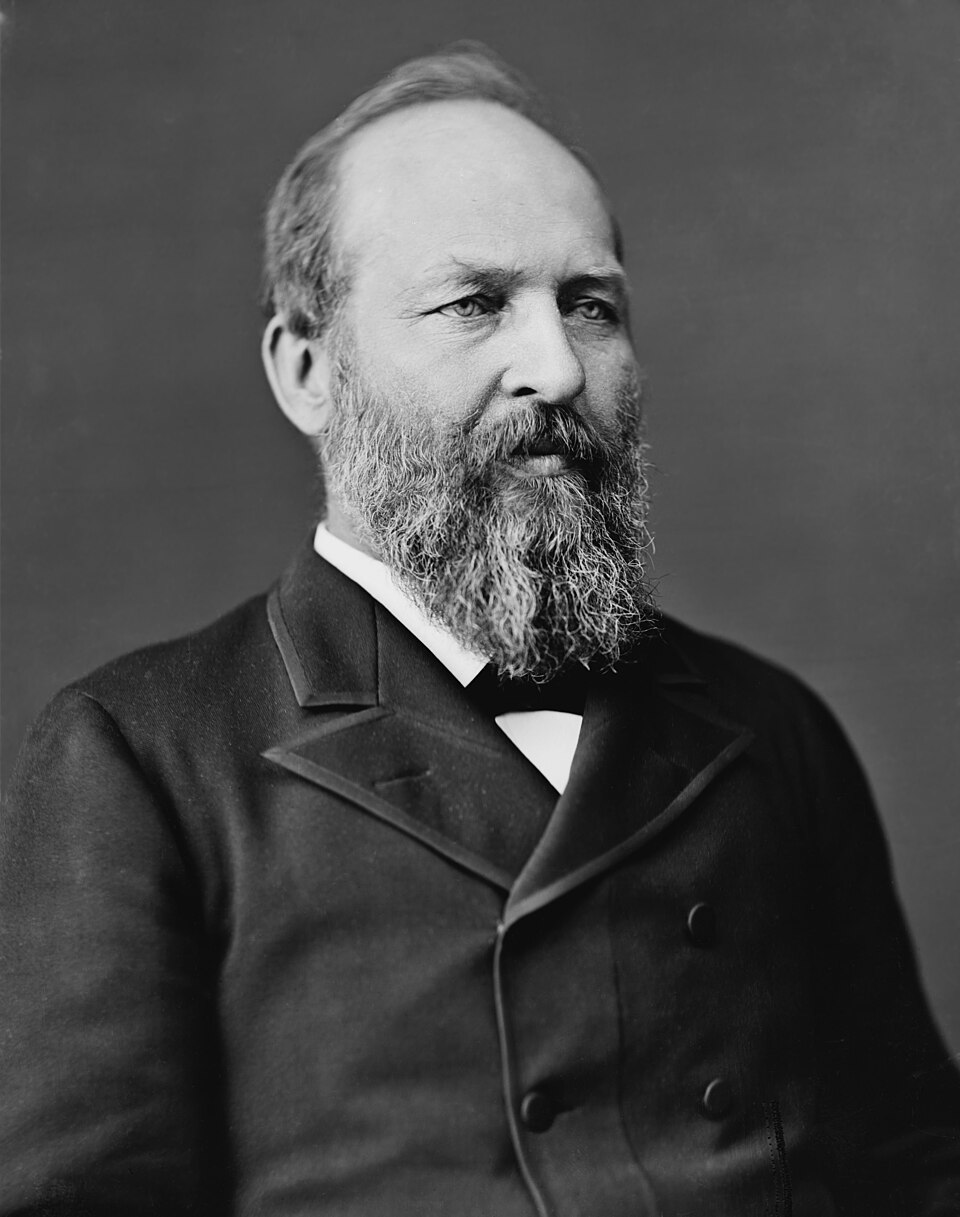
President James
Garfield |
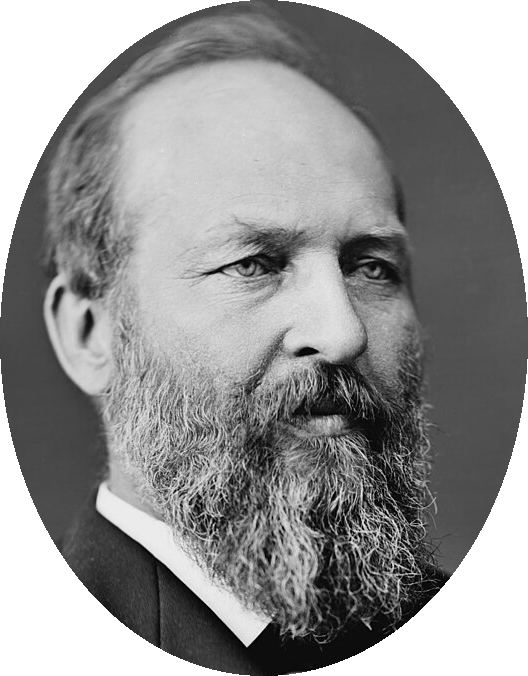
- Three years later, in 1880, Republican James Garfield (1831-1881) was elected.
- Garfield understood how the economy was being manipulated.
- As a congressman, he had been chairman of the Appropriations
Committee and was a member of banking and currency.
|
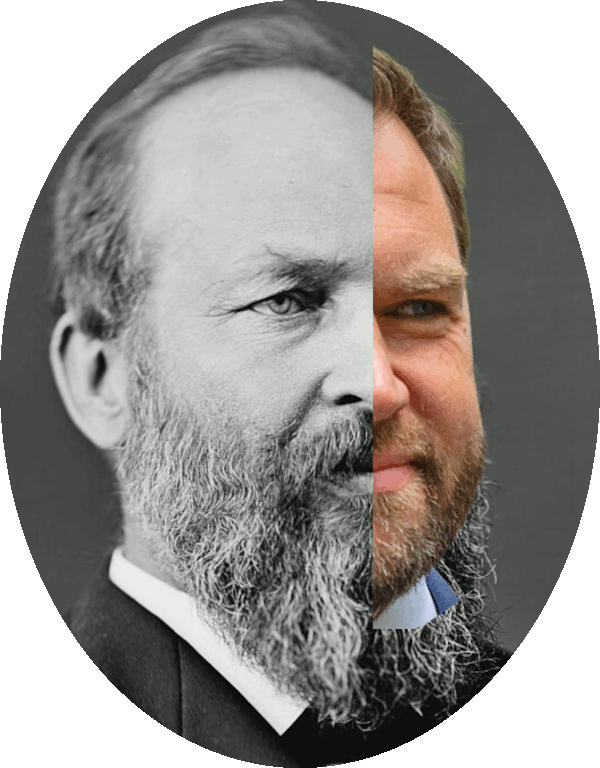
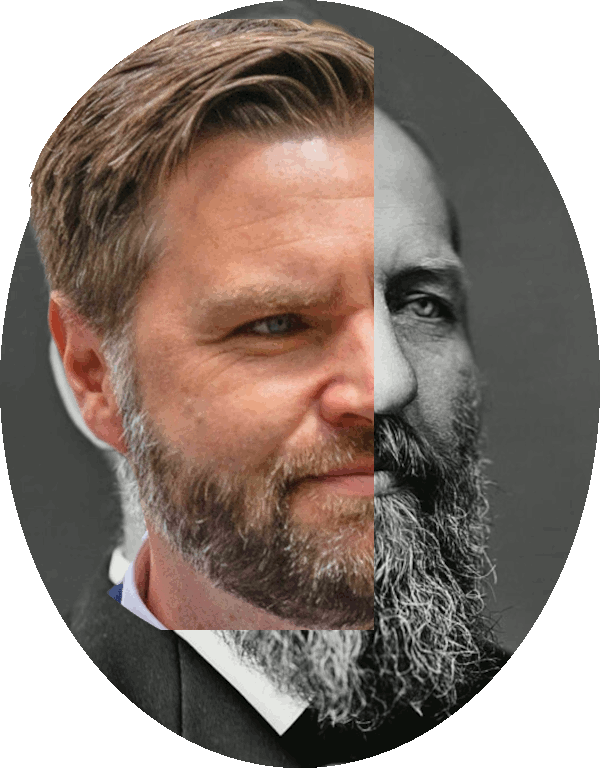
JD Vance as
James Garfield |
James David Vance
(ne James Donald Bowman)
1984
8/2
Trump's vice president |
James Abram Garfield
1831-1881
11/19 9/19
20th president |
 |
 |
|
Bow man |
- After inauguration, Garfield slammed the money changers
publicly in 1881.
- Unfortunately, within a few weeks of
making this statement, on July 2, 1881, Garfield was
assassinated.
|
Whoever controls the volume of money in any
country is absolute master of all industry and
commerce. And when you realize that the entire system
is very easily controlled, one way or another, by a
few powerful men at the top, you will not have to be
told how periods of inflation and depression
originate. (James Garfield)
|
Free silver |
- The money changers were gathering strength fast and they
began a periodic fleecing of the flock, as they called it, by
creating economic booms followed by further depressions, so
they could buy up thousands of homes and farms for pennies on
the dollar.
- In `1891, the money changers prepared to take
the American economy down again.
- Their methods and
motives were laid out with shocking clarity in a memo sent out
by the American Banking Association, an organization in which
most bankers were members.
- Notice that this memo called
for bankers to create a depression on a certain date, 3 years
in the future.
- These depressions could be controlled
because America was on the gold money standard and since gold
is scarce, it's one of the easiest commodities to manipulate.
|
On September 1,1894, we will not renew our loans
under any consideration. On September 1st we will
demand our money. We will foreclose and become
morgagees in possession. We can take two-thirds of the
farms west of the Mississippi, and thousands of them
east of the Mississippi as well, at our own price..
Then the farmers will become tenants as in England.
(ABA, Congressional Record April 29, 1913)
|
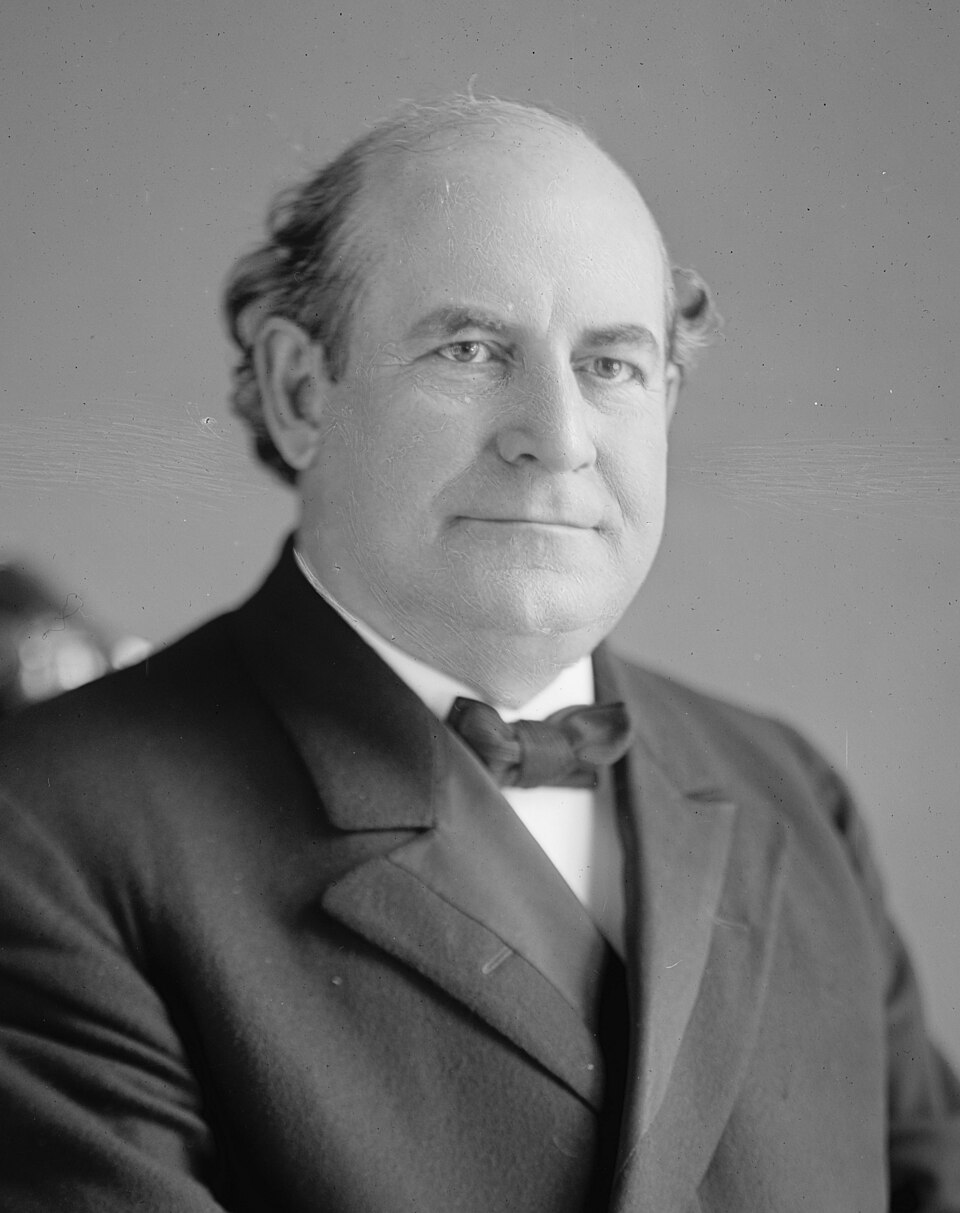
Harris & Ewing, photographer, Public domain, via Wikimedia Commons
William James Bryan |
- People wanted silver money legalized again so they could
escape the stranglehold the money changers had on gold money.
- Americans wanted silver money reinstated, reversing Ernest
Seyd's act of 1873.
- By 1896, the issue of more silver
money had become the central issue in the presidential
campaign.
- William James Bryan (1860-1925), a Senator from
Nebraska, ran for president as a Democrat on the free silver
issue in 1896.
- At the Democrat National Convention in
Chicago, he made an emotional speech which won him the
nomination entitled, 'Crown of Thorns and Cross of Gold.'
-
Though Bryan was only 36 years old at the time, this speech is
widely regarded as the most famous oration ever made before a
political convention.
|
We will answer their demand for a gold standard by
saying to them; You shall not press down upon the brow
of labor this crown of thorns, you shall not crucity
mankind upon a cross of gold.
(William James Bryan)
|
.jpg)
Public domain, via Wikimedia Commons
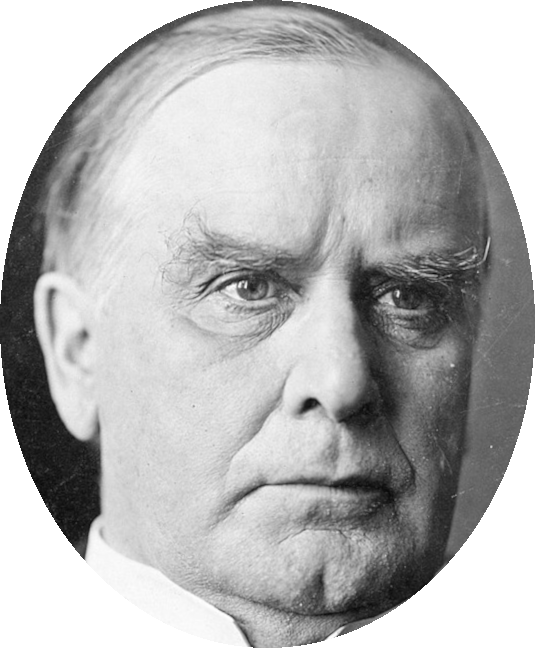
William
McKinley - 25th
president |
- The bankers lavishly supported the Republican candidate,
William McKinley (1843-1901), who favored the gold standard.
-
The resulting contest was among the most fiercely contested
presidential races in American history.
- Bryan made over
600 speeches in 27 states, and the McKinley got manufacturers
and industrialists to inform their employees that if Bryan
were elected, all factories and plants would close and there
would be no work.
- The ruse succeeded, McKinley beat Bryan
by a small margin.
- Bryan ran again in 1900 and 1908, but
fell short each time.
|
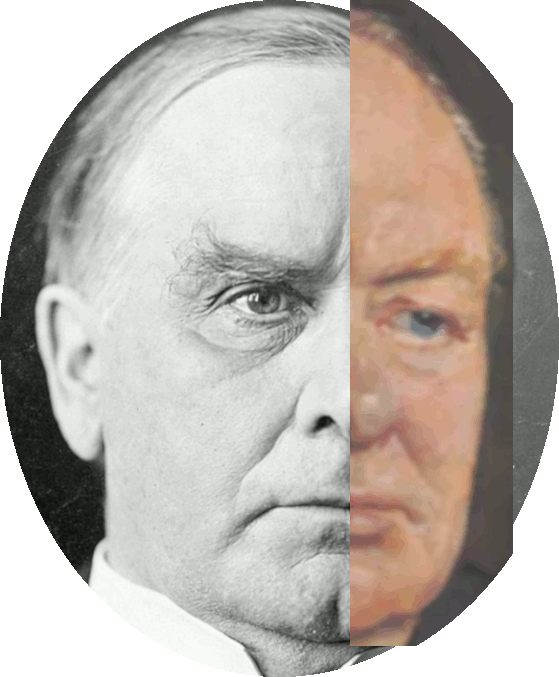
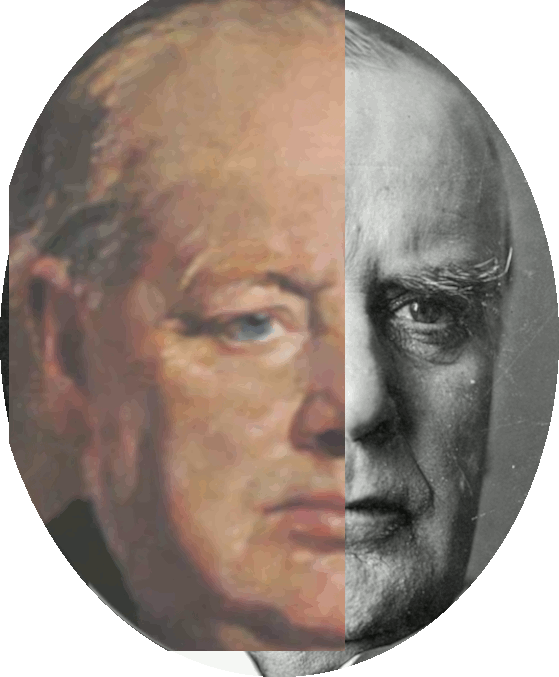
Winston
Churchill as William
McKinley |
Winston Leonard Spencer Churchill
1874-1965
10/14
9/10
|
William McKinley
1843-1901
1/29 9/14
25th president |
 |
 |
|
Ruse |
- William McKinley was assassinated on September 6, 1901, in
the Temple of Music on the grounds of the Pan-American
Exposition in Buffalo, New York, 6 months into his 2nd term.
- McKinley died on September 14 of gangrene caused by the wounds.
- He was the 3rd American president to be assassinated, following Abraham Lincoln in 1865 and James A. Garfield in 1881.
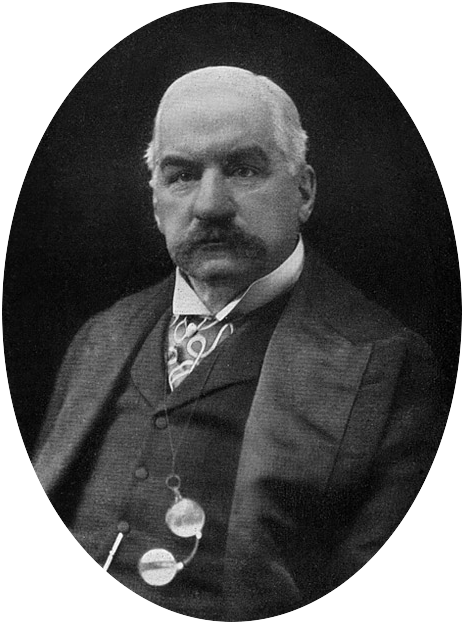
Beao, Public domain, via Wikimedia Commons
John Pierpont Morgan |
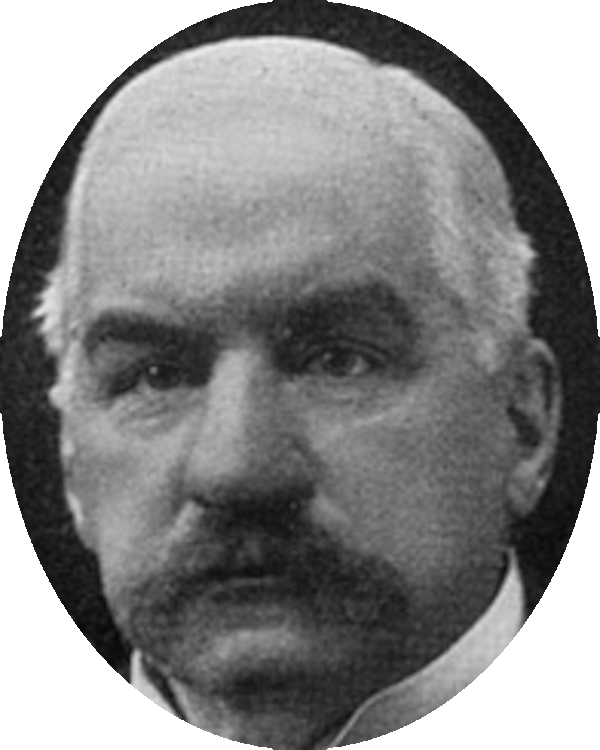
- John Pierpont Morgan (1837-1913) was an American financier and investment banker who dominated corporate finance on Wall Street throughout the Gilded Age and Progressive Era.
- Now it was time for the money changers to get back to
the business of a new private central bank for America.
-
During the early 1900s, men like JP Morgan led the charge.
- One final panic would be required to focus the nation's
attention on the supposed need for a central bank.
- The
rationale was that only a central bank could prevent bank
failures.
|
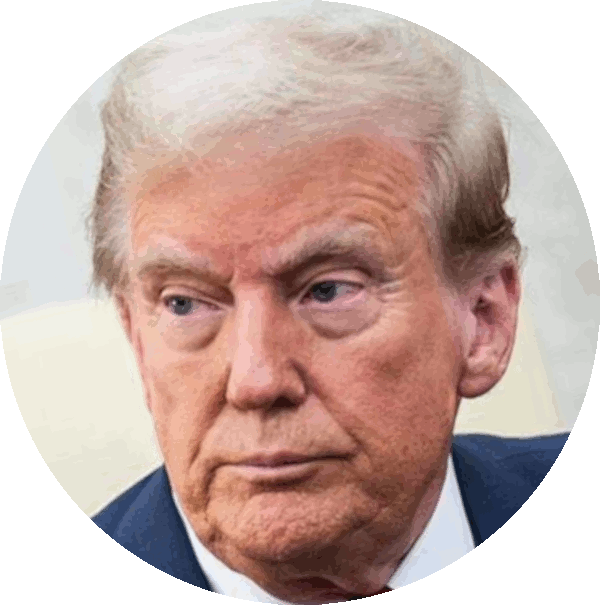
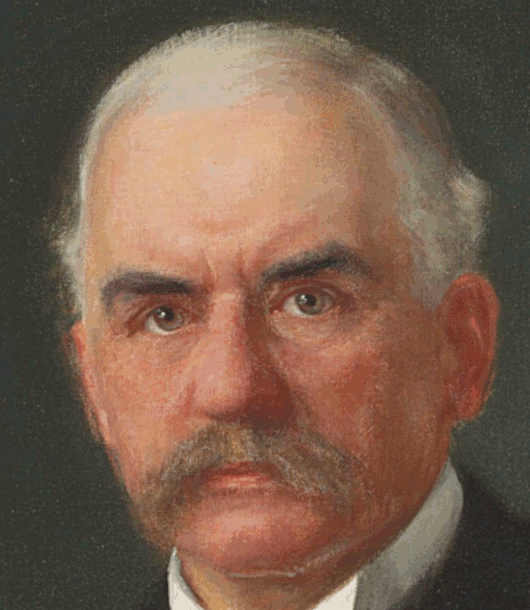
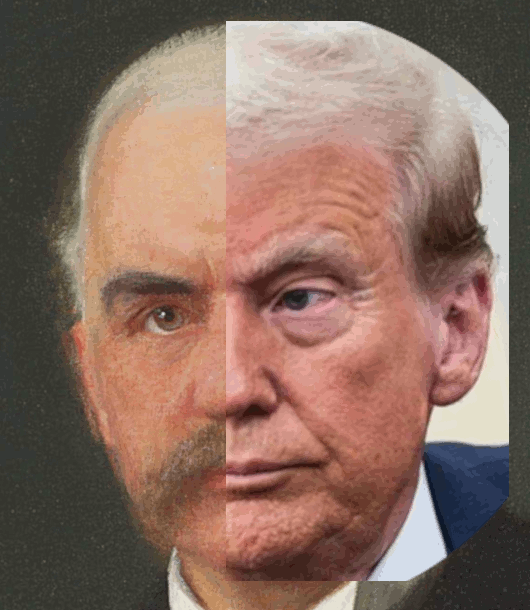
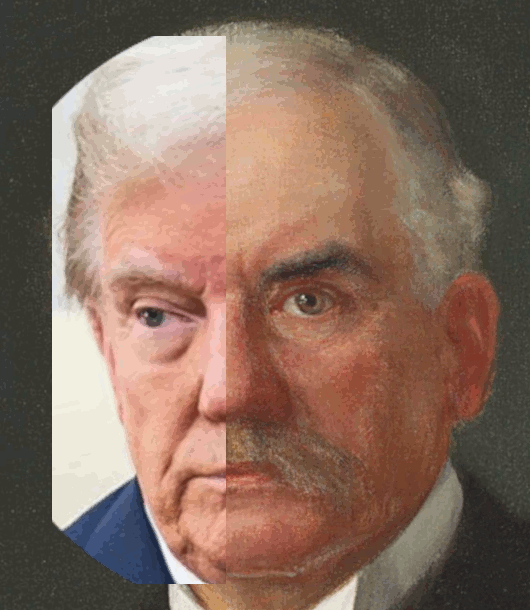
Donald Trump as J.P. Morgan |
 |
 |
Donald John Trump
1946
6/14
45th/47th president |
John Pierpont Morgan
1837-1913
4/17
3/31
Banker |
 |
 |
|
Titanic |
- Morgan was clearly the most powerful banker in America
and a suspected agent for the Rothschild's.
- He had helped
finance John D. Rockefeller's Standard Oil Empire.
- Morgan
had also helped finance the monopolies of Edward Harriman in
railroad, and Andrew Carnegie in steel, and many others in
numerous industries.
- On top of that, Morgan's father,
Junius Morgan, had been America's financial agent to the
British.
- After his father's death, J.P. Morgan took on a
British partner, Edward Grenfell (1870-1941), a long time
director of the Bank of England.
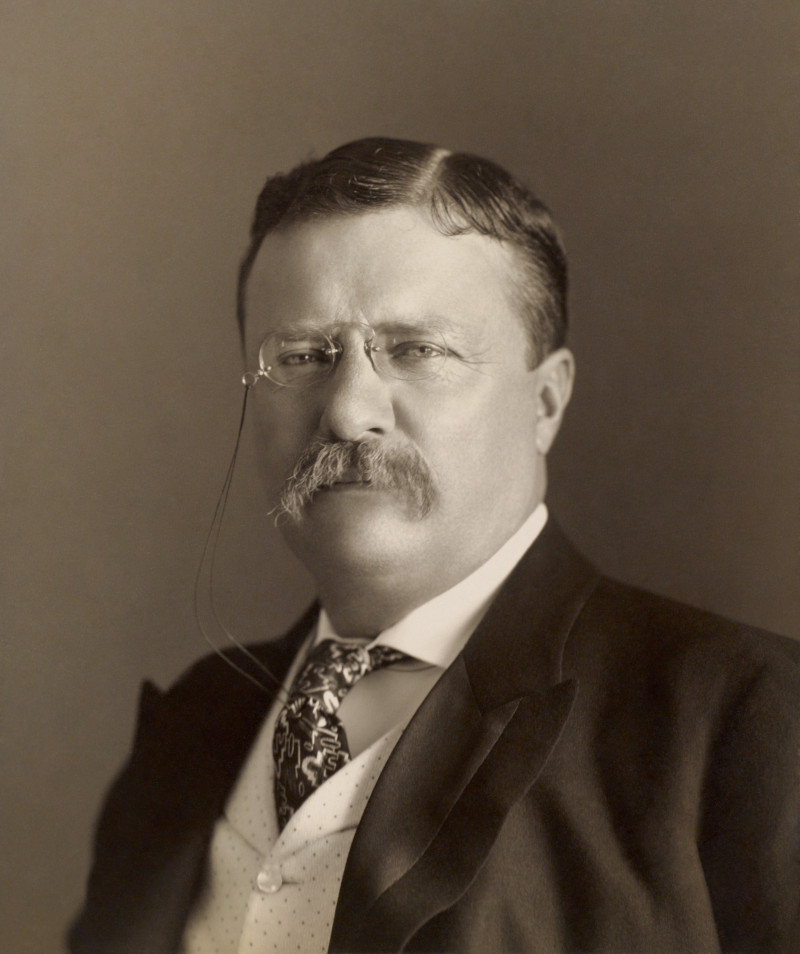
Public domain, via
Wikimedia Commons
Theodore Roosevelt
- 26th president |
- In fact, upon Morgan's death, his estate contained
only a few million dollars.
- The bulk of the securities
most people thought he owned were in fact owned by others.
- In 1902, President Theodore Roosevelt (1858-1919) allegedly
went after Morgan and his friends by using the Sherman
Antitrust Act to try to break up their industrial
monopolies.
- Actually, Roosevelt did very little to
interfere in the growing monopolization of American industry
by the bankers and their surrogates.
- For example,
Roosevelt supposedly broke up Rockefeller's Standard Oil
monopoly, however, it wasn't really broken at all, it was
merely divided into 7 corporations, all still controlled by
the Rockefeller's.
- The public was aware of this thanks to
political cartoonists like Thomas Nast who referred to the
bankers as the 'money trust.'
|
The Sherman Antitrust Act of 1890 is the foundational U.S. law prohibiting anti-competitive practices, outlawing monopolies and conspiracies in restraint of trade to ensure free competition in interstate commerce, criminalizing price-fixing, bid-rigging, and monopolization, and serving as a cornerstone of antitrust enforcement against large trusts like Standard Oil to protect consumers and workers. (Assistant)
|
|
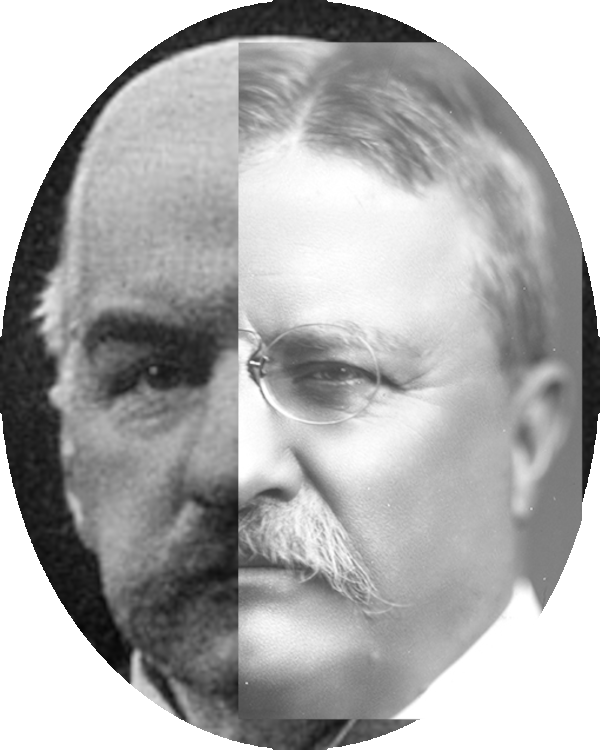
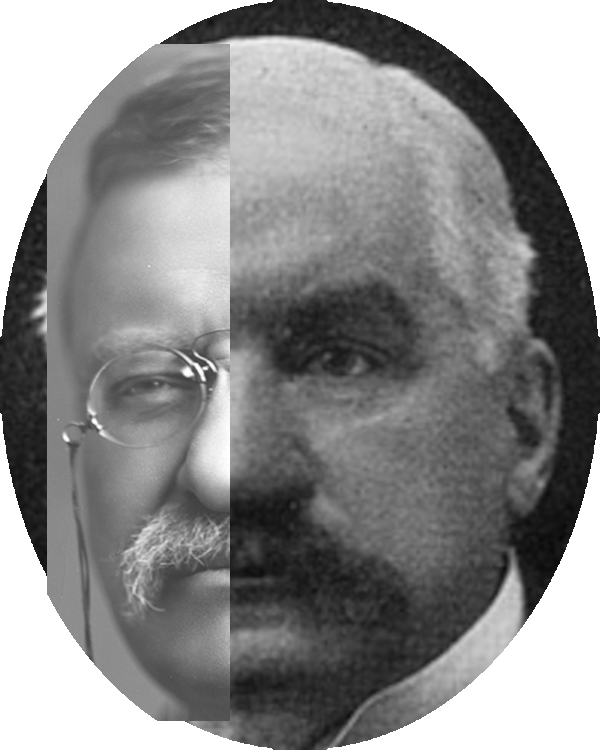
J.P. Morgan as Theodore Roosevelt |
 |
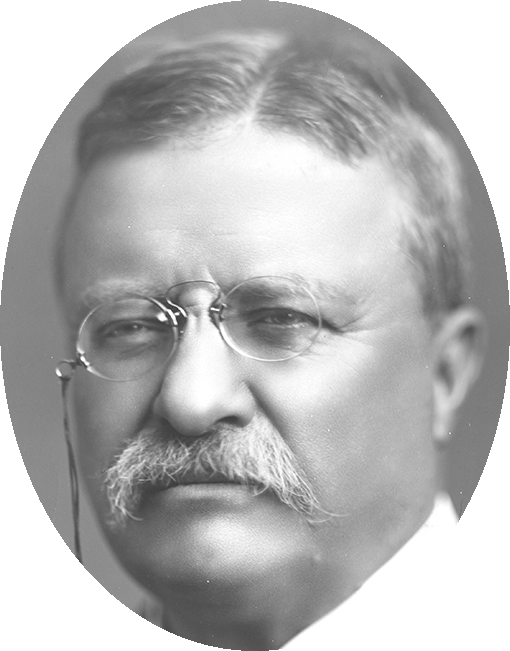 |
John Pierpont Morgan
1837-1913
4/17
3/31
Banker |
Theodore Roosevelt Jr.
1858-1919
10/27
1/6
26th president |
 |
 |
|
33rd
degree square deal |
- Teddy Roosevelt previously was involved in New York politics, including serving as the state's 33rd governor for two years.
- He served as the 25th vice president under President William McKinley for six months in 1901, assuming the presidency after McKinley's assassination.
- How amazing.
Triangled |
- By 1907, the year after Teddy Roosevelt's re-election,
J.P. Morgan decided it was time to try for a central bank
again.
- Using their combined financial muscle, Morgan and
his friends were secretly able to crash the stock market.
-
As a result, thousands of banks were vastly overextended.
-
Some had reserves of less than 1% thanks to the fractional
reserve principle and within days, bank runs were commonplace
across the nation.
- Now Morgan stepped into the public
arena and offered to prop up the faltering American economy by
supporting failing banks with money he manufactured out of
nothing.
- It was an outrageous proposal, far worse than
even fractional banking, but Congress let him do it.
Hoarding money |
- Morgan manufactured $200 million worth of this
completely reserveless money and bought things with it, paid
for services with it, and sent some of it to his branch banks
to lend out with interest.
- His plan worked, and soon the
public regained confidence in money in general, and quit
hoarding their currency.
- But as a result, banking power
was further consolidated into the hands of a few large banks.
- By
1908, the panic was over and Morgan was hailed as a hero by
the president of Princeton University by a man named Woodrow
Wilson.
|
All this could be avoided if we appointed a
committee of 6 or 7 public-spirited men like J.P.
Morgan to handle the affairs of our country. (Woodrow
Wilson)
|
.jpg)
Harris & Ewing, photographer, Public domain, via Wikimedia Commons
Woodrow Wilson
- 28th president |
- During the 1912 Democrat Convention, William Jennings
Bryan was a powerful figure who helped Woodrow Wilson
(1856-1924) win the
nomination.
- It was
during Wilson's term that the Federal Reserve Act was
passed in 1913.
- When Wilson became president, he appointed
Bryan as Secretary of State.
- However, Bryan soon became
disenchanted with the Wilson administration and he served only
2 years before resigning in 1915 over the highly suspicious
sinking of the Lusitania.
- This was the event used to
drive America into World War I.
- Although William James
Bryan never gained the presidency, his efforts delayed the
money changers for 17 years from attaining their next goal, a
new privately owned central bank for America.
Panic of 1907 |
- Economic textbooks would later explain that creation of
the Federal Reserve was the direct result of the Panic of
1907.
- Quote, 'With its alarming epidemic of bank
failures, the country was fed up once and for all with the
anarchy of unstable banking.'
- Minnesota congressman,
Charles A. Lindbergh Sr., Republican, later explained that the
Panic of 1907 was really just a scam.
- Now can you see how
all these chumps line up for public offices and play both
sides?
- Since the passage of the National Bank Act of 1863,
the money changers have been able to create a series of booms
and busts.
- The purpose was not only to fleece the
American public of their property, but to later claim that the
banking system was basically so unstable that it had to be
consolidated into a central bank once again.
|
Those not favorable to the money trust could be
squeezed out of business and the people frightened
into demanding changes in the banking and currency
laws which the Money trust would frame. (Charles
A. Lindbergh)
|
Jekyll Island |
- After the crash, Teddy Roosevelt in response to the
Panic of 1907 signed into law a bill creating something called
the National Monetary Commission.
- The commission was to
study the banking problem and make recommendations to
Congress.
- Of course, the commission was packed with J.P.
Morgan's friends and cronies.
- The National Monetary Commission was a U.S. congressional commission created by the
Aldrich–Vreeland Act of 1908.
- The commission's reports and recommendations became one of the principal bases in the enactment of the Federal Reserve Act of 1913 which created the modern Federal Reserve system.
.jpg)
Public Domain via
Wikimedia Commons
Nelson W. Aldrich |
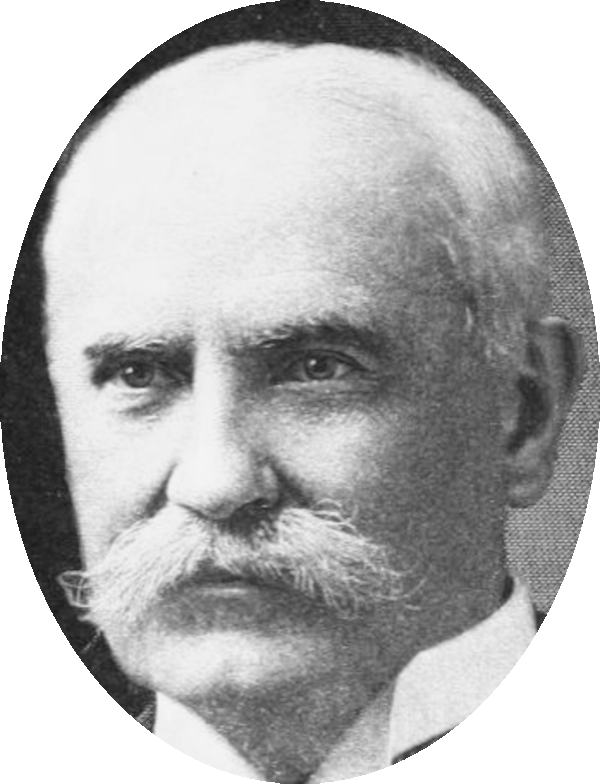
- The chairman was a man named Senator Nelson Aldrich from
Rhode Island and he represented the Newport homes in his state
owned by America's richest banking families.
- Aldrich's
daughter married John D. Rockefeller Jr., and together they
had 5 sons; John, Nelson, Lawrence, Winthrop and David, who
was the head of the Council on Foreign Relations and former
chairman of Chase Manhattan Bank, which later combined with
JPMorgan Chase & Co.
- Son Nelson Rockefeller (1908-1979)
was vice president to Republican Gerald Ford, the 38th
president, in 1974.
- As soon as the National Monetary
Commission was set up, Senator Aldrich immediately embarked on
a 2-year tour of Europe where he consulted at length with the
private central bankers in England, France and Germany.
-
The total cost of his trip alone to the taxpayers was $300,000
which was an astronomical sum in 1908.
|
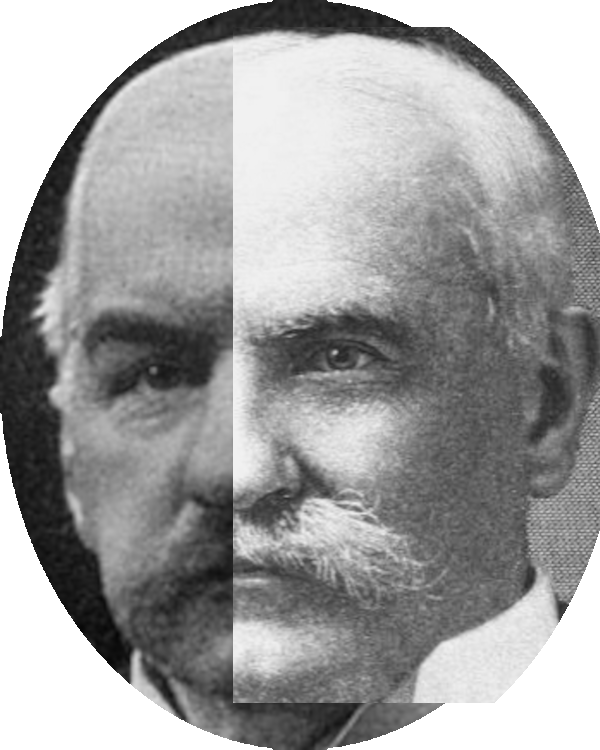
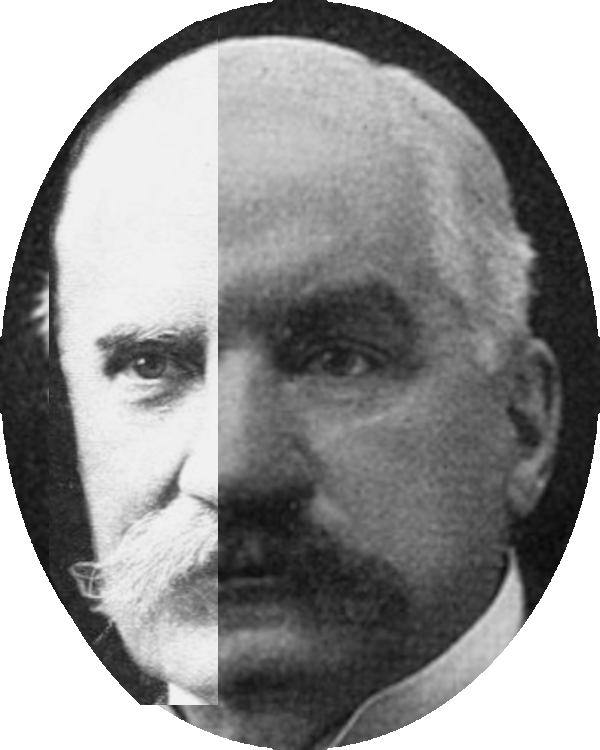
J.P. Morgan as Nelson Aldrich |
|
|
 |
John Pierpont Morgan
1837-1913
4/17
3/31
Banker |
Nelson Wilmarth Aldrich
1841-1915
11/6
4/16
Banker crony |
 |
 |
|
Crooks |
- Shortly after Aldrich returned from Europe, on November
22, 1910, some of the wealthiest men in America boarded his
private rail car, and in the strictest secrecy, journeyed to
Jekyll Island off
the coast of Georgia.
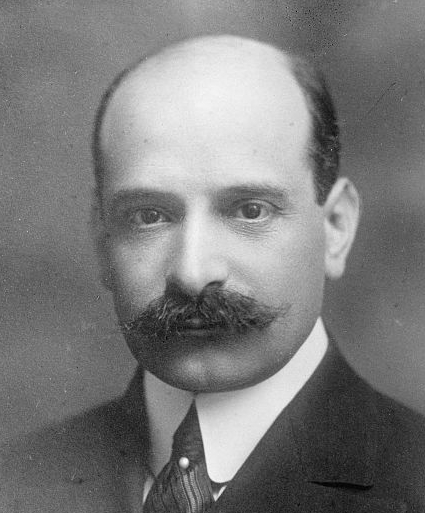
Public Doman via
Wikimedia Commons
Paul Moritz Warburg |
- With the group came Paul Warburg (1868-1932), a
German born American investment banker.
- Warburg had been
given a $500,000 per year salary to lobby for the passage of a
privately owned central bank in America by the investment
firm, Kuhn Loeb & Company.
- His partner in this bank
was a man named Jacob Schiff, the grandson of the man who
shared the 'Green Shield' house with the Rothschild family in
Frankfurt, Germany.
- Schiff was in the process of spending
$20 million to finance the overthrow of the Czar in Russia.
|
Kuhn, Loeb & Co., a major player in finance for decades, involved in massive deals like recapitalizing the Union Pacific Railway alongside figures like Jacob Schiff and James Stillman.
(Assistant)
|
|
J.P. Morgan as Paul Warburg |
|
|
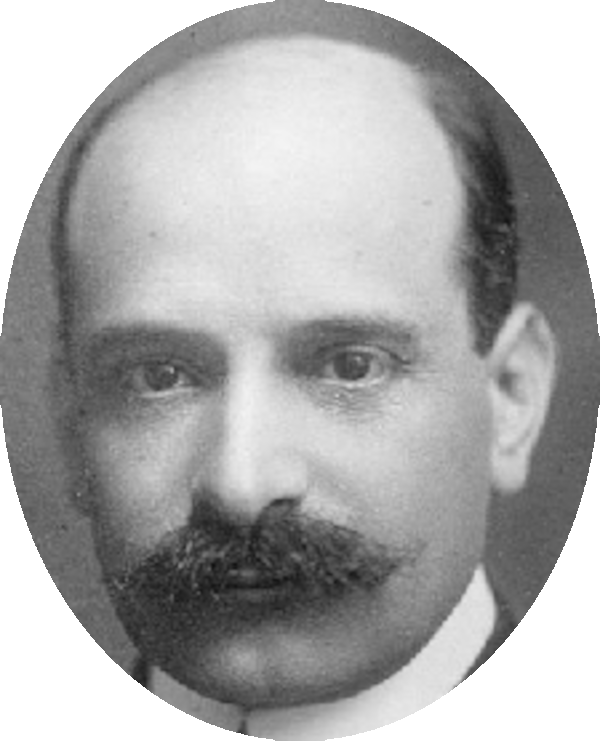 |
John Pierpont Morgan
1837-1913
4/17
3/31
Banker |
Paul Moritz Warburg
1868-1932
8/10
1/24
German born banker |
 |
 |
|
Jekyll and hide |
- These 3 European banking families, the Rothschilds, the
Schiffs and the Warburgs were interconnected by marriage down
through the years, just as their American counterparts, the
Rockefellers, Morgans and Aldriches were.
- Secrecy was so
tight that all 7 primary participants were cautioned to use
only first names to prevent servants from learning their
identities.
Public Doman via
Wikimedia Commons
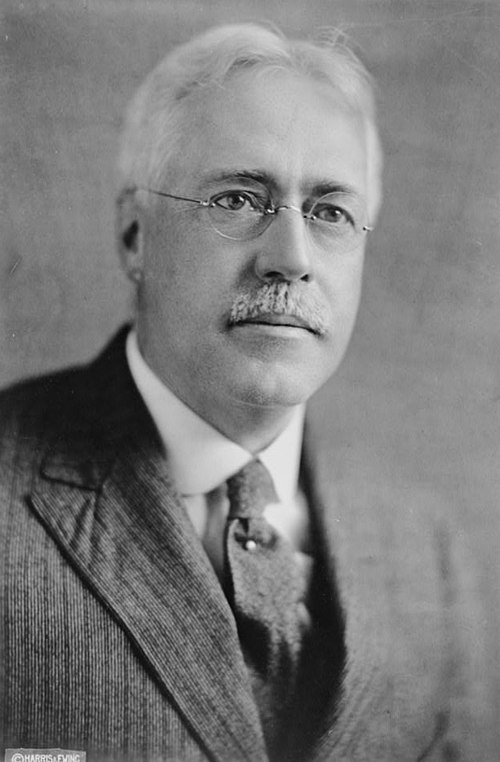
Frank A. Vanderlip |
- Years later, one participant, Frank A.Vanderlip
(1864-1937), president of National City Bank of New York and a
representative of the Rockefeller family, confirmed the Jekyll
Island trip in a February 9, 1925,
Saturday Evening Post article.
|
I was as secretive indeed, as furtive as any
conspirator... Discovery, we knew, simply must not
happen, or else all our time and effort would be
wasted. If it were to be exposed that our particular
group had got together and written a banking bill,
that bill would have no chance whatever of passage in
Congress. (Frank A.Vanderlip)
|
Banks slipping |
- The participants travelled to Jekyll Island to figure
out how to solve their major problem, how to bring back a
privately owned central bank.
- But there were other
problems that needed to be addressed as well.
- First of
all, the market share of the big national banks was shrinking
fast.
- In the first 10 years of the 20th-century, the
number of U.S. banks had more than doubled to over 20,000.
- By 1913, only 29% of all banks were national banks, and they
held only 57% of all deposits.
- As Senator Aldrich later
admitted in a magazine article, 'Before passage of this Act,
the New York bankers could only dominate the reserves of New
York, now we are able to dominate the bank reserves of the
entire country.'

Expansions |
- Therefore, something had to be done to bring these new
banks under their control.
- As John D. Rockefeller put it,
'Competition is sin.'
- Secondly, the nation's economy was
so strong that corporations were starting to finance their
expansions out of profits instead of taking out huge loans
from large banks.
- In the first 10 years of the
20th-century, 70% of corporate funding came from profits.
-
American industry was becoming independent of the money
changers and that trend had to be stopped.
- All the
participants knew that these problems could be hammered out
into a workable solution.
Hidden |
- But perhaps their biggest problem was a public relation
problem, the name of the new bank, a decision that took place
in a conference room in the sprawling Jekyll Island Club
Hotel.
- Aldrich believed that the word 'bank' should not
even appear in the name.
- Warburg wanted to call the
legislation the National Reserve bill or the Federal Reserve
bill.
- The idea here was to give the impression that the
purpose of the new central bank was to stop bank runs, but
also to conceal its monopoly character.
- However, it was
Aldrich, the egotistical politician, who insisted it be called
the Aldrich Plan which promoted the need to create a
private central bank.
Money out of
nothing |
- After 9 days at Jekyll Island, the group dispersed and
the new central bank would be very similar to the old Bank of
the United States.
- It would be granted a monopoly over
U.S. currency and create that money out of nothing.
- How
does the Fed create money out of nothing?
- It's a
four-step process, but first a word on bonds.
- Bonds are
simply promises to pay, or government IOUs.
- People buy
bonds to get a secure rate of interest because at the end of
the term of the bond, the government repays the bond plus
interest, and the bond is destroyed.
- There are about $38
trillion worth of these loans or bonds at present and that is
called the national debt.
Money making
process |
- Now here is the Fed money-making process.
- Step one,
the Federal Open Market Committee approves the purchase of
U.S. bonds on the open market.
- Step two, the bonds are
purchased by the Fed from whoever is offering them for sale on
the open market.
- Step three, the Fed pays for the bonds
with electronic credits to the seller's bank, which in turn
credits the seller's bank account and the trick is that these
credits are based on nothing, the Fed just creates them.
-
Step four, the banks use these deposits as reserves, they can
loan out over 10 times the amount of their reserves to new
borrowers, all at interest.
Thin air |
- In this way, a Fed purchase of say a $1 million worth of
bonds gets turned into over $10 million in bank accounts.
- The Fed in effect creates 10%
of this totally new money and the banks create the other 90%.
- To reduce the amount of money in the economy, the process is
just reversed.
- The Fed sells bonds to the public and the
money flows out of the purchaser's local bank.
- Loans must
be reduced by 10 times the amount of the sale.
- So, a
Fed's sale of $1 million in bonds results in $10 million less
money in the economy.
Jekyll bankers cast
in stone |
- How does this benefit the bankers whose representatives
huddled at Jekyll Island?
-
First, it totally misdirected banking reform efforts from
proper solution.
- Second, it prevented a proper debt-free
system of government finance like Lincoln's Greenbacks from
making a comeback.
- The bond-based system of government
finance forced on Lincoln was now cast in stone.
- Third,
it delegated to the bankers the right to create 90% of our
money supply based on only fractional reserves, which they
then loan out at interest.
- Fourth, it centralized overall
control of our nation's money supply in the hands of a few
men.
- Fifth, it established a centra bank with a high
degree of independence from effective political control.
Fooled the public |
- Soon after the banks creation, the Fed's great
contraction in the early 1930s would cause the Great
Depression.
- This independence has been enhanced since
then through additional laws.
- In order to fool the public
into believing the government retained control, the plan
called for the Fed to be run by a board of governors appointed
by the president and approved by Senate.
- But all the
bankers had to do was to be be sure their men got appointed to
this board.
- That wasn't hard because bankers have money
and money buys influence over politicians.
Endorse |
- Once the participants left Jekyll Island, the public
relations blitz was on.
- The big New York banks put together an
educational fund of $5 million to finance professors at
'respected' universities to endorse the new bank.
- Woodrow
Wilson at Princeton was one of the first to jump on the
bandwagon but banker's subtrifuge didn't work.
- The
Aldrich Plan bill was quickly identified as the banker's bill, a
bill to benefit only what became known as the money trust.
|
The Aldrich Plan is the Wall Street Plan. It means
another panic, if necessary, to intimidate the people.
Aldrich, paid by the government to represent the
people, proposes a plan for the trusts instead. (Charles
A. Lindbergh)
|
Public Doman via
Wikimedia Commons
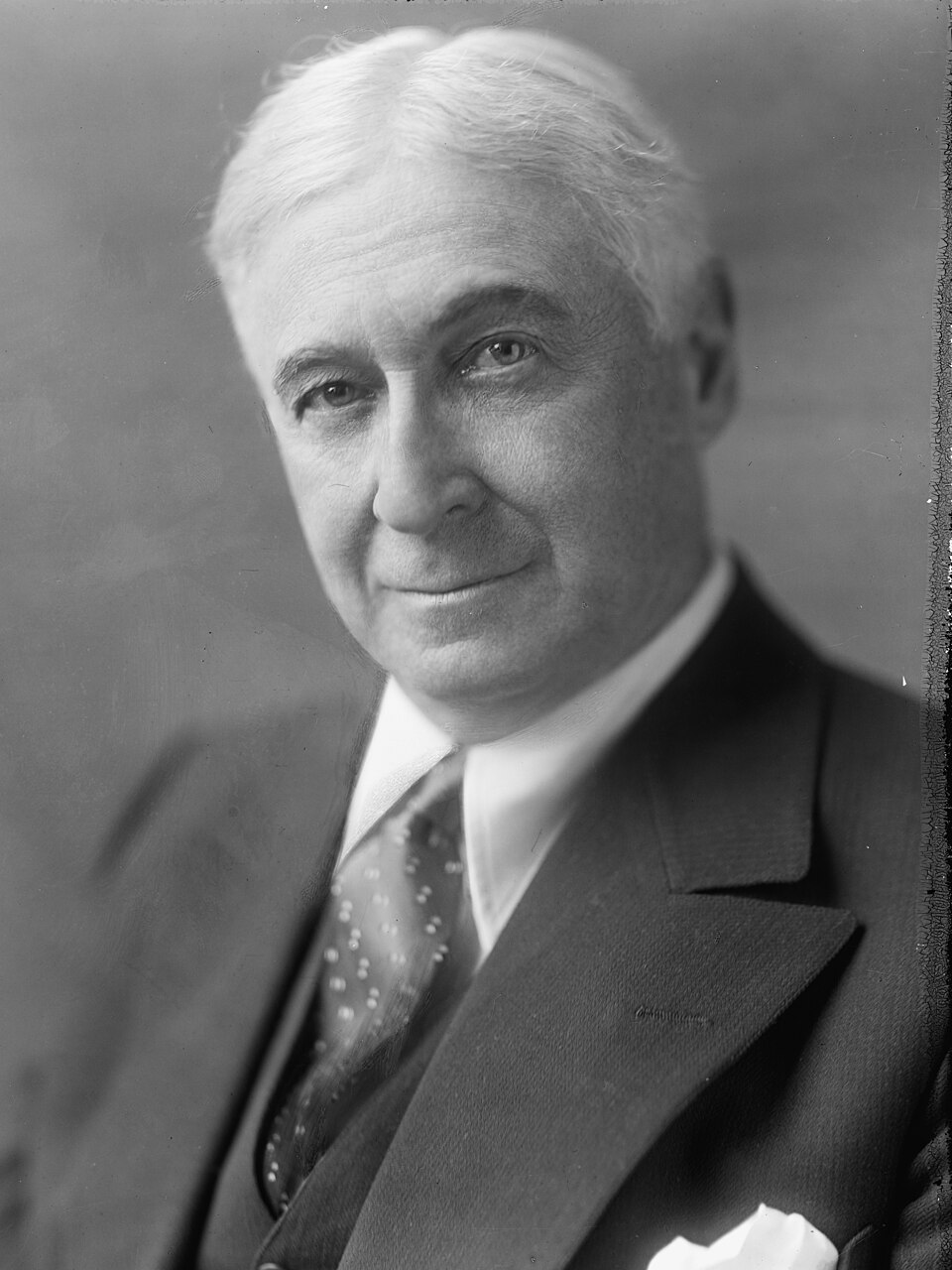
Bernard Mannes
Baruch |
- Seeing that they didn't have the votes to win in
Congress, the Republican leadership never brought the bill to
a vote and the bankers quietly decided to move to track two,
the Democratic alternative.
- They began financing Woodrow
Wilson as the Democratic nominee.
- Wall Street financier,
Bernard Baruch (1870-1965) was put in charge of Wilson's
education.
|
Baruch brought Wilson to the Democratic Party
Headquarters in New York in 1912, leading him like one
would lead a poodle on a string. Wilson received an
indoctrination course, from the leaders convened
there. (James Perloff)
|
|
Frank Vanderlip as Bernard Baruch |
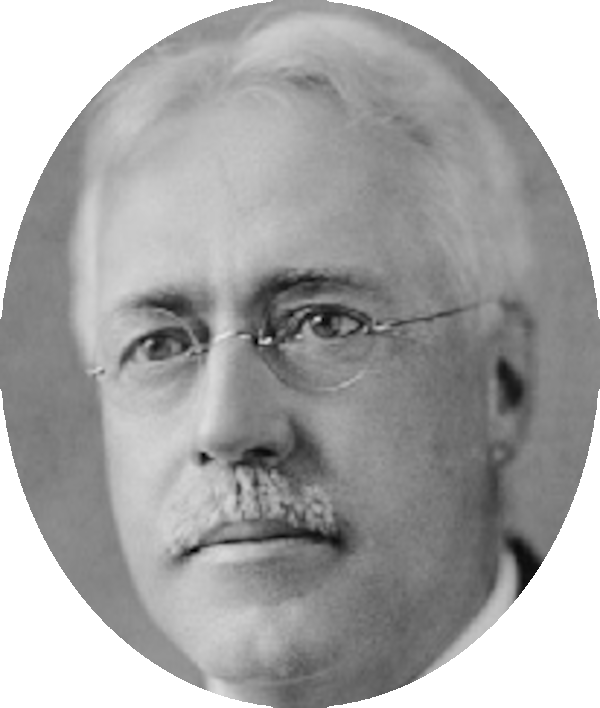 |
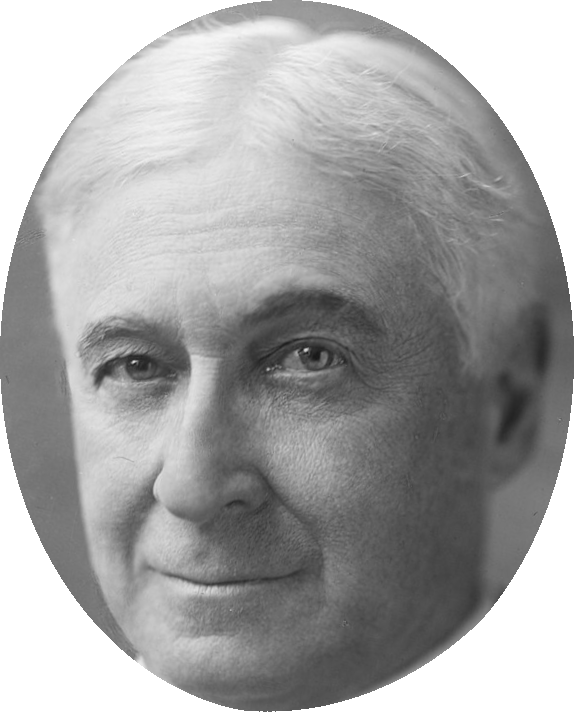 |
Frank Arthur Vanderlip
1864 - 1937
11/17
6/30
Banker |
Bernard Mannes Baruch
1870-1965
8/18
6/20
Wall Street financier |
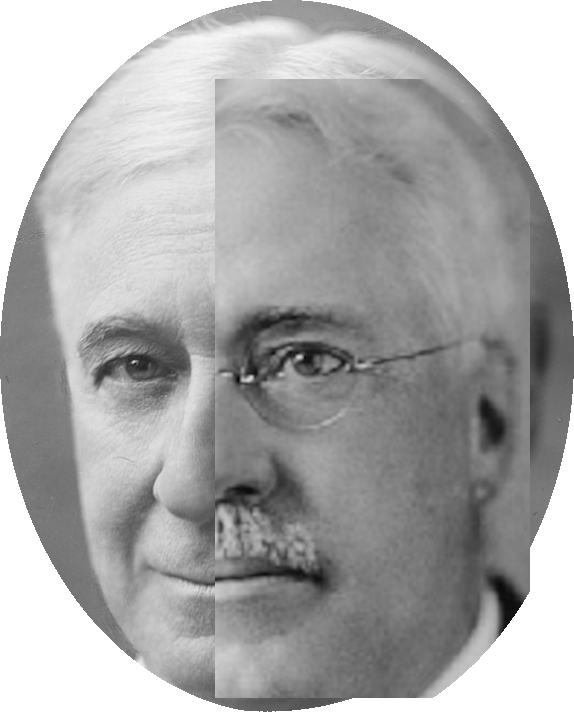 |
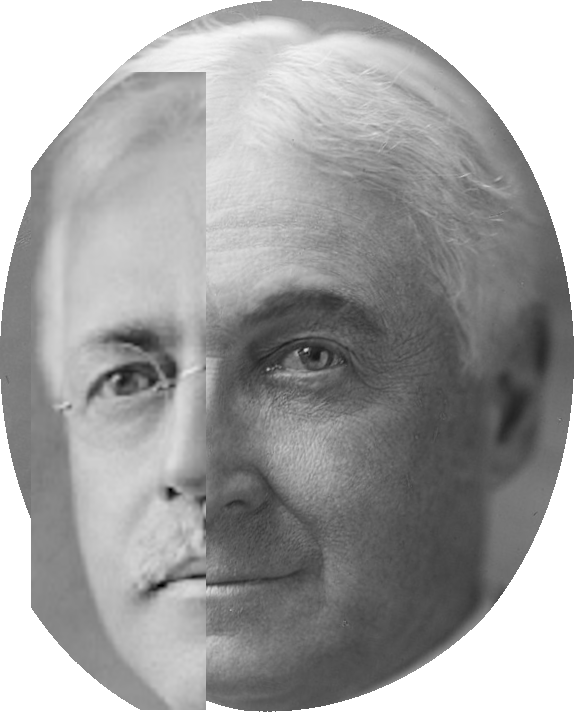 |
|
Brainwasher |
- So now the stage was set and the money changers were
poised to install their privately owned central bank once
again.
- The damage that President Andrew Jackson had done
76 years earlier had been only partially repaired with the
passage of the National Bank Act during the Civil
War.
- Since then, the battle had raged on across the
decades.
- The Jacksonians became the Greenbackers who
became the hardcore supporters of William Jennings Bryan.
-
With Bryan leading the charge, these opponents of the money
changers, ignorant of Baruch's tutelage, now threw themselves
behind Democrat Woodrow Wilson, they and Bryan would soon
be betrayed.
Daily Iowa State
Press - January 21, 1901 |
|
If thou art rich, thou'rt poor;
For, like an ass whose back with ingots bows,
Thou bears thy heavy riches but a journey,
And death unloads thee.
Shakespeare,
Measure for Measure

|