|
|
ABEL GRIMMER - TOWER OF BABEL - PAGE 2
|
Peace is the
Enemy of War Profiteers |
Five American Wars |
- This is the story about how five families made billions
from every American war and this was not speculation, it was
government contracts.
- The pattern that's made these
dynasties billions while millions died.
- There's a model
in American history that more profitable than oil and more
consistent than banking and more protected than any monopoly.
|
It's made the same families wealthy for six
generations and created dynasties that control
billions in assets.
(Economy Rewind)
|
The quad |
- War profitting is a pattern that funds political
careers, creates university endowments and charitable
foundations.
- It's built on a simple premise; profit from
war, every war, any war, because while soldiers die and
taxpayers pay, a small group of companies always wins.
-
The contracts are public record, the profits are documented and
the pattern is undeniable.
Five families, five
companies, grifters |
- The DuPont family; explosives and
chemicals from the Revolutionary war through Iraq and 220
years of war profits.
- The Rockefellers;
oil and fuel, Civil War through Afghanistan and 160 years of
energy monopoly during conflict.
- JP Morgan; banking dynasty, war financing, Spanish American War through
World War II, lending to governments and profitting from both
sides.
- Lockheed Martin's predecessors;
aviation and weapons, World War I through today, over 100
years of war contracts.
- Halliburton;
military logistics and infrastructure, World War II through
the War on Terror, 80 years of no-bid contracts and cost
overruns.
The works |
- Five families and five
companies and if you track their profits through American
wars, you see the same pattern.
- War is declared, stock
prices surge, contracts are awarded, profits explode, war
ends.
- They keep the money and families all over the world
suffer and grieve.
- But there is so much more.
Building the war |
- When the next war starts, they're ready to go, because they
didn't just profit from war, they built the war.
- They
helped create conditions that made war inevitable.
-
Through government lobbying, political contributions and
through shaping foreign policy.
- This isn't conspiracy,
this is capitalism applied to conflict and the receipts are
public record.
- Let's examine how this all works war by
war, dollar by dollar, contract by contract.

Benstown, Public domain, via Wikimedia Commons
DuPont de Nemours, Inc. |
- This all began with the family that literally built the
American military-industrial complex, the DuPont family.
- If you've
heard of them, it's probably because of chemicals or teflon.
Bridge |
- The American family line begins with Eleuthère Irénée du Pont (E.I. du Pont), who fled France during the Revolution and founded the DuPont gunpowder mills.
- The DuPont family forture was built on gunpowder and they've
provided explosives for every American war since 1802.
|
The DuPont (or du Pont) family, known for the American chemical giant, has French origins, with the surname meaning "of the bridge" (from French du pont).
(Assistant)
|

Arrives from France |
- They started by positioning themselves, Eleuthère Irénée
du Pont arrived in America from France in 1800.
- He was a
trained chemist who had worked in French gunpowder mills and
he saw an opportunity.
- America had just fought a
Revolution and was expanding westward and that created a
never-ending need for explosives for clearing land, for
mining, and for war.
Down by the river |
- In 1802 he founded the DuPont Compnay on the Brandywine
River in Delaware.
- The location was strategic, close to
Philadelphia and Washington and the location provided access
to water and power for mills, yet was far enough from cities that
explosions wouldn't cause political problems.
Manufactory |
- Not long after, by the War of 1812, DuPont was supplying
gunpowder to the U.S. military.
- This was their first
major government contract and it established a pattern that
would repeat for two centuries.
- War begins, the
government needs explosives, DuPont is ready with existing
capacity.
- They get the contract, expand production and
make enormous profits and when the war ends, they keep the
infrastructure and wait for the next war.
Supplies |
- During the Mexican-American War from 1846 to 1848,
DuPont supplied enough gunpowder for artillary and small arms.
- The contract was worth over one million dollars, which is
about $35 million in today's money.
- However, the real
value was establishing DuPont as the U.S. governments
preferred supplier.
- When you're the company that
delivered during the last war, you're first in line for the
next war and all the lucrative contracts.
Civil |
- During the Civil War from 1861 to 1865, this was DuPont's
major breakthrough.
- The Union Army needed gunpowder on a
scale never seen before.
- Four years of continuous warfare
and hundreds of battles with millions of rounds fired.
-
DuPont's gunpowder mills ran 24 hours per day during and
they produced 4 million pounds of gunpowder annually.
- The
contracts were worth over $10 million and that's over $300
million today.
- And that' just direct sales to the
military because DuPont also sold to private contractors, who
then sold to the government at marked up prices.
Side saddle |
- The DuPont family were Northern Democrats and they
opposed Abolition.
- Some family members even supported the
Southern Confederacy politically.
- However, they sold
gunpowder to the Union because that's where the contracts
were.
- Because in the end, ideology didn't matter, profit
did.
- After the war when the Union Army won, DuPont was
positioned as a patriotic company that helped save the nation.
French dynasty |
- The complexity of the company's actual position was
forgotten and only the profit remained.
- During World War
I from 1914 to 1918, DuPont transformed from a large company
into a dynasty.
- Before America entered the war in 1917,
DuPont sold explosives to Britain and France.
- Millions of
pounds of gunpowder, TNT, and smokeless powder.
- When
America entered the war, DuPont's production increased
expodentially, they built new plants and hired thousands of
workers and supplied 40% of all explosives used by Allied
Forces.
|
Allied Forces refers primarily to the coalition of countries, led by the United States, United Kingdom, Soviet Union, and China, that fought against the Axis powers (Germany, Italy, Japan) in World War II, formally known as the United Nations from 1942; they were an international military alliance united against common enemies, with members ranging from major powers to governments-in-exile like Poland and France. The term also applies to similar coalitions in other conflicts, such as World War I, and can refer to modern-day military partnerships or even staffing agencies.
(Assistant)
|
On the rise |
- The profits were staggering, DuPont's net earnings went
from $5 million in 1914, to $82 million in 1918, that's
over $1 billion today in 4 short years.
- In sum, that's
a 1,600% increase in profits in 4 years.
- But the
critical detail is that after the war they didn't return that
money, they diversified into chemicals, plastics and synthetic
materials.
- They used wartime profits to build a peacetime
empire.
Nylon |
- However, they didn't stop selling to the military, World War
II brought another surge and DuPont supplied explosives and
nylon for parachutes.
- They also worked on the Manhattan
Project.
- They operated the plutonium production facility
at Hanford in Washington state.
- This contract was
'cost-plus' meaning all expenses paid, and a guaranteed
profit, they couldn't lose.
- The government absorbed all
the risk.
|
The Manhattan Project was a research and development program undertaken during World War II to produce the first nuclear weapons.
It was an unprecedented, top-secret World War II government program in which the United States rushed to develop and deploy the world's first atomic weapons before Nazi Germany.
(Assistant)
|
Affiliations |
- Korea, Vietnam, the Gulf War, Iraq, Afghanistan, Iran;
during every conflict, DuPont or their successor companies and
affiliates, supplied materials.
- By the 2000s, DuPont's
defense division had been spun off and merged into other
companies, but the family wealth remained intact.
- The
DuPont family trust is worth an estimated $30 billion.
-
Six generations removed from Eleuthère Irénée du Pont, and
they're still living magnificantly off gunpowder profits.
Rockefeller
Standard 'elite'
monopoly for
grifters |
- Next up, the Rockefeller oil, the one resource that every
modern military needs, and the family that monopolized it for
a century.
- John D. Rockefeller founded Standard Oil
Company in 1870 and by 1880 he controlled 90% of America's oil
refining capacity.
- This wasn't a business, it was a
monopoly from the very beginning and when America went to war,
that monopoly became a strategic asset.
- The
Spanish-American War in 1898 was small but significant.
-
During this period, the U.S. Navy converted from coal to
oil-powered ships in the 1890s and this made Standard Oil
essential because naval vessels required fuel oil.
(d).jpg)
George Mountain Edmondson, Public domain, via Wikimedia Commons
John D. Rockefeller
- robber baron |
- John Davison Rockefeller Sr. (1839-1937) was an American businessman and
'philanthropist' also known as grifter trying to buy
legitimacy.
- He was one of the wealthiest Americans of all time and one of the richest persons in modern history.
- Rockefeller was born into a large family in Upstate New York who moved several times before eventually settling in Cleveland, Ohio.
- He became an assistant bookkeeper at age 16 and went into several business partnerships beginning at age 20, concentrating his business on oil refining.
- Rockefeller founded the Standard Oil Company in 1870.
|
He ran
the company until 1897 and remained its largest shareholder. In his retirement, he focused his energy and wealth on philanthropy, especially regarding education, medicine, higher education, and modernizing the Southern United States.
(Wikipedia)
|
|
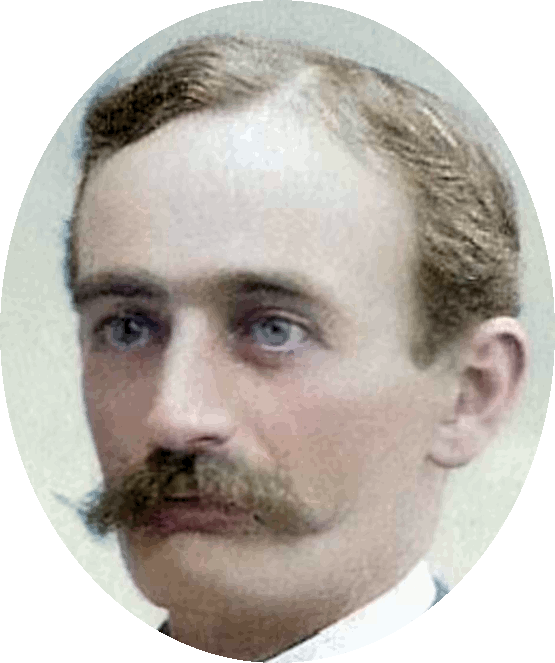
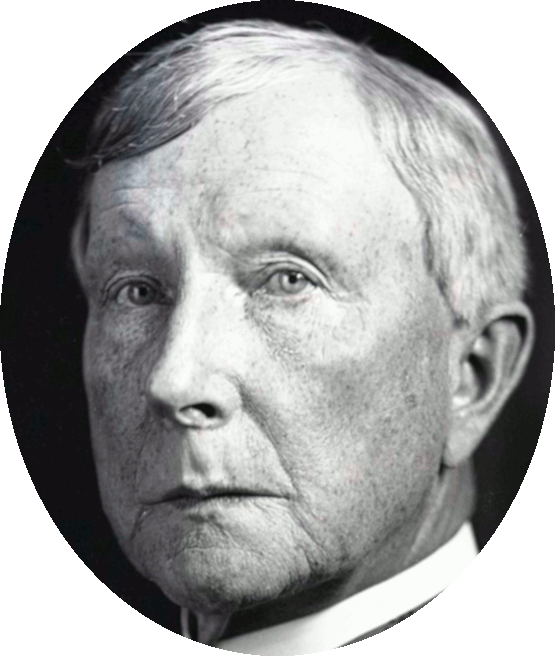
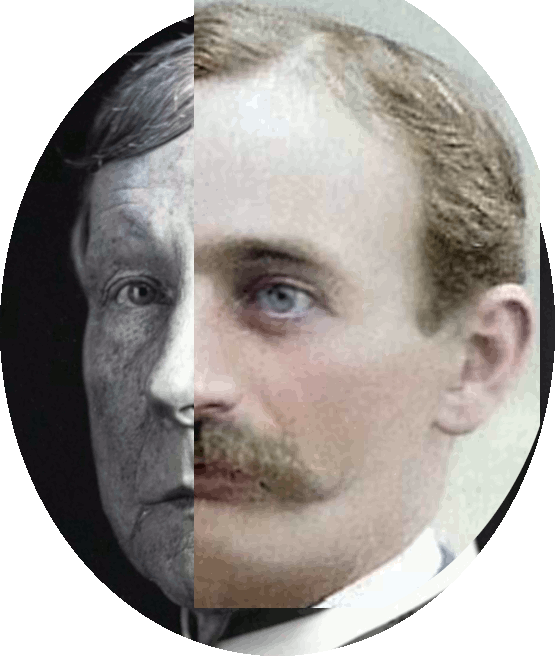
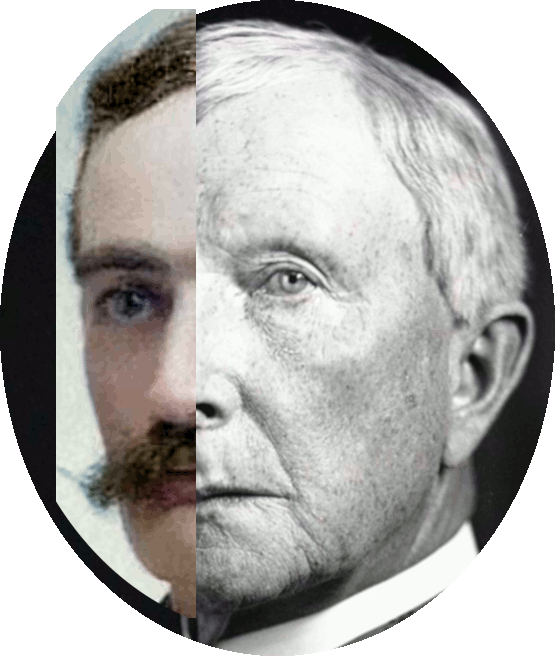
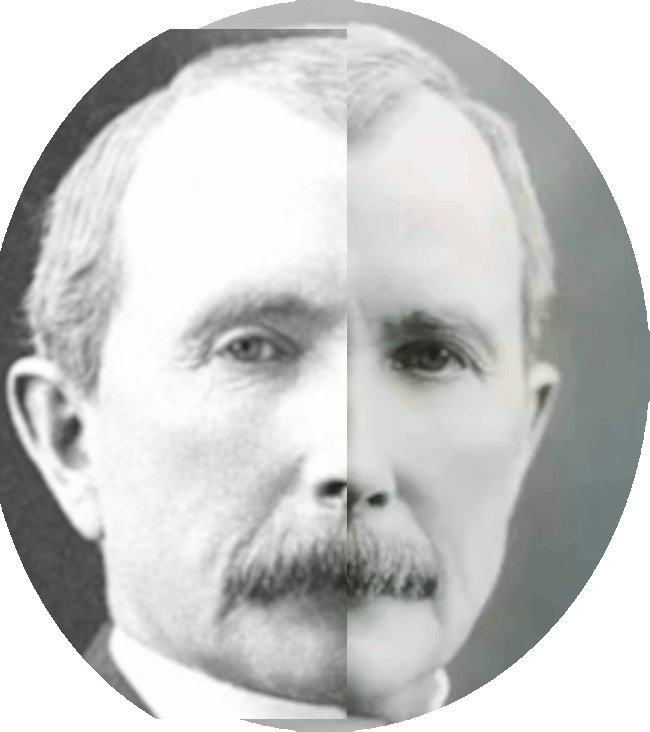
Friedrich Trump as John D. Rockefeller |
 |
 |
Friedrich Trump
1869-1918
3/14 5/30 |
John Davison Rockefeller
1839-1937
7/8
5/23 |
 |
 |
|
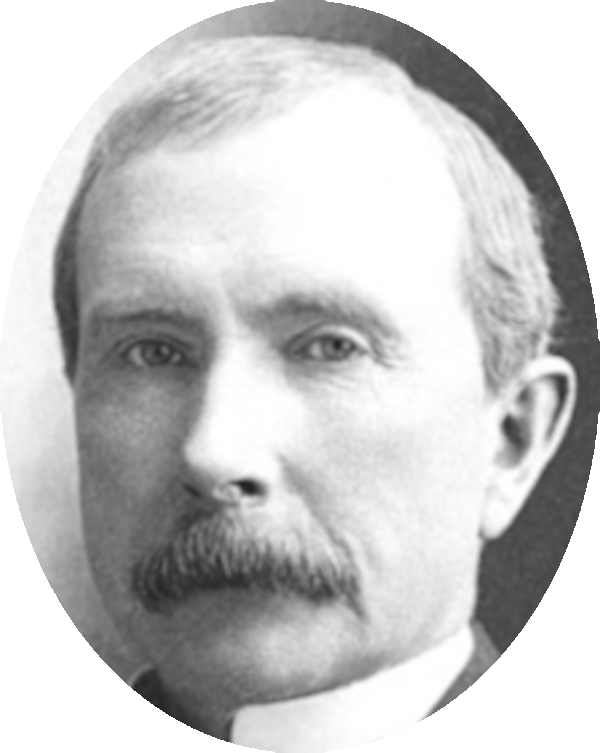
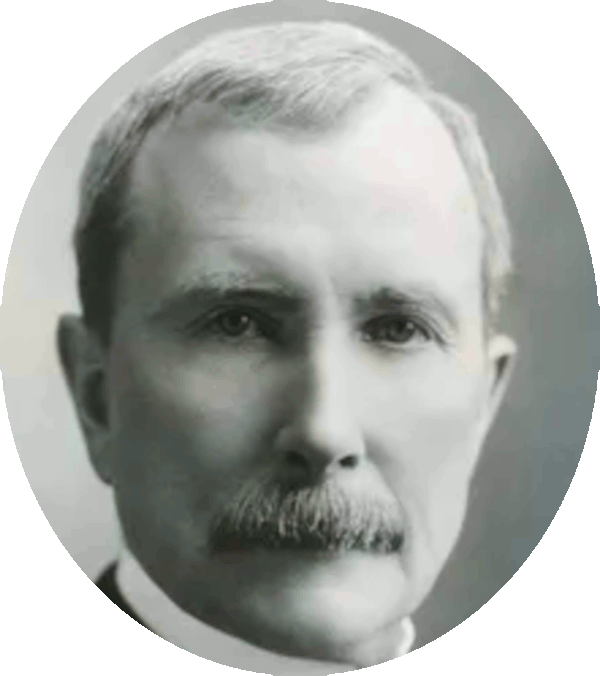
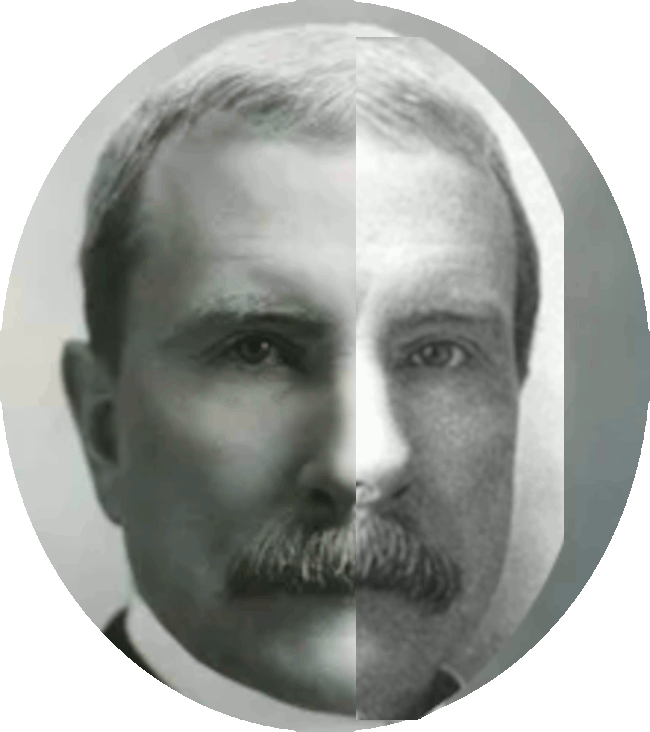
Pimp, Profiteer and Patriarch |
- Freidrich Trump, exploiting the poor, draft-dodging and busty blondes turn out to be family traditions.
|
Friedrich Trump as John D. Rockefeller |
 |
 |
Friedrich Trump
1869-1918
3/14 5/30 |
John Davison Rockefeller
1839-1937
7/8
5/23 |
 |
 |
|
The Monte Cristo gold rush |
- Christ Gold Mine.
- lovemoney.com.
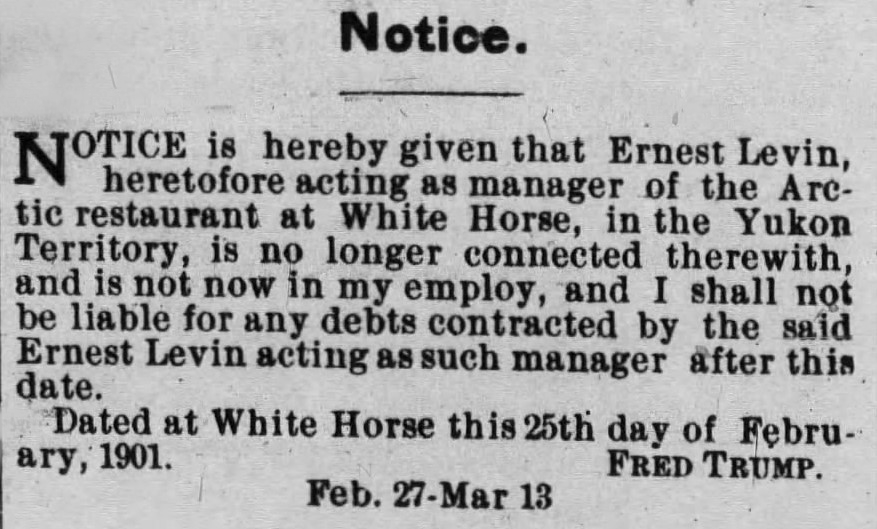
Whitehorse Star in 1901 |
- Donald Trump's grandfather got rich in the Yukon with hotels known for 'female companionship.'
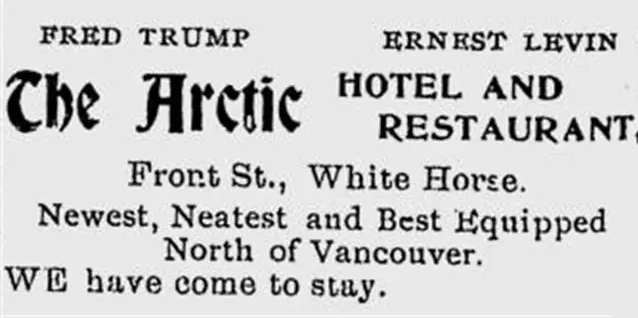
Whitehorse Star in 1901 |
- Donald Trump's grandfather ran a Canadian brothel during
the gold rush.
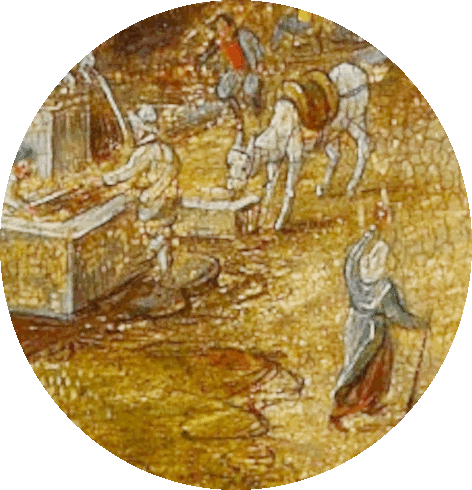
White horse and
prostitute |
- The war lasted for only a few months but it established
oil as a military necessity.
- Rockefeller supplied fuel
for the fleet and he learned a valuable lesson, control the
fuel, and you control the military.
-
World War I was the first industrial war where oil was
decisive because tanks, trucks, aircraft and ships all required
petroleum products.
Fueling up |
- Standard Oil, though broken up by
anti-trust action in 1911, still dominated through its succesor
companies.
- Exxon (Esso), Mobil, Chevron were all
controlled by Rockefeller and they supplied fuel to the U.S.
military and the Allies and the government contracts were
worth hundreds of millions.
Germany |
- Where the Rockefeller strategy differed from DuPont they
didn't just sell to one side, Standard Oil's German subsidiary
sold fuel to Germany.
- Even after America entered the war,
the Rockefeller family continued to trade with Germany through
neutral countries.
- This wasn't considered treason, it was
considered business
and it was 'legal' because the companies were technically
separate entities.
- The profits from both sides of World
War I, turned the Rockefeller's into the wealthiest family in
America.
- John D. Rockefeller soon became the world's
first billionaire.
Big tent |
- The family diversified into banking, 'philanthropy' and
real estate but oil remained the foundation.
- World War II
saw the same pattern, Rockefeller companies supplied fuel to
the U.S. military through exclusive contracts, cost-plus
pricing and guaranteed profits.
- Standard Oil of New
Jersey, Exxon's predecessor, was investigated by Congress for trading with
Nazi Germany through its subsideraries.
- The investigation
showed that Standard Oil had shared patents for synthetic
rubber with the German company, IG Farben, even after the war
began.
- IG Farben was once the largest company in Europe and the largest chemical and pharmaceutical company in the world.
|
I. G. Farbenindustrie AG, commonly known as IG
Farben, was a German chemical and pharmaceutical
conglomerate. It was formed on December 2, 1925 from a
merger of six chemical companies: Agfa, BASF, Bayer,
Griesheim-Elektron, Hoechst, and Weiler-ter-Meer. It was seized by the Allies after World War II and split into its constituent companies; parts in East Germany were nationalized.
(Wikipedia)
|

Congress back door |
- The patents gave Germany access to technology that
prolonged the war.
- Senator Harry Truman, before he was
president, led the investigation and his committee concluded
that Standard Oil's actions had damaged the war effort.
-
However, no one was ever proscuted, how amazing.
- The
company was 'too important' and the military needed their fuel
so the investigation was quietly shelved and the contracts
continued.
|
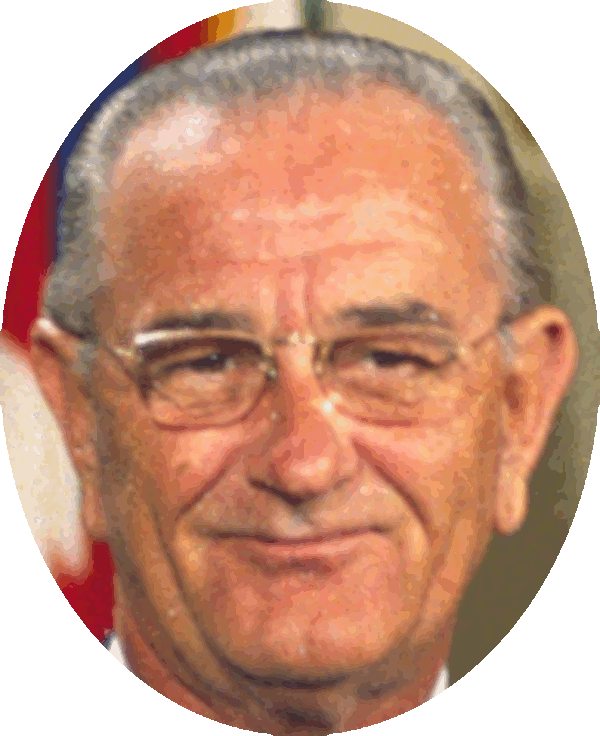
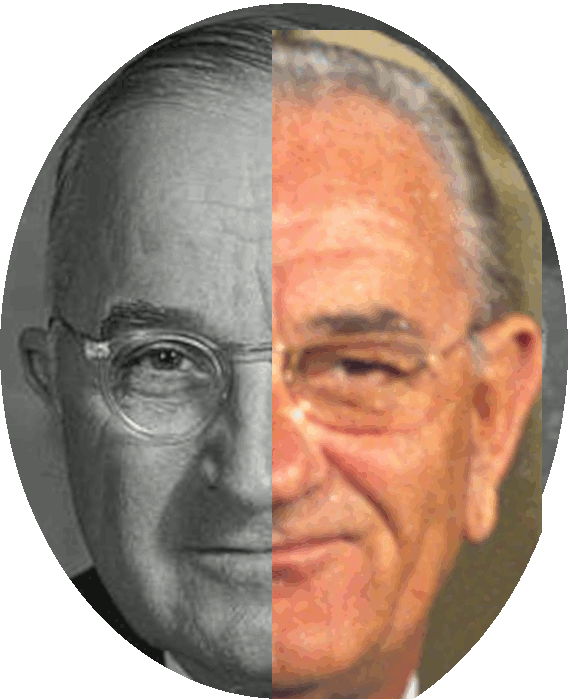
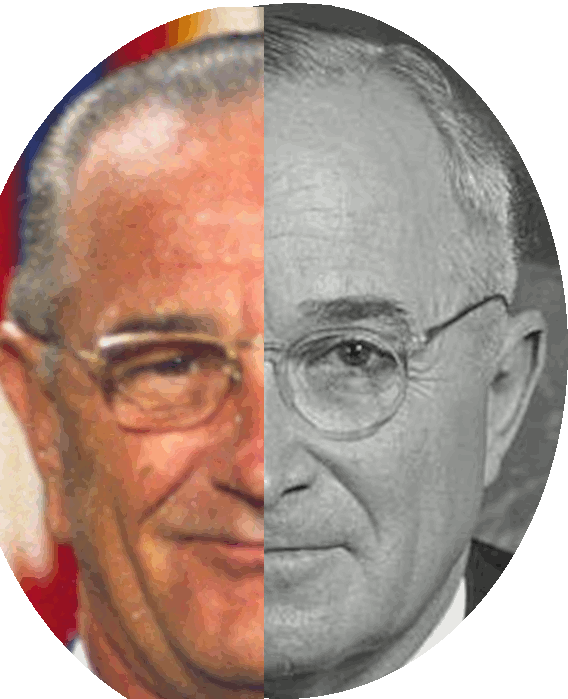
Lyndon Baines Johnson as Harry Truman |
 |
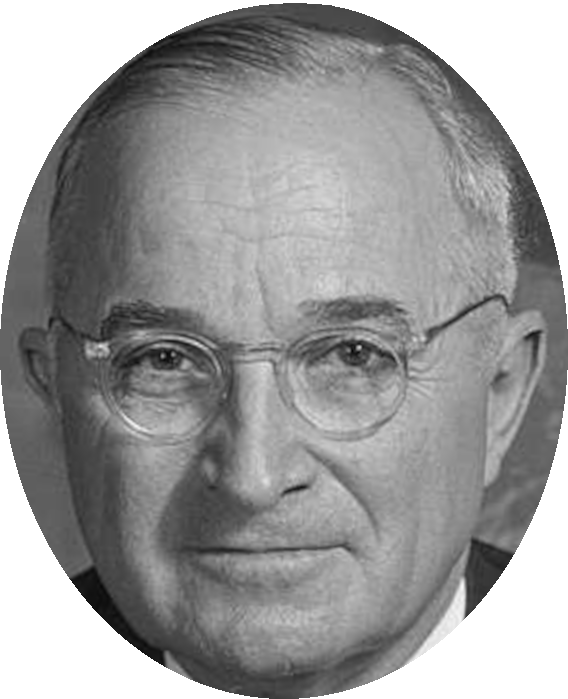 |
Lyndon Baines Johnson
1908-1973
8/27
1/22
36th president |
Harry S. Truman
1884-1972
5/8
12/26
33rd president |
 |
 |
|
Medicare insurance fraud |
- No wonder those elephant ears never looked real.
- Donald Trump played the part of Abe Lincoln,
Jefferson Davis and Thomas
Jefferson.
- JFK was also Jimmy Carter.
- Elon Wernher
von Braun as Ronald Reagan.
- Dick Clark as Richard Nixon
and Manson.
- Jim Carrey playing the part of Biden, and not
just on SNL.

Medicare and
insurance |
- Meanwhile, grifter JP Morgan acquired significant stakes and control over numerous American businesses, including insurance giants like Aetna (where his grandfather co-founded the company).
|
J.P. Morgan didn't "build" the entire insurance industry, but he profoundly influenced its structure, gaining controlling interests in major companies like Aetna, consolidating finance and industry, and his firm, J.P. Morgan & Co., became a crucial financial pillar for insurance growth, offering capital and integrating payments, especially as his legacy continues through JPMorgan Chase's modern insurance solutions and partnerships, showing deep historical ties.
(Assistant)
|
Rockefeller family
fortune |
- Korea, Vietnam, the Gulf War, every conflict required
lot's of oil and Exxon, Chevron and Mobil, the Rockefeller
successor supplied it.
- The profits were so large that by
the 1970s, the Rockefeller family began divesting from oil to
avoid political scrutiny, however, the wealth remained.
-
The Rockefeller family fortune is estimated at $11 billion
today, built on oil, sold to armies that burned it while
fighting never ending wars.

Banking dynasty |
- The J.P. Morgan banking dynasty offered war financing
because wars don't just need gunpowder, weapons and petroleum, they need
money, lot's of it, and the people that lend that money profit
substantially.
- Regardless of who wins.
- Morgan
founded his banking empire in the 1870s and by 1900, it was
the most powerful bank in America,
- And Morgan understood
something
that defines a century of war profits, governments at war will
borrow money at any rate, they have no choice, because the
alternative is losing.
|
Influential Banker Who Transformed Wall Street
J.P. Morgan refers to both the influential late 19th/early 20th-century American financier, John Pierpont Morgan, and the modern global financial giant, JPMorgan Chase & Co., a leading firm in investment banking, commercial banking, asset management, and financial services, offering solutions to corporations, institutions, and individuals worldwide.
(Assistant)
|

Europe in 1914 |
- The Spanish-American War in 1898, was financed partly
through Morgan loans to the U.S. government.
- It was a
small war, and small loans, however, it established the
relationship, and the government trusted Morgan, and he
profited from the interest.
- World War I was different,
when war broke out in Europe in 1914, America was officially
neutral, but American banks, led by Morgan, lent money to
Britain and France.
- Over $2 billion dollars between 1914
and 1917, that's equivalent to over $50 billion today.
European purchases |
- The loans were used to buy weapons, food and supplies,
much of it from American companies.
- So American banks
lent money to the Allies, who spent it buying from American
companies.
- The money circulated, however, the profit
stuck to both ends.
- But the critical detail is that those
loans made American neutrality impossible.
Beao, Public domain, via Wikimedia Commons
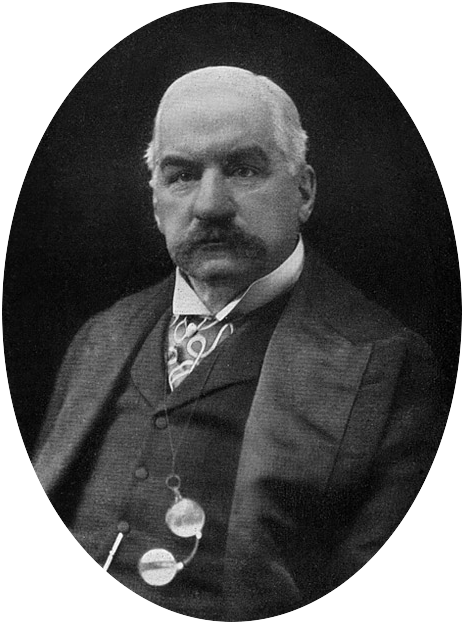
John Pierpont Morgan |
- John Pierpont Morgan (1837-1913) was an American financier and investment banker who dominated corporate finance on Wall Street throughout the Gilded Age and Progressive Era.
- As the head of the banking firm that ultimately became known as JPMorgan Chase & Co., he was a driving force behind the wave of industrial consolidations in the United States at the turn of the
20th-century.
- Over the course of his career on Wall Street, Morgan spearheaded the formation of several prominent multinational corporations including U.S. Steel, International Harvester, and General Electric.
Morgan riches |
- J.P. Morgan and his partners also held controlling
interests in numerous other American businesses including
Aetna, Western Union, the Pullman Car Company, and 21
railroads.
- His grandfather Joseph Morgan was one of the co-founders of Aetna.
- Through his holdings, Morgan exercised enormous influence over capital markets in the United States.
- During the Panic of 1907, he organized a coalition of financiers that saved the American monetary system from collapse,
how wide of him seeing as he controlled it.
- At the time
of his death in 1913 in Paris, Morgan's personal wealth was estimated at $80 million,
or equivalent to $1.9 billion in 2024.
|
After completing his education, Morgan went to London in August 1857 to join his father, now a partner in the merchant banking firm George Peabody & Co. For the next fourteen years, he worked as his father's American representative in a series of affiliated New York City banking houses, learning the trade and lifestyle of a bank partner: Duncan, Sherman & Company (1858–1861), his own firm J. Pierpont Morgan & Co. (1861–1864), and finally Dabney Morgan (1864–1872). Dabney, Morgan & Company was co-founded by Charles H. Dabney and Jim Goodwin.
(Assistant)
|
|
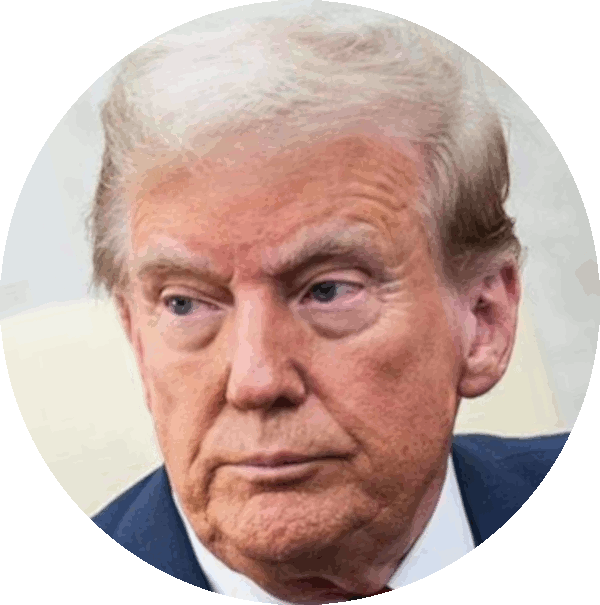
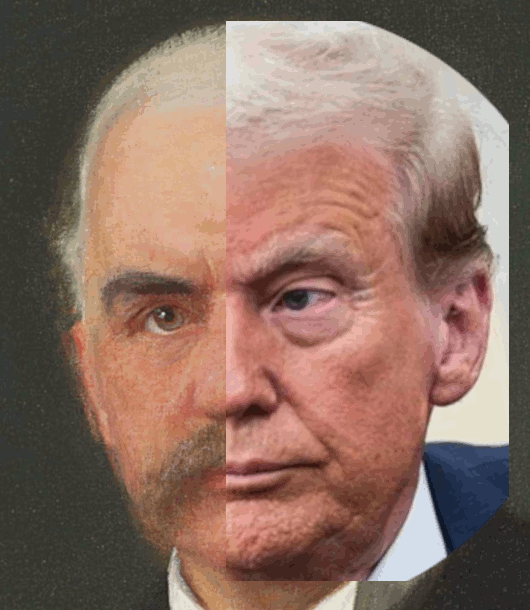
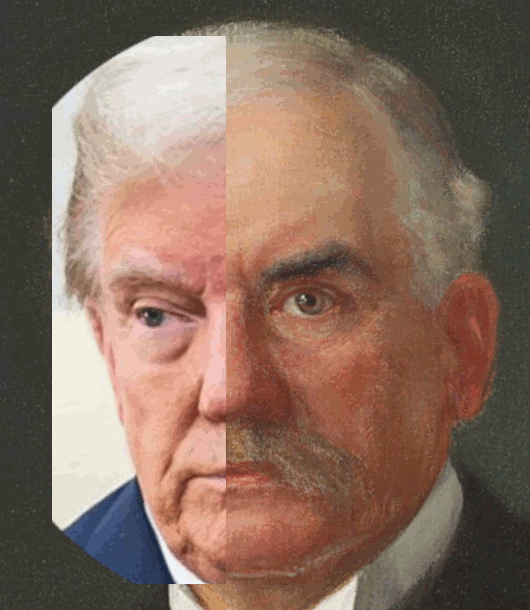
Donald Trump as J.P. Morgan |
 |
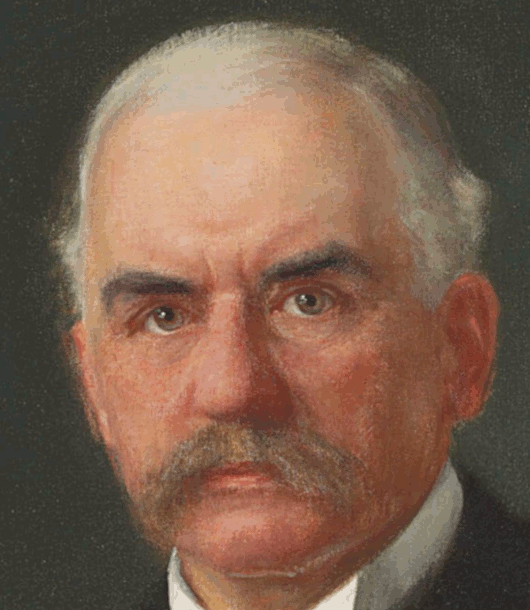 |
Donald John Trump
1946
6/14
45th/47th president |
John Pierpont Morgan
1837-1913
4/17
3/31
Banker |
 |
 |
|
Titanic |
-
Morgan was born on April 17, 1837, in Hartford, Connecticut, to Junius Spencer Morgan (1813–1890), of the influential Morgan family, and Juliet Pierpont (1816–1884).
- His father, Junius, was then a partner at Howe Mather & Co.,
the largest dry goods wholesaler in Hartford and guided his son's early career and established the Morgan banking house
(J.S. Morgan & Co.) with offices in London, New York, Philadelphia, and Paris.
- His mother Juliet was the daughter of the poet John Pierpont
and his uncle James Lord Pierpont composed the famous Christmas song
Jingle Bells.
|
When Morgan died in 1913, he was the most powerful banker in the world, and had captured the popular imagination to a much greater extent than his contemporaries John D. Rockefeller, Andrew Carnegie, E. H. Harriman, and Henry Clay Frick. He figures in countless anecdotes and in novels by, among others, Upton Sinclair, Henry James, E. M. Forster, John Dos Passos, and, more recently, E. L. Doctorow and Caleb Carr. And since surprisingly little is actually known about him, substantial measures of fiction have found their way into the accounts of historians and biographers as well. Most of the widely accepted renderings cast him as a ruthless tyrant who ordered workers shot, ruined farmers, and created financial panics for his own profit.
(Jean Strouse,
The New Yorker)
|
International |
- Morgan was a graduate of the University of Göttingen.
- His father wanted to build an international financial dynasty similar to those of the Rothschilds and the Barings, and he sent his son to school in Switzerland and to the German university at Göttingen, chiefly to acquire foreign languages.
|
The University of Göttingen, officially the Georg August University of Göttingen, is a public research university in the city of Göttingen, Lower Saxony, Germany. Founded in 1734 by George II, King of Great Britain and Elector of Hanover, it began instruction in 1737 and is recognized as the oldest university in Lower Saxony. Recognized for its historic and traditional significance, the university has affiliations with 47 Nobel Prize winners by its own count.
(Assistant)
|
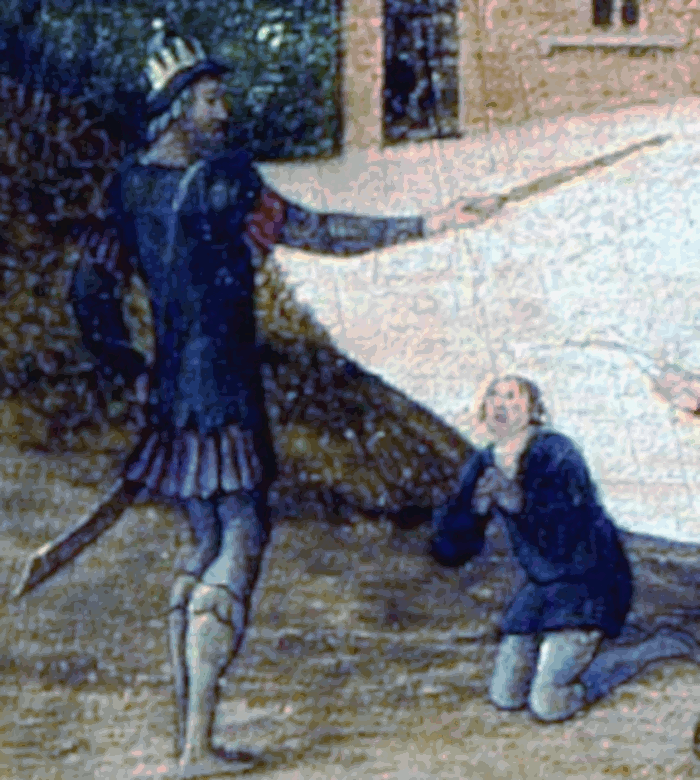
Bully |
- The depiction of Morgan as a ruthless bully, derives partly from his role in organizing industrial trusts
such as U.S. Steel and General Electric, and his position as the unofficial central banker of the United States before there was a Federal Reserve.
- Another story has to do with his appearance, because in middle age
Morgan suffered from an inherited skin disease called rhinophyma, which gave him what Margot Asquith, the wife of the British Prime Minister, graphically described as
'a Cyrano nose of vast blue oozing glands, a hideous
deformity.'
- Rather than acting like a total ogre, Morgan
was usually behind the scenes 'brokering' deals for workers
and some considered that 'kindness' although it benefited his
empire.
|
It was Frick, not Morgan, who was responsible for having workers shot during the Homestead steel strike of 1892. Morgan had nothing to do with it. And in 1901, when the steelworkers’ union called a strike against U.S. Steel, he proposed a compromise that union leaders rejected; two months later, steel officials forced the workers to accept terms far harsher than Morgan’s, and Samuel Gompers, of the American Federation of Labor, criticized the head of the steelworkers’ union for turning down “the good will and kindly assurances of J. P. Morgan.”
(Jean Strouse,
The New Yorker)
|
Master Mason |
- During a coal strike in 1902, Morgan brought bullheaded mine owners to the bargaining table, where, for the first time, the federal government, under Theodore Roosevelt, brokered a
'square deal' for labor.
- Morgan’s philanthropic activity also contradicts the stock image of the greedy robber baron.
- But does it really, because philanthropy to the rich is
simply re-building society the way they wanted it.
- Like
Bill Gates current plans for the world, blocking out our sun.
- When Morgan walked into a room it was said, 'you felt something electric,
he wasn’t a terribly large man, but he had a simply tremendous
effect, he was the king. He was it.'
|
He gave millions of dollars to cultural institutions, hospitals, medical education, the Episcopal Church, artists, scholars, clergymen, relatives, and friends. Between 1890 and 1913, he spent more than half his for-tune on art about sixty million dollars, equivalent to roughly a billion dollars in the
1990s. In his will, he asked that his collections be made “permanently available for the instruction and pleasure of the American people,” since he had not had time to dispose of them himself. His son eventually gave about seven thousand objects to the Metropolitan Museum of Art.
(Jean Strouse,
The New Yorker)
|
|
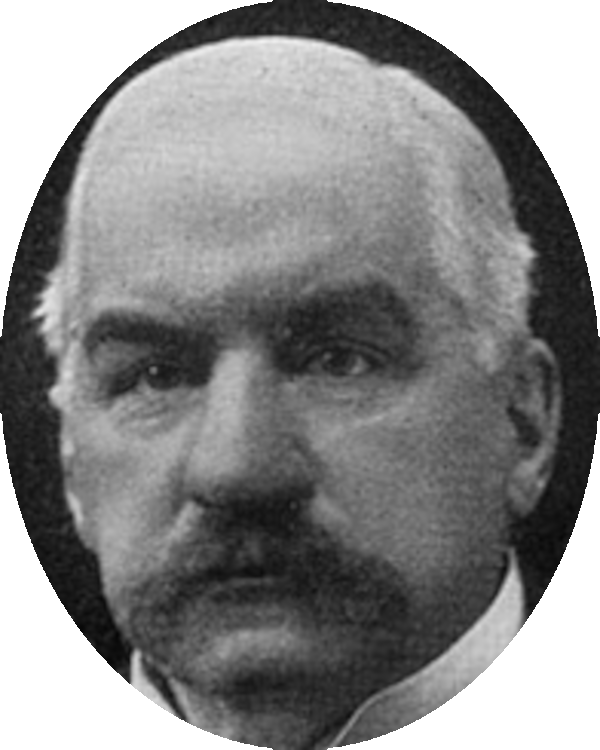
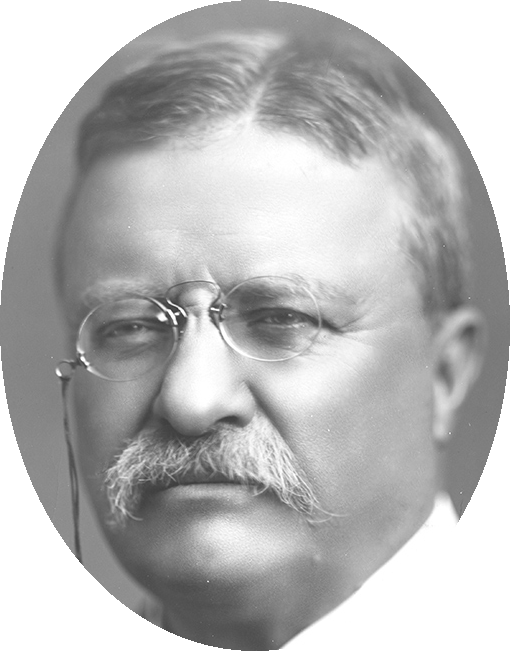
J.P. Morgan as Theodore Roosevelt |
 |
 |
John Pierpont Morgan
1837-1913
4/17
3/31
Banker |
Theodore Roosevelt Jr.
1858-1919
10/27
1/6
26th president |
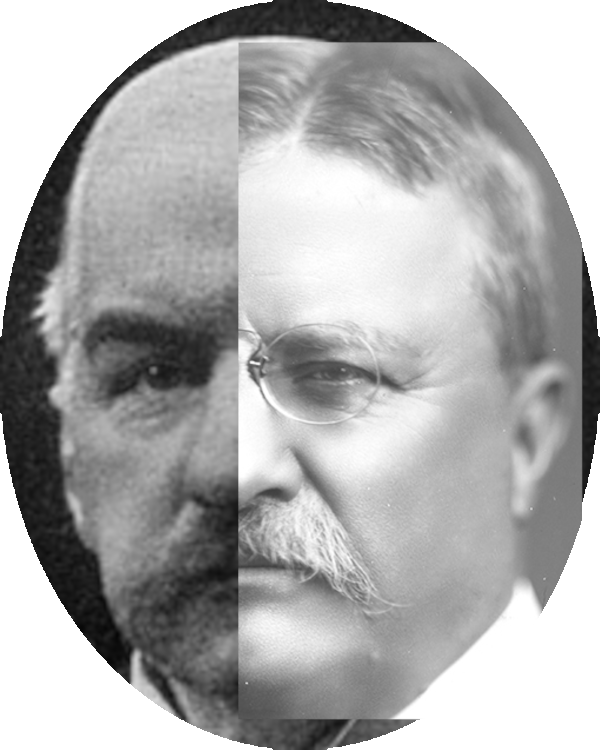 |
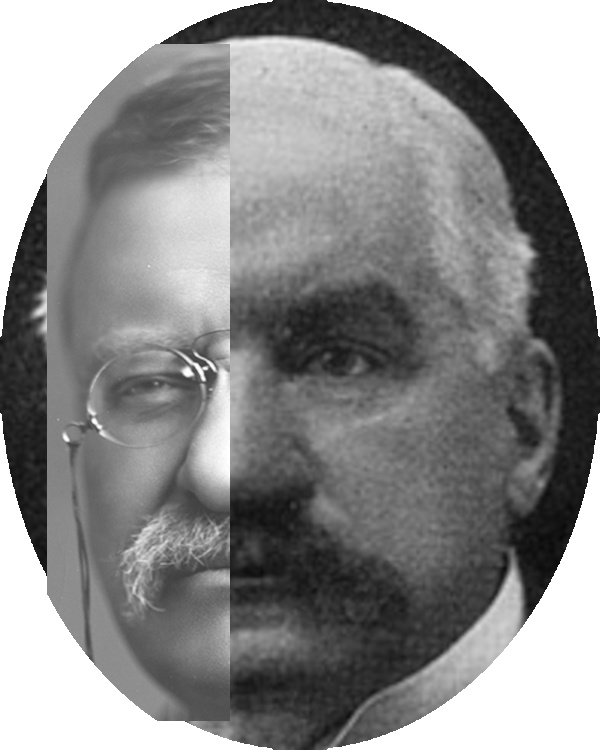 |
|
33rd
degree square deal |
- Teddy Roosevelt previously was involved in New York politics, including serving as the state's 33rd governor for two years.
- He served as the 25th vice president under President William McKinley for six months in 1901, assuming the presidency after McKinley's assassination.
- How amazing.
Religious calling |
- Both Morgan and his father regarded their profession as a noble, almost religious calling: they were funnelling capital from Europe to the emerging American market, watching over United States credit abroad, building the railroads and industrial corporations that would shape the American future, and acting as the country’s unofficial lender of last resort.
- J.P. Morgan thrived on Manhattan, hard work, social crowds (he hated to be alone), constant motion
and adventurous travel.
- He took the whole family to Egypt in 1871, and returned as often as possible after that, and
partook in the best in art, homes, yachts, décor, cigars, cuisine, and wine.
-
It was said that he built New York’s Lying-In Hospital to take care of all the pregnancies he was responsible for.
|
Neither man entertained an instant’s doubt about the patriotic service he was performing, although many other people did. Still, Pierpont restlessly wanted more, and less. He volunteered for the job of America’s central banker, but he, also craved freedom to travel, collect art, explore foreign cultures, and entertain legions of friends.
(Jean Strouse,
The New Yorker)
|
Loaded |
- By 1917, Britain and France owed so much money to
American banks that their defeat would have caused a financial
crisis in America.
- If they lost the war they couldn't
repay the loans, and American banks would collapse.
-
President Wilson asked Congress to declare war in April 1917,
it wasn't just about democracy or German agression, it was
about protecting American financial interests.
|
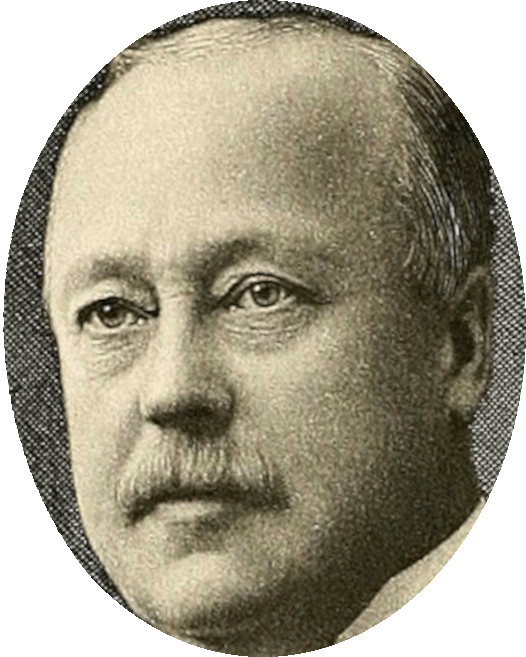
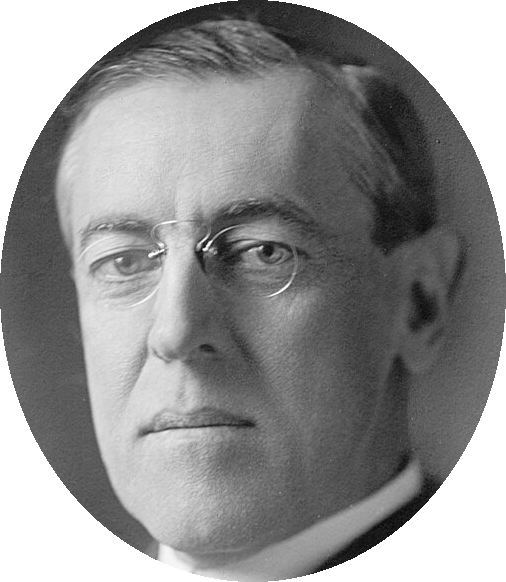
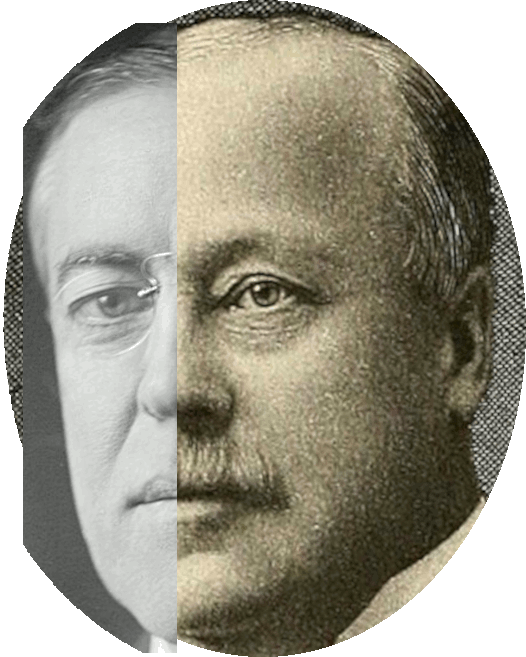
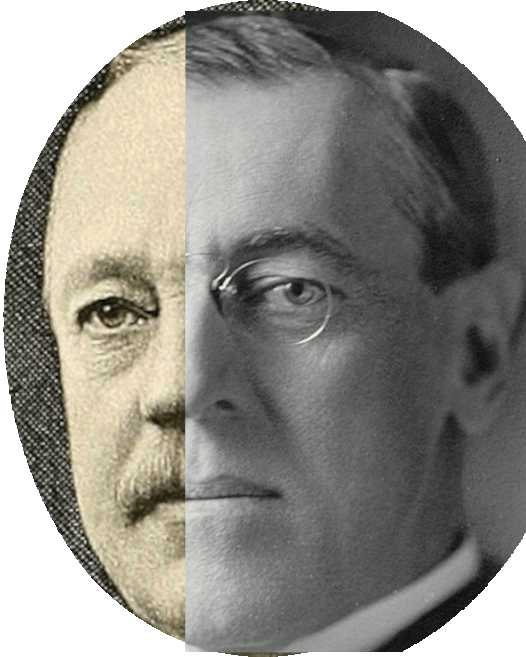
Lyman C. Smith as Woodrow Wilson |
 |
 |
Lyman Cornelius Smith
1850-1910
3/31 11/5
Smith-Corona Typewriter
L.C. Smith Shotguns |
Thomas Woodrow Wilson
1856-1924
12/26
2/3
28th president |
 |
 |
|
Federal Reserve |
- Woodrow Wilson, a graduate of Princeton University, had a family of Scots-Irish and Scottish descent, with his father's family coming from County Tyrone, Ireland, and his mother's side being from Scotland and England.
- His father, Joseph Ruggles Wilson, was a Presbyterian minister who was a descendant of the Scots-Irish and Scottish families.
- His maternal grandparents were immigrants from Paisley, Scotland, and his paternal grandparents immigrated from County Tyrone in what is now Northern Ireland.
- His mother was born in Carlisle, England, and the family moved to America.
Federal Reserve
banking |
- Senator George Norris of Nebraska said it expressly
during the war declaration debates, 'We are going into war
upon the demand of gold, we are about to put the dollar sign
on the American flag.'
- Norris voted against the war, but Congress
approved it, and J.P. Morgan's loans were secured by American
military power.
- After the war, Morgan profited again
because Germany owed reparations to the Allies, and the Allies
owed money to America.
- Of course, Morgan arranged the
loans for Germany to pay the reparations, and the Allies
repaid the American loans.
- Morgan collected fees at every
step.
- The Dawes Plan in 1924 and the Young Plan in 1929,
both structured by Morgan bankers refinanced billions in war
debt and Morgan collected millions in fees.
|
The Dawes Plan (1924) was an American-led plan to help Germany manage its massive World War I reparations payments by restructuring them into manageable installments, providing U.S. loans to Germany for recovery, and stabilizing its economy, which fostered a brief period of German prosperity and European stability before the Great Depression made it unsustainable, eventually leading to the Young Plan (1929).
(Assistant)
|
Reconstruction |
- World War II followed the same pattern and before
America entered the war, Morgan financed British war
purchases.
- After Pearl Harbor, the U.S. government
borrowed heavily to fund the war effort; war bonds and
treasury securities.
- Morgan banks underwrote them,
collecting fees on every issuance.
- After the war, Morgan
banks financed reconstruction.
- The Marshall Plan in 1948, which
rebuilt Europe, was administered partly through Morgan
connected institutions.
|
The Marshall Plan (European Recovery Program, ERP) was a U.S. initiative from 1948-1952 providing over $13 billion (around $150+ billion today) in aid to Western Europe after WWII to rebuild economies, prevent communist expansion, and foster stability, encouraging cooperation and free markets through investment in infrastructure, food, and machinery, successfully reviving European industry and creating strong trade partners for the U.S.. Initiated by Secretary of State George C. Marshall, it transformed war-torn nations, including West Germany, into prosperous, democratic allies.
(Assistant)
|

Original Chase Bank
logo |
- The Cold War, Korea, Vietnam, every conflict required
financing and by then, Morgan banks merged into J.P.
Morgan-Chase and they were always involved.
- Underwriting government debt, financing government
contractors and profitting from the interest and fees.
-
The Morgan family is no longer involved in day-to-day banking,
but the wealth remains and the family fortune is estimated at
$30 billion built by financing wars and collecting interest.
- While soldiers died paying the cost.
|
The Chase logo's iconic blue octagon, designed by Chermayeff & Geismar in 1960, symbolizes corporate strength, stability, and forward-moving progress through its four colored wedges (black, brown, green, blue) rotating around a central white square, representing security, innovation, and unity from a core, echoing ancient coins or a bank vault. It was a revolutionary abstract design meant to be memorable, representing a modern, united financial entity.
(Assistant)
|
Aviation |
- Lockheed Martin, or more accurately, the companies that
merged to become Lockheed Martin because military aviation has
been profitable since World War I.
- The Loughead brothers,
who later became Lockheed, founded their airplane company in
1912 and by World War I, they were building planes for the
military.
- Small contracts, experimental designs, but
aviation was the future and the companies that got into the
business early positioned themselves for a century of profits.
- World War I saw limited use of aircraft, mainly for
reconnaissance, some bombing, but the potential was clear.
CindyN, CC BY-SA 4.0 , via Wikimedia Commons
P-38 Lightning |
- After the war, military aviation contracts dried up and
many aircraft companies went bankrupt.
- Lockheed survived
by building civilian planes, but they kept their military
connections alive.
- However, World War II was their
breakthrough because military aircraft were decisive; bombers,
fighters, transports, all essential.
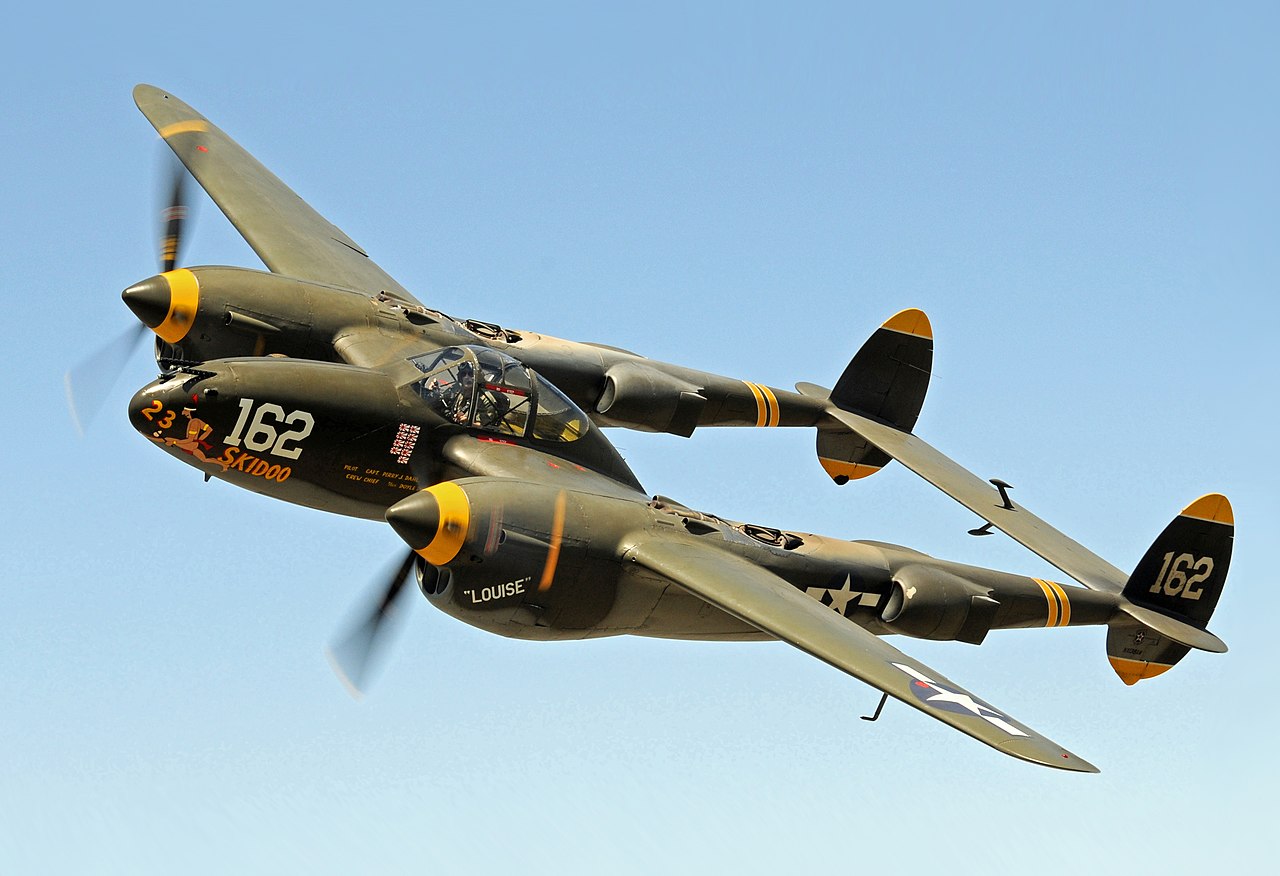
- Lockheed built the
P-38 Lightning fighter and produced over 10,000.
- Next
they built the Hudson Bomber and produced 2,800.
- The
contracts were worth hundreds of millions, but Lockheed didn't
just build planes, they built relations with the Pentagon.
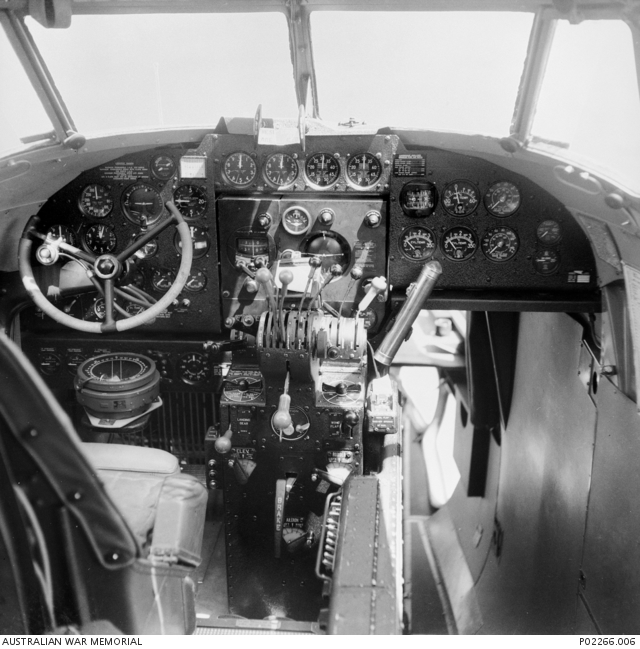
Australian War Memorial, Public domain, via Wikimedia Commons
Hudson Bomber
'cock'pit |
- Lockheed hired former military officers as executives,
they located factories in Congressional districts where
representatives needed jobs for constituents.
- As a
result, they made themselves politically untouchable.
-
After World War II, the Cold War kept the contracts flowing
and Lockheed built the U-2 spy plane and the SR-71 Blackbird,
the C-130 Cargo plane, still in use today.
- Every decade
brought new government contracts and Lockheed's strategy was
also the same; build good products and underestimate costs,
get the contract and then come back for more money.
-
Because the project is more complex than expected.
More complex |
- The Pentagon always paid because cancelling the project
always meant admitting waste.
- The C-5 Galaxy transport
plane is the perfect example as the initial contract in 1965
for $2.1 billion, however, upon delivery, the actual cost was
$5.3 billion.
- Some 150% over budget but Lockheed didn't
lose any money because they had cost-plus contracts and they
were paid all costs and profits.
- The Pentagon couldn't
cancel because they'd already spent billions so they paid, and
Lockheed profited.
- Congress approved it because the
company employed thousands in Georgia, a key state.
Merger |
- Vietnam, the Gulf War, Afghanistan, Iraq, every war
brought Lockheed contracts.
- By the 1990s, the
military-industrial complex was consolidating and Lockheed
merged with Martin Marietta in 1995 and today, Lockheed Martin
is the largest defense contractor in the world.
- They
earned $65 billion in revenue in 2023, 90% from government
contracts.
- So the pattern continues, the F-35 fighter
jet, the most expensive weapons program in history.
- The
original budget $233 billion, current estimate, over $1.7
trillion, 7 times over budget and Lockheed is getting full
pay.
- Every cost overrun, the Pentagon covers because they
can't cancel, too much already invested, too many jobs at
stake, too many Congressional districts dependent on the
program.
Shareholders |
- The Lockheed family doesn't directly control the company
anymore, it's publicly traded, however, the shareholders
profit and the pattern developed over a century ago continues.
- War is declared, Lockheed's stock price rises, contracts are
awarded, costs overrun, government pays, shareholders profit.
- Repeat.

Military logistics |
- Halliburton, the company that turned war support into an
art form was founded in 1919 by Erle P. Halliburton.
-
Initially, it was an oil services company, cementing oil
wells, however, the founder understood that infrastructure,
whether for oil or military was lucrative.
- By World War
II, Halliburton was building military bases, airfields and
ports for the military and the pattern was simple, because
military needs infrastructure fast.
- Halliburton has the
expertise and equipment and they get no-bid contracts because
there's no time for competitive bidding.
Public Domain via
Wikiapedia Commons
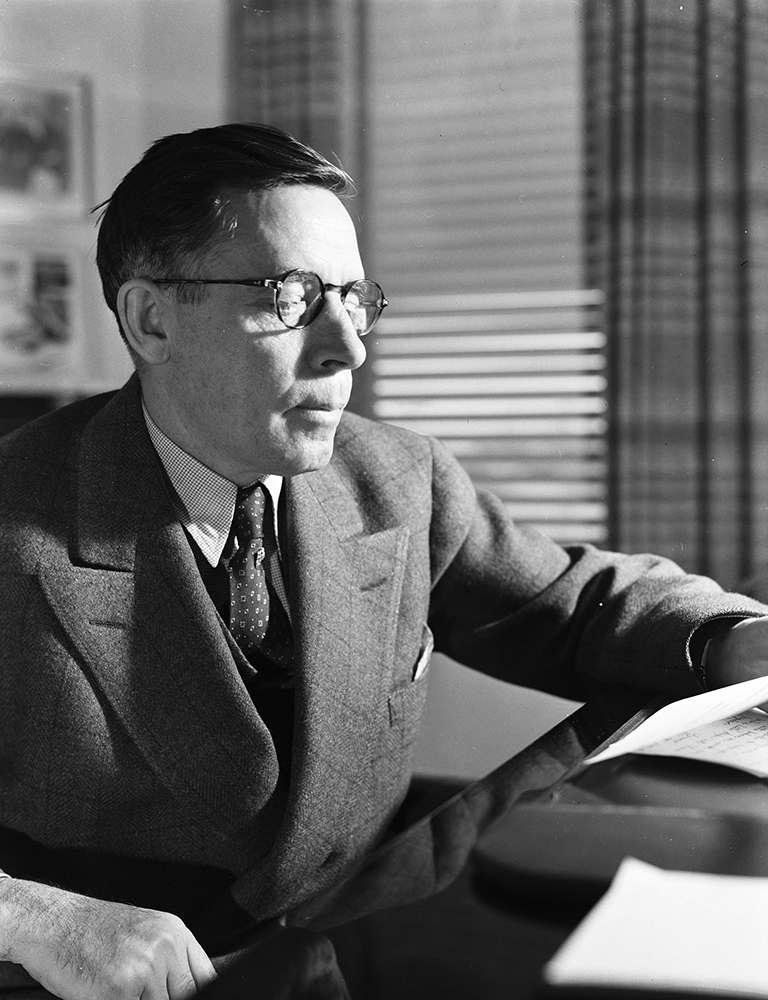
Erle P. Halliburton
- 1940 |
- Erle Palmer Halliburton (1892-1957) was an American businessman specializing in oil field services.
- He was born on September 22, 1892, near Henning,
Tennessee, the son of Lou Emma (Cothran) and Edwin Graves
Halliburton
- When Halliburton was 12 years old, his father died
and at 14, Halliburton left home to support the family.
- Before the U.S. entered into World War I, Halliburton gained exposure to shipboard engineering as a member of the U.S. Navy.
- After his discharge in 1915, he headed for the
oilfields of California, where he was able to apply techniques
analogous to the technology with which he had worked in the
Navy.
|
His drive and his sense of innovation soon brought him into conflict with his boss, Almond Perkins. Halliburton later quipped that getting hired and getting fired by the Perkins Oil Well Cementing Company were the two best opportunities he had ever received.
(Wikipedia)
|
|
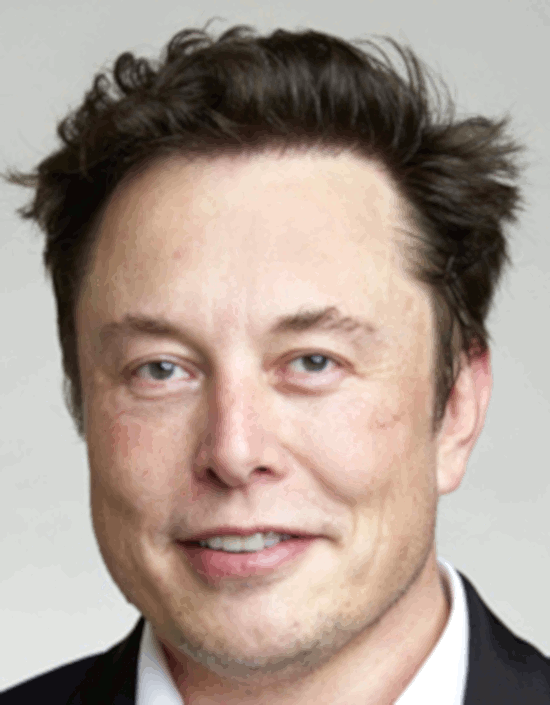
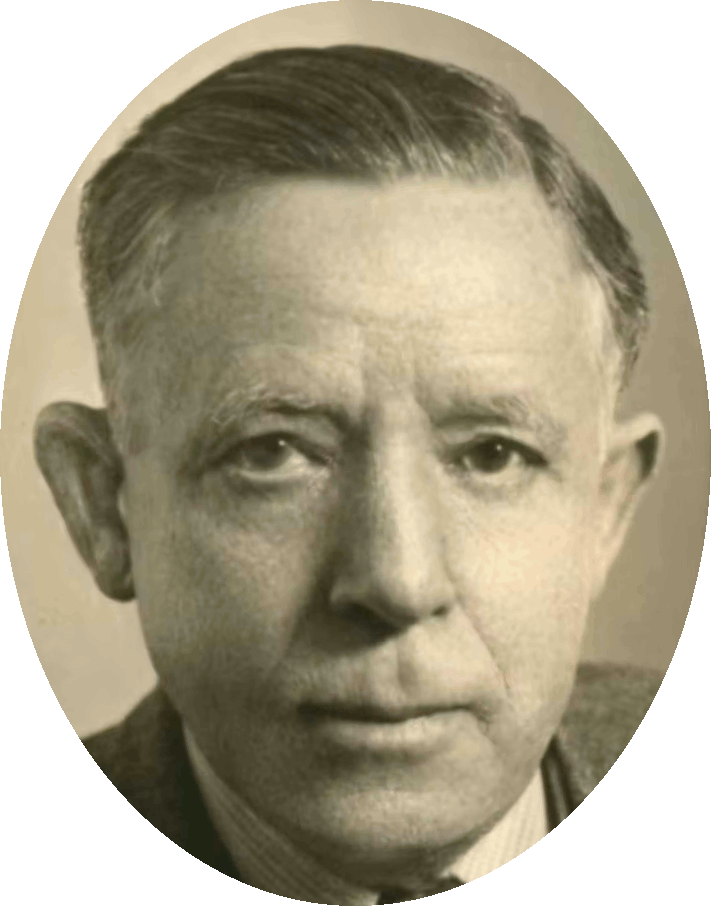
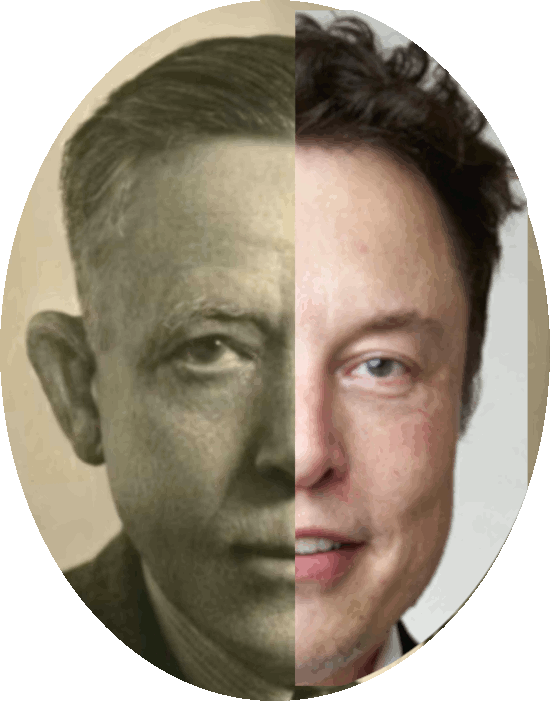
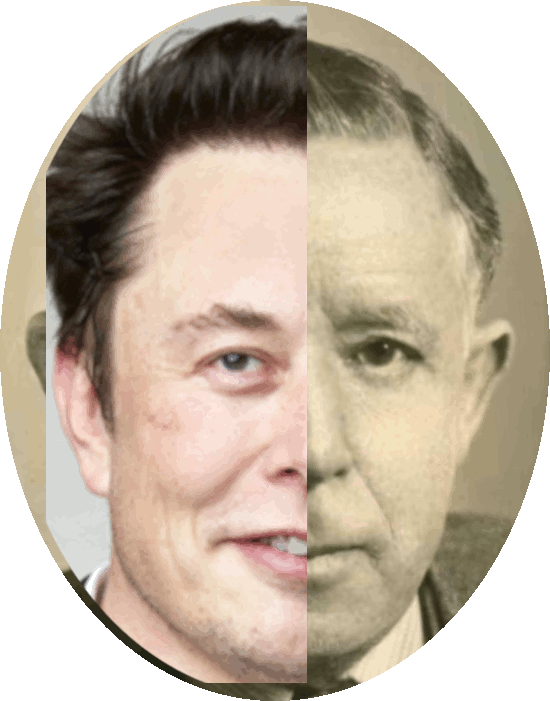
Elon Musk as Erle Halliburton |
 |
 |
Elon Reeve Musk
1971
6/28
Patent grifter |
Erle Palmer Halliburton
1892-1957
9/22
10/13
|
 |
 |
|
Shoddy work |
- he company has been criticized for its involvement in numerous controversies, including its involvement with Dick Cheney
who was U.S. Secretary of Defense, then CEO of the company, then vice president of the United States
and the Iraq War, and the Deepwater Horizon.
- Halliburton, through its subsidiary KBR, secured massive U.S. military logistics and reconstruction contracts in Iraq, providing essential services like building bases, supplying food, fuel, laundry, and rebuilding oil infrastructure under emergency
'no-bid' deals, generating billions in revenue but facing significant controversy over overcharging, shoddy work (leading to soldier deaths), lack of competition, and allegations of corruption, with investigations and lawsuits following.
Military facilities |
- They build a facility and a cost-plus contract means
that they get paid all expenses plus guaranteed profit so they
can't lose money.
- Korea saw Halliburton build bases and
infrastructure, Vietnam was even bigger and through its
subsidiary Brown & Root, they built roads, ports and airfields
throughout South Vietnam.
- The contracts were worth
billions and they were awarded without competitive bidding
because Brown & Root had political connections.
- Here's
where the political connection becomes crucial, George Brown
was a major donor to Lyndon B. Johnson's presidential campaign
as well as his political career.
- When Johnson became
president, Brown & Root received massive contracts for Vietnam
infrastructure.
Political donations |
- Coincidence? the pattern is clear, political donations,
access to power, government contracts, profit.
- The Gulf
War in 1991, brought Halliburton back into the picture.
-
Dick Cheney was Secretary of Defense and Halliburton got
contracts to build facilities in Saudi Arabia and Kuwait.
-
After the war, Cheney left government and became CEO of
Halliburton in 1995 and he ran the company until 2000 when he
became vice president under George W. Bush.
- And then came
Afghanistan and Iraq, Halliburton through its subsidiary KBR
got contracts worth over $40 billion.
- You know, the
typical, cost-plus pricing and no-bid contracts.
-
Halliburton built bases, provided food services, supplied
fuel, managed logistics, and the costs were astronomical.
|
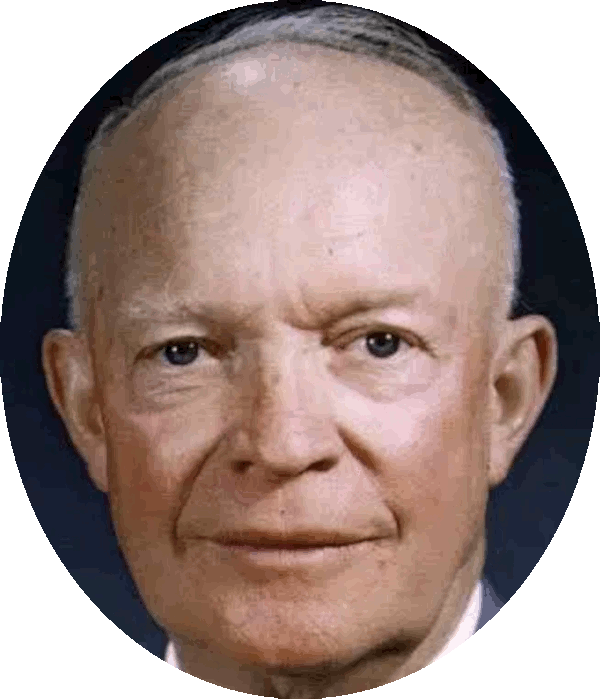
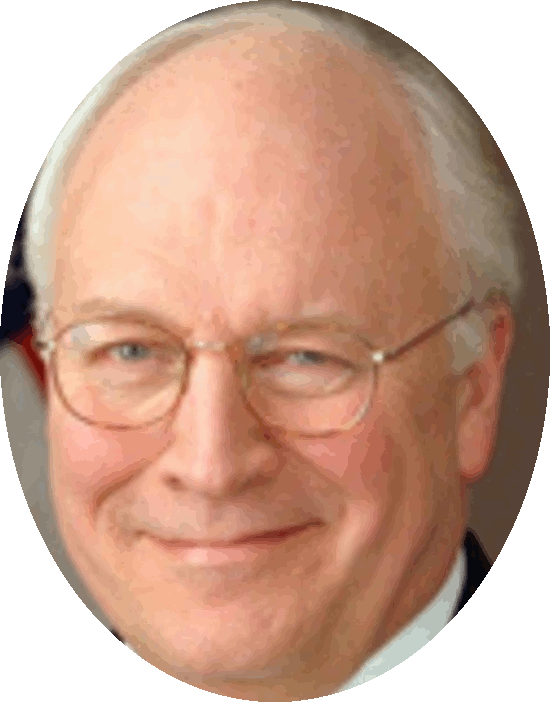
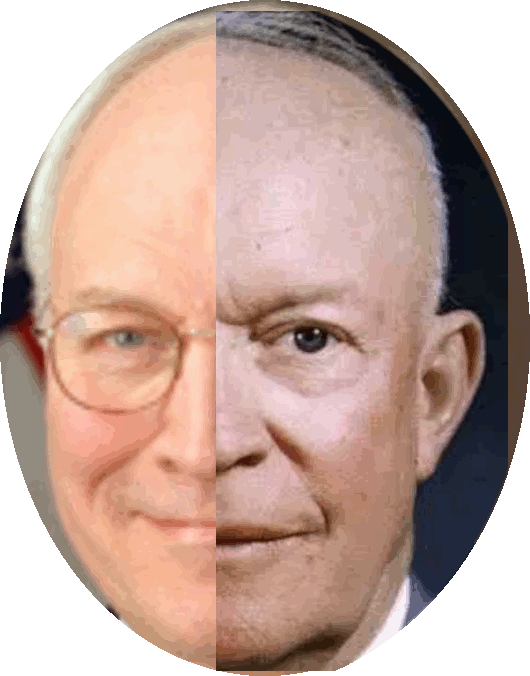
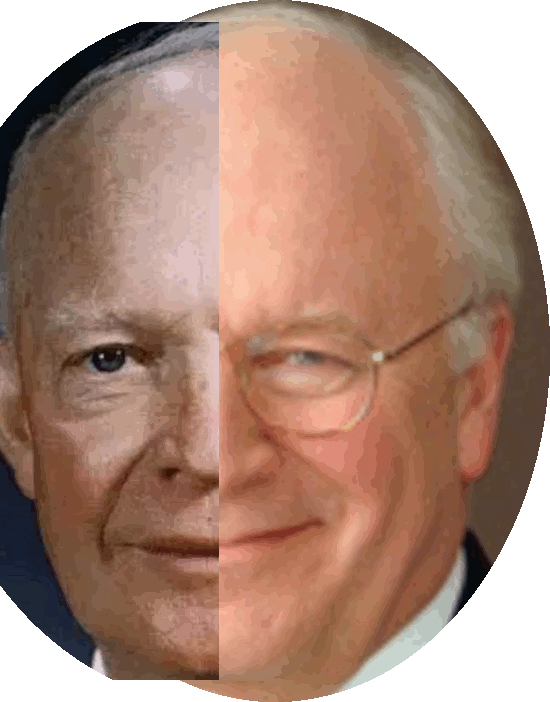
Dwight 'Ike' Eisenhower as Dick Cheney |
 |
 |
Dwight David Eisenhower
1890-1969
10/14
3/28
34th president |
Richard Bruce Cheney
1941-2025
1/30
11/3
Chief war profiteer |
 |
 |
|
Military Industial complex |
- During World War II, Eisenhower was Supreme Commander of the Allied Expeditionary Force in Europe and achieved the five-star rank as General of the Army. Eisenhower planned and supervised two of the most consequential military campaigns of World War II: Operation Torch in the North Africa campaign in 1942–1943 and the invasion of Normandy in 1944.
- No wonder he needed this military industrial complex.
|
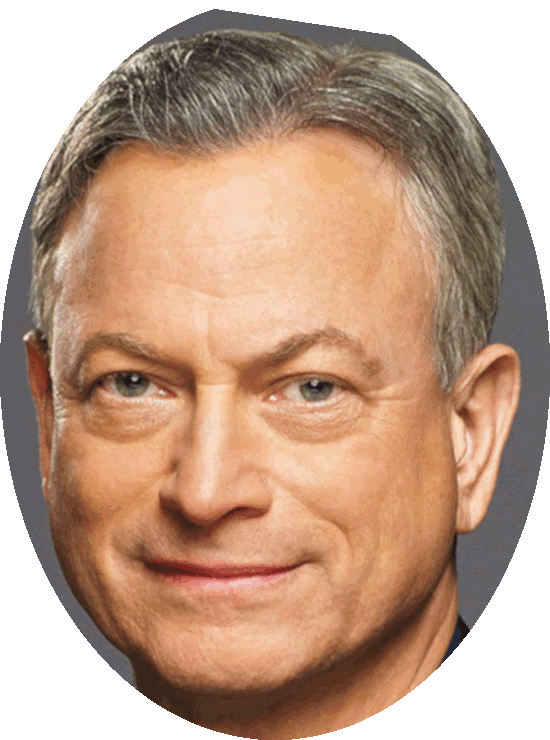
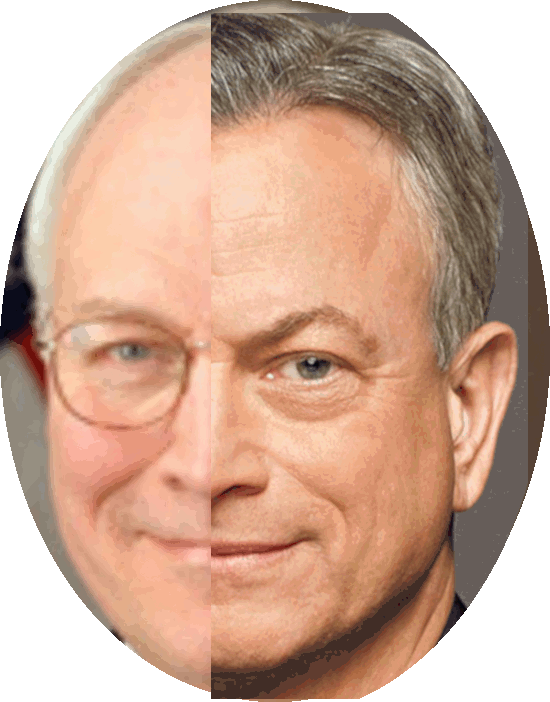
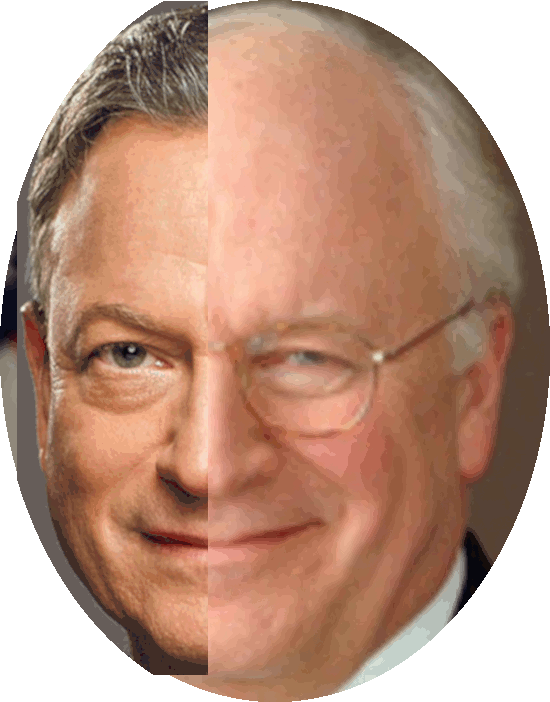
Gary Sinise as Dick Cheney |
 |
|
Gary Alan Sinise
1955
3/17
Actor |
Richard Bruce Cheney
1941-2025
1/30
11/3
Chief war profiteer |
 |
 |
|
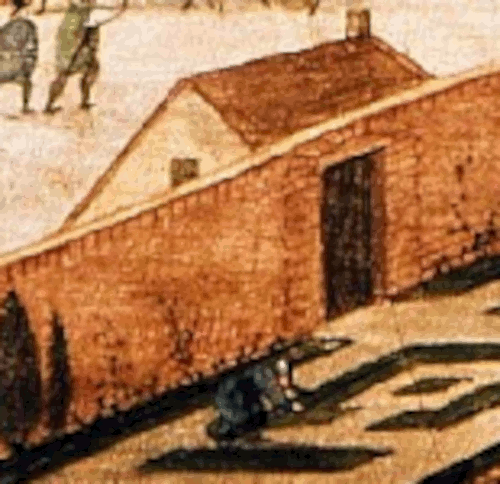
Oak grove |
- Burnt sienna.
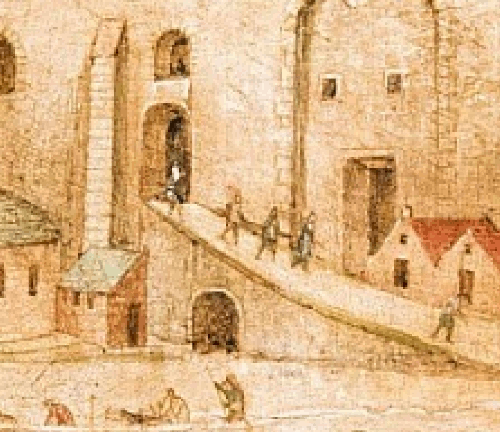
Plank walk |
- The Pentagon's Inspector General found billions in waste
and overcharges.
- Halliburton billed the government for
meals never served, for fuel deliveries that were never
happened, for construction that was never completed.
- When
questioned about it, Halliburton claimed that war zones are
chaotic and waste is inevitable!
- So the government agreed
with them and kept on paying.
- Cheney, as vice president,
recused himself from contract decisions involving Halliburton,
but, they received more government contracts during his tenure
than in any previous period.
Politicians back
door |
- From 2003 to 2008, Halliburton's government contracts
increased by 400% and their stock price tripled.
- When
Cheney left office in 2009, he still held Halliburton stock
options worth millions.
- This is the pattern, the company
hires politicians as executives and those executives build
relations in government and when war starts, those relations
turn into contracts.
- The profit is shared, politicians
retire wealthy, companies get richer, and taxpayers pay the
bill and increasingly live in poverty.
|
Summary |
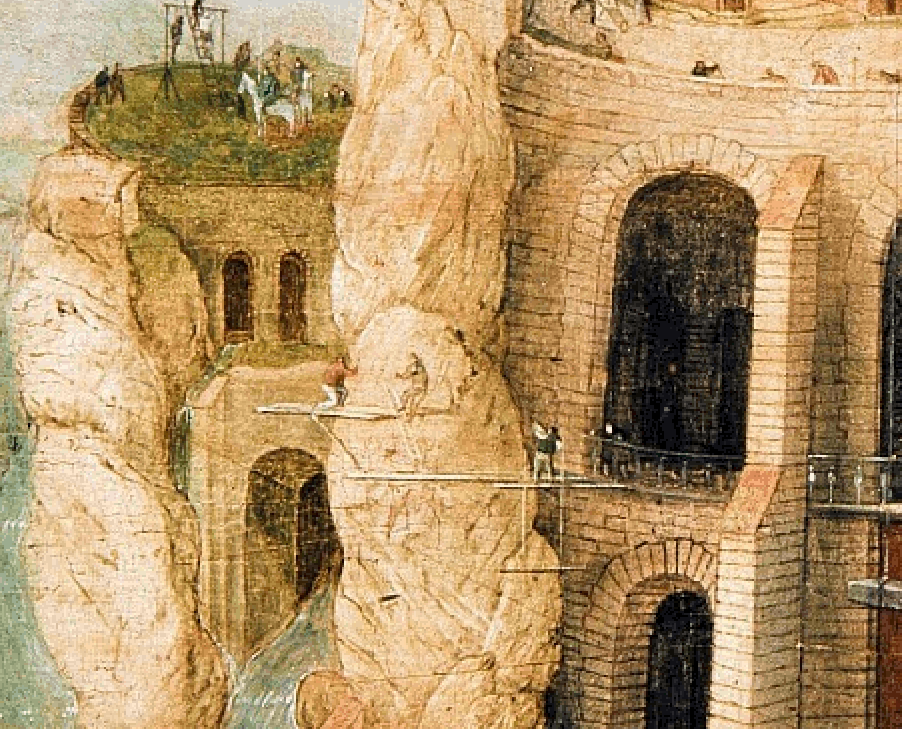
Never ending
construction |
- If we look at this pattern across all 5 of these
corporations, it's not a matter that these families profited
from war, it's HOW they profited.
- They have repeated the
same strategy forr 150 years.
- Step 1: Before the war, all
5 companies established themselves as essential before any
conflict began such as DuPont who built explosive
manufacturing capacity during peacetime, Rockefeller
monopolized oil refining, Morgan established banking
relations, Lockheed maintained military contracts between
wars, and Halliburton built infrastructure expertise.
-
When war started, they were all ready to go.

Never ending
supplies |
- Step 2: Get the first contract because government needs
supplies immediately, no time for competitive bidding.
-
Companies already positioned get no-bid contracts and the
justification is always national security, we can't wait for
bids, we need it now.
- Once they have their first bid the
next are much easier because by then, your company is the
'proven' supplier.
Begs for cost-plus
pricing |
- Step 3: Cost-plus pricing was guaranteed to these
companies on every major contract from the Civil War onward.
- Once you have this advantage the contractor simply bills the
government for all costs plus a guaranteed percentage profit.
- This removes all risks, if costs overrun, the government
pays and if the project runs longer, the contractor makes more
profit.
- The incentive for the suppliers therefore is to
maximize costs, not minimize them.
Overruns |
- Step 4: Overrun the budget because every major contract
in the last 50 years has come in over-budget including the
F-35 seven times over, the Zumwalt destroyer three times over,
the Littoral combat ship double the estimate.
- This isn't
incompetence, it's the business model; underbid time and money
to get the contract, then revise estimates upward.
- The
government can't cancel because they've already paid, so the
contractor profits from the overruns.
Hiring practices |
- Step 5: Hire the regulators, when military officers
retire they all get jobs at the defense contractors.
-
Generals who approved Lockheed contracts, automatically become
Lockheed executives.
- Admirals who oversaw shipbuilding
get jobs with shipbuilding companies.
- The revolving door
between Pentagon and industry is so established it has a name,
and it ensures that the people awarding contracts maintain
relationships that benefit them later.
Lobbying for more
war |
- Step 6: Lobby for more war, this is the darkest part
because defense contractors spend millions lobbying to
Congress.
- They donate to campaigns, fund think tanks that
produce papers advocating military intervention.
- The
Center for Strategic and International Studies and the
American Enterprise Institute both receive funding from
defense contractors and both consistently publish research
supporting military action.
- When Iraq was being debated
in 2002, defense contractors funded organizations that
produced intelligence reports that supported invasion.
-
They paid for advertisements and hired former generals to
appear on news shows advocating war.
- When war was
approved, those same defense contractors received billions in
contracts.
- Did they create the Iraq war? They created an
environment where war was much more likely and they profited
when it happened.
Advocating war |
- Step 7: Diversify the profit because not all profits
come from weapons, DuPont used explosive profits to build a
chemical empire.
- Rockefeller used oil profits to buy
banks and real estate, Morgan used wartime profits to fund
peacetime industries.
- These companies all diversify so
that even when war ends, the wealth remains and the families
behind these companies become 'elite' dynasties.
-
Multi-generational wealth built on war.
Dynasty |
- How much profit are we talking about; DuPont's total
revenue from military contracts since 1802 is estimated at
over $50 billion in inflation adjusted dollars.
-
Rockefeller companies, over $100 billion in fuel sales to
military since 1898.
- Morgan banks interest and fees from
war financing estimated at over $75 billion.
- Lockheed
Martin and predecessors, over $200 billion in aircraft and
systems, just since 1917.
- Halliburton, over $60 billion
in military logistics and infrastructure since 1942.
-
Total, these five companies and their predecessors have
extracted over $485 billion from American taxpayers through
war contracts.
More war! |
- That's documented, publicly available war contract
values, and doesn't include indirect profits or stock price
increases.
- Nor does it include real estate purchased with
war profits or industries built using war capital.
- If you
included that, the number soars to over $1 trillion and the
critical detail is that money came from American taxpayers.
- Every dollar these elites at DuPont got paid for explosives,
was taken from American workers through taxes, every dollar
paid to Halliburton for logistics came from deficit spending
that future generations will need to repay.
- In no way are
these 'normal' business profits, these are taxpayer funds
transfered to private corporations and families, all justified
by war.
Overpaid defense
contractors |
- Now the question you should be asking, is this still
happening, yes of course it is.
- In 2023, the U.S.
military budget was $816 billion.
- The five largest
defense contractors, Lockheed Martin, Boeing, Raytheon,
General Dynamics and Northrup Gruman received over $200
billion in contracts just in one year.
- That's 25% if the
entire defense budget going to just five companies.
- The
pattern continues because these companies employ former
Pentagon officials who lobby Congress, locate factories
strategically.
The elite war club |
- Lockheed's F-35 program has suppliers in 45 states and
that's intentional and shows that 90 senators have
constituents employed by the program, so voting against the
F-35 means voting against jobs in your state.
- As a
result, Congress keeps funding it even though it's seven times
over budget, years behind schedule and even though it has over
800 documented defects.
- The pattern established by DuPont
in 1802 continues today.
|
War is profitable for companies, for shareholders,
for executives, for politicians who get donations and
jobs after retirement. The only people who don't
profit are the soldiers who fight and the taxpayers
who pay.
(Economy Rewind)
|

Opportunity cost
lost |
- We have to look at the opportunity cost, what could
Americans have built with $485 billion if it hadn't gone to
all these grifters and their war profits.
- $485 billion
could fund free college for every American student for 20
years, it could build high-speed rail connecting every major
city.
- It could fund universal healthcare for a decade or
rebuild every road and bridge in the country, or fund health
research for a century.
- But instead, the elite fat cats
get paid, and the money gets the citizens fuel, logistics,
weapons and more war.
- Some necessary, most not.
- The
companies profited while the public good suffered, this isn't
about war or whether it was necessary, because even these wars
were used to exploit taxpayers for profit.
Black hole |
- The profit didn't create all wars, but it made them
longer and more expensive.
- But the final piece of this
'pattern' is that the families are untouchable despite
evidence of overcharging and fraud or profiteering, no one
ever goes to jail.
- DuPont was investgated for explosive
profiteering in the 1930s and nothing happened, Standard Oil
was broken up for monopoly but the Rockefeller's kept the
wealth and the companies reunited over time.
- Morgan banks
were investigated for profiteering after World War I, no one
was prosecuted.
Horse before the
cart |
- Halliburton was investigated for overcharging in Iraq,
they paid a small fine, kept the contracts and continued
profiting.
- Lockheed was investigated for bribing foreign
officials to buy weapons, they paid a fine and the executives
faced no jail time.
- The pattern continues, companies are
investigated and pay small fines, a fraction of the profit,
and no one is ever prosecuted.
- Companies continue on
because these companies are considered too important and the
corrupt military depends on them and Congress depends on them
for jobs in their districts.
The beat goes on |
- The economy depends on them because they seem to be the
only jobs, so they're protected even when they break the law.
- Five companies, five families, over 150 years, every
American war and the pattern is identical every time; position
before the war, get the contracts, overrun the costs, hire the
regulators, lobby for more, profit while others die.
- If
you finally understand that war is a business than you're
starting to see that 5 families earn profits based on wars
that killed millions.
|
Many wars were encouraged, prolonged, or esculated because it was profitable, Vietnam could have ended years earlier, but defense contractors lobbied to continue. Iraq was sold on false intelligence partly produced by contractor funded think tanks.
Afghanistan became a 20 year occupation partly because
contractors spent money building what we destroyed.
(Economy Rewind)
|
|
|
|
Too rash, too unadvised, too sudden.
Shakespeare,
Romeo and Juliet

|