|







|
|
|
ABEL GRIMMER -
THE LOST CASTLE - PAGE 7
|
Great
Britain Victorian
Era |

An Empire at its Peak
|
- Victoria's lineage traces back to the German House of Hanover, with her grandfather, George III, being the first Hanoverian king born in England.
-
Because Hanover followed Salic Law (excluding female rulers), her uncle, Ernest Augustus, inherited the Hanoverian crown, while Victoria inherited the British crown.
- Her long reign (1837-1901) was a period of immense industrial, cultural, and imperial growth for Britain.
- This period saw the rise of the Industrial Revolution, bringing innovations like the telephone, electric lights, steamships, and the massive expansion of railways, transforming society and trade.
- Bisexuality existed and Victorian society encouraged it between women.
lesbianism and female 'friendships' were promoted within female boarding schools and between women in heterosexual marriages; the precise relationships exemplified in
Jane Eyre.
|
Shall I compare thee to a summer’s day?
Thou art more lovely and more temperate:
Rough winds do shake the darling buds of May,
And summer’s lease hath all too short a date.
(Shakespeare, Sonnet 18)
|
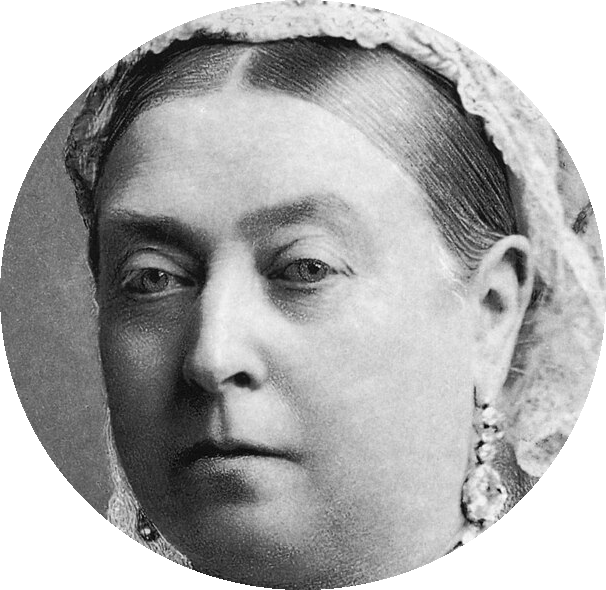
Queen
Victoria of the United
Kingdom
1837 -
1901

House of Hanover |
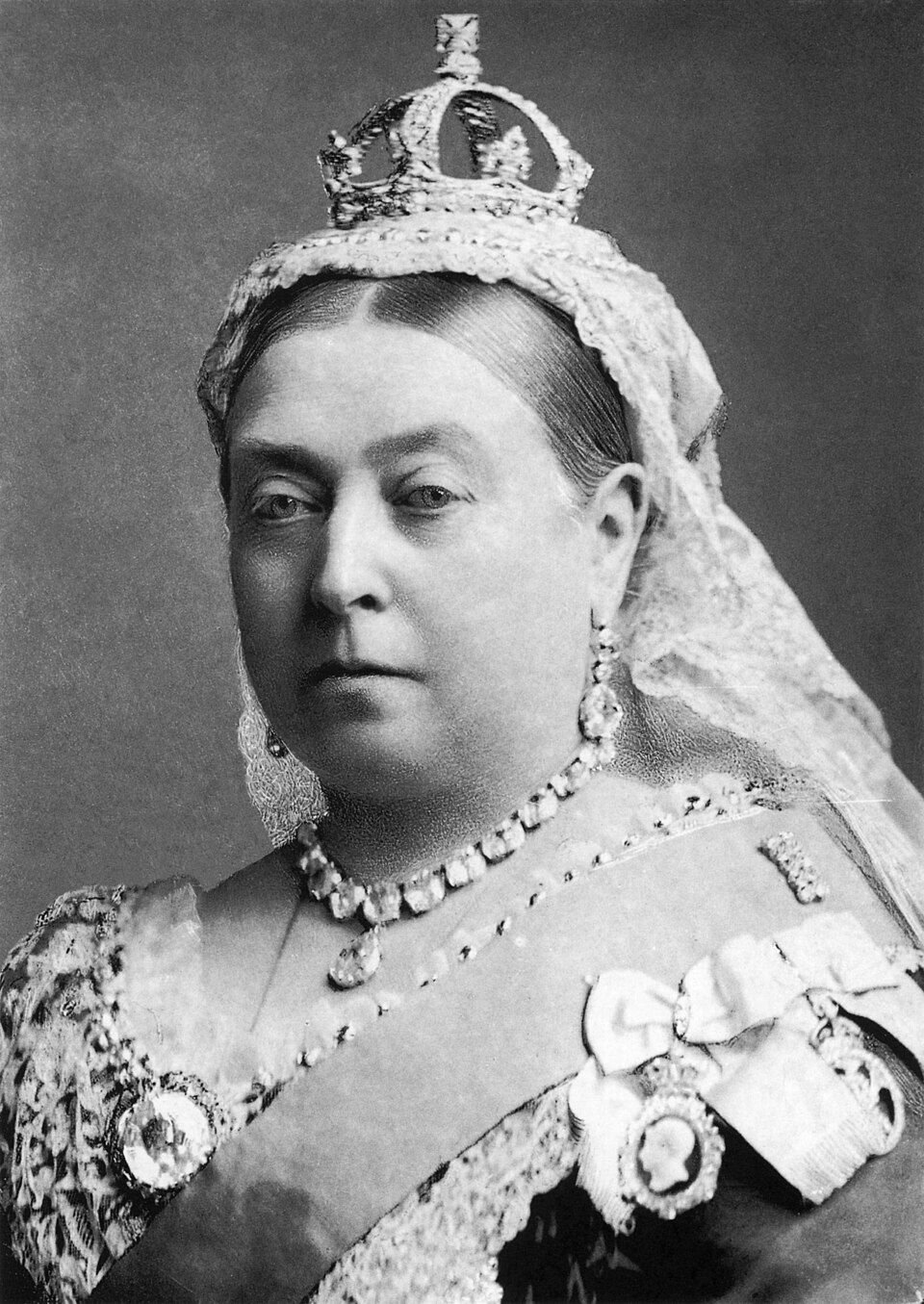
Alexander Bassano, Public domain, via Wikimedia Commons
Queen Victoria |
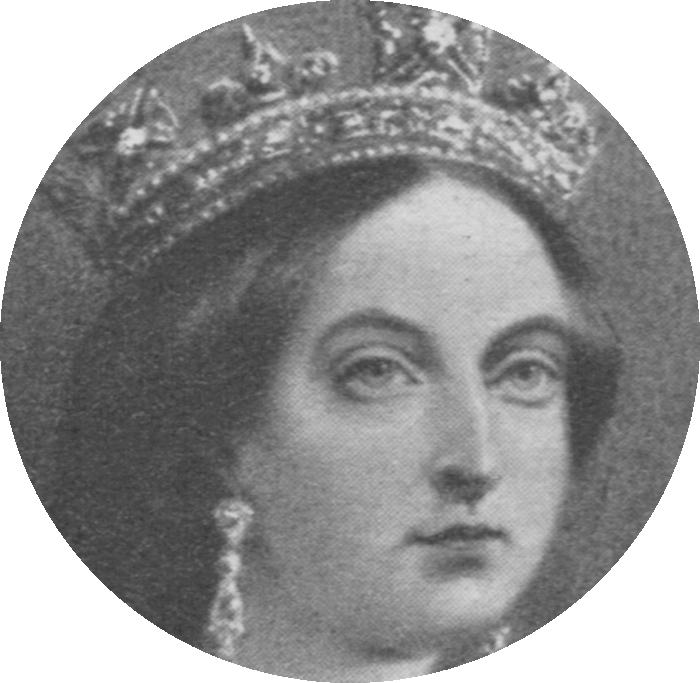
- Victoria was born as Alexandrina Victoria (1819-1901)
and was Queen of the United Kingdom of Great Britain and Ireland from June
20, 1837, until her death on January 22, 1901.
- Her reign of 63 years and 216 days, which was longer than those of any of her predecessors, constituted the Victorian era, a period of industrial, political, scientific, and military change within the United Kingdom marked by a great expansion of the British Empire.
- In 1876, the British parliament voted to grant her the additional title of Empress of India.
War horse |
-
Queen Victoria's reign was defined by numerous British military campaigns, from colonial conflicts in Africa and Asia like the
Indian Rebellion from 1857-1858 which was a turning point leading to the end of East India Company rule and the start of direct British rule (the Raj).
- First Opium War from 1839-1842 was a period
where Britain sent forces to protect opium trade interests
in China, leading to Hong Kong's cession.
- The Colonial Wars involved numerous conflicts in
China, Africa (Zulu War, Asante Wars),
Afghanistan, and New Zealand, expanding the British Empire.
- Second Anglo-Afghan War from 1878-1880 aimed at counteracting Russian influence in Central Asia.
- She
presided over the major European Crimean War from 1854 to 1856, where she became actively involved by supporting troops, visiting hospitals, and establishing the Victoria Cross for bravery.
- Boer Wars (1880-81, 1899-1902) overshadowed the
end of her reign, with Victoria famously declaring, 'We are
not interested in the possibilities of defeat.'
- She maintained neutrality in the American Civil War and influenced European politics through her vast royal family, but her family ties, particularly to Prussia, linked Britain to European power struggles that eventually led to inadvertently setting some groundwork for future conflicts like
World War I.
|
Victoria's era was defined by the expansion and challenges of empire, with the Queen acting as a symbol of national unity and imperial might, personally engaging with the human cost of war.
(Assistant)
|
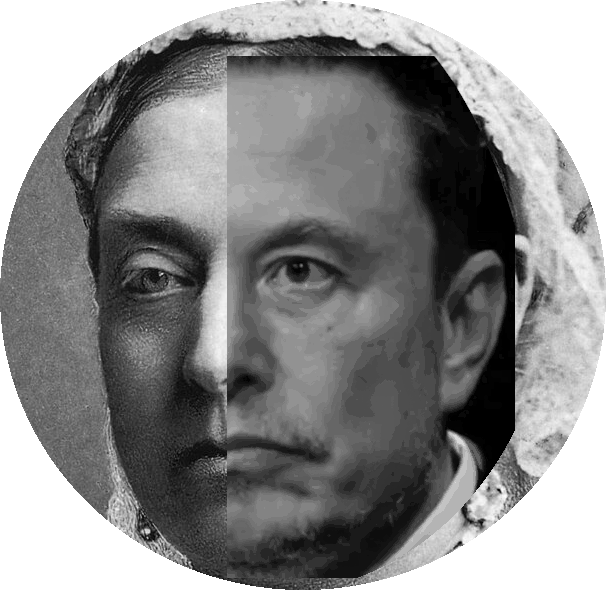
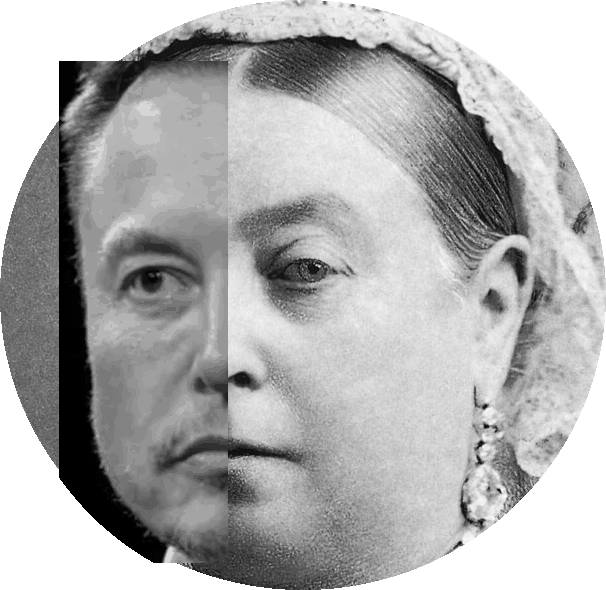
Alexandrina Victoria
1819-1901
5/24 1/22 |
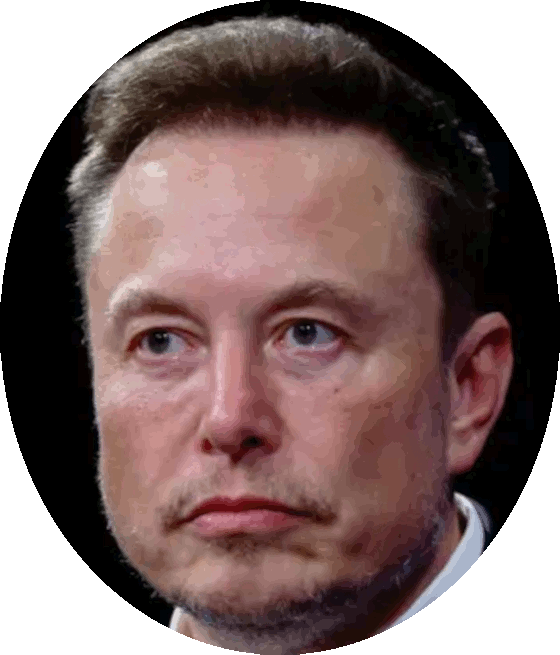
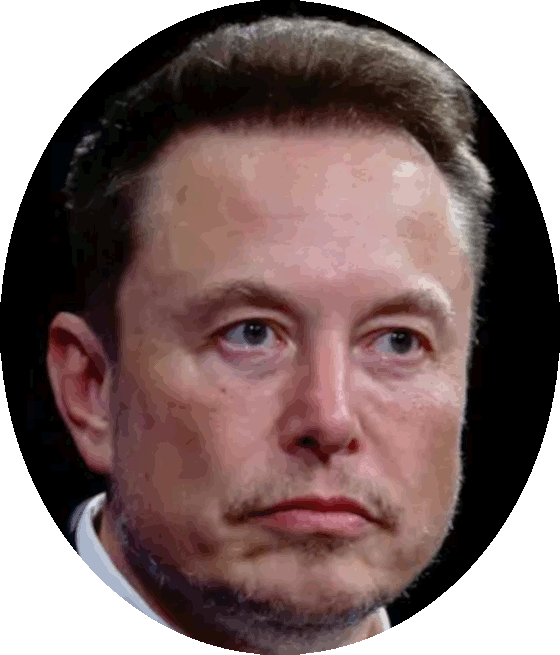
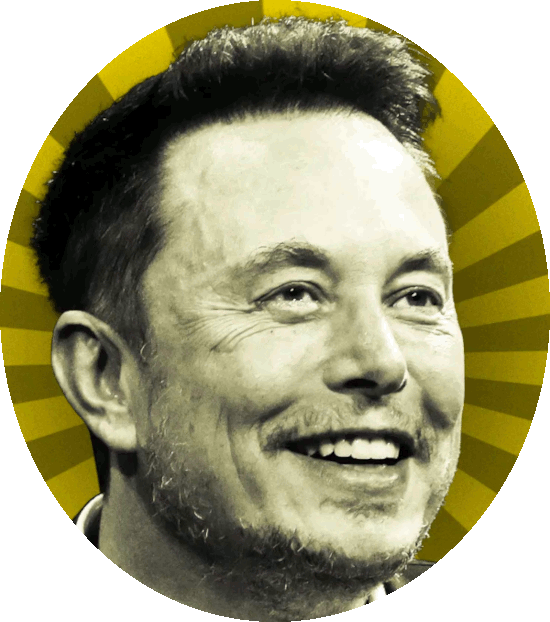
Elon Reeve Musk
1971
6/28 |
 |
 |
|
Faggy boy |
- Victoria was born on
May 24, 1819, and was the daughter of Prince Edward, Duke of Kent and Strathearn (the fourth son of King George III), and Princess Victoria of Saxe-Coburg-Saalfeld.
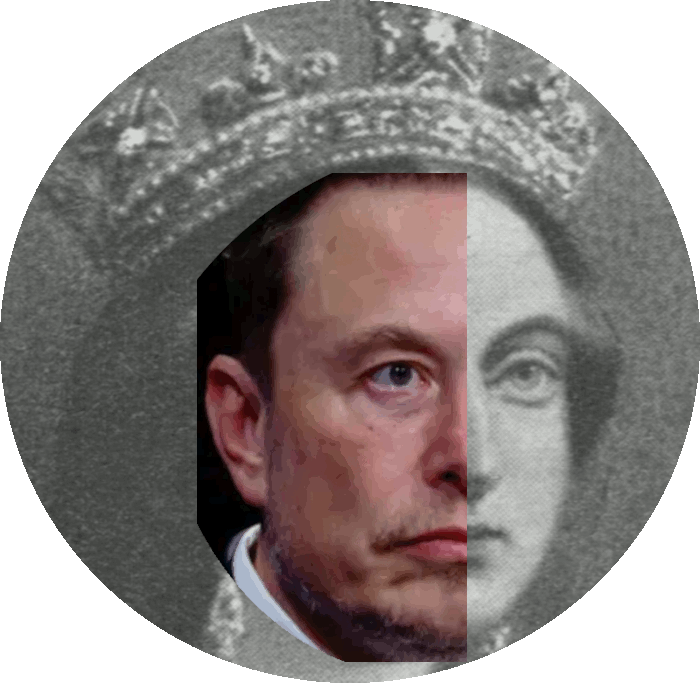
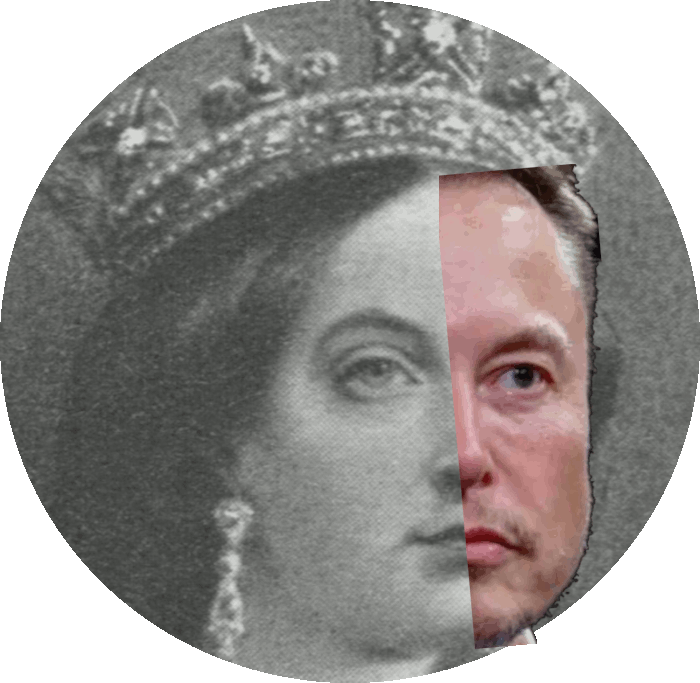
Alexandrina Victoria
1819-1901
5/24 1/22 |
Elon Reeve Musk
1971
6/28 |
 |
 |
|
Princess |
- Victoria married her first cousin, Prince Albert of Saxe-Coburg and Gotha, in 1840.
- Her 9 children were the illegitimate children of
Nathan Rothschild.
- Their children married into royal
and noble families across the continent.
Rothschild |
-
Victoria, Princess Royal (Vicky) became German Empress by marrying the future Emperor Frederick III; their son was Kaiser Wilhelm II, the German Emperor during WWI.
-
Edward VII (Bertie) became King of the United Kingdom, linking the British monarchy directly to European courts.
- Princess Alice married Louis IV, Grand Duke of Hesse; their daughter Alexandra (Alix) became Tsarina of Russia.
- Prince Alfred (Duke of Edinburgh/Saxe-Coburg and
Gotha) married Grand Duchess Marie of Russia, connecting the British and Russian royals.
- Princess Helena (Lenchen) married Prince Christian of Schleswig-Holstein.
- Princess Louise married the Duke of Argyll, a Scottish noble, less involved in foreign royalty.
- Prince Arthur (Duke of Connaught) his daughter, Princess Margaret, married into the Swedish royal family, linking to Scandinavian royalty.
- Prince Leopold (Duke of Albany) married Princess Helena of Waldeck-Pyrmont
and his daughter, Princess Alice, married into the Battenberg/Mountbatten family, tying into Spanish and other European lines.
- Princess Beatrice married Prince Henry of Battenberg; their daughter Victoria became Queen of Spain as the wife of King Alfonso XIII, introducing hemophilia to the Spanish royal family.
|
Queen Victoria's nine children married into royal
families across Europe, earning her the title
"Grandmother of Europe," creating
extensive dynastic ties that shaped European
monarchies through the early 20th century.Through these marriages, Victoria's descendants occupied thrones in Germany, Russia, Greece, Romania, Spain, Sweden, Norway, and Denmark, making her family central to European diplomacy and politics, and a key factor in the interconnectedness of royal houses that ultimately led to the conflicts of World War I.
(Assistant)
|
30th Prime
Minister of United
Kingdom
1835-1841
(2nd term) |
|
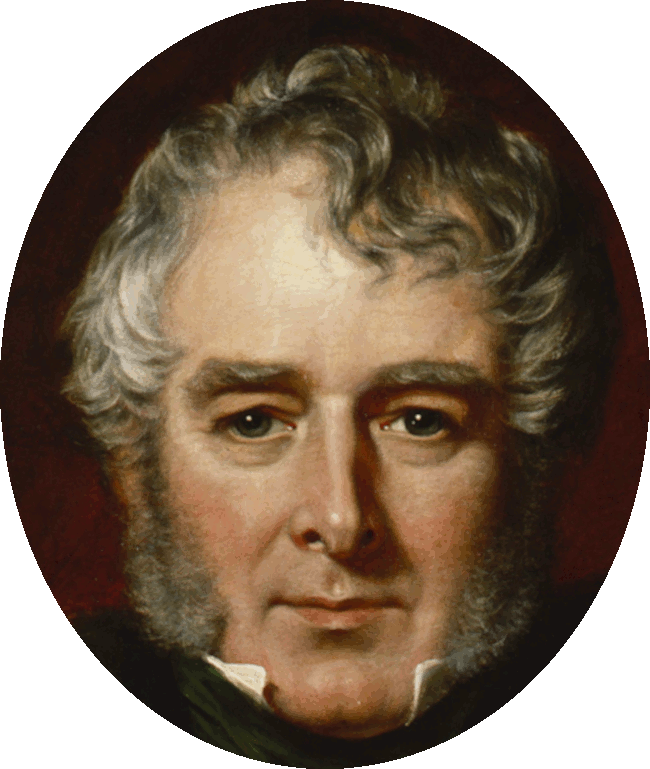
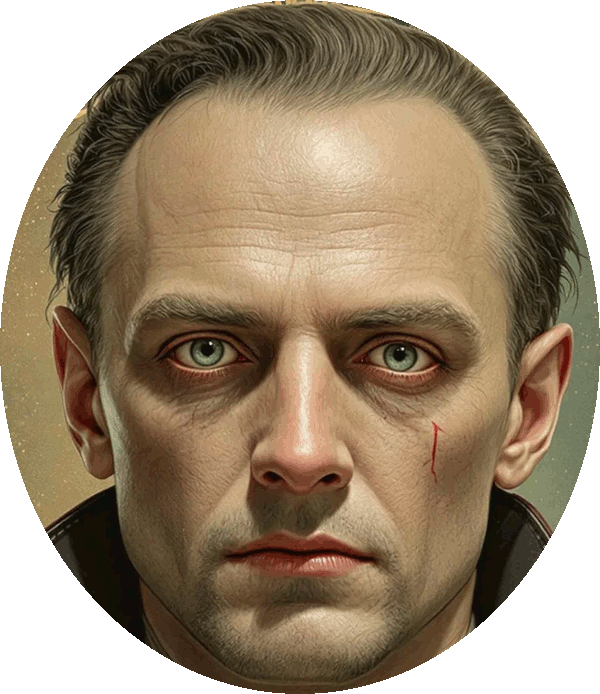
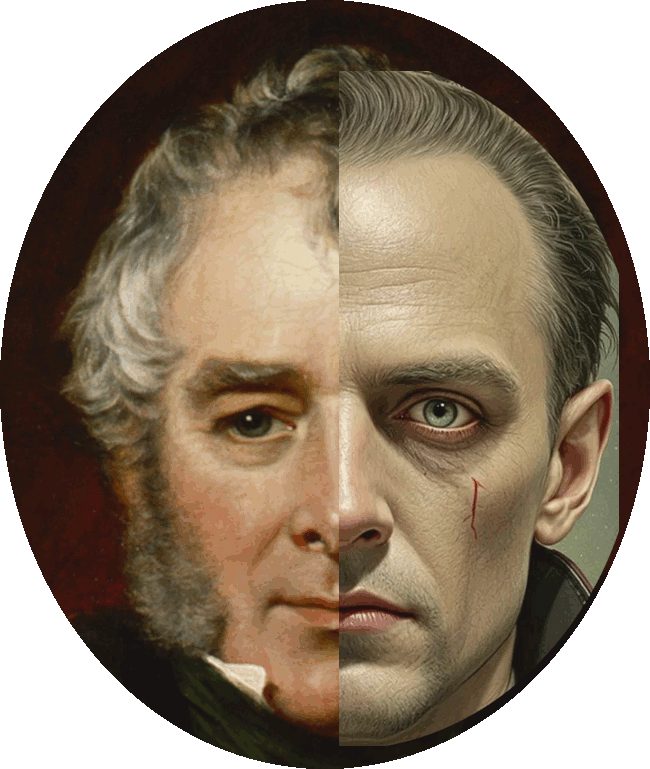
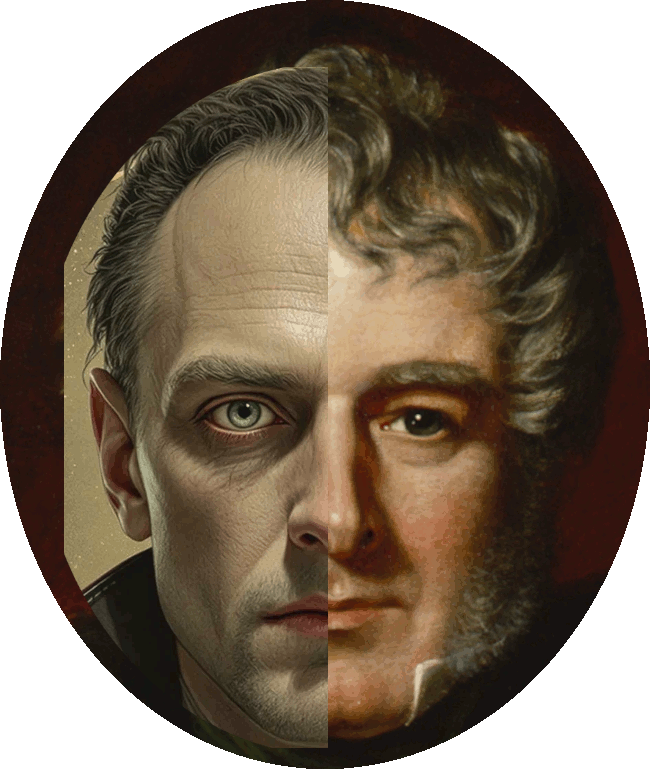
Henry William Lamb as
Hannibal Lecter |
 |
 |
Henry William Lamb
1779-1848
3/15
11/24
Prime Minister |
Hannibal Lecter
|
 |
 |
30th Prime Minister
Lord Byron |
- Lamb developed a very close, almost paternal relationship with the young Queen, guiding her through the early years of her reign and the intricacies of constitutional monarchy.
- Their rapport was central to his second premiership.
- His governments oversaw significant Victorian-era reforms, including the
Poor Law Amendment Act of 1834 and the Municipal Corporations Act
of 1835.
- He was a civilian Prime Minister, not a soldier, responsible for policy and governance during wartime.
|
The Municipal Corporations Act of 1835 was a
landmark UK law that reformed England and Wales's
corrupt, outdated borough governments, replacing old
systems with elected councils (mayors, aldermen,
councillors) chosen by ratepayers, creating modern
local authorities with powers for policing,
sanitation, and infrastructure, laying the groundwork
for Victorian civic life, though excluding major
cities like London initially.
(Assistant)
|
31st Prime
Minister of United
Kingdom
1841-1846 (2nd
term) |
|
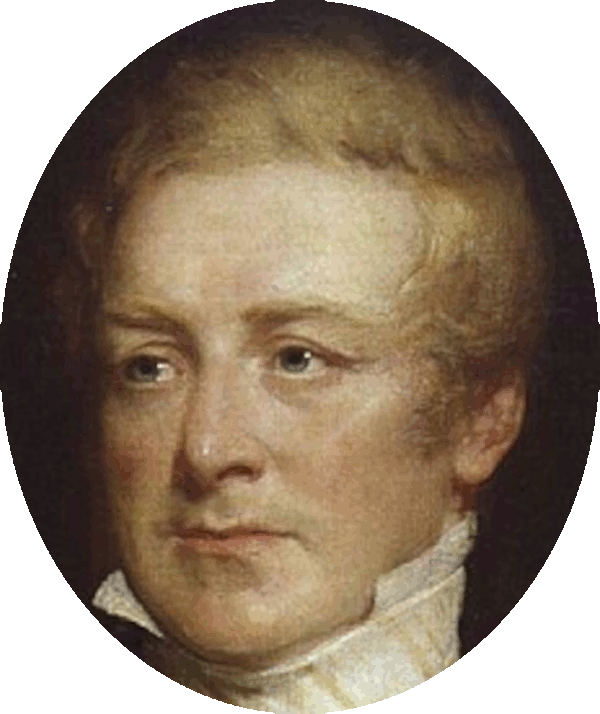
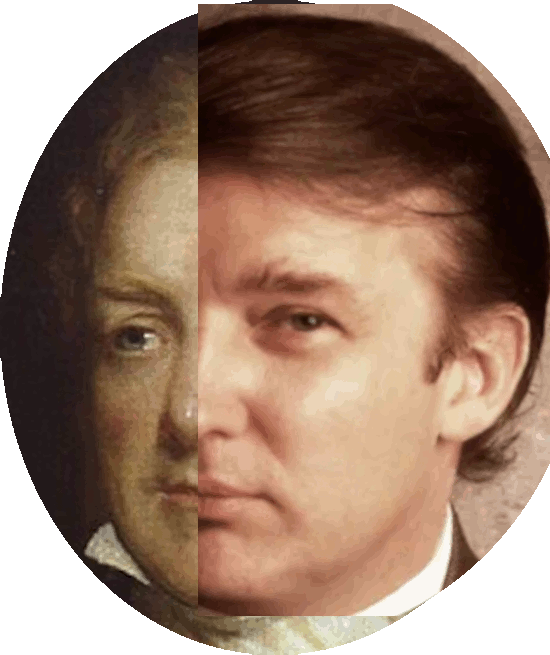
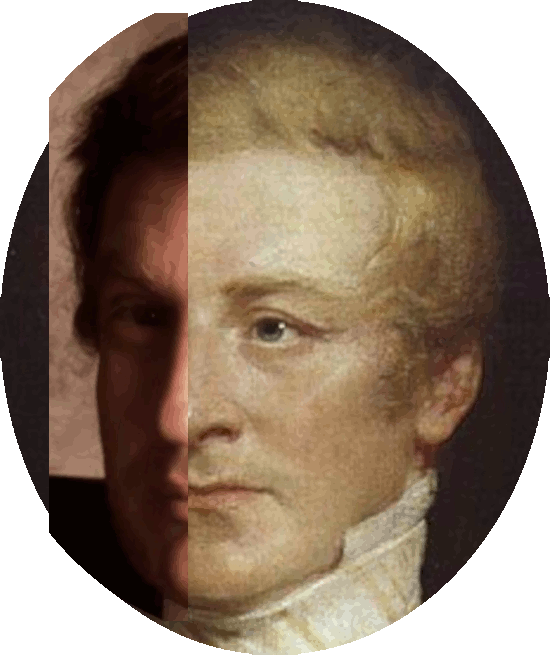
Sir Robert Peel as Trump |
 |
 |
Sir Robert Peel
1788-1850
2/5 7/2
Prime Minister |
Donald John Trump
1946
6/14 |
 |
 |
31st Prime Minister
Orange
Peel |
-
Peel lowered tariffs, reintroduced income tax, and
established the Bank of England's charter!!!
- He successfully resolved border disputes with the U.S. and ended the
Afghan War.
- He died in 1850 from injuries sustained in a riding accident, shortly after leaving office.
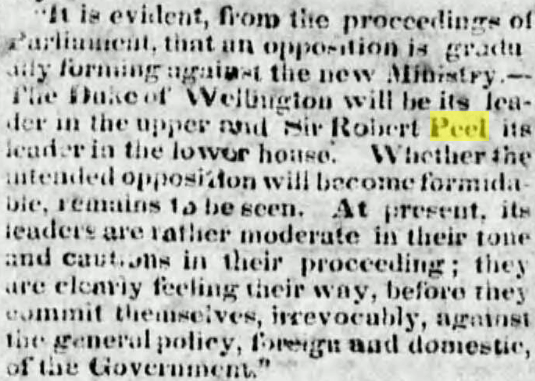
Augusta Chronicle and
Georgia Advertiser - February 5, 1831
First appearance of
Peelite in
press
|
- The Peelites were a breakaway political faction of the British Conservative Party from 1846 to 1859.
- Initially led by Robert Peel (1788-1850), the former Prime Minister and Conservative Party leader in 1846, the Peelites supported free trade while the bulk of the Conservative Party remained protectionist.
- The Peelites later merged with the Whigs and Radicals to form the Liberal Party in 1859.
- The Peelites were characterised by commitment to free trade and a managerial, almost technocratic, approach to government.
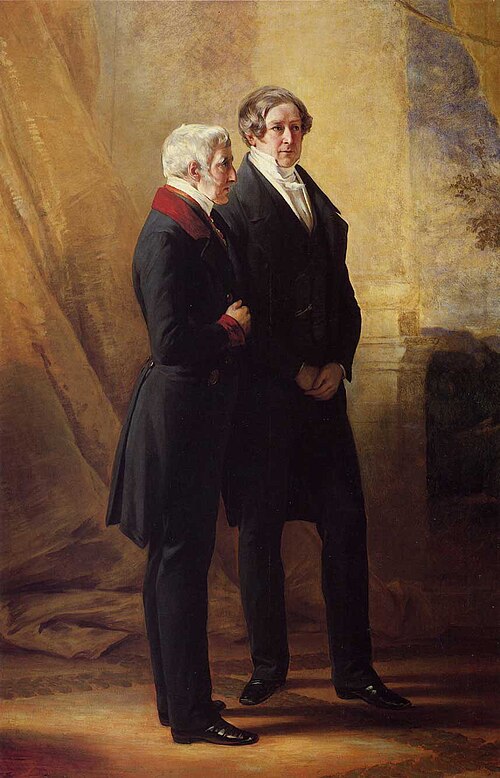
Franz Xaver Winterhalter, Public domain, via Wikimedia Commons
The Duke of Wellington and Sir Robert Peel, 1844 |
-
Sir Robert Peel was the initial leader of the Peelites in the House of Commons after the Conservative Party split in 1846.
-
Peel, as the Duke of Wellington served as Leader of the House of
Lords for the whole Conservative Party from 1841 until Peel's
government fell in June 1846.
32nd Prime
Minister of United
Kingdom
1846-1852
(1st term)
John
Russell, 1st Earl
Russell |
.jpg)
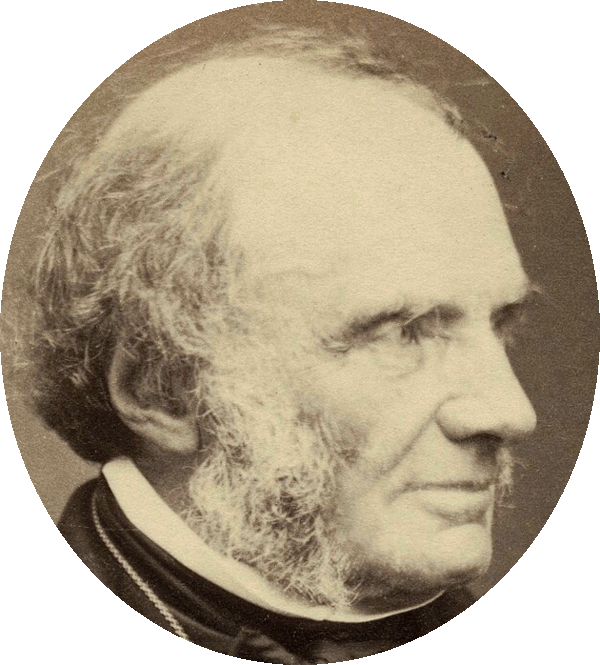
John Jabez Edwin Mayall, Public domain, via Wikimedia Commons |
- John Russell, 1st Earl Russell (1792-1878), known as Lord John Russell before 1861, was a British Whig and Liberal statesman who was Prime Minister of the United Kingdom from 1846 to 1852 and again from 1865 to 1866.
- The third son of the 6th Duke of Bedford, Russell was educated at Westminster School and Edinburgh University before entering Parliament in 1813.
- In 1828 he took a leading role in the repeal of the
Test Acts which discriminated against Catholics and Protestant dissenters.
- He was one of the principal architects of the Reform Act 1832, which was the first major reform of Parliament since the Restoration, and a significant early step on the road to democracy and away from rule by the aristocracy and landed gentry.
- He favored expanding the right to vote to the middle
classes and enfranchising Britain's growing industrial towns
and cities, but he never advocated universal suffrage and he
opposed the secret ballot.
|
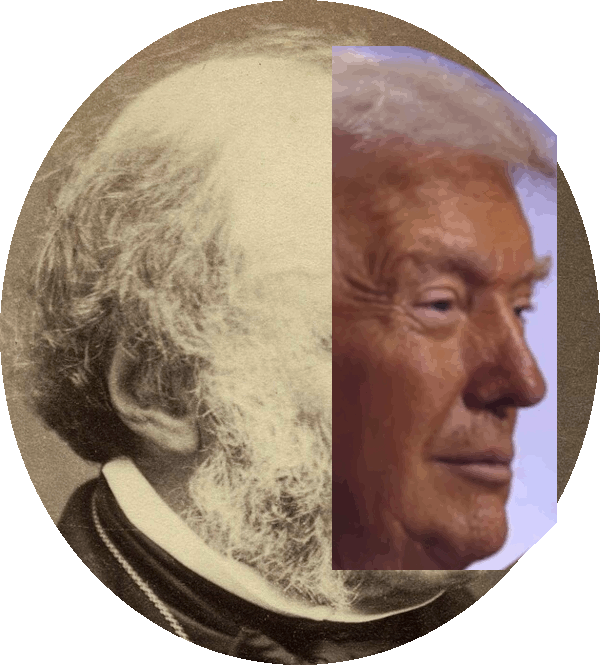
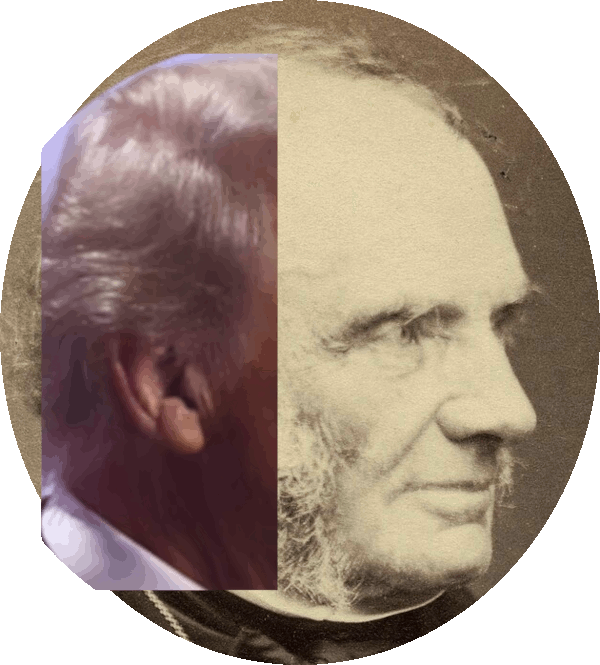
John Russell as Trump |
 |
 |
John Russell
1792-1878
8/18
5/28
Prime Minister |
Donald John Trump
1946
6/14 |
 |
 |
32nd Prime Minister
The Widow's Mite |
- Russell was outspoken on many issues over the course of
his career, advocating Catholic emancipation in the 1820s,
calling for the repeal of the Corn Laws in 1845, denouncing
Pope Pius IX's revival of Catholic bishoprics in 1850, and
supporting Italian unification during the 1860s.
- He faced problems with ineffective handling of the Irish Famine, disunited cabinets, weak parliamentary support, and difficult relationships with colleagues.
- Perceived as aloof and elitist, which alienated some
supporters.
33rd Prime
Minister of United
Kingdom
1852-1852
(1st term)
Edward
George Geoffrey
Smith-Stanley, 14th
Earl of Derby |
.jpg)
W. & D. Downey, Public domain, via Wikimedia Commons |
- Edward George Geoffrey Smith-Stanley, 14th Earl of Derby (1799-1869), known as Lord Stanley from 1834 to 1851, was a British statesman and Conservative politician who served
3 times as Prime Minister of the United Kingdom.
- To date, he is the longest-serving leader of the Conservative Party
from 1846–68.
- He is one of only 4 British prime
ministers to have 3 or more separate periods in office.
- However, his ministries each lasted less than two years and totaled
3 years and 280 days.
- Derby introduced the state education system in Ireland, and reformed Parliament.
|
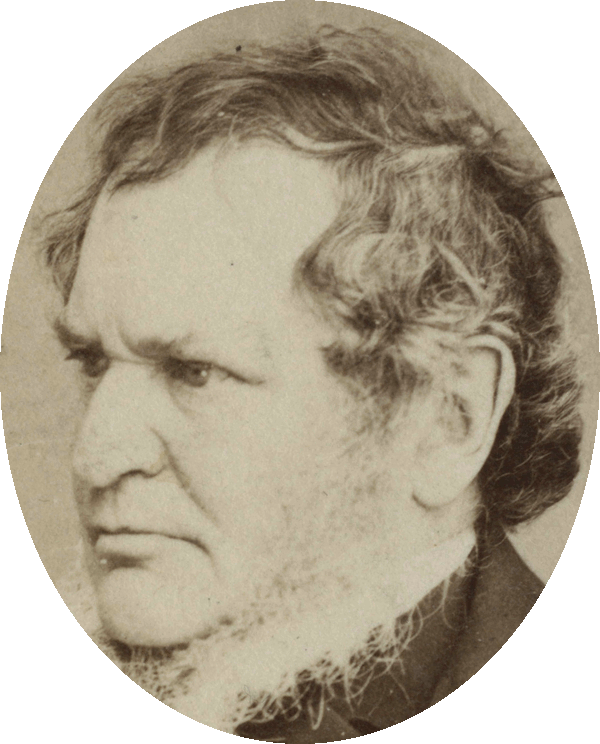
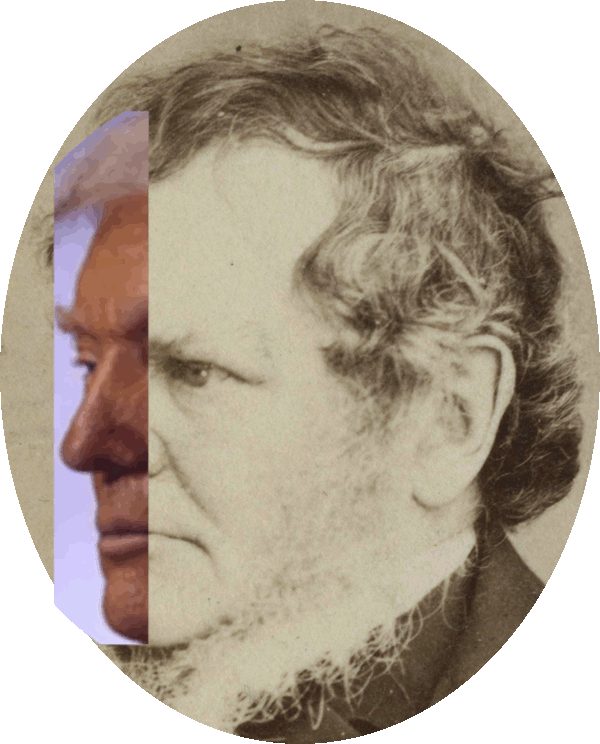
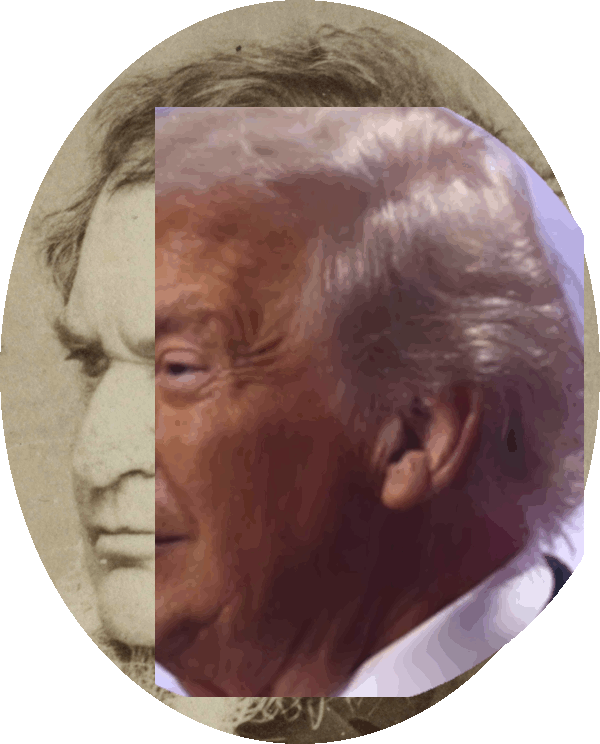
Edward George Geoffrey Smith-Stanley as Trump |
 |
 |
Edward George Geoffrey Smith-Stanley
1799-1869
3/29
10/23
Prime Minister |
Donald John Trump
1946
6/14 |
 |
 |
33rd Prime Minister
Rupert of Debate |
- Despite his high rank, he was deemed insolvent upon his death.
- His vast private zoo and museum at Knowsley cost approximately £15,000 annually (in mid-19th-century currency), which severely encumbered his estates.
34th Prime
Minister of United
Kingdom
1852-1855
George
Hamilton-Gordon, 4th
Earl of Aberdeen |
.jpg)
John Jabez Edwin Mayall, Public domain, via Wikimedia Commons |
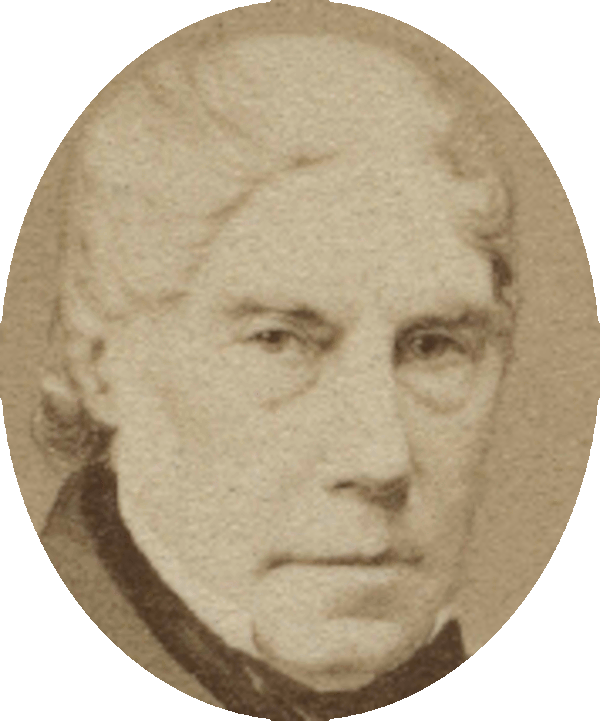
- George Hamilton-Gordon, 4th Earl of Aberdeen (1784-1860), styled Lord Haddo from 1791 to 1801, was a British statesman, diplomat and landowner, successively a Tory, Conservative and Peelite politician and specialist in foreign affairs.
- He served as Prime Minister from 1852 until 1855 in a coalition between the Whigs and Peelites, with Radical and Irish support.
- The Aberdeen ministry was filled with powerful and talented politicians, whom Aberdeen was largely unable to control and direct.
- Despite his efforts to avoid this happening, his ministry took Britain into the
Crimean War in 1854, and fell when the war's conduct became unpopular.
- Subsequently, Aberdeen retired from politics.
|
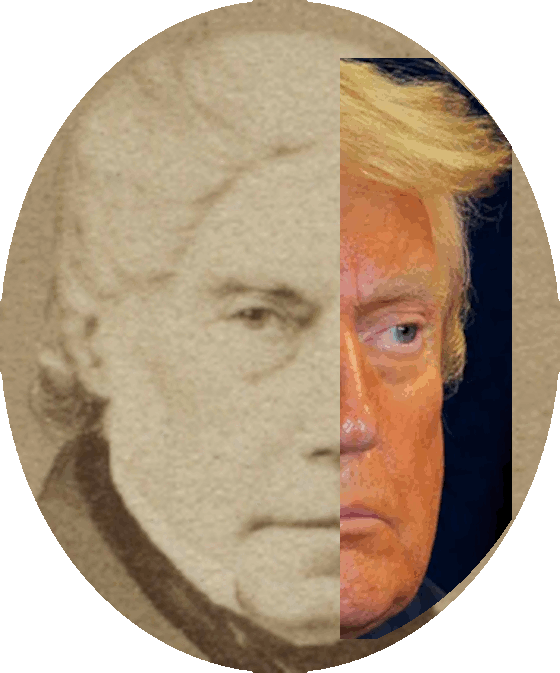
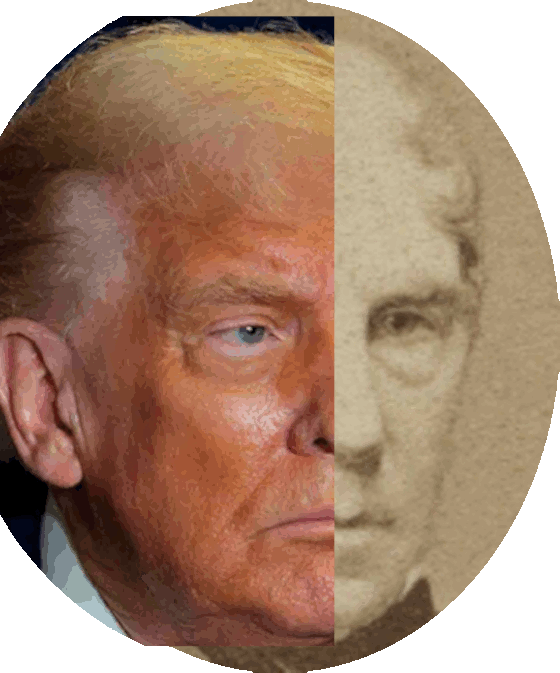
George Hamilton-Gordon as Trump |
 |
 |
George Hamilton-Gordon
1784-1860
1/28
12/14
Prime Minister |
Donald John Trump
1946
6/14 |
 |
 |
34th Prime Minister
Athenian Aberdeen |
- As Prime Minister, he led a coalition with strong personalities (Palmerston, Russell, Gladstone) whom he couldn't control, hindering effective governance.
- His diplomatic skill didn't translate to decisive
action as prime minister, especially regarding Russia, making him appear
weak, according to critics like Disraeli. Foreign Policy
Clashes.
35th Prime
Minister of United
Kingdom
1855-1858 (1st term)
Henry John Temple,
3rd Viscount
Palmerston |
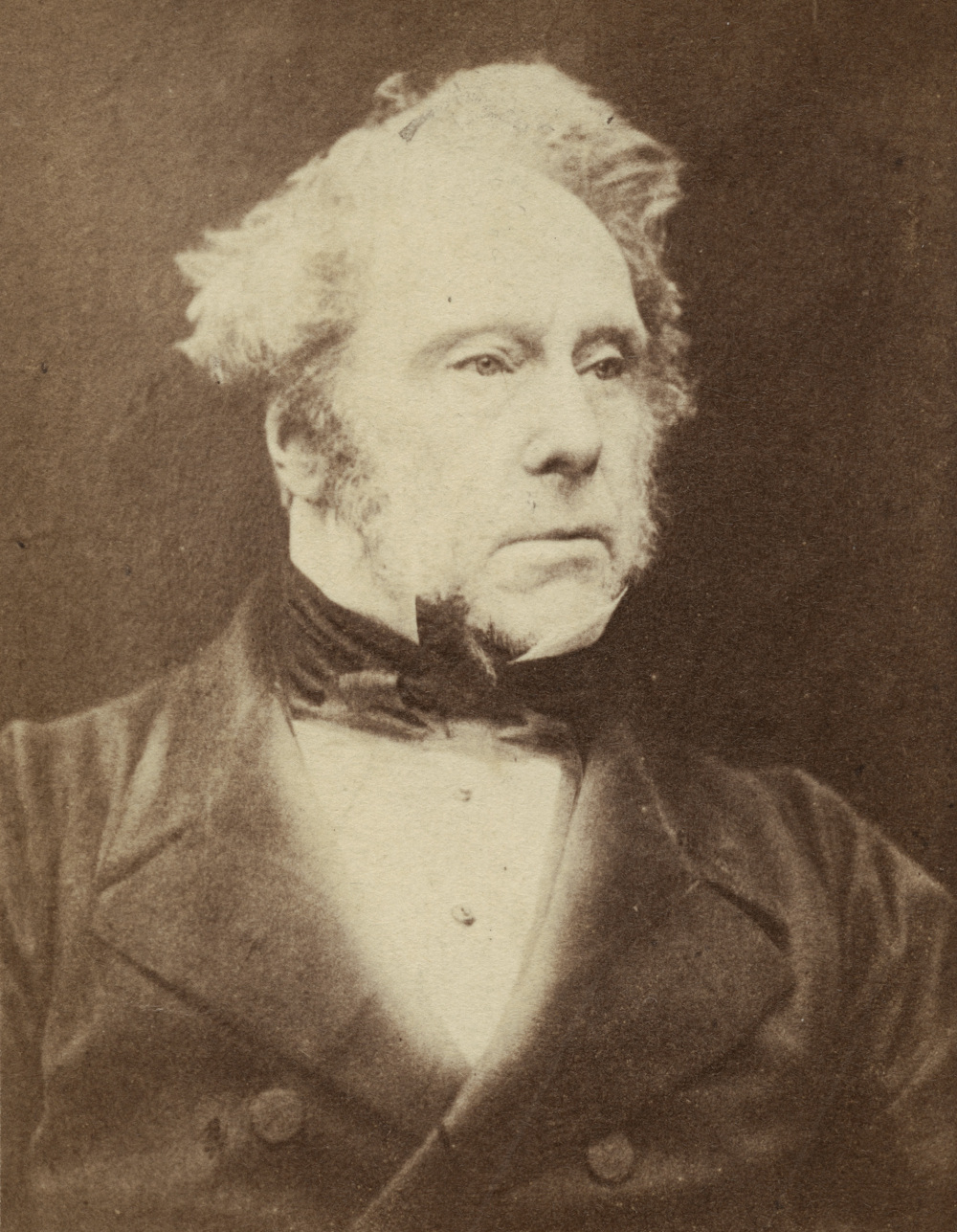
Herbert Watkins, Public domain, via Wikimedia Commons |
- Henry John Temple, 3rd Viscount Palmerston (1784-1865), known as Lord Palmerston, was a British statesman and politician who served as prime minister of the United Kingdom from 1855 to 1858 and from 1859 to his death in 1865.
- A member of the Tory, Whig and Liberal parties, Palmerston was also the first Liberal prime minister.
- He dominated British foreign policy from 1830 to 1865 when Britain stood at the height of its imperial power.
- In 1802, Temple succeeded to his father's Irish peerage as the 3rd Viscount Palmerston.
- This Irish peerage did not entitle him to a seat in the House of Lords and Temple became a Tory MP in the House of Commons in 1807.
- From 1809 to 1828, he was Secretary at War, organizing the finances of the army.
- He was Foreign Secretary from 1830–1834, 1835–1841 and 1846–1851, responding to a series of conflicts in Europe.
|
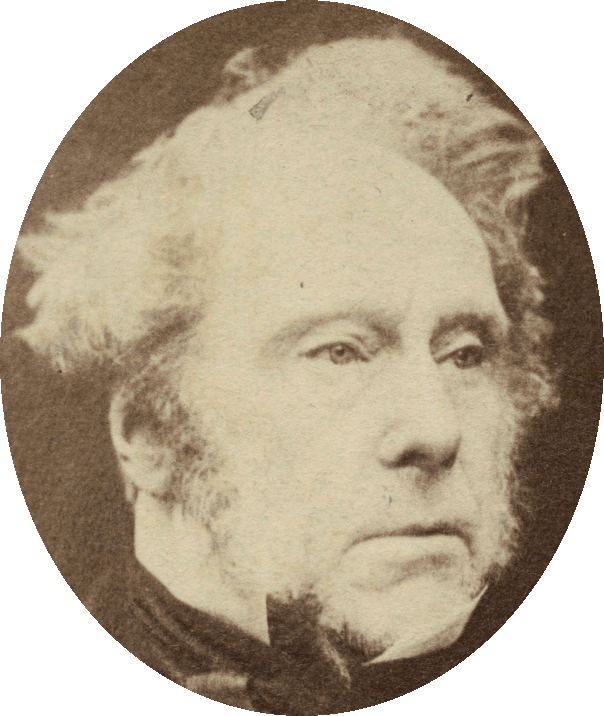
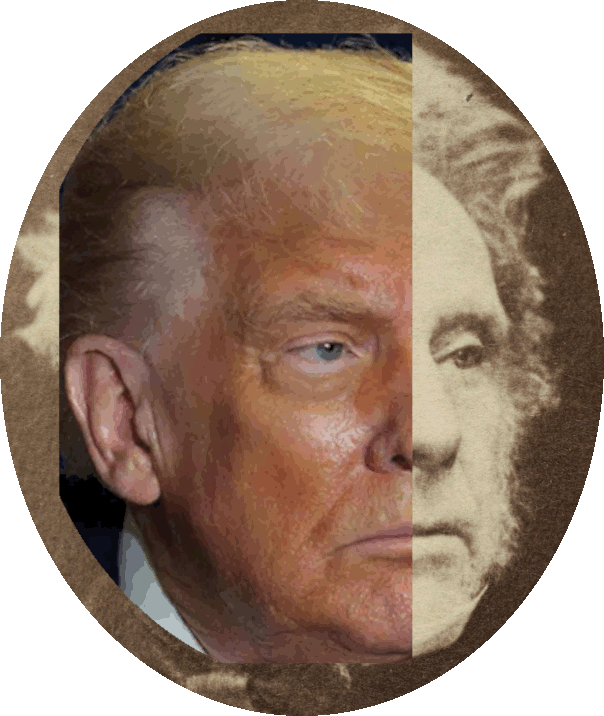
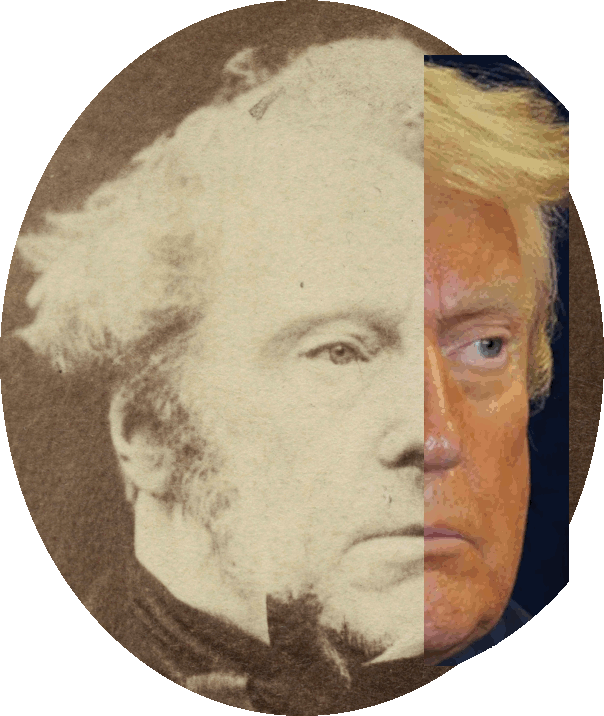
Henry John Temple as Trump |
 |
|
Henry John Temple
1784-1865
10/20
10/18
Prime Minister |
Donald John Trump
1946
6/14 |
 |
 |
35th Prime Minister
Lord Pumicestone
Mongoose |
- Inheriting debt from his father meant he couldn't afford to be out of office for long, driving his pursuit of public roles.
-
Crimean War (1853-1856): He became Prime Minister during this conflict, which involved Britain and France against Russia, aiming to maintain European balance of power
Radicals 1763-1859
|
- The Radicals were a loose parliamentary political grouping in Great Britain and Ireland in the early to mid-19th century who drew on earlier ideas of radicalism and helped to transform the Whigs into the Liberal Party.
- The Radical movement arose in the late 18th-century to
support parliamentary reform, with additional aims including
lower taxes and the abolition of sinecures.
- Sinecure is a position requiring little or no work but giving the holder status or financial benefit.
36th Prime Minister of United Kingdom
1858-1859 (2nd term) |
|
Edward George Geoffrey Smith-Stanley as Trump |
|
|
|
Edward George Geoffrey Smith-Stanley
1799-1869
3/29
10/23
Prime Minister |
Donald John Trump
1946
6/14 |
|
|
|
36th Prime Minister
Rupert of Debate |
-
Established the state education system in Ireland which was
detested by many of the Irish.
- Passed the India Act of 1858, moving control of India from the East India Company to the Crown.
- Championed Jewish emancipation, ending their exclusion from Parliament.
37th Prime
Minister of United
Kingdom
1859-1865 (2nd term) |
|
Henry John Temple as Trump |
|
|
|
Henry John Temple
1784-1865
10/20
10/18
Prime Minister |
Donald John Trump
1946
6/14 |
|
|
|
37th Prime Minister
Mongoose |
- Temple was deeply involved in warfare as a politician, serving as Secretary at War during the
Napoleonic Wars from 1809-1828, organizing army finances, and later as Foreign Secretary and Prime Minister, where his assertive diplomacy (often called
'Palmerstonian').
- This pushed Britain into conflicts or crises to protect interests, notably supporting liberal revolutions in Europe but opposing Russian expansion
from 1830-1850 and mediating during the American Civil War.
38th Prime
Minister of United
Kingdom
1865-1866
(2nd term) |
|
John Russell as Trump |
|
|
|
John Russell
1792-1878
8/18
5/28
Prime Minister |
Donald John Trump
1946
6/14 |
|
|
|
38th Prime Minister
Finality Jack |
- The
Factory Act of 1847, also known as the Ten Hours Act, was a landmark UK law that restricted working hours for women and young people (ages 13-18) in textile mills to 10 hours per day.
- Russell was known for championing moderate reforms like the
Public Health Act of
1848.
- He expanded the state's role in education.
- Supported representative government in colonies and repealed
Navigation Acts of 1849, ending centuries of
mercantilist trade restrictions by adopting free trade
principles.
- Russell was Prime Minister during periods of significant international conflict, notably the
American Civil War (1861-1865), where Britain, under his foreign policy as Foreign Secretary, navigated neutrality amidst Confederate attempts for recognition, and the
Schleswig-Holstein War in 1864, which he tried to mediate.
|
The Public Health Act 1848 was a landmark British law establishing a General Board of Health for England and Wales, created in response to poor sanitation from industrialization, aiming to improve water, sewage, refuse removal, and housing by empowering local authorities to form health boards, though it was often limited by its permissive nature and lack of central funding. Driven by social reformer Edwin Chadwick's reports, it marked the first government attempt to proactively manage public health, making local councils responsible for environmental health and laying groundwork for future sanitary reforms.
(Assistant)
|
39th Prime
Minister of United
Kingdom
1866-1868
(2nd term) |
|
Edward George Geoffrey Smith-Stanley as Trump |
|
|
|
Edward George Geoffrey Smith-Stanley
1799-1869
3/29
10/23
Prime Minister |
Donald John Trump
1946
6/14 |
|
|
|
39th Prime Minister
Scorpion Stanley |
- Despite his high rank, he was deemed insolvent upon his death.
- His vast private zoo and museum at Knowsley cost approximately £15,000 annually (in mid-19th-century currency), which severely encumbered his estates.
- He remains the longest-serving leader of the Conservative Party (1846–1868) and is one of only
4 British Prime Ministers to serve 3 or more non-consecutive terms, despite each term being relatively brief.
40th Prime
Minister of United
Kingdom
1868-1868
(1st term)
Benjamin Disraeli,
1st Earl of
Beaconsfield |
.jpg)
Cornelius Jabez Hughes, Public domain, via Wikimedia Commons
Masonic hand sign |
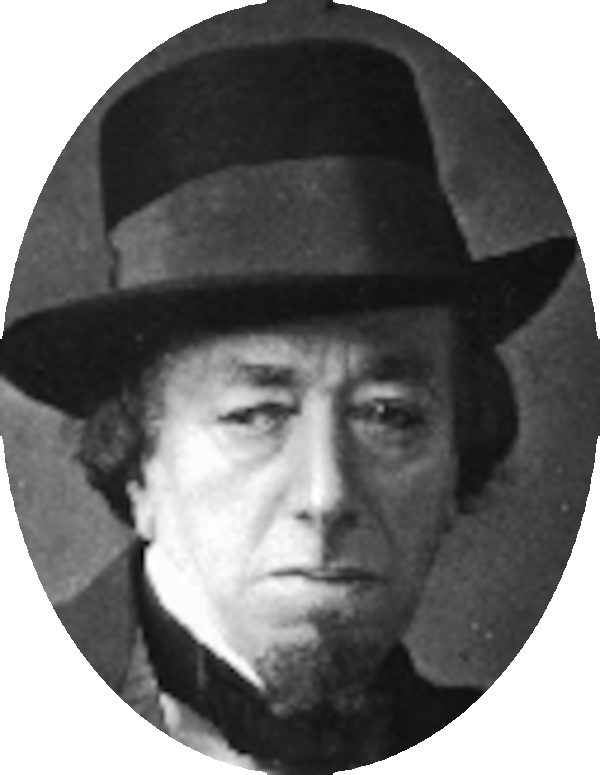
- Benjamin Disraeli, 1st Earl of Beaconsfield (1804-1881), was a British statesman, Conservative politician and writer who twice served as Prime Minister of the United Kingdom.
- He played a central role in the creation of the modern Conservative Party, defining its policies and its broad outreach.
- Disraeli is remembered for his influential voice in world affairs, his political battles with the Liberal Party leader William Ewart Gladstone, and his one-nation conservatism or
'Tory democracy.'
- He made the Conservatives the party most identified with the British Empire and military action to expand it, both of which were popular among British voters.
- He is the only British prime minister to have been born Jewish.
|
Disraeli strongly supported imperialism, viewing the British Empire as essential for national power, and expanded its reach, including proclaiming Queen Victoria Empress of India.
(Assistant)
|
|
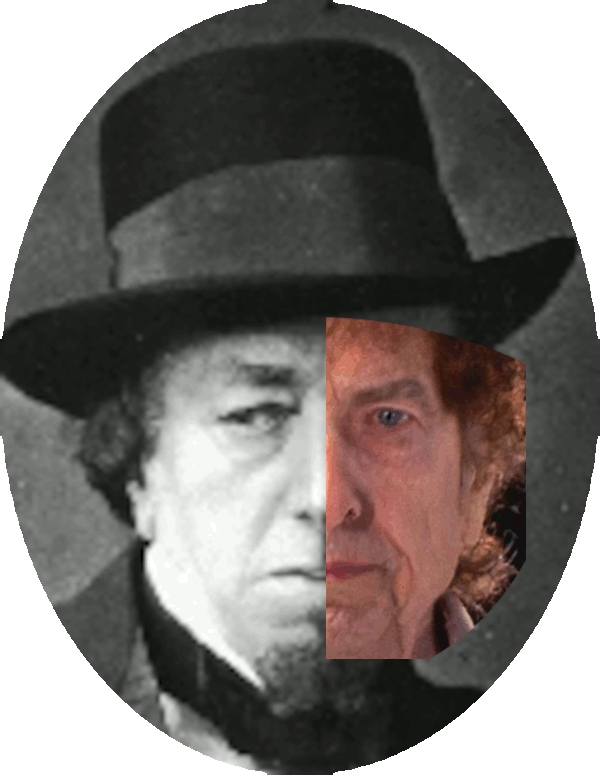
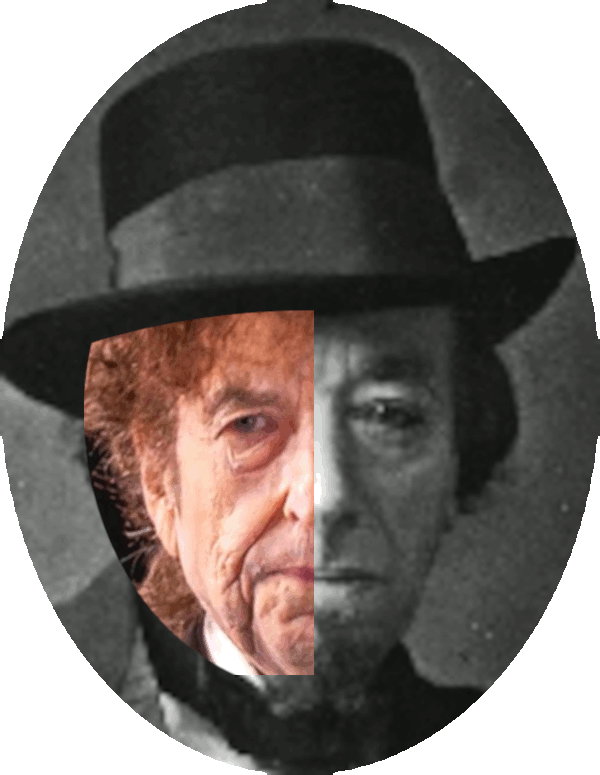
Benjamin Disraeli as Bob Dylan |
 |
 |
Benjamin Disraeli
1804-1881
12/21
4/19
Prime Minister |
Robert Allen Zimmerman
1941
5/24 |
 |
 |
40th Prime Minister
Dizzy the Dandy (black
velvet suits) |
-
As a young man, Disraeli engaged in stock market speculation and the launch of an unsuccessful newspaper,
The Representative, which resulted in significant financial losses and debts that plagued him for decades.
- Disraeli's political career was defined by his intense, lifelong rivalry with the Liberal leader William Ewart Gladstone.
- Their opposing political philosophies and personal animosity created a dynamic of constant political battle.
- Abyssinian Expedition (1868): Despite high costs, he defended this "noble feat of arms" as boosting British prestige in the East, prioritizing success over money.
|
The British Expedition to Abyssinia was a rescue mission and punitive expedition carried out in 1868 by the armed forces of the British Empire against the Ethiopian Empire (also known at the time as Abyssinia). Emperor Tewodros II of Ethiopia, then often referred to by the anglicized name Theodore, imprisoned several missionaries and two representatives of the British government in an attempt to force the British government to comply with his requests for military assistance. Historian Harold G. Marcus described the action as "one of the most expensive affairs of honour in history."
(Assistant)
|
41st Prime
Minister of United
Kingdom
1868-1874 (1st
term)
William
Ewart Gladstone |
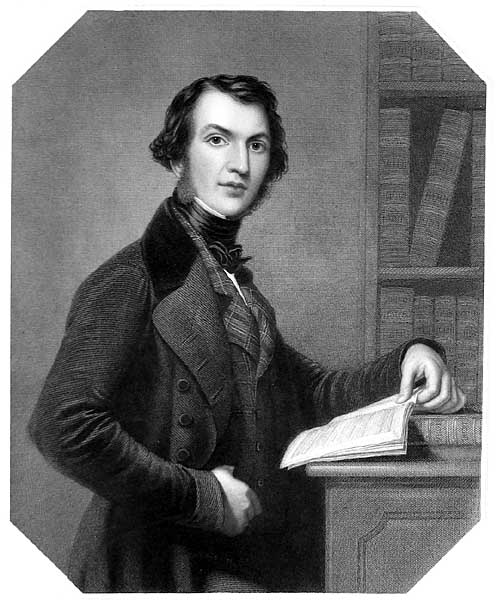
William Henry Mote, Public domain, via Wikimedia Commons
Masonic hidden hand |
- William Ewart Gladstone was Chancellor of the Exchequer four times, for more than 12 years
and he was also Leader of the House of Commons.
- He served as Prime Minister of the United Kingdom
4 times (1868–74, 1880–85, 1886, 1892–94) as a Liberal leader, more than any other British Prime Minister, dominating the Victorian era with his focus on moralistic leadership, financial reform (as four-time Chancellor), and Irish Home Rule, though his policies often divided his party and the nation, solidifying his image as a transformative but controversial figure known as the
'Grand Old Man.'
-
Gladstone was a Member of Parliament (MP) for 60 years, from 1832 to 1845 and from 1847 to 1895; during that time he represented a total of
5 constituencies.
|
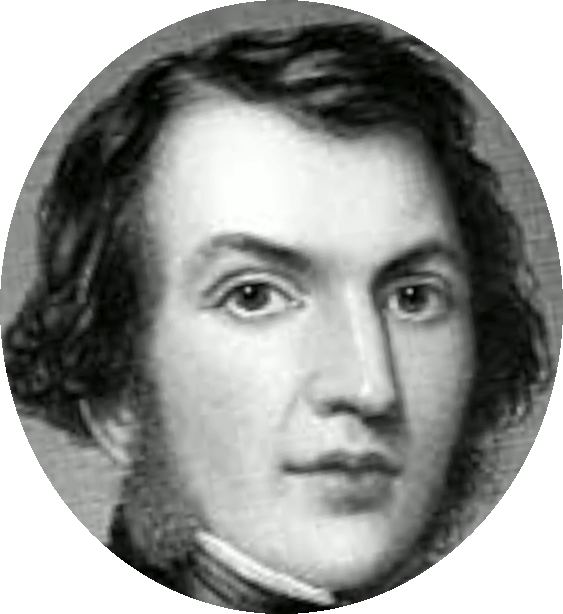
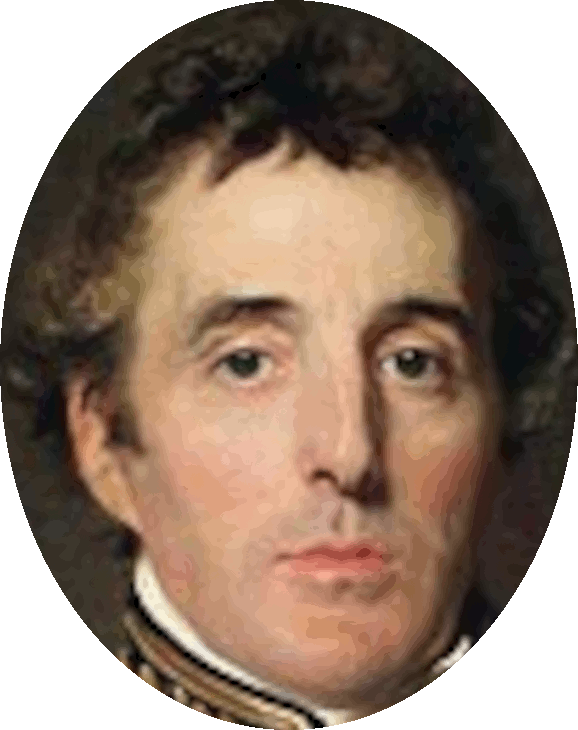
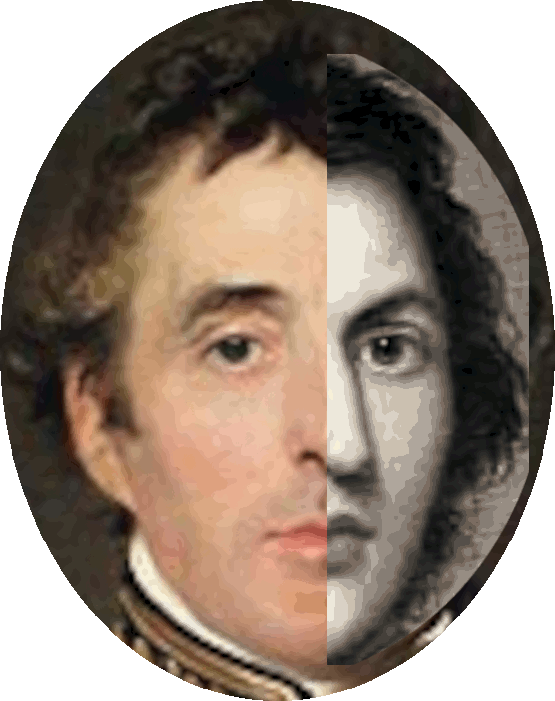
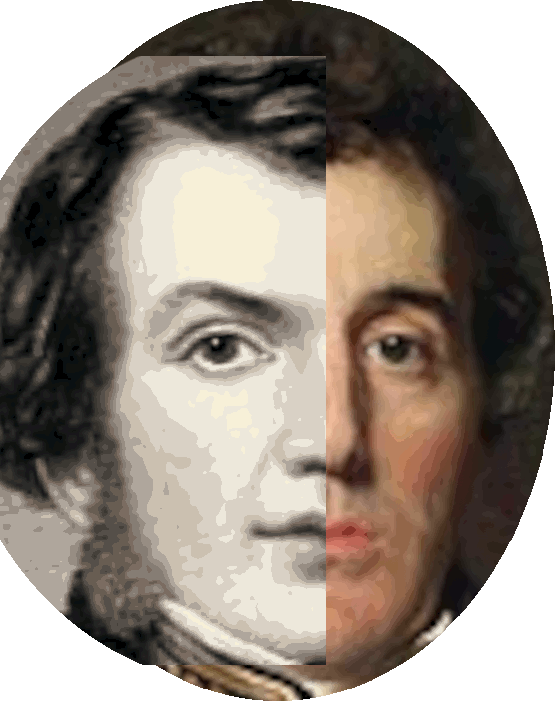
William Ewart Gladstone as Duke of Wellington |
 |
 |
William Ewart Gladstone
1809-1898
12/29
5/19
Prime Minister |
Arthur Wellesley
1769-1852
5/1
9/14
Prime Minister |
 |
 |
41st Prime Minister
God's Only Mistake |
- Gladstone championed classical liberalism, advocating for reduced government spending, free trade, individual liberty, and helping the poor through voluntary means rather than state dependency.
- Focused on liberal reforms, disestablishing the Church of Ireland, improving civil service, introducing the secret ballot
with the Ballot Act, and granting legal status to trade unions
in the Trades Union Act.
|
The Ballot Act (1872) attempted to deal with bad electoral practices by introducing the secret ballot. This meant voters could vote in private without being intimidated into voting for a particular party. It also meant that it was harder for bribers to ensure that voters did as requested..
(Assistant)
|
42nd Prime
Minister of United
Kingdom
1874-1880
(2nd term) |
|
Benjamin Disraeli as Bob Dylan |
|
|
|
Benjamin Disraeli
1804-1881
12/21
4/19
Prime Minister |
Robert Allen Zimmerman
1941
5/24 |
|
|
|
42nd Prime Minister
Dizzy the Dandy (black
velvet suits) |
- Disraeli is credited with formulating 'One Nation' conservatism, also known as
'Tory democracy,' a philosophy that aimed to unite the different social classes of Britain, particularly appealing to the working classes with social reforms.
- The Public Health Act 1875, which codified sanitary laws, including provisions for clean water and refuse disposal.
- The Conspiracy and Protection of Property Act 1875, which legalized peaceful picketing and made workers and employers more equal before the law regarding labor contracts.
- In 1875, he arranged the purchase of a controlling interest in the Suez Canal Company from the Khedive of Egypt, securing a vital route to India.
- He passed the Royal Titles Act in 1876, proclaiming Queen Victoria as the Empress of India.
- Congress of Berlin (1878): He successfully negotiated a settlement to the
Russo-Turkish War, preventing Russian dominance in the Balkans and acquiring Cyprus for Britain, a major diplomatic triumph.
- He faced liberal accusations, particularly from Gladstone, for potentially supporting Turkish actions against Christians and for aggressive imperialism.
- Disraeli died in 1881, shortly after losing the 1880 general election to Gladstone's Liberals, leaving a lasting legacy in shaping the modern Conservative Party
43rd Prime
Minister of United
Kingdom
1880-1885 (2nd
term) |
|
William Ewart Gladstone as Duke of Wellington |
|
|
|
William Ewart Gladstone
1809-1898
12/29
5/19
Prime Minister |
Arthur Wellesley
1769-1852
5/1
9/14
Prime Minister |
|
|
|
43rd Prime Minister
Slave master |
- William Gladstone defended his father’s role in slavery.
- The great Victorian statesman’s glittering career was financed by huge profits made in the 1820s and 30s on Guyanese estates.
- Crimean War (1854-1856): As Chancellor, Gladstone fiercely funded it through tax hikes (especially Income Tax) to make Britons feel the cost, but he later opposed the war itself, resigning from Palmerston's government in protest of a war inquiry.
- Opium Wars (1840s): A strong opponent, he called the First Opium War
'infamous and atrocious' and a 'war more unjust in its origin,' attributing it to
'national iniquity.'
- His governments enacted significant changes, including the Representation of the
People Act 1884, expanding the vote, and measures against corruption.
- This
added about 2 million voters, enfranchising roughly
two-thirds of the adult male population, primarily rural
workers, however, the Act did not grant women the right to vote, and roughly 40% of men remained disenfranchised.
- It was paired with the Redistribution of Seats Act 1885, which redrew parliamentary boundaries to create more equal-sized constituencies.
|
The People Act 1884 (officially the Representation of the People Act 1884) was the UK's Third Reform Act, significantly expanding suffrage by creating a uniform voting system for counties and boroughs, extending the vote to most working men (including agricultural laborers) by enfranchising £10 household or property occupiers, nearly doubling the electorate, but
still excluding women. It aimed for a single standard of voting rights across the nation, setting the stage for the subsequent Redistribution of Seats Act 1885 to create modern single-member constituencies.
(Assistant)
|
44th Prime
Minister of United
Kingdom
1885-1886
(1st term)
Robert
Arthur Talbot
Gascoyne-Cecil, 3rd
Marquess of
Salisbury |
.jpg)
Elliott & Fry, Public domain, via Wikimedia Commons |
- Robert Arthur Talbot Gascoyne-Cecil, 3rd Marquess of Salisbury (1830-1903), known as Lord Salisbury, was a British statesman and Conservative politician who served as Prime Minister of the United Kingdom
3 times for a total of over
13 years.
- He was also Foreign Secretary before and during most of his tenure.
- He avoided international alignments or alliances, maintaining the policy of
'splendid isolation.'
- Lord Robert Cecil, later known as
Lord Salisbury, was first elected to the House of Commons in
1854 and served as Secretary of State for India in Lord
Derby's Conservative government 1866–1867.
|
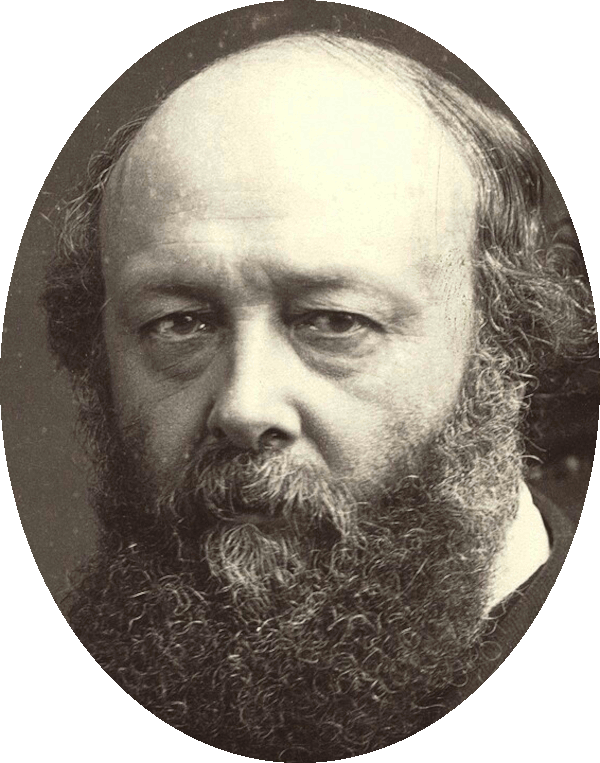
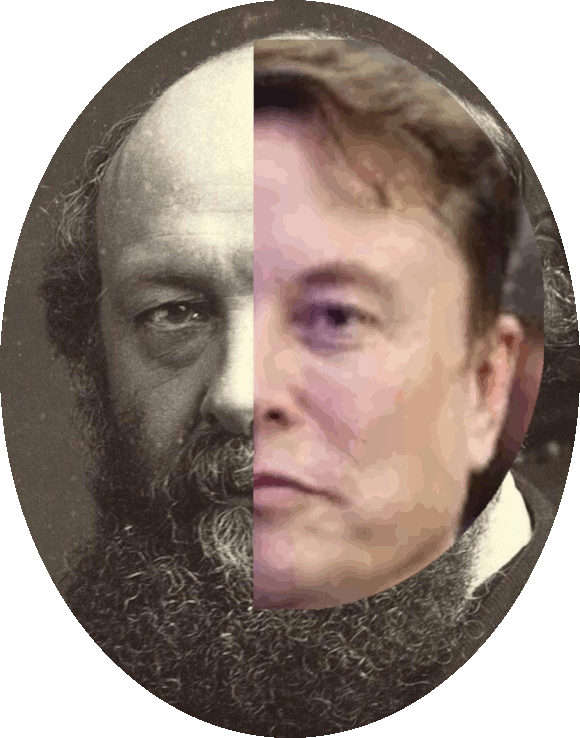
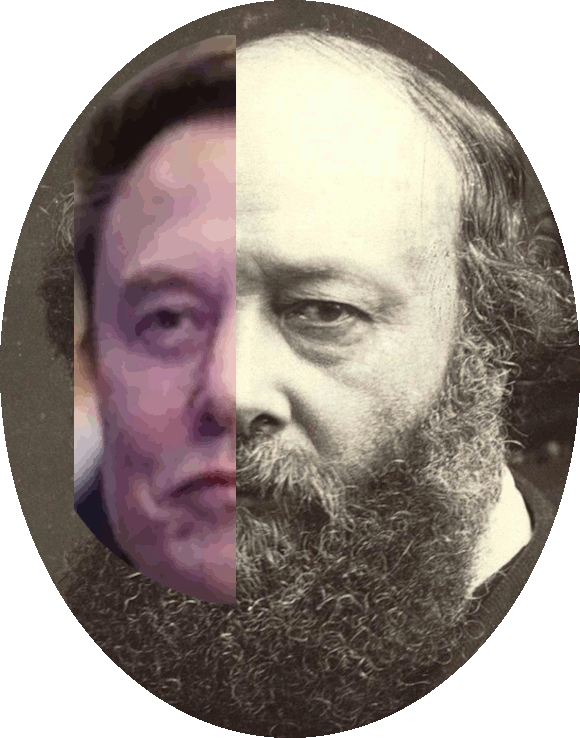
Robert Gascoyne-Cecil as Elon Musk |
 |
 |
Robert Arthur Talbot Gascoyne-Cecil
1830-1903
2/3
8/22
Prime Minister |
Elon Reeve Musk
1971
6/28 |
 |
 |
44th Prime Minister
Salisbury |
- Suffered intense bullying at Eton, leading to his removal and fostering a pessimistic view of democracy.
- A deeply empirical leader, he disliked dogma and found delegation difficult, making him a challenging boss and sometimes hindering effective governance.
- Presided over the acquisition of vast African territories during the
'Scramble for Africa.'
45th Prime
Minister of United
Kingdom
1886-1886
(3rd term) |
|
William Ewart Gladstone as Duke of Wellington |
|
|
|
William Ewart Gladstone
1809-1898
12/29
5/19
Prime Minister |
Arthur Wellesley
1769-1852
5/1
9/14
Prime Minister |
|
|
|
45th Prime Minister
Murderer of Gordon |
-
A harsh nickname arising from the failure to rescue General Gordon in Sudan.
- Anglo-Egyptian War (1882)
and Gordon's Expedition (1884-1885): He authorized intervention in Egypt but later faced immense unpopularity and censure for his hesitant response to General Gordon's besieged garrison in Khartoum, which fell before relief arrived.
-
Saw another attempt at Home Rule pass the Commons but fail in the Lords; he resigned due to declining health.

Brooklyn Daily
Eagle - July 14,
1882 |
- In 1882, Henry Campbell-Bannerman was financial secretary of
the war officer under Gladstone and they were buying gunboats
to protect British vessels through the Suez Canal.
46th Prime
Minister of United
Kingdom
1886-1892
(2nd term) |
|
Robert Gascoyne-Cecil as Elon Musk |
|
|
|
Robert Arthur Talbot Gascoyne-Cecil
1830-1903
2/3
8/22
Prime Minister |
Elon Reeve Musk
1971
6/28 |
|
|
|
46th Prime Minister
Salisbury |
- Successfully forced France to back down in a colonial dispute.
- He led Britain to victory in a bitter, controversial war against the Boers.
47th Prime
Minister of United
Kingdom
1892-1894
(4th term) |
|
William Ewart Gladstone as Duke of Wellington |
|
|
|
William Ewart Gladstone
1809-1898
12/29
5/19
Prime Minister |
Arthur Wellesley
1769-1852
5/1
9/14
Prime Minister |
|
|
|
47th Prime Minister
Murderer of Gordon |
-
He often advocated for restraint, non-entanglement, and opposed supporting
'inhuman' powers like the Ottoman Empire against Russia, contrasting with Disraeli.
- Saw another attempt at Home Rule pass the Commons but fail in the Lords; he resigned due to declining health.
48th Prime
Minister of United
Kingdom
1894-1895
Archibald Philip
Primrose, 5th Earl
of Rosebery, |
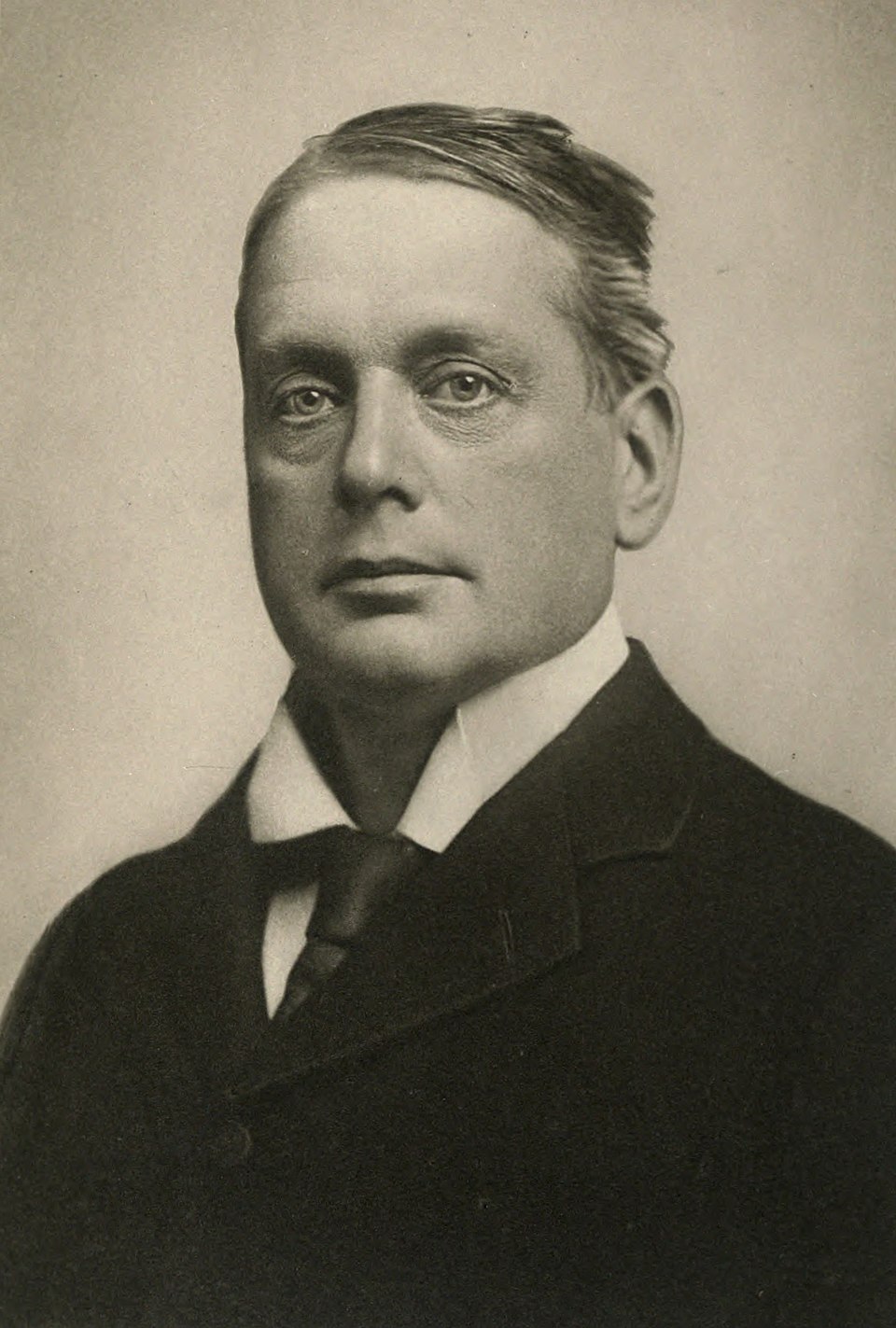
Public domain, via Wikimedia Commons |
- Archibald Philip Primrose, 5th Earl of Rosebery, 1st Earl of Midlothian (1847-1929), was a British Liberal Party politician who served as Prime Minister of the United Kingdom from March 1894 to June 1895.
- Rosebery first came to national attention in 1879 by sponsoring the successful Midlothian campaign of William Ewart Gladstone.
- His most successful performance in office came as chairman of the London County Council in 1889.
- He entered the Cabinet in 1885 and was twice Foreign Secretary, paying special attention to French and German affairs.
- He succeeded Gladstone as prime minister and leader of
the Liberal Party in 1894; the Liberals lost the 1895
election.
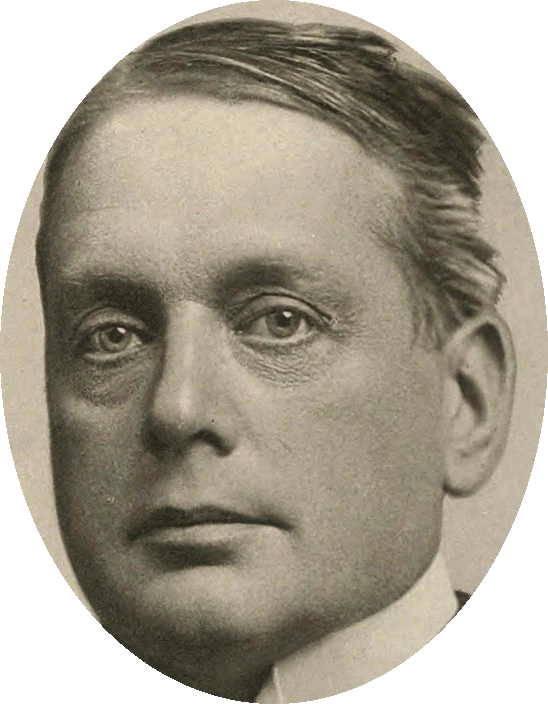
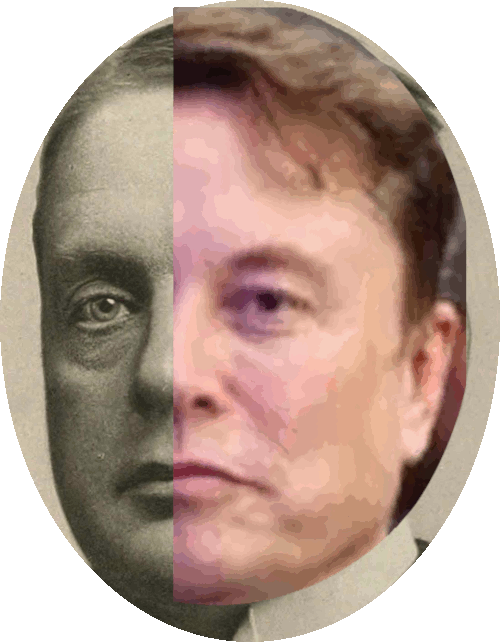
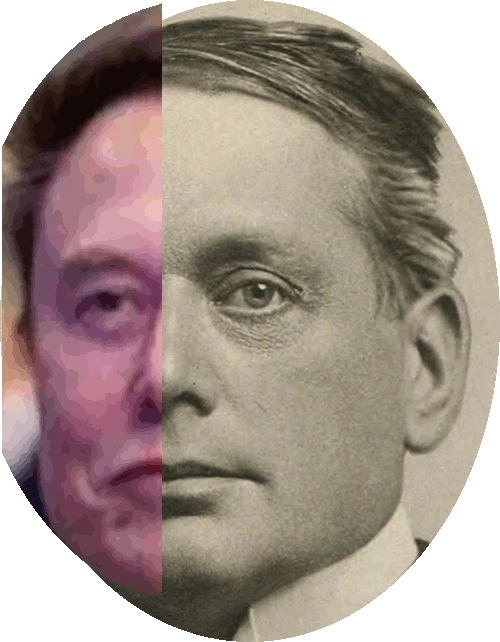
|
Archibald Philip Primrose as Elon Musk |
 |
|
Archibald Philip Primrose
1847-1929
5/7
5/21
Prime Minister |
Elon Reeve Musk
1971
6/28 |
 |
 |
48th Prime Minister
Rosebery |
- Suffered greatly from insomnia, using morphine, which
affected his ability to lead effectively.
- An intelligent idealist with an innate dislike for the bitterness of politics, he reportedly sought
'the palm without the dust,' struggling with the day-to-day grind.
- He resigned the party leadership in 1896 and never again
held political office.
- His short term ended before the
major conflicts of the era although he supported colonial expansion and a strong British presence overseas, opposing
'Little England' policies.
- Though his time in office was brief
and he didn't accomplish much, he fulfilled his ambition to become Prime Minister, alongside marrying an heiress and owning a Derby-winning horse.
49th Prime
Minister of United
Kingdom
1895-1902
(3rd term) |
|
Robert Gascoyne-Cecil as Elon Musk |
|
|
|
Robert Arthur Talbot Gascoyne-Cecil
1830-1903
2/3
8/22
Prime Minister |
Elon Reeve Musk
1971
6/28 |
|
|
|
49th Prime Minister
Salisbury |
-
Prime Minister during the Second Boer War (1899-1902).
- Supported British control of the Transvaal but reluctantly entered the war; focused on diplomacy to avoid conflict.
- Retired in 1902, succeeded by his nephew, Arthur Balfour.
|
Northwest
Passage |
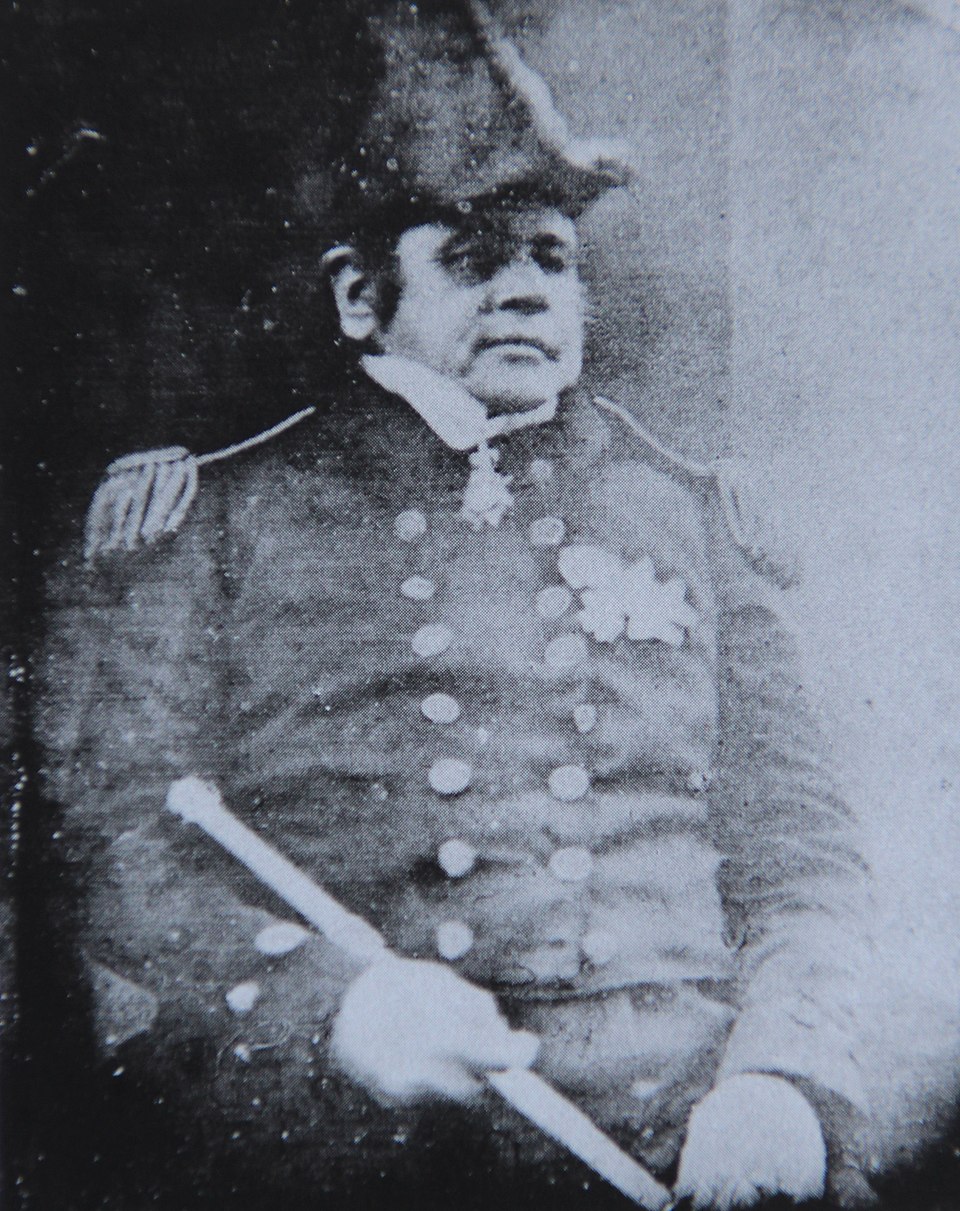
Maritim Greenwich Souvenir Guide, London 1993, Public domain, via Wikimedia Commons
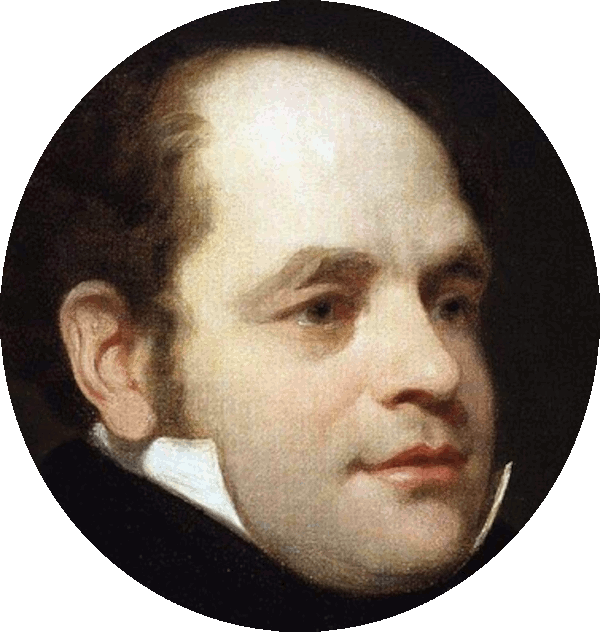
Sir John Franklin
was Barrow's
reluctant choice to
lead the expedition |
- Franklin's lost expedition was a failed British voyage of Arctic exploration led by Captain Sir John Franklin (1786-1847) that departed England in 1845
during the reign of Queen Victoria.
-
They set off aboard two ships, HMS Erebus and HMS Terror, and were assigned to traverse the last unnavigated sections of the Northwest Passage in the Canadian Arctic and to record magnetic data to help determine whether a better understanding could aid navigation.

Great challenges |
- In 1819, Franklin was chosen to lead the Coppermine
expedition overland from Hudson Bay to chart the north coast
of Canada eastwards from the mouth of the Coppermine River.
- On his 1819 expedition, Franklin fell into the Hayes
River at Robinson Falls and was rescued by a member of
his expedition about 100 yards downstream.
- In 1825, Franklin left for his second Canadian and third Arctic expedition, the Mackenzie River expedition.
- In 1845,
James Fitzjames was tapped by Sir John Barrow as a potential leader of an expedition to the Northwest Passage, but was instead named as captain of
HMS Erebus under Sir John Franklin.
|
Between 1819 and 1822, he lost 11 of the 20 men in his party. Most died of starvation or exhaustion, but there was also at least one murder and suggestions of cannibalism. The survivors were forced to eat lichen and even attempted to eat their own leather boots. This gained Franklin the nickname of "the man who ate his boots."
(Wikimedia)
|
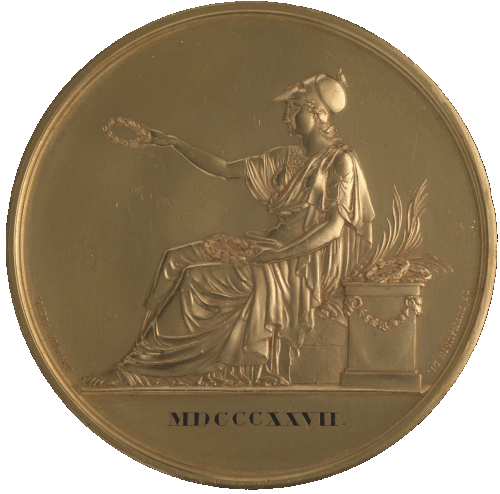
Gold Medal of the
Société de
Géographie of
France. |
- On April 29. 1829, Franklin was knighted by George IV and the same year awarded the first Gold Medal of the Société de Géographie of France.
- On January 25, 1836, he was made Knight Commander of
the Royal Guelphic Order and a Knight of the Greek
Order of the Redeemer.
- In 1830 he became captain of
HMS Rainbow, stationed in the eastern Mediterranean, then accepted appointment as lieutenant governor of the convict colony, Van Diemen's Land (Tasmania) in 1837.
- He was back in England in June 1844.
|
The Gold Medal of the Société de Géographie of France, often called the "Grande Médaille d'Or des Explorations," is one of the society's highest honors for significant contributions to geography and exploration. It was first awarded in 1829 to explorer John Franklin, and notable recipients include David Livingstone, Ernest Shackleton, and Roald Amundsen. The medal recognizes a wide range of achievements, such as discoveries, explorations, and scientific contributions to the field of geography.
(Wikimedia)
|
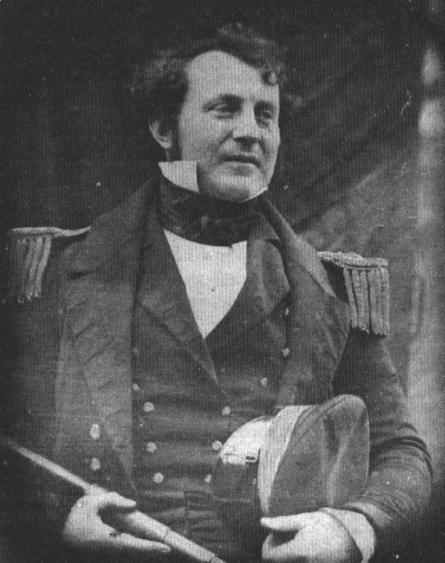
Richard Beard, Public domain, via Wikimedia Commons
Commander James
Fitzjames in 1845 |
- Franklin's lost expedition departed England in
1845 and Commander James Fitzjames
(1813-1848) commanded the expedition's flagship, HMS Erebus.
- Fitzjames had the potential to become the next celebrity
explorer as he was young, athletic and handsome; a war hero who did not
shy away from public appearances.
- He distinguished himself in an ill-conceived expedition to establish a steamship line in Mesopotamia in the 1830s, and in combat during the
Egyptian–Ottoman War and the First Opium War.
- Isn't it just amazing
that we have this old tin-type photo that looks like a
Hollywood stage prop, and this was all the way back in 1845?
- Does this feel like Star Trek?
|
A daguerreotype of Lieutenant James Fitzjames (later Captain) of the Royal Navy, taken by Richard Beard at his temporary dockside studio in Greenhithe, England, shortly before the Northwest Passage expedition's departure on 19 May 1845.
(Wikimedia)
|
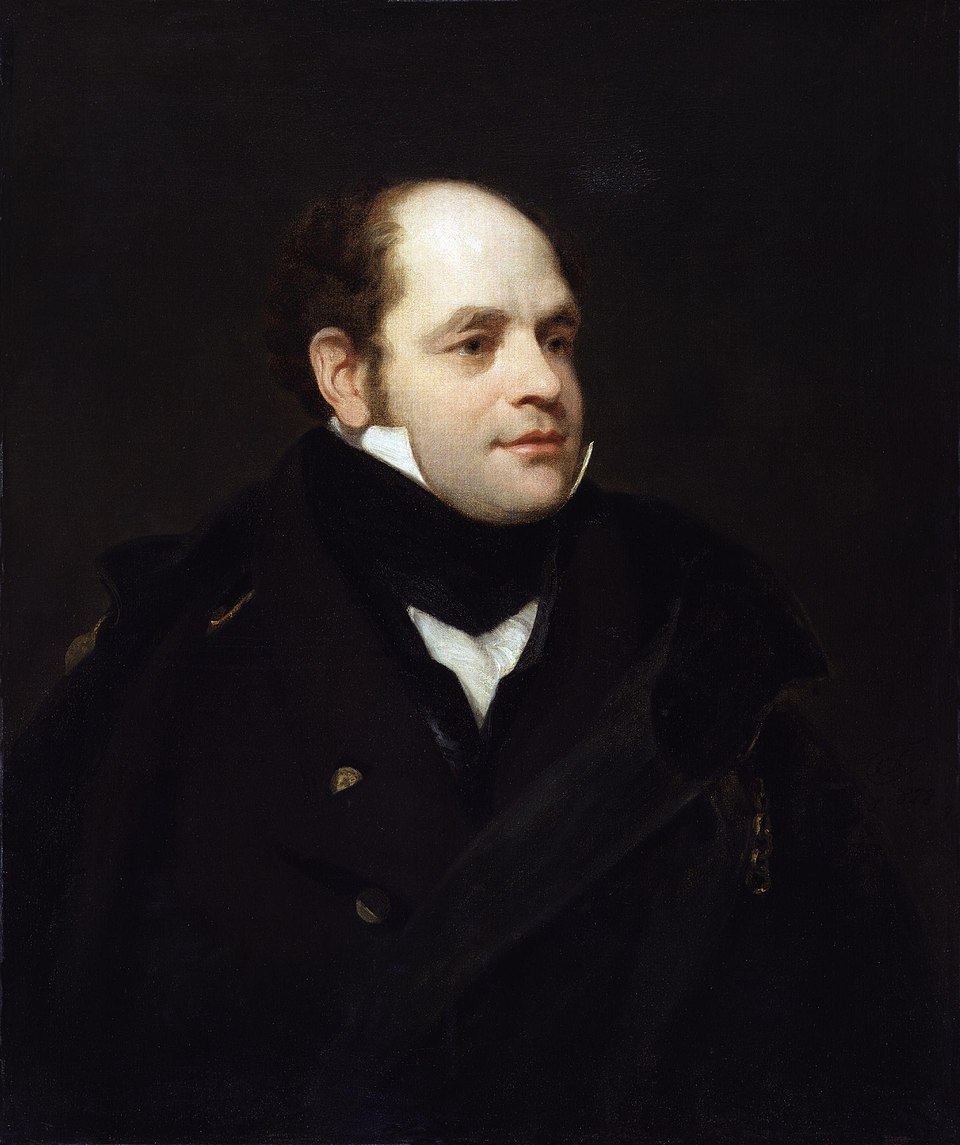
Thomas Phillips, Public domain, via Wikimedia Commons
Sir John Franklin 1828 |
- The expedition met with disaster after both ships and their crews, a total of 129 officers and men, became icebound in Victoria Strait near King William Island in what is today the Canadian territory of Nunavut.
- After being icebound for more than a year, the two ships were abandoned in April 1848, by which point
24 men, including Franklin, had died.
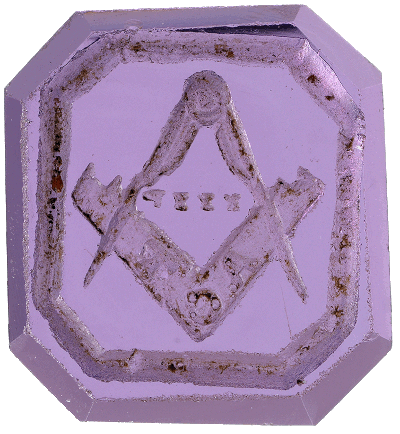
Maasonic seal |
- The ship's log records Franklin's death on June
11, 1847.
- In 2014 the wreck of the HMS Erebus was discovered in Queen Maud Gulf; two years later,
HMS Terror was found near the island's western coast.
|
A purple glass masonic seal was among the relics recovered, and is preserved in the National Maritime Museum. One of Franklin's officers or men was most likely a freemason, but who it was is unknown.
(freemasonry.bcy.ca)
|
|
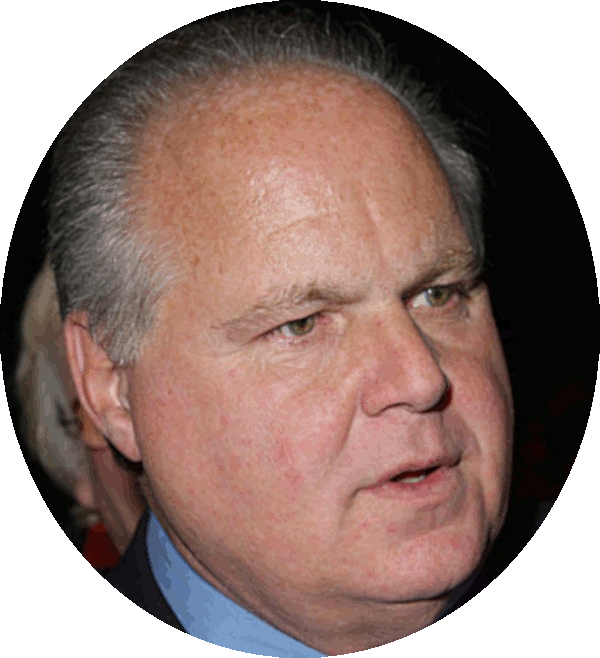
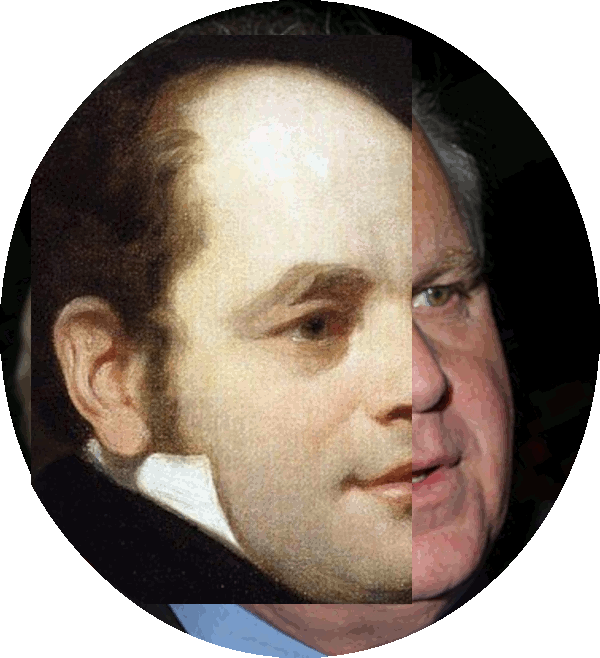
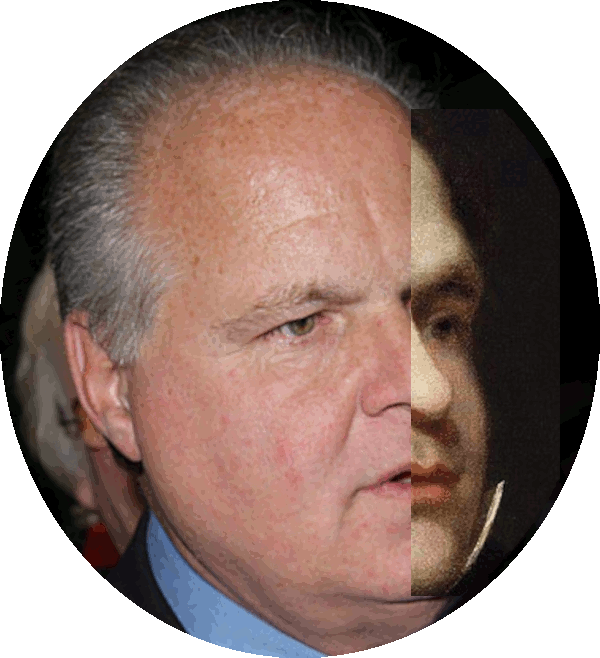
Sir John
Franklin as
Rush Limbaugh |
Sir John Franklin
1786-1847
1/5
6/11
|
Rush Hudson Limbaugh
1951-2021
1/12 2/17 |
 |
 |
|
Coppermine |
- The survivors, now led by Franklin's second-in-command, Francis Crozier, and Erebus's captain, James Fitzjames, set out for the Canadian mainland and disappeared, presumably having perished.
- Fitzjames and 12 others died in the vicinity of Erebus Bay, 50 miles from where they had abandoned the ships.
- His remains were rediscovered in 1993 and forensically identified in September 2024.
|
A series of scientific studies in modern times
suggested that the men of the expedition did not all
die quickly. Hypothermia, starvation, lead poisoning
or zinc deficiency and diseases including scurvy, along with general exposure to a hostile environment while lacking adequate clothing and nutrition, killed everyone on the expedition in the years after it was last sighted by a whaling ship in July 1845. Cut marks on some of the bones recovered during these studies also supported allegations of cannibalism reported by Franklin searcher John Rae in 1854.
(Wikipedia)
|
Ice bound |
- Despite the expedition's notorious failure, it did succeed in exploring the vicinity of one of the many Northwest Passages that would eventually be discovered.
- Robert McClure led one of the expeditions that investigated the fate of Franklin's expedition, a voyage which was also beset by great challenges and later controversies.
- McClure's expedition returned after finding an ice-bound route that connected the Atlantic Ocean to the Pacific Ocean.
- The Northwest Passage was not navigated by boat until 1906, when Roald Amundsen traversed the passage on the Gjøa.
|
Byrd claimed to be the first to reach both the North and South Poles by air. However, there is some controversy as to whether he was actually the first person to reach the North Pole. It is generally believed that the distance he claimed to have flown was longer than the possible fuel range of his airplane.
(Wikipedia)
|
|
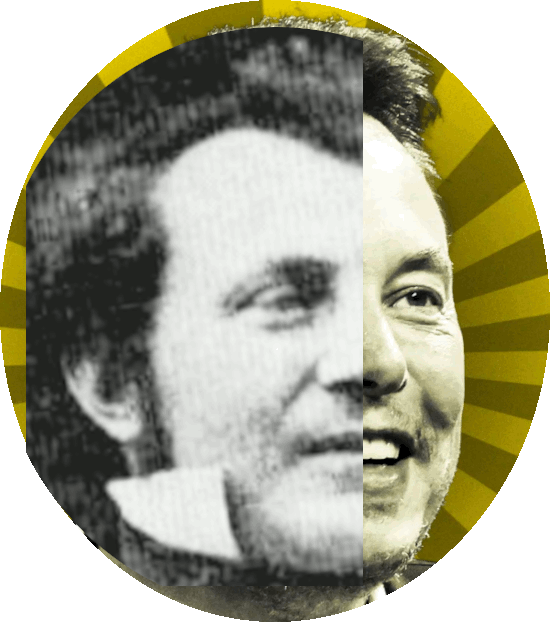
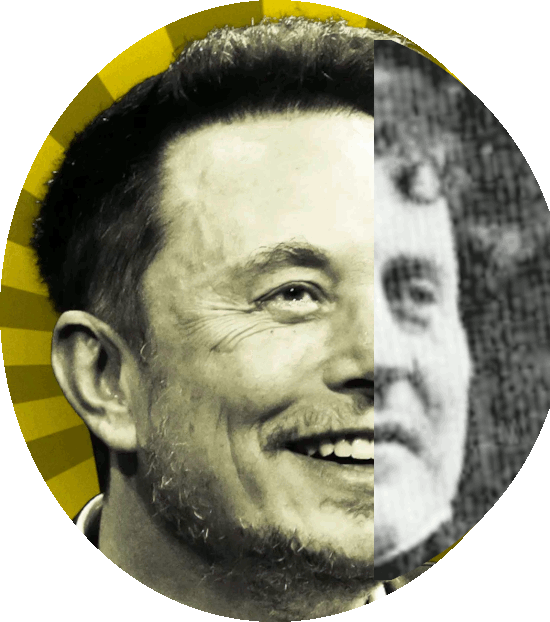
Captain James Fitzjames
as Elon Musk |
James Fitzjames
1813-1848
7/27
5/?
Lost explorer
|
Elon Reeve Musk
1971
6/28 |
 |
 |
|
Captain Kirk |
- Captain James Fitzjames was the illegitimate son of a
man with ties to the Navy and an explorer to the
Northwest Passage.
- Fitzjames goes down in history as a British Royal Navy officer and explorer.

Great challenges |
-
Unfortunately, both Franklin and Fitzjames ended up stranded and lost in ice.
- Just
in time for Admiral Richard Evelyn Byrd Jr. (1888-1957) to
arrive on the scene and play another Elon hero scene ad
nauseum.
|
The 50 incredible journeys include Tenzing and Hillary's conquest of Everest; Neil Armstrong's giant leap; Christopher Columbus' new world; Amelia Earhart flying the Atlantic; gold fever in the Yukon; and the hunt for a man-eating leopard in India. (Assistant)
|
|
Osborne House |
- Queen Victoria died at Osborne House on the Isle of
Wight, at the age of 81.
- She was the last monarch of the
German House of Hanover to rule Britain, reigning from 1837 to
1901, with her death ending the direct Hanoverian line, which
passed to her son Edward VII (House of Saxe-Coburg-Gotha) and
later the Windsor dynasty.
|
…Love me or hate me, both are in my favor...
If you love me, I'll always be in your heart.
If you hate me, I'll always be in your mind.
Shakespeare

| |
 |
 |