|
ABEL GRIMMER -
THE LOST CASTLE - PAGE 8
|
Bannerman's
Castle and Dunkirk |
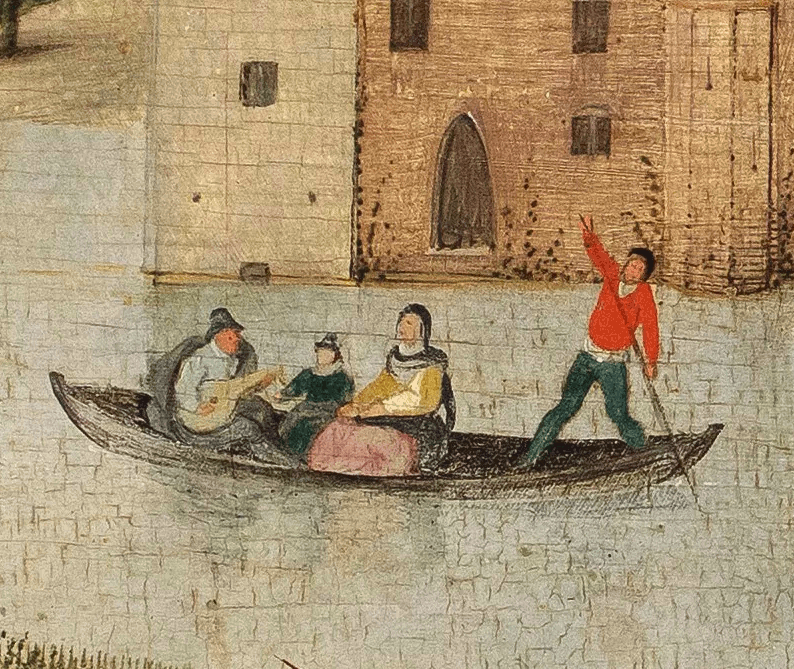
Floating the boat |
- The Liberal Party was one of the two major political parties in the United Kingdom, along with the Conservative Party, in the 19th and early 20th centuries.
- Beginning as an alliance of Whigs, free trade–supporting Peelites, and reformist Radicals in the 1850s, by the end of the 19th-century, it had formed four governments under William Ewart Gladstone
(1809-1898).
- However, the Liberal Party declined in the early 20th-century,
and was supplanted by the Labour Party as the main opposition to the Conservatives after 1918.
|
Gladstone was a British statesman and Liberal
politician, starting as Conservative MP for Newark and
later becoming the leader of the Liberal Party. In a
career lasting more than 60 years, he was Prime
Minister of the United Kingdom for 12 years, spread
over four non-consecutive terms (the most of any
British prime minister), beginning in 1868 and ending
in 1894, (Wikipedia)
|
Political Systems |
- While the American political parties are more
consistent
from the sense there are two primary factions, liberal
(Democrats) and conservative (Republicans), the British system
has always been more 'fractured.'
- This more than likely
is caused by independence from a Monarchy, because after a general election
in Britain, the Monarch appoints the leader of the party most likely to command the House of Commons's confidence (usually the majority party) as Prime Minister, forming the new government, which then needs Parliament's consent for laws and spending.
-
Whereas, the U.S. remains a strong two-party system, primarily due to its winner-take-all electoral college and congressional election system
and even when splinter parties are formed, they still carry
out this same approach with the left-right divide.
Fractured |
- Recent evidence suggests that while the U.S. system is highly polarized, the UK's has experienced significant fragmentation in its traditional two-party system.
- A general election results in the election of 650 Members of Parliament (MPs) to the House of Commons, typically every five years
and the Monarch appoints the leader of the party with the most seats (or who can form a majority) as Prime Minister.
- Traditional left-right divides no longer fully explain British politics; instead, new fault lines like social conservative vs. social liberal, and the desire for radical transformation vs. incremental reform, are emerging.
- Run by the Hebrew German Ashkenazi, there's nothing
British about it.
|
Currently, the UK Parliament has several parties represented, including the Scottish National Party (SNP), Liberal Democrats, and others, meaning voters have more choice and party loyalties are in flux. (Assistant)
|
House of
Saxe-Coburg-Gotha
1901 - 1917
German |
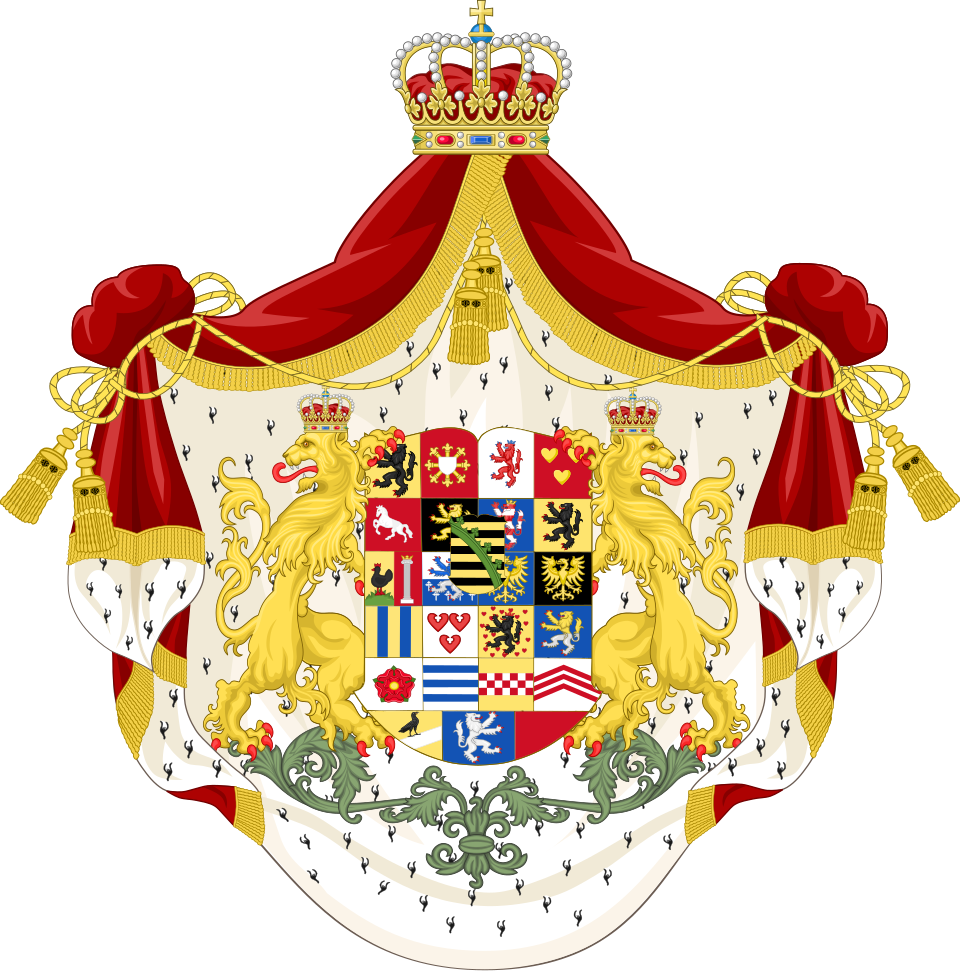
Glasshouse using elements by Sodacan, Trondivers and katepanomegas, CC BY-SA 4.0 , via Wikimedia Commons |
-
Queen Victoria's marriage to Prince Albert of Saxe-Coburg and Gotha in 1840 linked the British throne to the German house, though Victoria remained Hanoverian.
- In 1917, the
First World War caused the British king George V to officially change the name from
'Saxe-Coburg and Gotha' to 'Windsor' in the United Kingdom.
-
The line provided kings for the UK, Belgium, Portugal, and Bulgaria in the 19th/20th centuries.
- This included Edward VII and George V.
- In the United Kingdom, the Edwardian era was a period in the early 20th-century that spanned the reign of King Edward VII from 1901 to 1910
and commonly extended to the start of the First World War in 1914, during the early reign of King George V.
- It was not until the Edwardian era that the title prime minister was constitutionally recognized.
King Edward
VII of the United
Kingdom
1901-
1910
House of
Saxe-Coburg-Gotha |
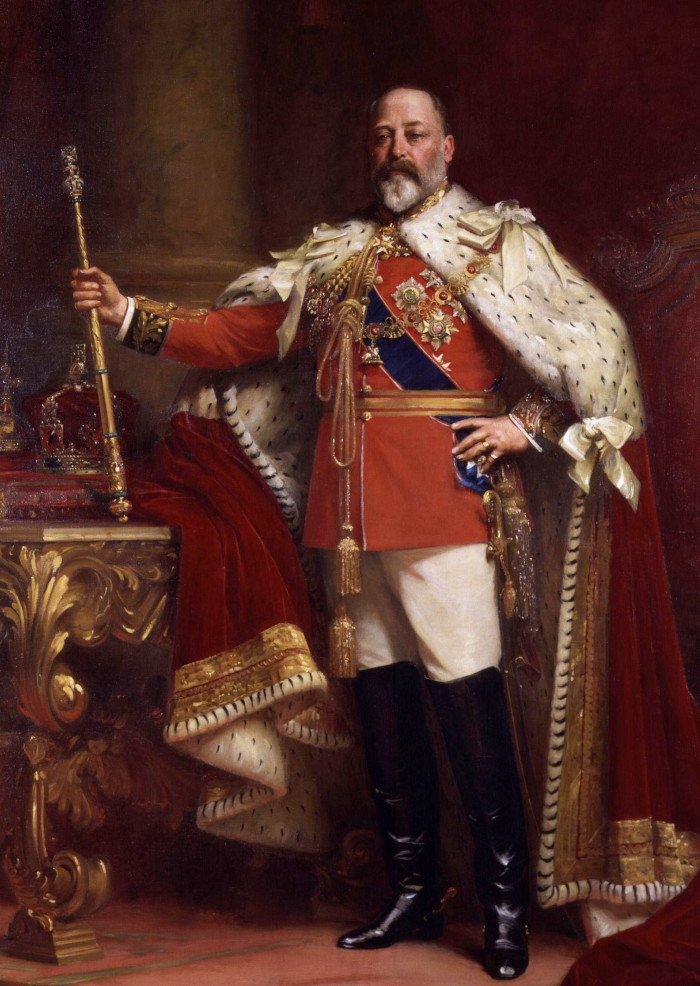
Luke Fildes, Public
domain, via
Wikimedia Commons
Coronation robe |
- Edward VII who was born Albert Edward (1841-1910) was King of the United Kingdom and the British Dominions, and Emperor of India, from January
22, 1901, until his death on May 6, 1910.
- He was the second child and eldest son of Queen Victoria and Prince Albert of Saxe-Coburg and Gotha
and was born on November 9, 1841.
- Edward, nicknamed 'Bertie,' was Prince of Wales and heir apparent to the British throne for almost 60 years.
|
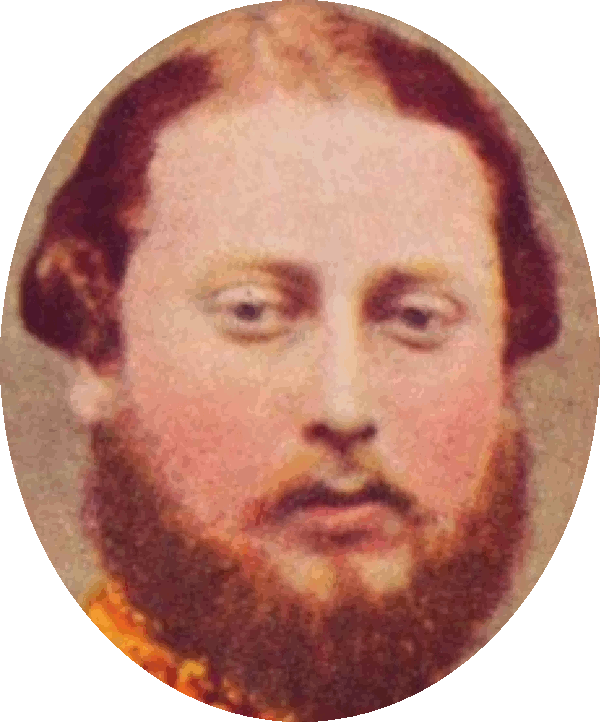
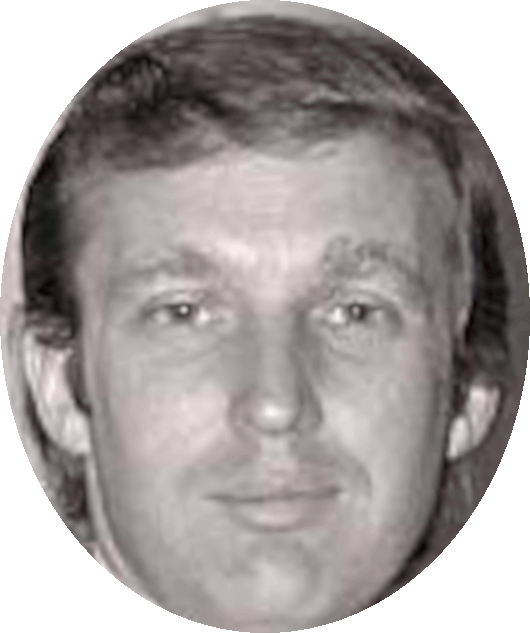
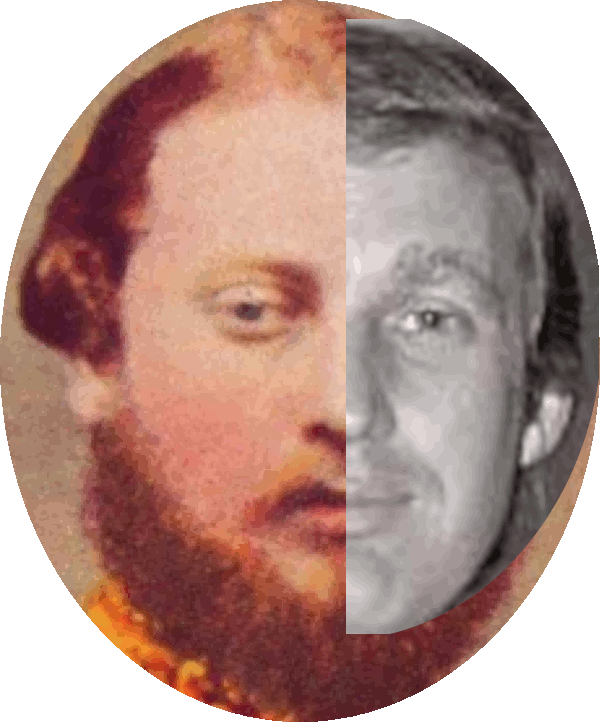
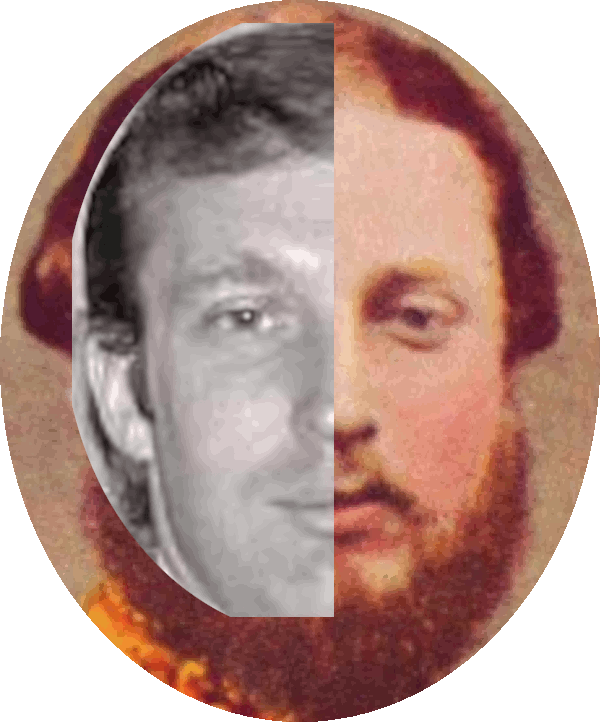
Edward VII as Donald Trump |
 |
 |
Albert Edward
1841-1910
11/9
5/6
monarch |
Donald Trump
1946
6/14
|
 |
 |
|
Bertie
the orange man |
- King Edward VII had numerous mistresses, but his most famous and longest-serving was Alice Keppel, a charming aristocrat who was Queen Camilla's great-grandmother and whose relationship with the King was accepted, even by his wife, Queen Alexandra.
- Other notable lovers included actress Lillie Langtry (his first major mistress) and Daisy Greville, Countess of Warwick.
War horse |
- King Edward VII didn't personally lead armies in major new wars, but his reign was marked by ongoing imperial conflicts
including smaller colonial wars and the tail end of the Second
Boer War.
- Additionally military reforms after that war, and crucial diplomacy forming alliances
such as Triple Entente that set the stage for World War I, which
began just as he died, earning him the nickname 'Peacemaker' for his efforts to prevent continental war.
-
Ultimately, while the nickname as peacemaker was popular
during his reign and reflected his successful public
diplomacy, the long-term impact of the resulting alliance
system on European stability remains a subject of historical
debate.
- Realistically, he created the base, set the
stage, for the Allied Forces in World War I and that had nothing to do
with 'peace.'
|
The Triple Entente was a powerful diplomatic understanding among France, Russia, and Great Britain, formed in the early 20th century (solidified by 1907) to counterbalance the growing military might of Germany and its allies (the Triple Alliance). Though not a formal military pact, it created a framework for cooperation and linked existing agreements (Franco-Russian Alliance 1894, Entente Cordiale 1904, Anglo-Russian Entente 1907) into a bloc that became the core of the Allied Powers in World War. (Assistant)
|
.png)
Public domain, via Wikimedia Commons
Former British
Liberal Party |
- Despite being divided over the issue of Irish Home Rule, the
Liberal party returned to government in 1905 and won a landslide victory in the 1906 general election.
- Under prime ministers Henry Campbell-Bannerman (1905–1908) and H. H. Asquith (1908–1916), the Liberal Party passed reforms that basically
created a welfare state.
- Although Asquith was the party leader, its dominant figure was David Lloyd George
(1863-1945).
|
Irish Home Rule was a late 19th/early 20th-century movement for Irish self-government within the United Kingdom, seeking an Irish parliament for domestic affairs, but it faced fierce opposition from Ulster Protestants and was ultimately overshadowed by Irish republicanism, leading to partition and independence for most of Ireland after WWI. The Government of Ireland Act 1914 passed, granting home rule, but its implementation was suspended due to World War I, and the 1920 Act partitioned Ireland, establishing Northern Ireland and the Irish Free State. (Asssistant)
|
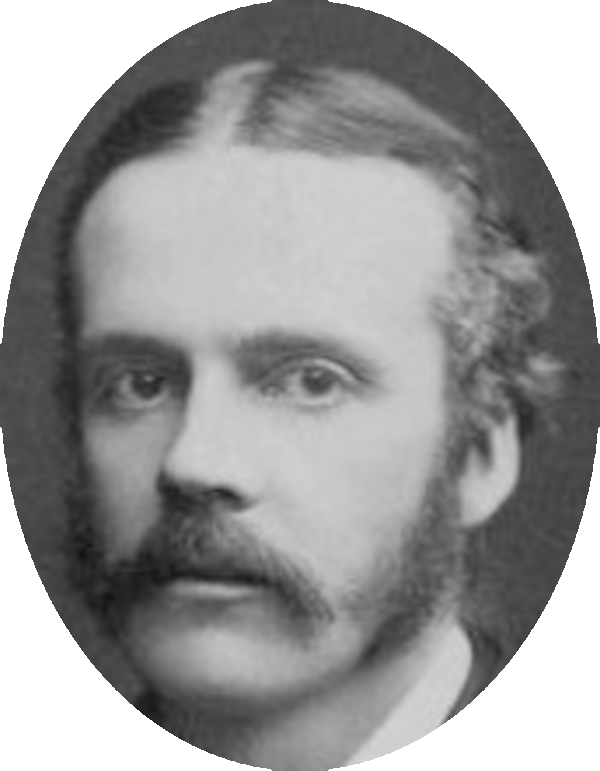
50th Prime
Minister of Great
Britain
1902-1905
Arthur James
Balfour, 1st Earl of
Balfour |
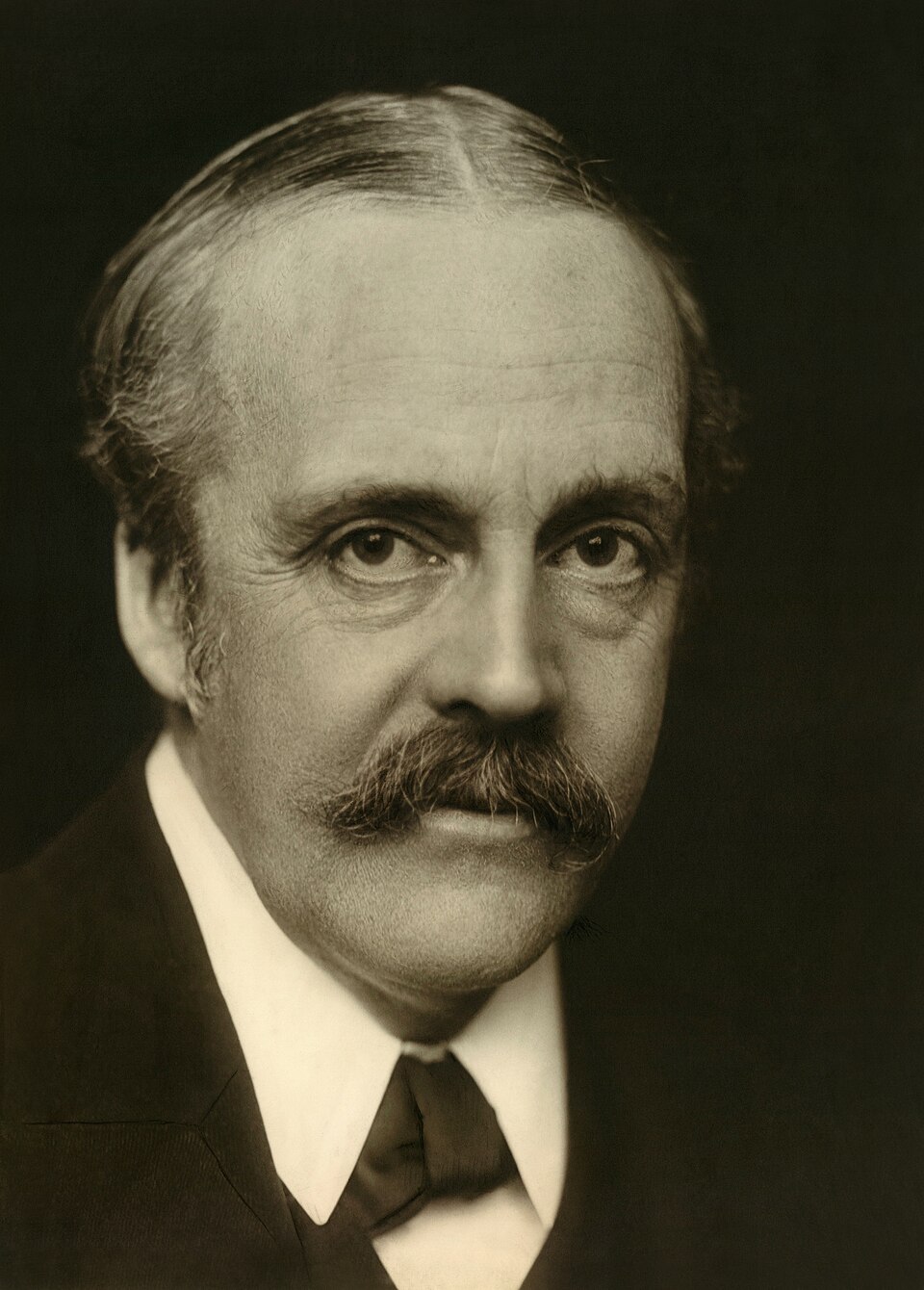
Public domain, via Wikimedia Commons |
- Arthur James Balfour, 1st Earl of Balfour (1848-1930), was a British statesman and Conservative politician who served as Prime Minister of the United Kingdom from 1902 to 1905.
- As foreign secretary in the Lloyd George ministry, he
issued the Balfour Declaration of 1917 on behalf of the
cabinet, which supported a 'home for the Jewish people' in
Palestine, and later issued the Balfour Declaration of 1926 as Lord of the Privy Council, which announced a co-equal relationship between the United Kingdom and its Dominions, laying the groundwork for the
Statute of Westminster 1931 which granted full independence to the former colonies.
|
The Statute of Westminster 1931 was a landmark UK Act of Parliament granting full legislative independence and legal equality to the self-governing Dominions (Canada, Australia, New Zealand, South Africa, Newfoundland, and Eire), confirming their autonomy in foreign and domestic affairs, effectively establishing the modern Commonwealth by ending Britain's power to legislate for them without consent and making UK laws extend to Dominions only if requested. It formalized the constitutional relationship, recognizing the Dominions as equal, sovereign nations within the Empire, though some (like Canada) initially retained restrictions. (Asssistant)
|
|
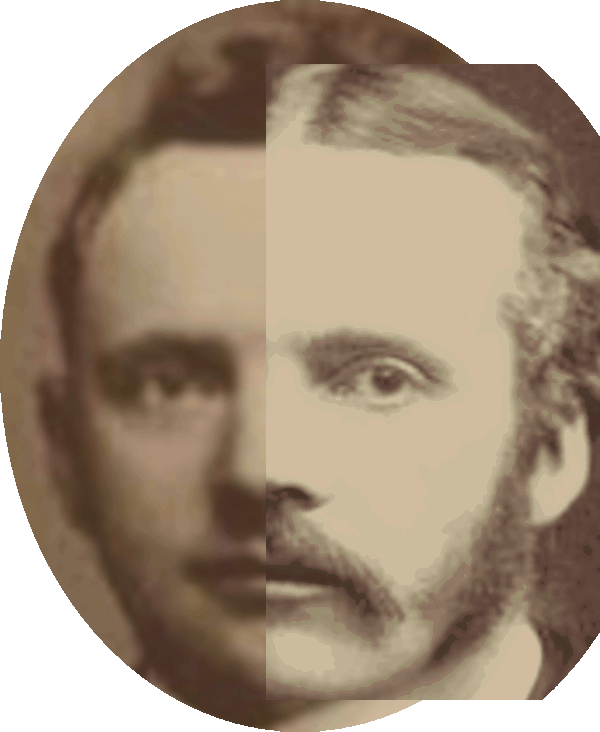
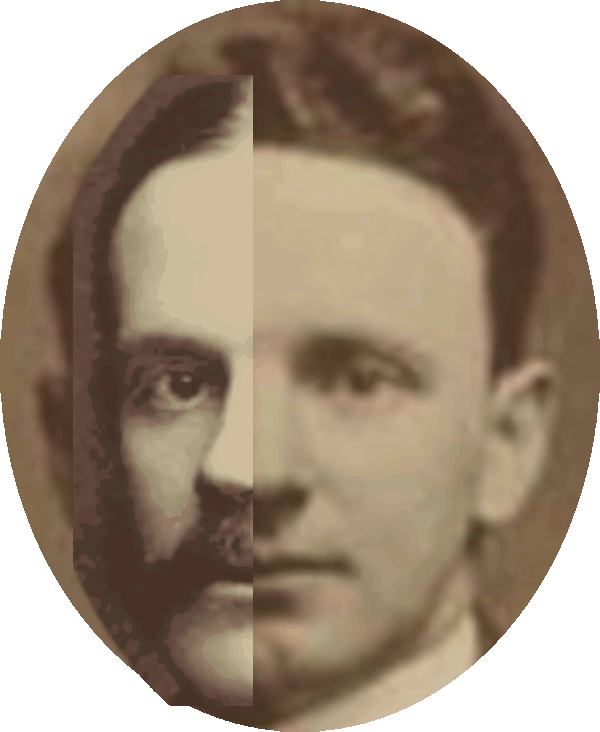
Arthur James Balfour as Senator Harry
Byrd |
Arthur James Balfour
1848-1930
7/25 3/19
Prime Minister |
Harry Flood Byrd Sr.
1887-1966
6/10
10/20
politician
|
 |
 |
50th Prime Minister
Bloody Balfour
Byrd Organization |
-
Balfour Declaration (1917) core issue was the declaration's inherent contradiction, supporting Zionism while stating
'nothing shall be done which may prejudice the civil and religious rights of existing non-Jewish communities,' a pledge many felt was ignored.
- Critics, including Palestinians, viewed the declaration as an imperialist act that dismissed the rights and presence of the Arab majority, laying groundwork for future displacement (Nakba) and conflict.
- Balfour's views, including supporting Jewish immigration restrictions to protect Britain's ethno-nationalist vision, led to accusations he was a white supremacist who saw Zionism as a solution to perceived
'Jewish problems.'
|
The Nakba, meaning "catastrophe" in Arabic, refers to the 1948 Palestinian exodus during the creation of Israel, involving mass displacement, destruction of Palestinian society, and loss of homeland, with enduring impacts like the refugee crisis, ongoing dispossession, and denial of return, marking a pivotal, traumatic event central to Palestinian identity, culture, and the persistent Israeli-Palestinian conflict, commemorated annually on May 15th as Nakba Day. (Asssistant)
|
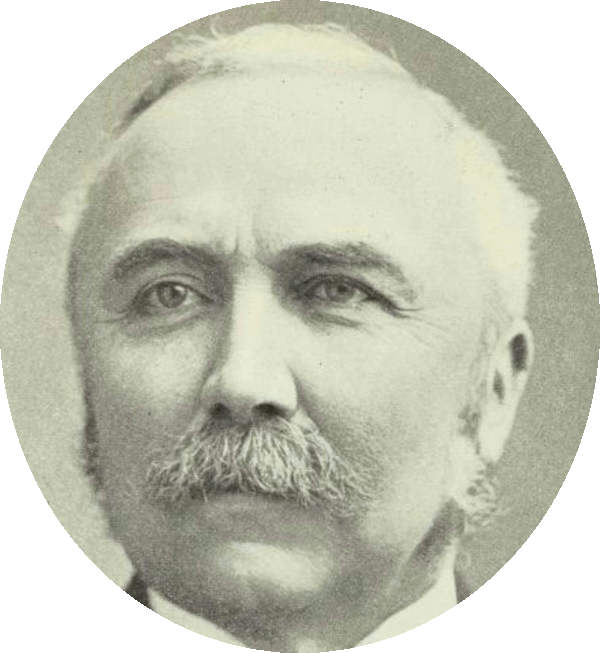
51st Prime
Minister of Great
Britain
1905-1908
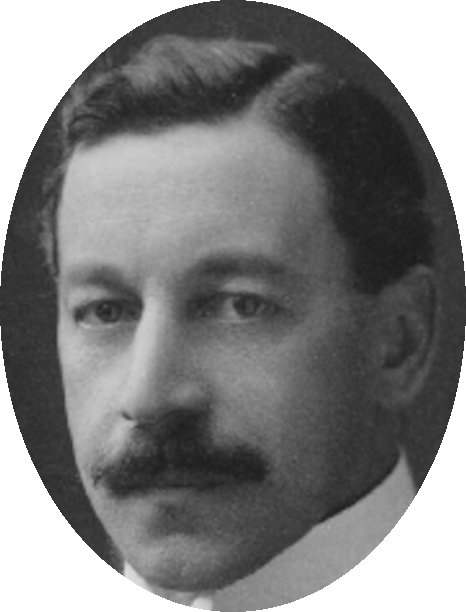
Henry
Campbell-Bannerman |
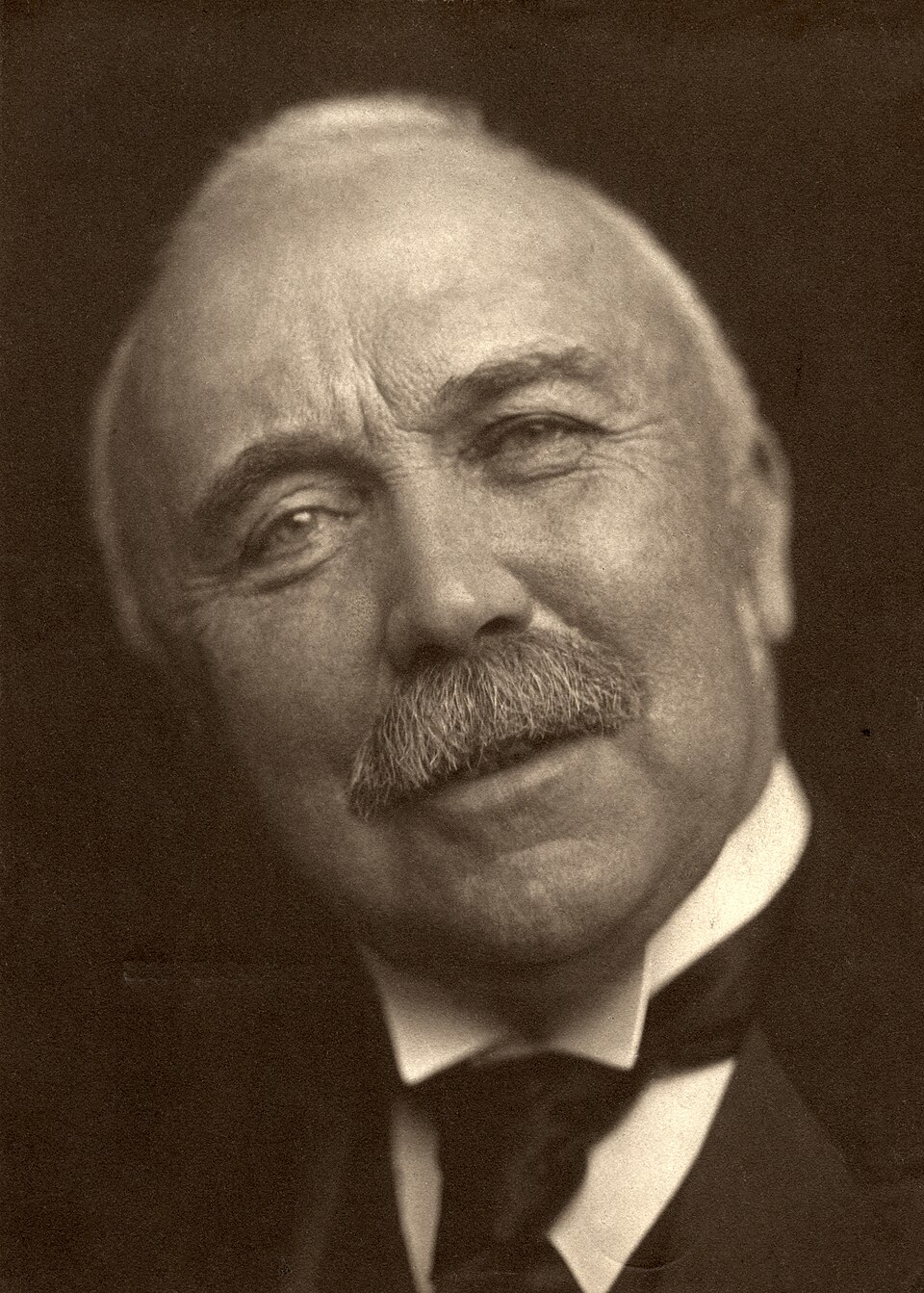
George Charles Beresford, Public domain, via Wikimedia Commons |
-
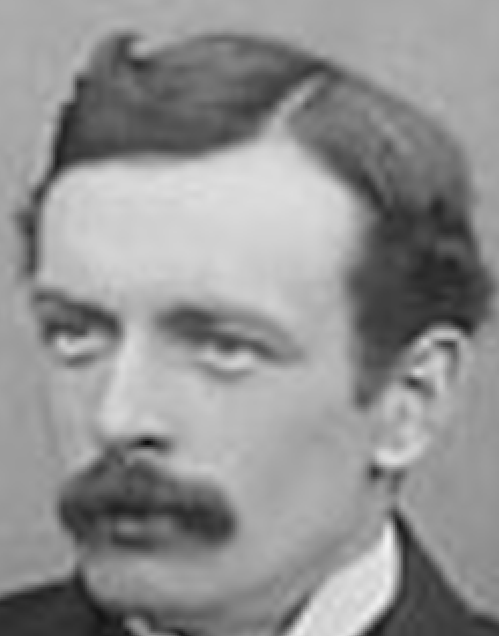
Sir Henry Campbell-Bannerman (1836-1908) was a British statesman and Liberal Party politician who was Prime Minister of the United Kingdom from 1905 to 1908 and Leader of the Liberal Party from 1899 to 1908.
- He also was Secretary of State for War twice, in the cabinets of Gladstone and Rosebery.
- He was the first First Lord of the Treasury to be officially called the Prime Minister, the term only coming into official usage
5 days after he took office.
- He remains the only person to date to hold the positions of Prime Minister and Father of the House at the same time, and the last Liberal leader to gain a UK parliamentary majority.
|
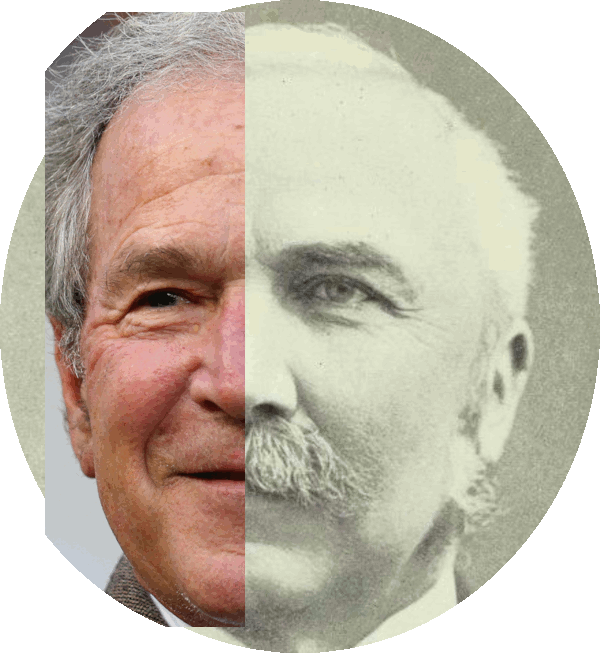
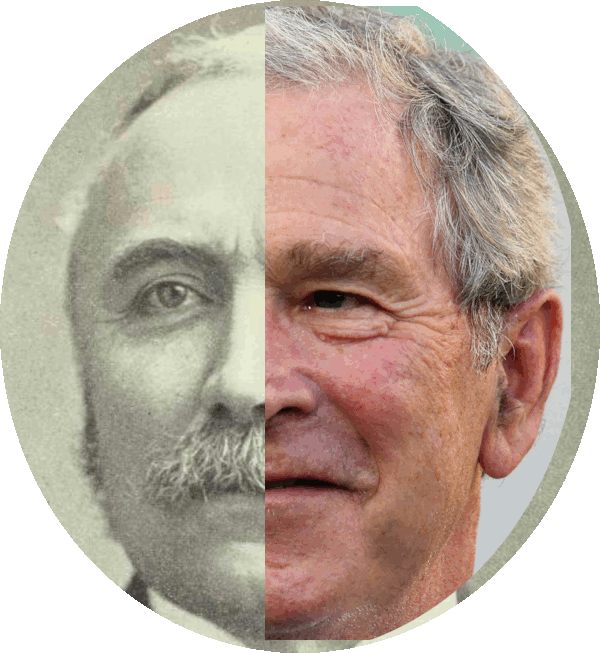
Sir Henry Campbell-Bannerman
as George Bush Jr. |
Henry Campbell
1836-1908
9/7
4/22
Prime Minister
|
George Walker
Bush
1946
7/6 |
 |
 |
51st Prime Minister
CB
|
- Campbell-Bannerman caused friction by condemning British actions as
'methods of barbarism,' alienating imperialists but uniting anti-war factions.
- He famously criticized the scorched-earth tactics, executions, and the notorious concentration camps where thousands of women and children died.
- The war remained a divisive issue, contributing to the Liberal Party's defeat in the 1900 general election.
|
In 1928 Vickers Ltd merged with the greater part of
the company Armstrong-Whitworth of Newcastle to form
Vickers-Armstrongs Ltd. The two companies had
developed along similar lines, expanded into various
military sectors and produced a whole suite of
military products. In 1928 a merger of companies in
the steel industry was announced, involving parts of
Vickers, Vickers-Armstrongs and Cammell, Laird and Co
to form the English Steel Corporation.
Vickers-Armstrongs was involved heavily in the
rearmament programme in the lead up to the Second
World War, during which time the company played the
major role in rearming the British Army.
(sciencemuseumgroup.org.uk)
|
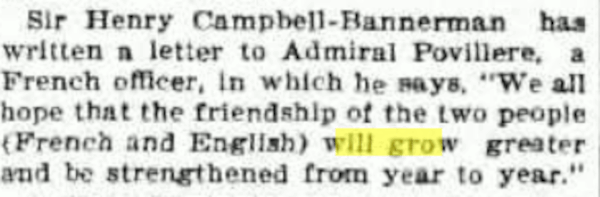
Melbourne Weekly
Times - April 29,
1905 |
- Henry Campbell-Bannerman was hoping for peace with the French in April
1905.
- Campbell-Bannerman's government came to power after a Liberal landslide victory in the January 1906 general election.
- Vickers, Armstrong & Co. was a British engineering company that built a B-class submarine around 1903-1906.
- They faced multiple challenges during the period 1901–1918.
- After experiencing a surge in artillery orders for the Boer
War, they were criticized by the government for the pace of
their response, leading to prickly relationships with the War
Office.
|
In 1905, Prime Minister Balfour resigned and Sir Henry Campbell-Bannerman formed a government pending a January election, appointing
Winston Churchill as Under-Secretary of State for the Colonies, assisting Lord Elgin. And in the Liberal Party’s landslide election victory in early 1906, Churchill was elected as the Liberal MP for North-West Manchester. Churchill, the ambitious, shining ‘glow-worm’, was on his way.
(winstonchurchill.org)
|

Jewish buffer state |
- In 1907, Prime Minister Henry Campbell-Bannerman
was in contact with Albert Vickers in Zurich who was head of
Vickers, Armstrong & Co. and who was apparently building
gunboats.
- That same
year, a document called Campbell-Bannerman Report openly asked for a Jewish state in Palestine.
- The report submitted in 1907 to British Prime Minister Sir Henry Campbell-Bannerman emphasized that a Jewish buffer state, which is friendly to Europe and hostile to its neighbors, must be established in Palestine.
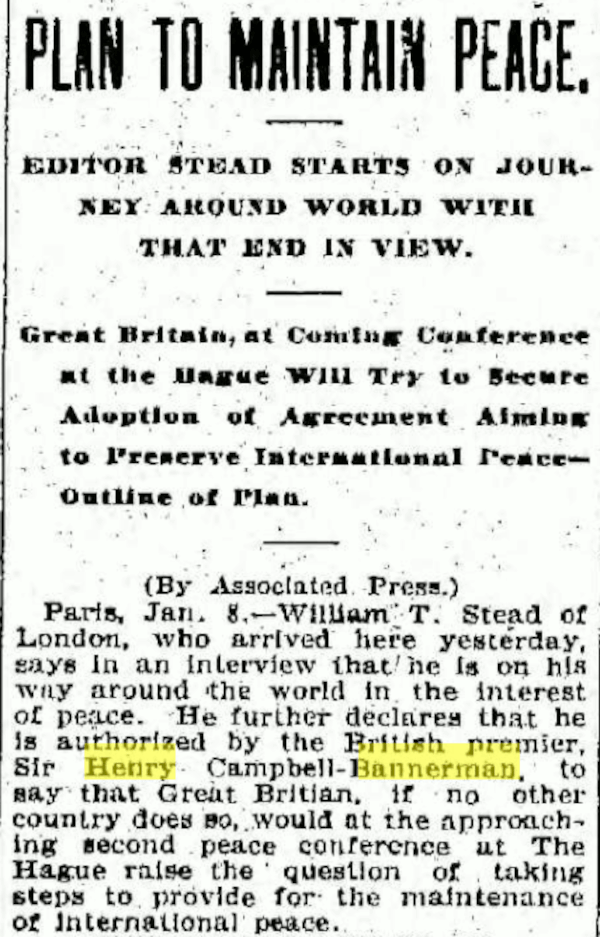
Oshkosh Daily
Northern - January
8, 1907
Plan to
Maintain Peace |
- Some claim that Campbell-Bannerman never called for a
Jewish buffer state but he was certainly calling for peace,
and he showed up here for a reason.
- Overall, he spent a
lot of time trying to reduce arms while purchasing gunboats.
The arms are fair,
When the intent of bearing them is just. (Shakespeare, Henry IV)
|
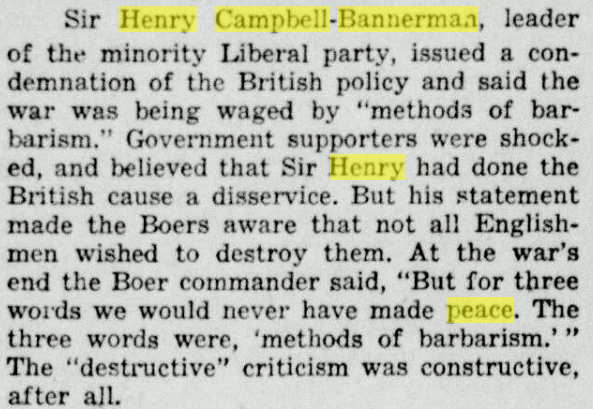
Athens Messenger -
October 11, 1960 |
- He talked a lot in the news about a plan for
international peace which was a brand new topic at that time.
|
Peace was used by some Zionists as a tactic for public consumption to mask or facilitate the underlying goals of land acquisition and the establishment of a Jewish state with minimal Arab population. In essence, from this critical viewpoint, "peace" was used as a rhetorical and strategic device to advance Zionist goals while managing external and internal perceptions of the conflict.
(Assistant)
|
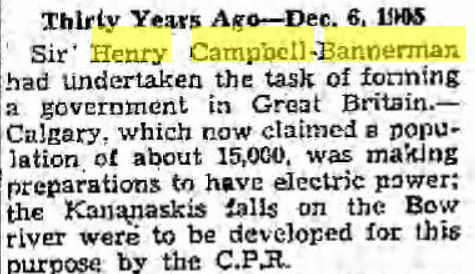
Winnepeg Free Press
- December 7, 1935 |
- Sir Henry installing government in Calgary, Alberta,
on December 6, 1905.
Jewish home |
- Eventually, the British took Jews to their side and quickly began to award them with a nation-state via the
Balfour Declaration, which reads
"His Majesty’s Government accepts the principle that Palestine should be reconstituted as the National Home of the Jewish People.
"
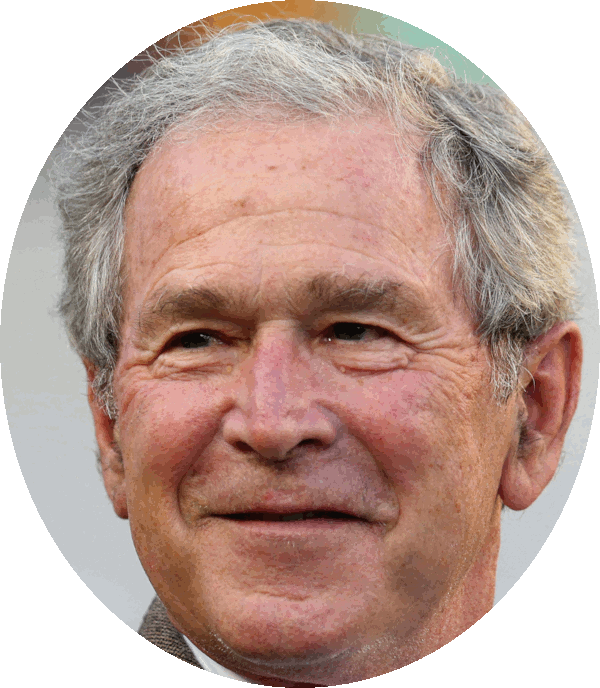
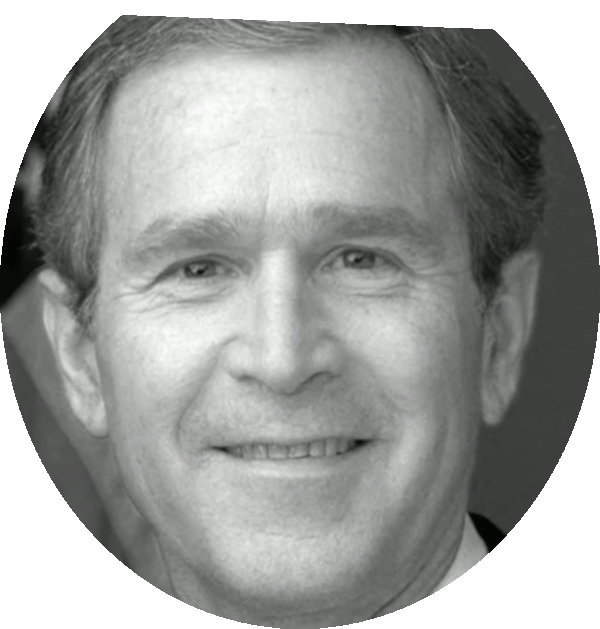
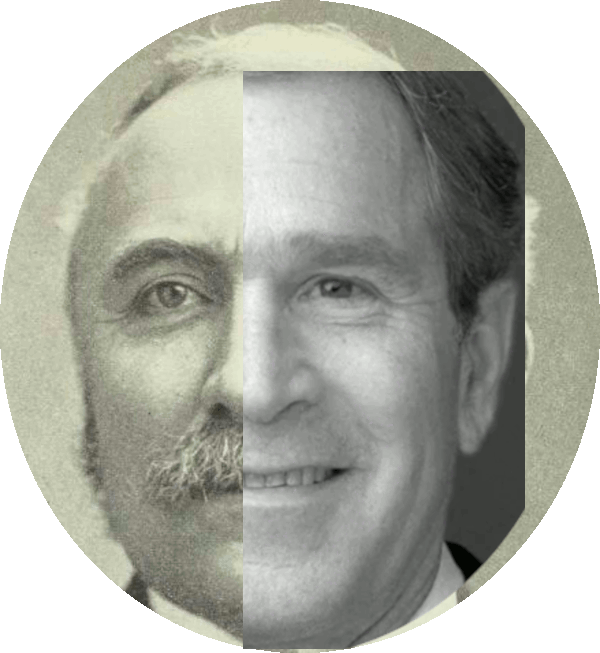
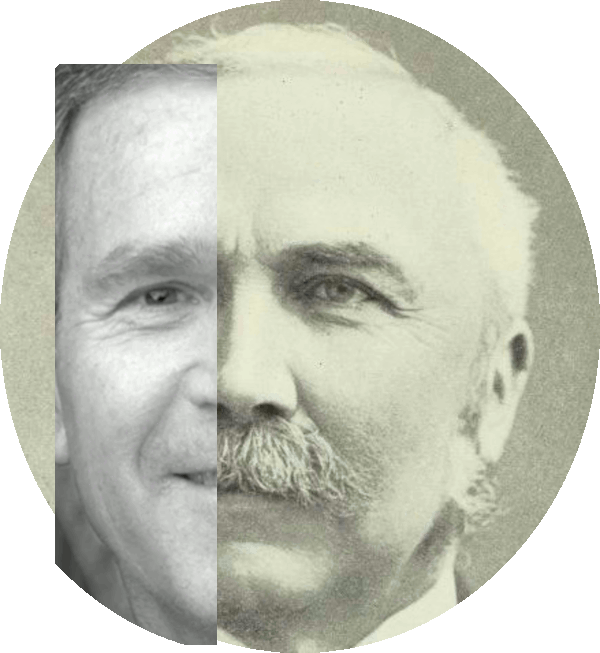
- Bush's 'Bannergate' Shuffle.
- Bush Kept His 'Mission Accomplished' Banner.
|
George Jr. as
Sir Henry Campbell-Bannerman |
George 'Skin' Walker
Bush
1946
7/6
|
Henry Campbell
1836-1908
9/7
4/22 |
 |
 |
|
Ghosted |
-
Stacy Bannerman returned a Freedom Medal to President George W. Bush that he had given to her after her now ex-husband who was in the
Iraq War.
- When the War Came Home: The Inside Story of Reservists and the Families They Leave Behind.
- Trump is a terror, but we can't forget the politicians who allowed his rise.
|
But she says like so many other veteran families the decisions made by those in office destroyed her life and many others. She hopes her books can help more people understand what families of veterans face and the casualties found at home as well. (kobi5.com)
|
The Bay of Plenty
Times - June 11,
1906
Great
International
Expedition |
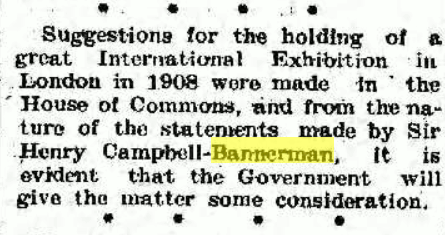
- Campbell-Bannerman made suggestions to promote the
Great International Expedition held in London in 1908.
- The last Great Exhibition of the Works of Industry of All Nations, also known as the
Great Exhibition or the Crystal Palace Exhibition, was an international exhibition that took place in Hyde Park, London, from 1 May to 15 October 1851.
- It was the first in a series of world's fairs, exhibitions of culture and industry that became popular in the 19th-century.
- The event was organized by Henry Cole and Prince Albert, husband of Victoria, Queen of the United Kingdom.
Hang out our banners on the outward walls. (Shakespeare, MacBeth)
|
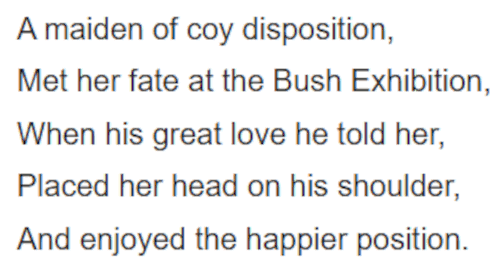
Limerick used in
advertisement |
- The Franco-British Exhibition was a large public fair held in London between 14 May and 31 October 1908.
- It was the first in the series of the White City
Exhibitions and apparently the event that Campbell-Bannerman
was suggesting ideas for.
- The most popular attractions at the exhibition were the two so-called
'colonial villages' including an 'Irish village' and a 'Senegalese village,' which were designed to communicate the success of imperialism.
- The Great International Expedition also refers to the
discovery of the Northwest Passage.
|
Famous people of the time attended the Great Exhibition, including Charles Darwin, Karl Marx, Michael Faraday (who assisted with the planning and judging of exhibits), Samuel Colt, members of the Orléanist royal family and the writers Charlotte Brontë, Charles Dickens, Lewis Carroll, George Eliot, Alfred Tennyson, and William Makepeace Thackeray.
(Wikimedia)
|
World War I |
- In 1905, Prime Minister Henry Campbell-Bannerman gave Winston Churchill his first government post as Under-Secretary of State for the Colonies.
- This appointment marked the beginning of Churchill's time as a Liberal politician and was a key step in his rise within the party.
- Campbell-Bannerman's government also included other future prime ministers like H.H. Asquith and David Lloyd George.
On the road |
- In August 1914 Asquith took the United Kingdom of Great Britain and Ireland and the British Empire into the
First World War.
- During 1915 his government was vigorously attacked for a shortage of munitions and the failure of the Gallipoli Campaign.
- He formed a coalition government with other parties, but failed to satisfy critics, was forced to resign in December 1916, and never regained power.
- Asquith apparently achieved what he set out to do, world war.
|
In 1925 Asquith was granted the title of Earl of Oxford and elevated to the House of Lords. He died of a stroke in 1928. (gov.uk)
|
House of
Windsor
1910 - Present
European |
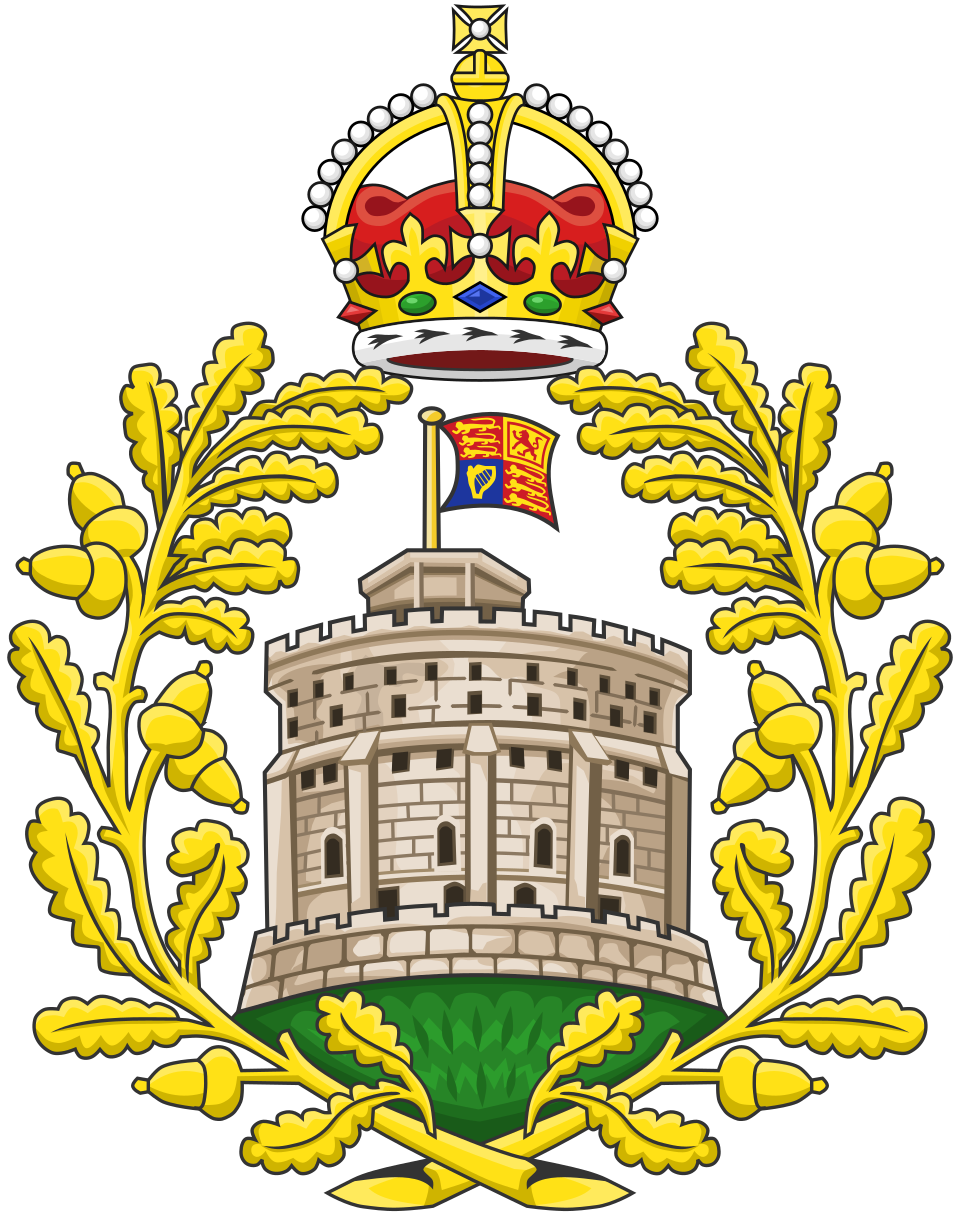
Sodacan, Public domain, via Wikimedia Commons |
- The House of Windsor is the current royal house of the United Kingdom and other Commonwealth realms.
- The house's name was inspired by the historic Windsor Castle estate.
- It was founded on July 17, 1917, when King George V changed the name of the royal house from the German Saxe-Coburg and Gotha to the English Windsor due to anti-German sentiment during the
First World War.
King George
V of the United
Kingdom
1910-
1936
House of Windsor |
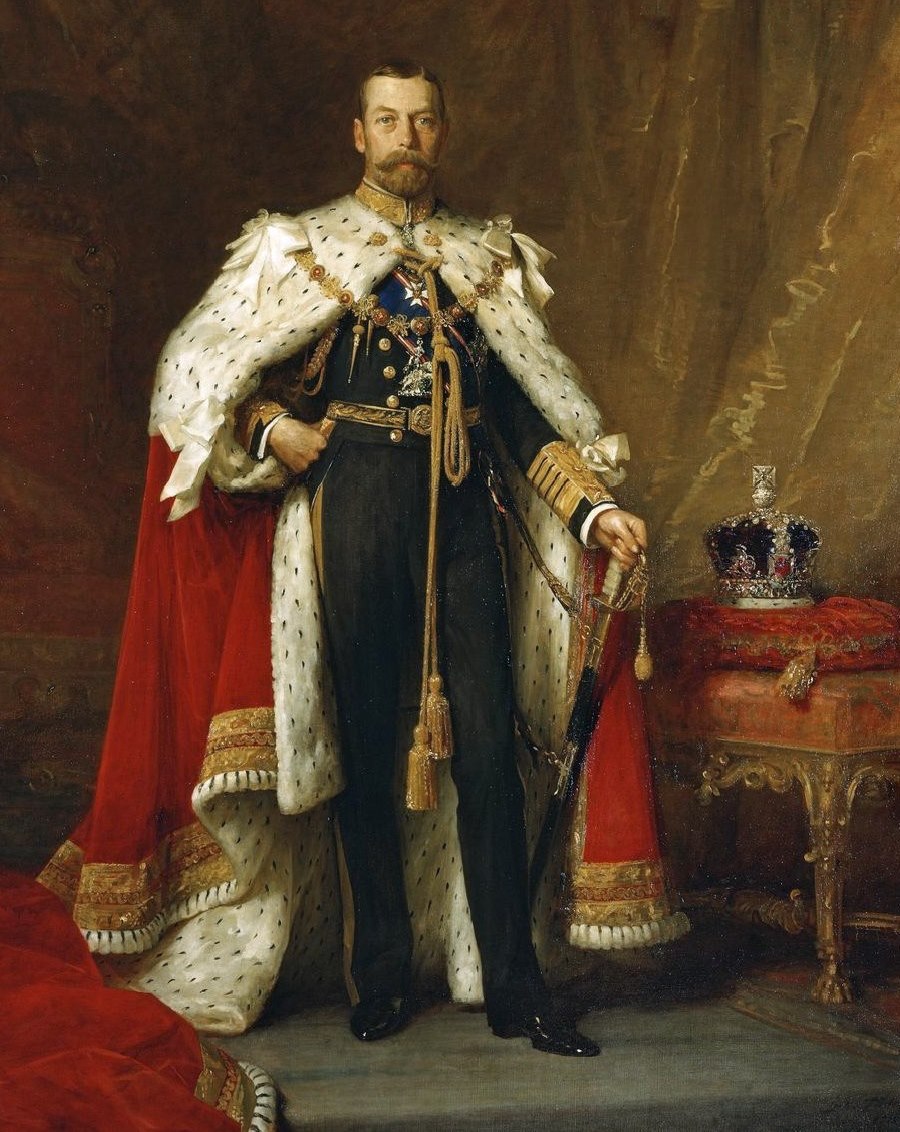
Luke Fildes, Public
domain, via
Wikimedia Commons
Coronation robe |
- George V was born George Frederick Ernest Albert (1865-1936) was King of the United Kingdom and the British Dominions, and Emperor of India, from May
6, 1910, until his death on January 20, 1936.
- George was born on June 3, 1865, during the reign of his paternal grandmother, Queen Victoria, as the second son of the Prince and Princess of Wales (later King Edward VII and Queen Alexandra).
- He was third in the line of succession to the British throne behind his father, and his elder brother, Prince Albert Victor.
|
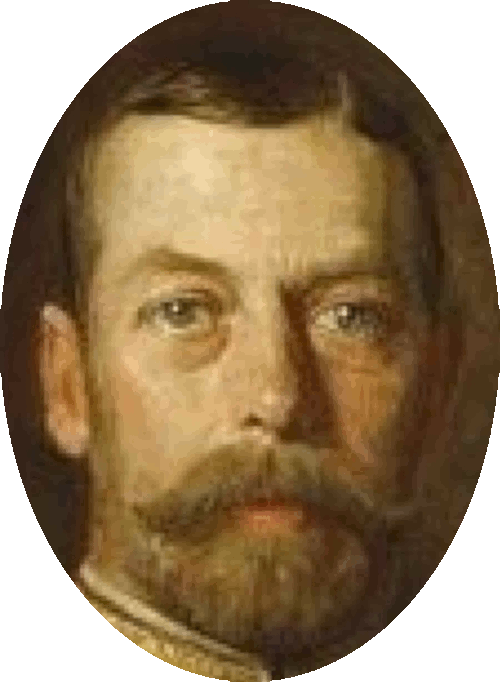
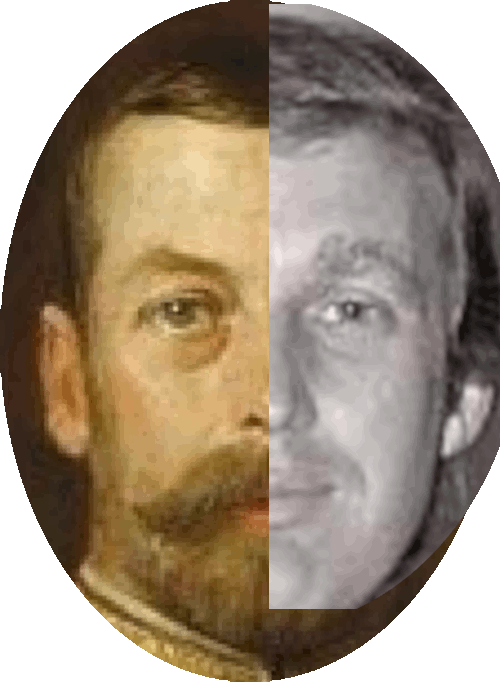
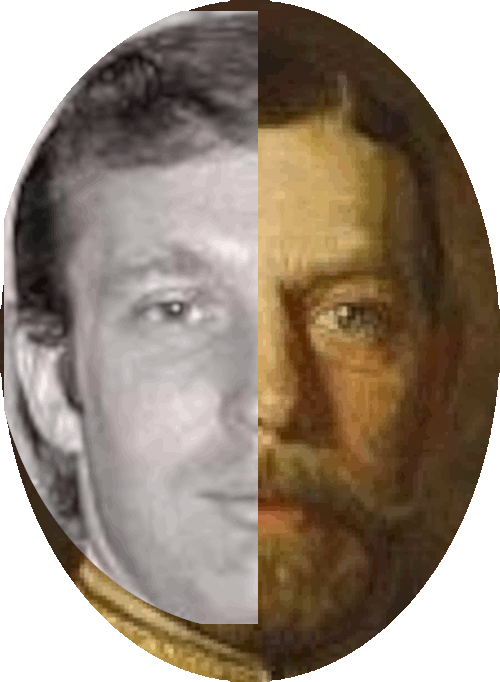
George V as Donald Trump |
 |
|
George Frederick Ernest Albert
1865-1936
6/3
1/20
monarch |
Donald Trump
1946
6/14
|
 |
 |
|
Romanov |
- King George V didn't save the Romanovs primarily due to fears of sparking socialist revolution in Britain, the unpopularity of the Tsar and Tsarina, the extreme political climate during
World War I, and the logistical impossibility of a rescue, leading him to renege on an initial offer of asylum and effectively abandon his cousins to their fate.
- His government and advisors worried bringing the reviled autocrats to England would incite British workers,
damage the war effort, and threaten the
monarchy itself!!!!
|
Austrian journalist Theodor Herzl is considered the father of modern Zionism. His 1896 pamphlet The Jewish State and the subsequent First Zionist Congress in 1897 formalized the movement's political goals of obtaining a publicly and legally secured home for the Jewish people. The movement gained international traction, notably with the British government's 1917 Balfour Declaration supporting a Jewish national home in Palestine. Following the Holocaust, which underscored the need for a Jewish refuge, the movement's goal was realized with the declaration of the independent State of Israel on May 14, 1948. (Assistant)
|
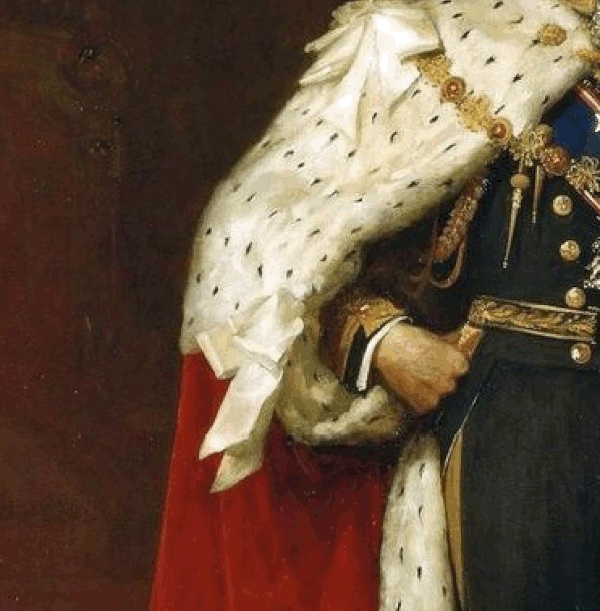
Masonic |
- George V served in the Royal Navy, until his elder brother's unexpected death in January 1892, put him directly in line for the throne.
- The next year he married his brother's former fiancée, Princess Victoria Mary of Teck, and they had
6 children.
- When Queen Victoria died in 1901, George's father ascended the throne as Edward VII, and George was created Prince of Wales.
- He became king-emperor on his father's death in 1910.
War horse |
- King George V's role at war, primarily during World War I, was as a crucial figurehead for British morale, boosting support through visits to troops, factories, and hospitals, while also navigating political tensions, changing the royal name to Windsor, and seeing his sons serve, embodying national unity and resilience against his cousins (Kaiser Wilhelm II and Tsar Nicholas II) who led enemy empires.
- He and Queen Mary made numerous visits to the armed forces and civilians, becoming symbols of perseverance, especially during the Blitz (though this was during WWII, it reflects his wartime image).
-
George V was a figurehead and represented the British Empire, connecting with soldiers and the public during the
Great War.
- He actively collected wartime memorabilia and initiated the Imperial War Graves Commission for memorials.
- The war led to the downfall and execution of his cousins, the German Kaiser and Russian Tsar.
|
Christian Zionism Roots (19th Century):
Early supporters were British evangelicals and Restorationists who believed Jews returning to the Holy Land fulfilled prophecy, paving the way for Christ's second coming. Motivated by a desire to gain global Jewish support for the war effort, leverage perceived Jewish influence, and secure strategic advantage in the post-Ottoman Middle East. (Assistant)
|
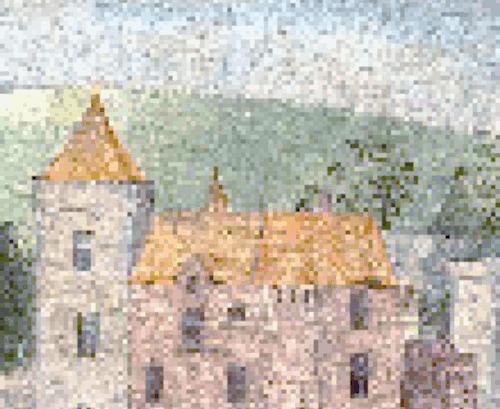
Britain |
- A quarter-century before 'boldly' leading Britain in World War II, Winston Churchill spearheaded a
World War I military debacle
in 1914.
- Although the political head of the Royal Navy, the ambitious Churchill also fancied himself a military strategist
and he confided in a friend, 'I have it in me to be a successful soldier. I can visualize great movements and combinations.'
- Egads!
|
As 1914 staggered to its bloody conclusion, the “Great War” dissolved into a horrific grind along the 500 battle-scarred miles of the Western Front. Britain and France had suffered nearly a million casualties in the war’s first four months alone, and the deadly stalemate in the trenches increasingly frustrated Britain’s 40-year-old First Lord of the Admiralty who asked the prime minister, “Are there not other alternatives than sending our armies to chew barbed wire in Flanders?” (history.com)
|
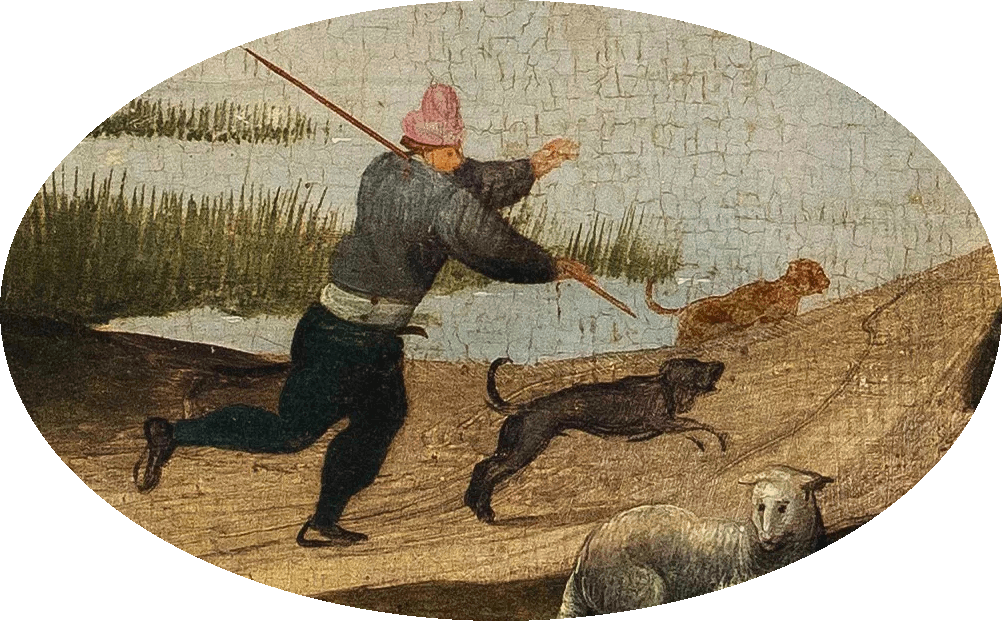
Clear route to
Russia |
- The young minister proposed a bold stroke that would win the war.
- He abandoned his earlier plan to invade Germany from the Baltic Sea to the north,
and now had another proposal that was under consideration by the military to strike more than 1,000 miles to east.
- Churchill proposed to thread his naval fleet through the needle of the Dardanelles, the narrow 38-mile strait that severed Europe and Asia in northwest Turkey.
- He wanted to seize Constantinople and gain control of the strategic waterways linking the Black Sea in the east to the Mediterranean Sea in the west.
|
Churchill believed the invasion would give the British a clear sea route to their ally Russia and knock the fading Ottoman Empire, the “sick man of Europe” that had reluctantly joined the Central Powers in October 1914, out of the war, which would persuade one or all of the neutral states of Greece, Bulgaria and Romania to join the Allies. (history.com)
|

Sent in the fleet
in the dark |
- The British War Office, however, refused to send as many troops as he wished, but Churchill sent in the fleet anyway.
- The attack on Gallipoli began on the morning of February 19, 1915, with long-range bombardment of the peninsula by British and French battleships.
- Despite initial success, the attack stalled as the weather grew worse and Allied minesweepers drew heavy fire.
|
A military campaign in the First World War on the Gallipoli peninsula (now Gelibolu) from 19 February 1915 to 9 January 1916. The
campaign was a costly failure for the Allies, who failed to capture Constantinople or knock the Ottoman Empire out of World War I, resulting in heavy casualties (over 250,000 combined) for both sides but a crucial strategic victory for the Ottomans. The campaign led to the evacuation of Allied troops, discredited political figures like Winston Churchill, and paradoxically, forged a strong national identity for Australia and New Zealand (ANZAC) through shared sacrifice, commemorated annually on ANZAC Day.
(Assistant)
|
52nd Prime
Minister of Great
Britain
1908-1916
Herbert Henry
Asquith, 1st Earl of
Oxford and Asquith |
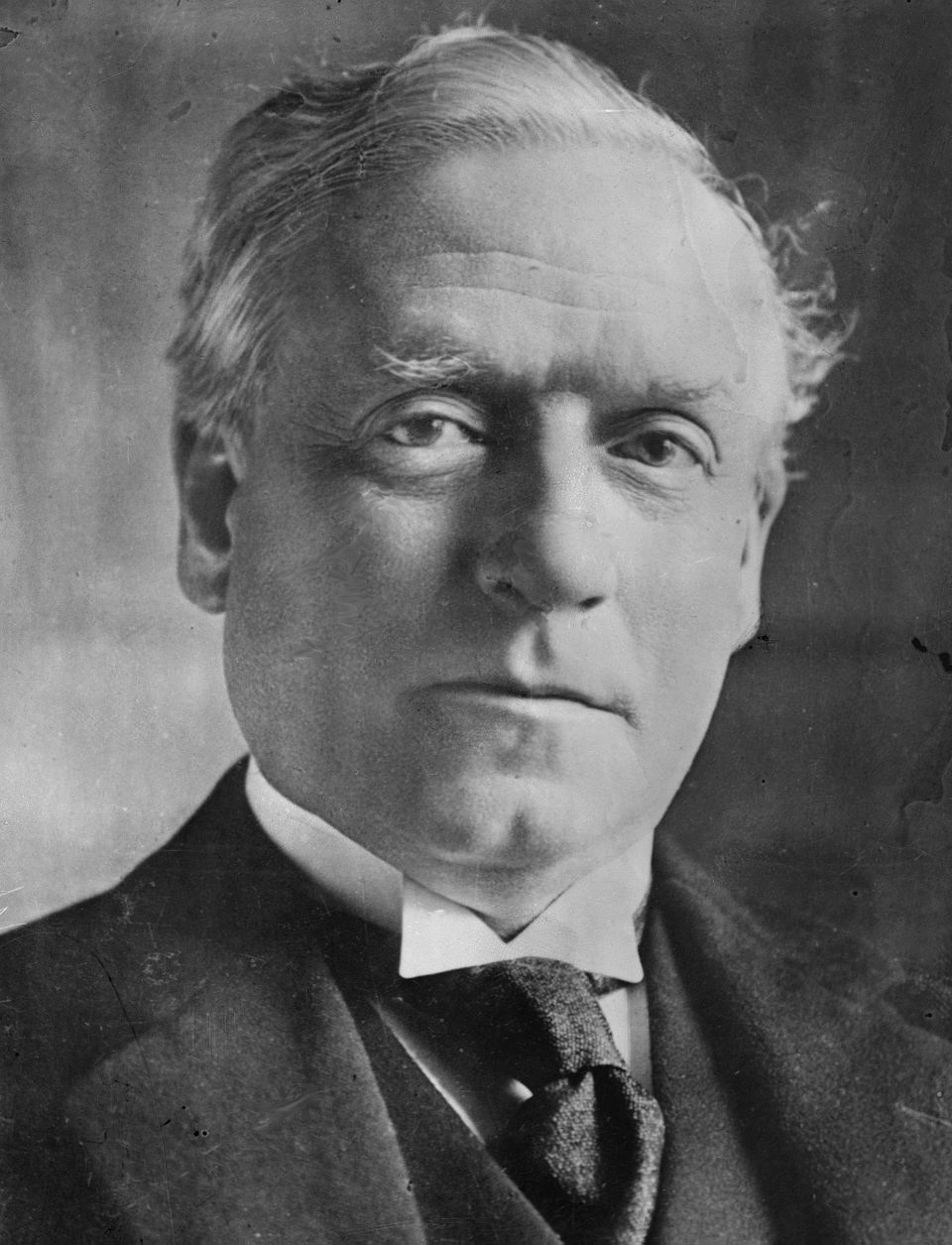
Bain News Service, Public domain, via Wikimedia Commons |
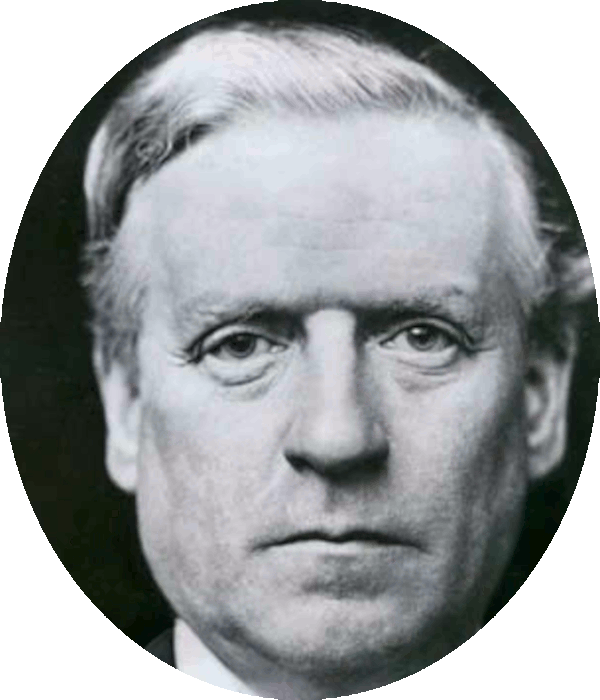
- Herbert Henry Asquith, 1st Earl of Oxford and Asquith (1852-1928), generally known as H. H. Asquith, was a British statesman and Liberal politician who was Prime Minister of the United Kingdom from 1908 to 1916.
- He was the last prime minister from the Liberal Party to command a majority government, and the most recent Liberal to have served as Leader of the Opposition.
- He played a major role in the design and passage of major liberal legislation and a reduction of the power of the House of Lords.
|
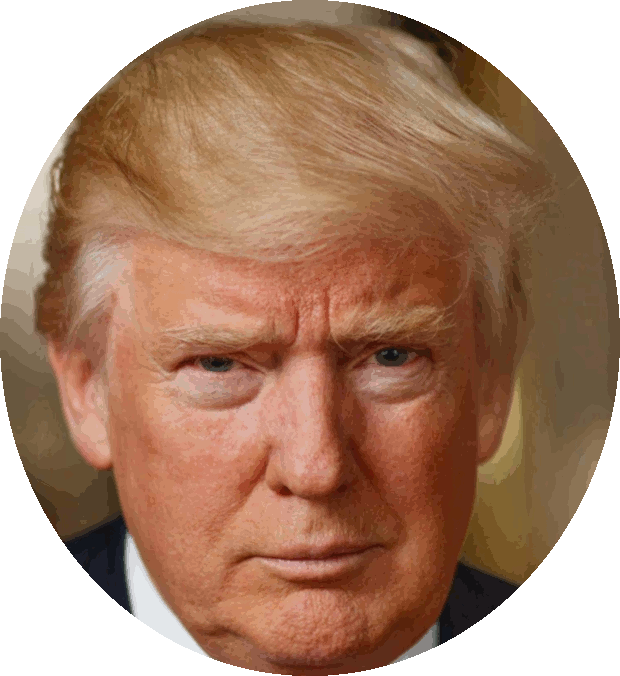
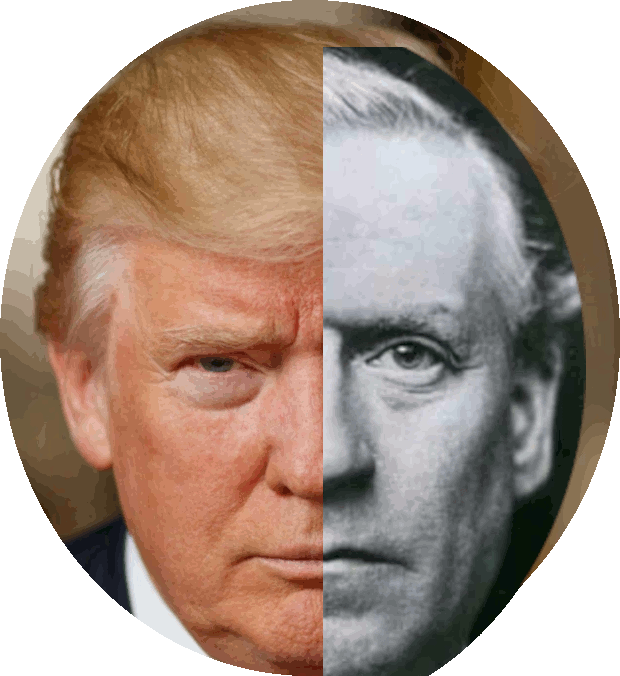
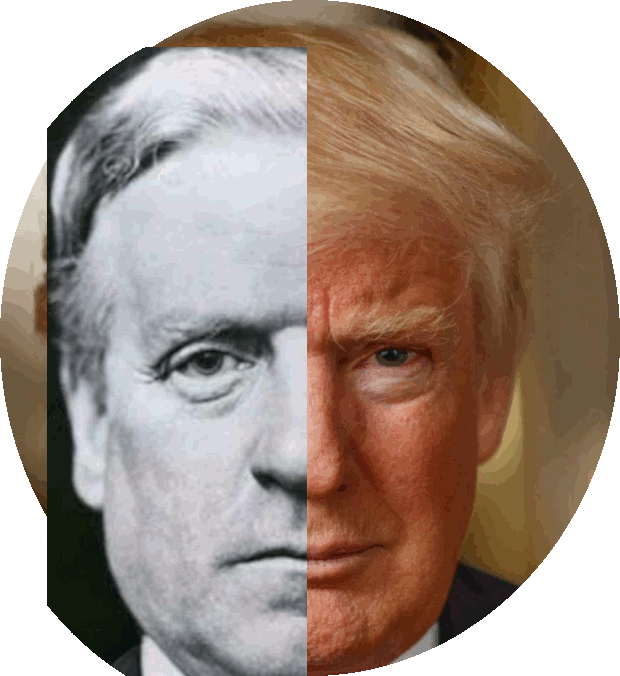
Herbert
Asquith as Donald
Trump |
Herbert Henry Asquith
1852-1928
9/12
2/15
Prime Minister
|
Donald John Trump
1946
6/14 |
 |
 |
52nd Prime Minister
Squiffy (loved the drink) |
-
Asquith's government declared war on Germany in August 1914, initially enjoying public support.
- As a result, he took the United Kingdom of Great Britain and Ireland and the British Empire into the
First World War.
- During 1915 his government was vigorously attacked for a shortage of munitions and the failure of the Gallipoli Campaign.
- He formed a coalition government with other parties, but failed to satisfy critics, was forced to resign in December 1916, and never regained power.
- Perceived as indecisive and slow to adapt to the demands of modern warfare, relying too much on committees.
53rd Prime
Minister of United
Kingdom
1916-1922
David Lloyd George,
1st Earl
Lloyd-George of
Dwyfor |
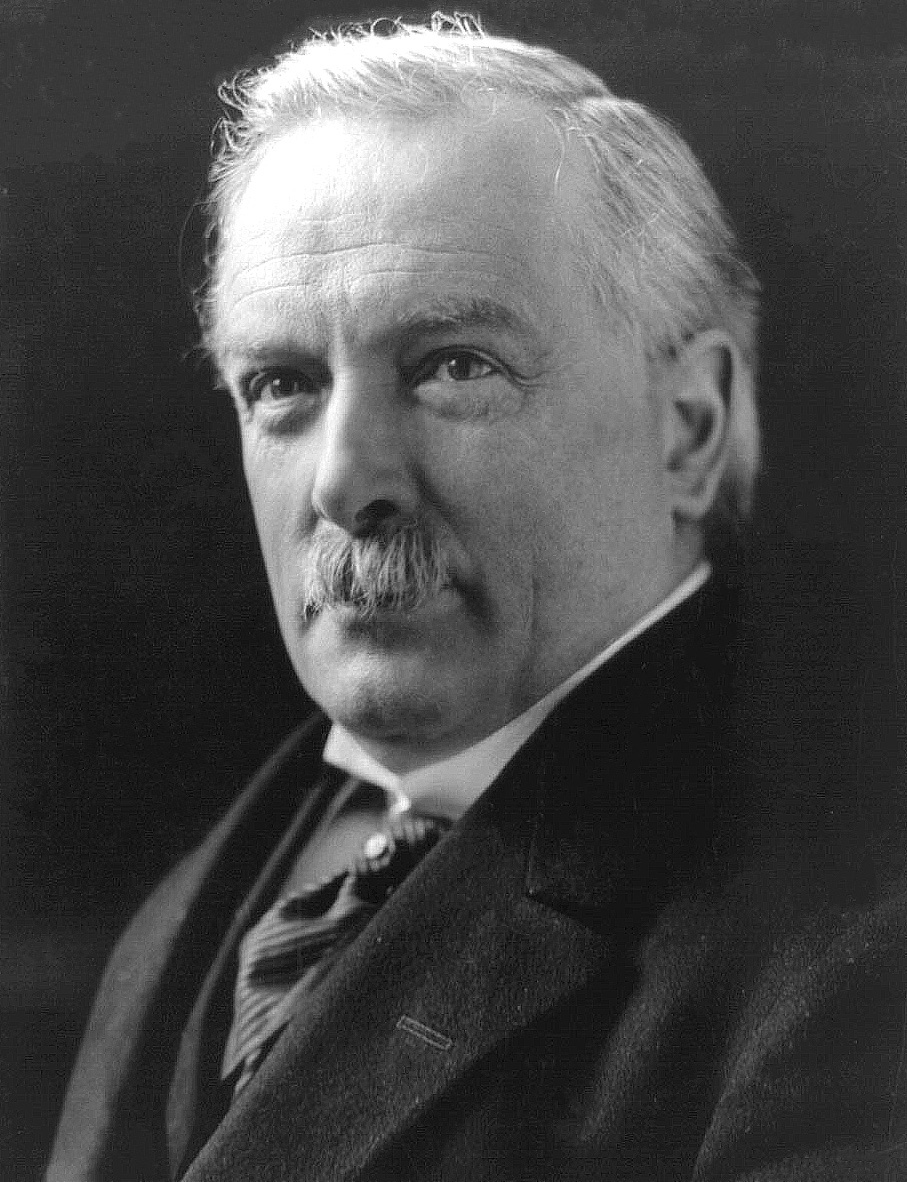
Harris & Ewing, Public domain, via Wikimedia Commons |
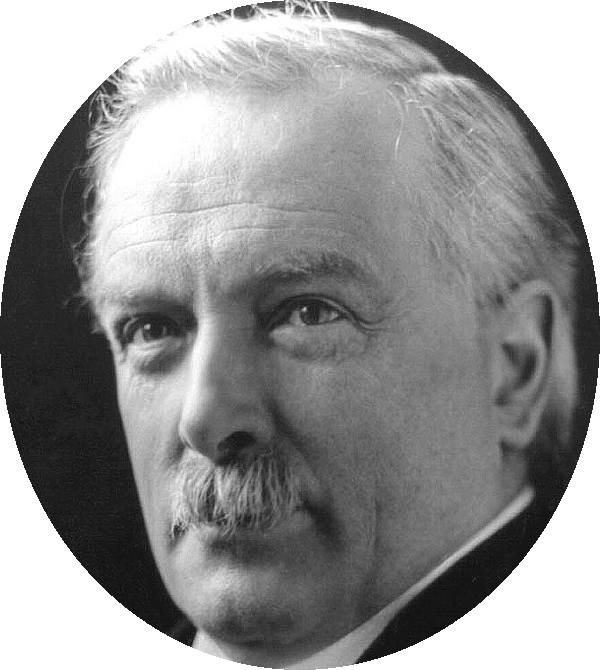
- David Lloyd George, 1st Earl Lloyd-George of Dwyfor (1863-1945) was Prime Minister of the United Kingdom from 1916 to 1922.
- A Liberal Party politician from Wales, he was known for leading the United Kingdom during the
First World War, for social-reform policies, for his role in the Paris Peace Conference, and for negotiating the establishment of the Irish Free State.
- He won an 1890 by-election to become the Member of
Parliament for Caernarvon Boroughs, and was continuously
re-elected to the role for 55 years.
|
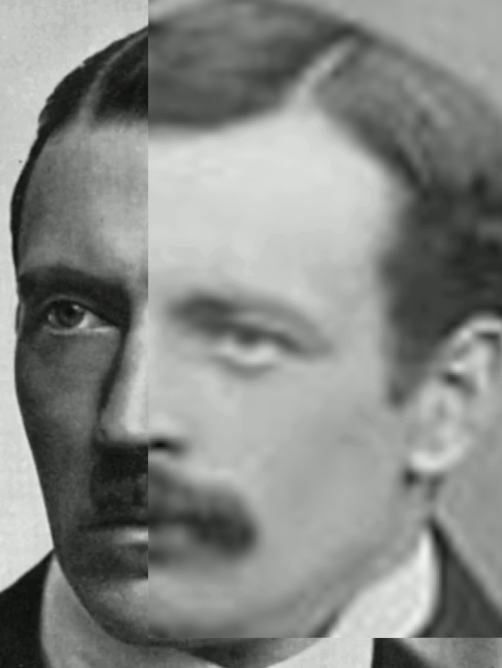
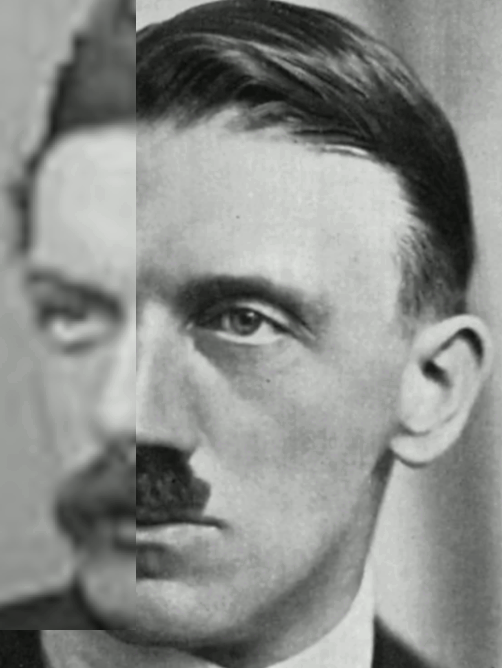
David Lloyd
George as Fred
Trump Sr.
|
David Lloyd George
1863-1945
1/17
3/26
Prime Minister |
Frederick Christ Trump Sr.
1905-1999
10/11
6/25
Real estates |
 |
 |
53rd Prime Minister
The Goat (numerous
affairs)
|
-
George was a pivotal leader during World War I, transforming from a Liberal critic of the
Boer War to a dynamic war leader, first as Minister of Munitions boosting production, then War Secretary.
- Persuaded the Navy to adopt the convoy system to combat German U-boats, reducing shipping losses.
- Paris Peace Conference (1919): Represented Britain, balancing American ideals with French demands in the
Treaty of Versailles.
-
Presided over severe economic depression, rising unemployment, and significant industrial unrest.
- Known for charm and radicalism, but also for ruthlessness, ambition, and a lack of deep personal friendships.
- Accused of corruption (selling honors), questionable ethics, and a complicated personal life, impacting his popularity.
- His actions, particularly betraying Asquith, were largely responsible for the Liberal Party's collapse, as noted by contemporaries.
54th Prime
Minister of United
Kingdom
1922-1923
Andrew Bonar Law |
.jpg)
Bain News Service, Public domain, via Wikimedia Commons |
- Andrew Bonar Law (1858-1923) was a British statesman and politician who was Prime Minister of the United Kingdom from October 1922 to May 1923.
- Law was born in the British colony of New Brunswick
which is now a Canadian province.
- He was of Scottish and Ulster Scots descent and moved to Scotland in 1870.
- He left school aged 16 to work in the iron industry, becoming a wealthy man by the age of
30.
- He entered the House of Commons at the 1900 general election, relatively late in life for a front-rank politician; he was made a junior minister, Parliamentary Secretary to the Board of Trade, in 1902.
- Law joined the Shadow Cabinet in opposition after the 1906 general election.
- In 1911, he was appointed a Privy Councillor, before standing for the vacant party leadership.
- Despite never having served in the Cabinet and trailing
3rd after Walter Long and Austen Chamberlain, Law became leader when the two front-runners withdrew rather than risk a draw splitting the party.
|
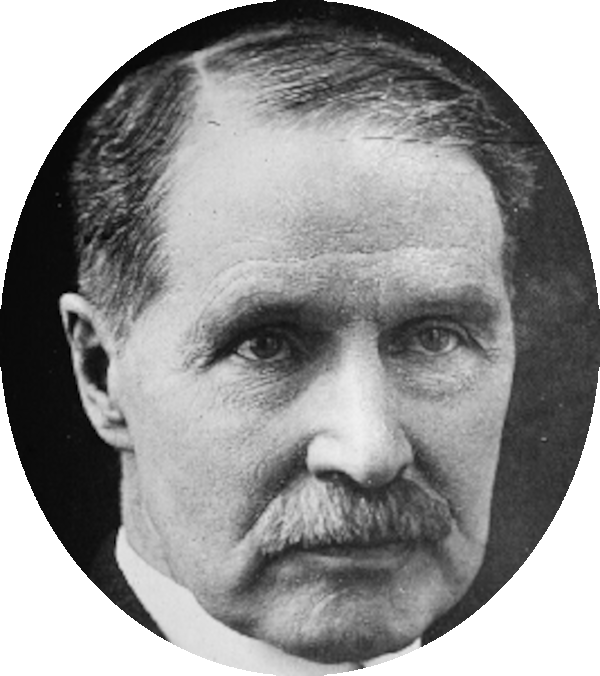
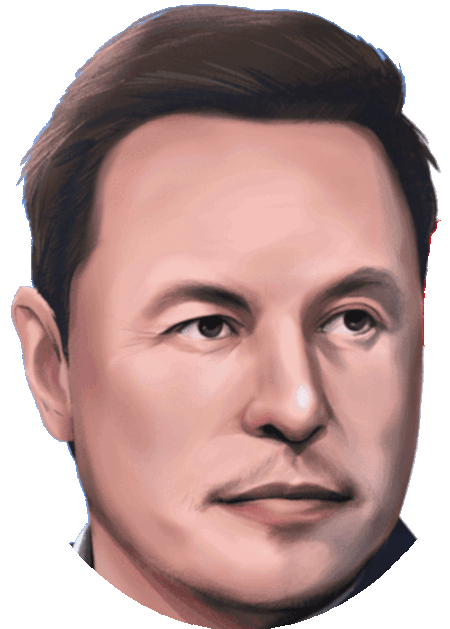
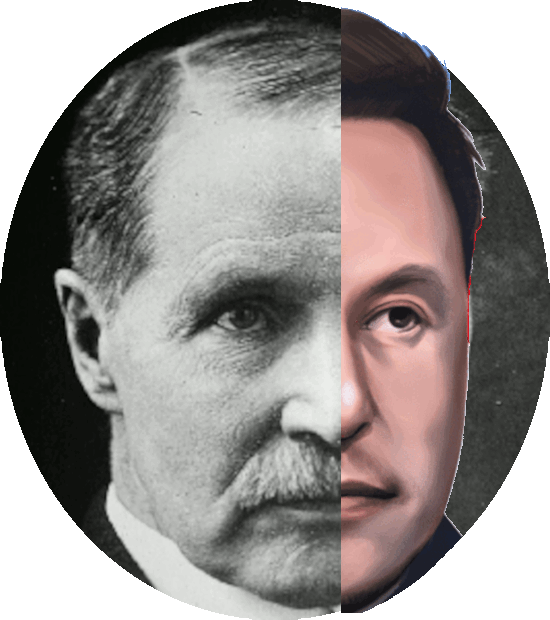
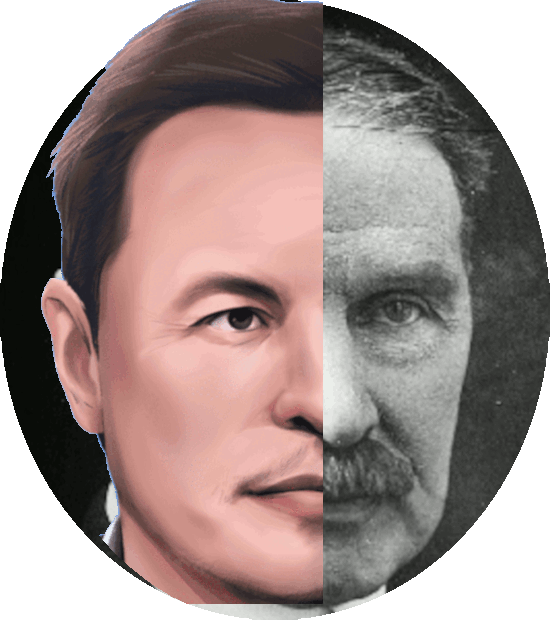
Andrew Bonar
Law as Elon Musk
|
Andrew Bonar Law
1858-1923
9/6
10/30
Prime Minister |
Elon Reeve Musk
1971
6/28 |
 |
 |
54th Prime Minister
The Unknown
|
- Bonar Law was an uncompromising opponent of Irish Home Rule for Ireland and a strong supporter of the Ulster Unionists.
- He controversially threatened resistance to the Liberal government's Home Rule Bill, stating he would support
'any length of resistance to which Ulster will go,' and was involved in planning for armed opposition, bringing the country to the brink of civil war before
World War I intervened.
-
He was instrumental in forming the War Cabinet, supported the war effort decisively.
- This stance, while solidifying his leadership of the Conservative Party, has been criticized by historians for contributing to the partition of Ireland and lending support to unconstitutional action.
- He was largely uninterested in social reform legislation, viewing it as a Liberal area, which led to criticism from some party members interested in improving conditions for the working classes.
55th Prime
Minister of United
Kingdom
1923-1924 (1st
term)
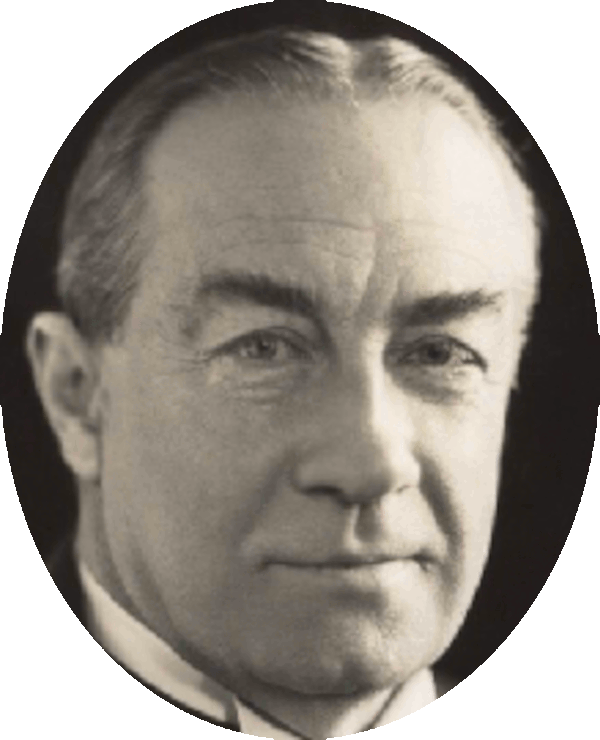
Stanley
Baldwin, 1st Earl
Baldwin of Bewdley |
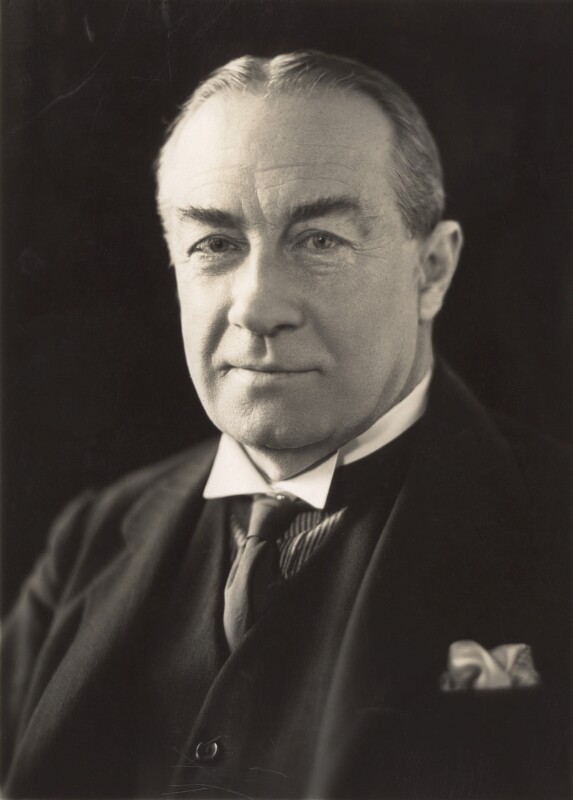
Bassano Ltd, Public domain, via Wikimedia Commons |
- Stanley Baldwin, 1st Earl Baldwin of Bewdley (1867-1947),was a British statesman and Conservative politician who was prominent in the political leadership of the United Kingdom between the world wars.
- He was prime minister on 3 occasions, from May 1923 to January 1924, from November 1924 to June 1929 and from June 1935 to May 1937.
- Born to a prosperous family in Bewdley, Worcestershire, Baldwin was educated at Hawtreys, Harrow School and Trinity College, Cambridge.
- He joined the family iron and steel-making business and entered the House of Commons in 1908 as the member for Bewdley, succeeding his father Alfred.
- He was Financial Secretary to the Treasury from 1917–1921 and President of the Board of Trade
from 1921–1922 in the coalition ministry of David Lloyd George and then rose rapidly.
- In 1922, Baldwin was one of the prime movers in the withdrawal of Conservative support from Lloyd George; he subsequently became Chancellor of the Exchequer in Bonar Law's Conservative ministry.
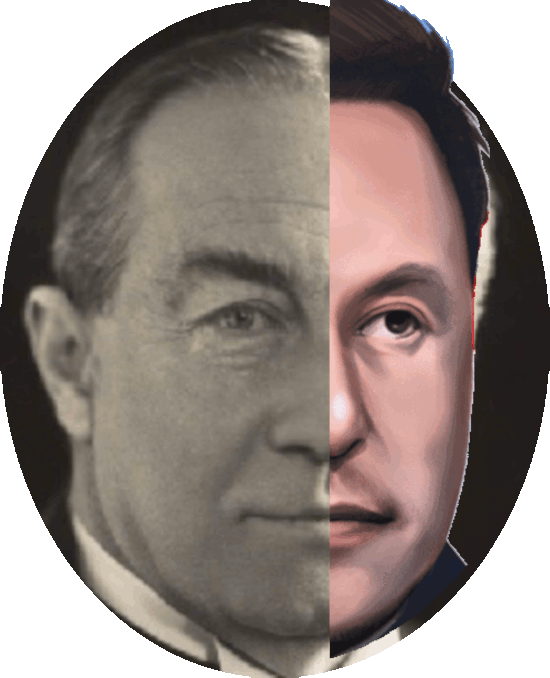
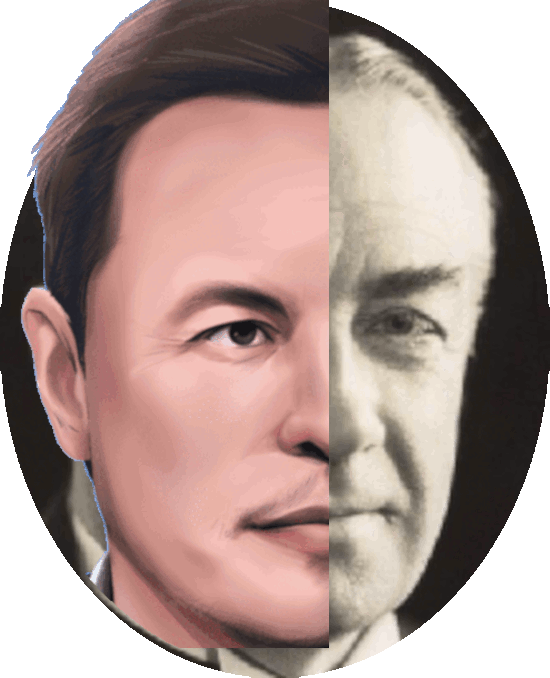
|
Stanley
Baldwin as Elon Musk
|
Stanley Baldwin
1867-1947
8/3
12/14
Prime Minister |
Elon Reeve Musk
1971
6/28 |
 |
 |
55th Prime Minister
Uncle Stanley |
- Baldwin served in government during World War I (as Financial Secretary to the Treasury, encouraging war bond donations).
- Declared a state of emergency and refused negotiations until the strike ended, curtailing union power with the 1927 Trade Disputes Act.
- After World War II, he was blamed for failing to prepare Britain, famously saying
'the bomber will always get through,' which was seen as defeatist.
- He actively encouraged voluntary contributions to repay the UK's war debt, even donating a significant portion of his own wealth and writing letters to
The Times under a pseudonym.
56th Prime
Minister of United
Kingdom
1924-1924 (1st
term)
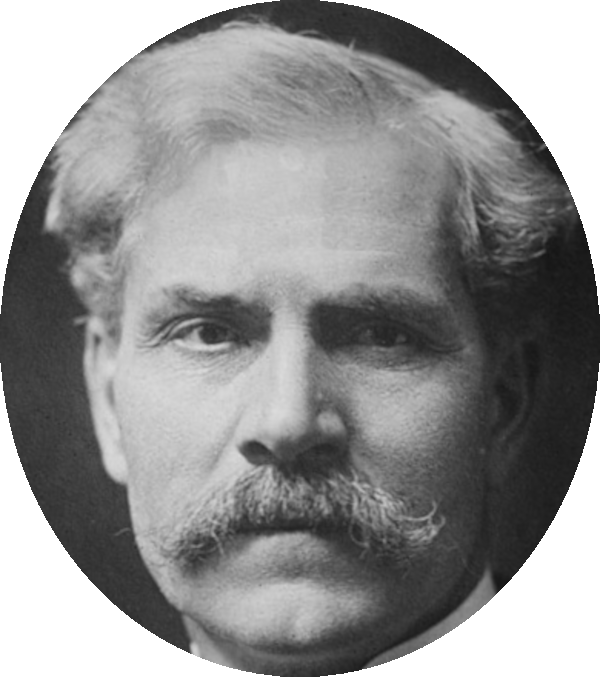
James
Ramsay MacDonald |
.jpg)
Walter Stoneman, Public domain, via Wikimedia Commons |
- James Ramsay MacDonald (1866-1937) was a British
statesman and politician who served as Prime Minister of the United Kingdom.
- The first two of his governments belonged to the Labour Party, where he led a minority Labour government for
9 months in 1924 and again between 1929 and 1931.
- In 1931, MacDonald was expelled from the Labour Party, after he formed a National Government dominated by the Conservative Party and supported by only a few Labour members, his premiership of which lasted until 1935.
-
MacDonald, along with Keir Hardie and Arthur Henderson, was one of the 3 principal founders of the Labour Party in 1900.
- He was chairman of the Labour MPs before 1914 and, after an eclipse in his career caused by his opposition to the First World War, he was Leader of the Labour Party from 1922.
- The second Labour Government (1929–1931) was dominated by the Great Depression.
Public domain, via Wikimedia Commons
Labour Party |
-
The Labour Party was formed by unions and left-wing groups to create a distinct political voice for the working class in Britain. In 1900 the Trades Union Congress (TUC), an umbrella body for most unions, sponsored a national conference to unite into a single party that would sponsor candidates for the House of Commons.
- The conference created the Labour Representation Committee (LRC), as a coalition of separate groups with Ramsay MacDonald as secretary.
|
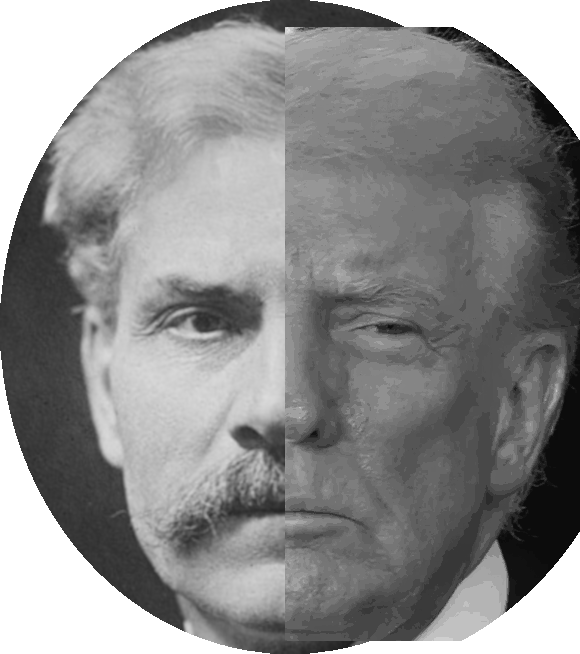
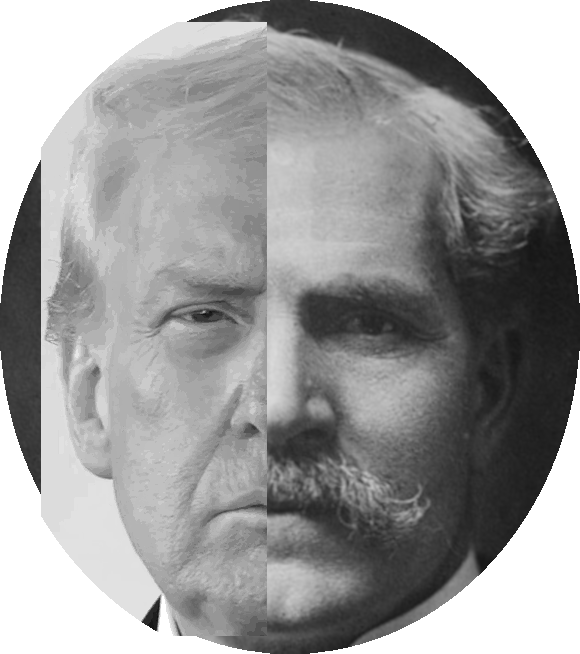
James Ramsay
MacDonald as Donald
Trump
|
James Ramsay MacDonald
1866-1937
10/12
11/9
Prime Minister |
Donald John Trump
1946
6/14 |
 |
 |
56th Prime Minister
Ramshackle Mac (weak and unreliable) |
- He formed the National Government to carry out spending cuts to defend the gold standard, but it had to be abandoned after the Invergordon Mutiny, and he called a general election in 1931 seeking a
'doctor's mandate' to fix the economy.
- Great Depression: The second Labour government was unprepared for the global economic crash. MacDonald's adherence to orthodox economic policies, such as remaining on the Gold Standard and aiming for balanced budgets, left him unwilling to use large-scale public works to combat soaring unemployment, disappointing many in his party.
- The 'Zinoviev Letter' Hoax: His first government fell partly due to the publication of the "Zinoviev letter" during the 1924 election campaign, a probable forgery that implied Labour links to Russian Bolsheviks and damaged his anti-Communist credentials.
57th Prime
Minister of United
Kingdom
1924-1929 (2nd
term) |
|
Stanley
Baldwin as Elon Musk
|
Stanley Baldwin
1867-1947
8/3
12/14
Prime Minister |
Elon Reeve Musk
1971
6/28 |
|
|
|
57th Prime Minister
Honest Stan |
- General Strike (1926): As prime minister, he declared a
state of emergency during the strike and refused to negotiate
until it ended, later passing the Trade Disputes Act.
- He was described as a difficult, vain, and secretive man,
which led to tense relationships with colleagues like Arthur
Henderson and Philip Snowden. Winston Churchill famously
quipped that MacDonald had 'the gift of compressing the
largest amount of words into the smallest amount of thought.'
- He suffered from eye trouble, insomnia, and encroaching senility, making him an increasingly ineffectual leader.
|
The Trade Disputes Act primarily refers to UK legislation, notably the 1906 Act, which granted trade unions legal immunity from damages during strikes, reversing the damaging Taff Vale court ruling by protecting union funds from lawsuits, and providing legal protection for peaceful picketing, establishing key principles for lawful industrial action that influenced labor laws globally, though later acts, like the 1927 Act (restricting unions) and 1946 Act (repealing it), modified the landscape. (Assistant)
|
58th Prime
Minister of United
Kingdom
1929-1935
(2nd term) |
|
James Ramsay
MacDonald as Donald
Trump
|
James Ramsay MacDonald
1866-1937
10/12
11/9
Prime Minister |
Donald John Trump
1946
6/14 |
|
|
|
58th Prime Minister
Ramshackle Mac (weak and unreliable) |
- He formed the National Government to carry out spending cuts to defend the gold standard, but it had to be abandoned after the
Invergordon Mutiny, and he called a general election in 1931.
|
The “Invergordon mutiny” is remembered as the largest mutiny in modern British history: it broke out off the coast of Invergordon, a small village on the north-east coast of Scotland, in September 1931, when the seamen refused to take the ships of the Atlantic Fleet to sea as ordered. (openedition.org)
|
|
Admiral Sir John De Robeck as Donald Trump |
 |
|
John De Robeck
1862-1928
6/10
1/20 |
Donald Trump
1946
6/14
|
 |
 |
|
Iron Duke |
-
De Robeck commanded the allied naval force in the Dardanelles during the
First World War.
- His campaign to force the straits, launched on March
18, 1915, was nearly successful, as the Turkish land-based artillery almost ran out of ammunition,
however, mines laid in the straits led to the loss of 3 allied battleships.
- Under pressure from
Winston Churchill to continue the attack, the British naval commander in the region, Admiral Sackville Carden, suffered a nervous collapse and was replaced by
Admiral Sir John De Robeck.
- He was an officer in the Royal Navy. In the early years of the 20th century he served as Admiral of Patrols, commanding
4 flotillas of destroyers.
- Quite an acccomplishment.
|
The Dardanelles' historical significance lies in its crucial strategic location, connecting the Black Sea to the Mediterranean, making it a vital waterway for trade and military control, famously contested during World War I's failed Gallipoli Campaign to open a supply route to Russia, and serving as a backdrop for ancient myths (like Hero and Leander) and empires (like the Ottomans) controlling access between Europe and Asia.
(Assistant)
|

Attack |
- Days later on the morning of March 18, 1915, British and French battleships entered the straits and launched an attack.
- Again, the Allies had the upper hand in the initial hours until undetected mines sank
3 ships and severely damaged 3 others.
- With half of his fleet out of commission, de Robeck ordered a withdrawal.
- Churchill wanted his commander to press on, but de Robeck wanted to wait for army support forces, which were now being provided after all.
- As the fleet hesitated, it lost the advantage.
Beachheads |
- In the wake of the failed naval attack, the Allies launched a major land invasion of Gallipoli on April 25,
1915.
- The month-long delay allowed the Turks to rush reinforcements to the peninsula and boost their defenses, and the British, French and members of the Australian and New Zealand Army Corps (ANZAC) could make little progress from their beachheads.
- In the first month after storming the peninsula, the Allies lost 45,000 men.
- The ill-fated Gallipoli Campaign lasted 9 months before the evacuation of the last Allied troops in January 1916.
- Each side sustained 250,000 casualties with 46,000 Allied troops and 65,000 Turkish troops dead.
|
The turquoise waters of the Aegean Sea turned crimson as the stiff Turkish resistance struck down the waves of Allied forces that washed ashore. The Battle of Gallipoli became a slaughter and quickly morphed into a stalemate just as bloody, just as pointless as that on the Western Front. (history.com)
|
Obscure cabinet
post |
- The invasion had been scuttled by incompetence and hesitancy by military commanders, but, fairly or unfairly, Churchill was the scapegoat,
as he should be.
- The Gallipoli disaster threw the government into crisis, and the Liberal prime minister was forced to bring the opposition Conservatives into a coalition government.
- As part of their agreement to share power, the Conservatives wanted Churchill, a renegade politician who had bolted their party a decade earlier, out from the Admiralty.
- In May 1915, Churchill was demoted to an obscure cabinet post.
|
“I am the victim of a political intrigue,” he lamented to a friend. “I am finished!” Displaying the steely determination that would serve him well in World War II, however, the marginalized Churchill did not slink from the fight. In November 1915, the statesman turned soldier. (history.com)
|
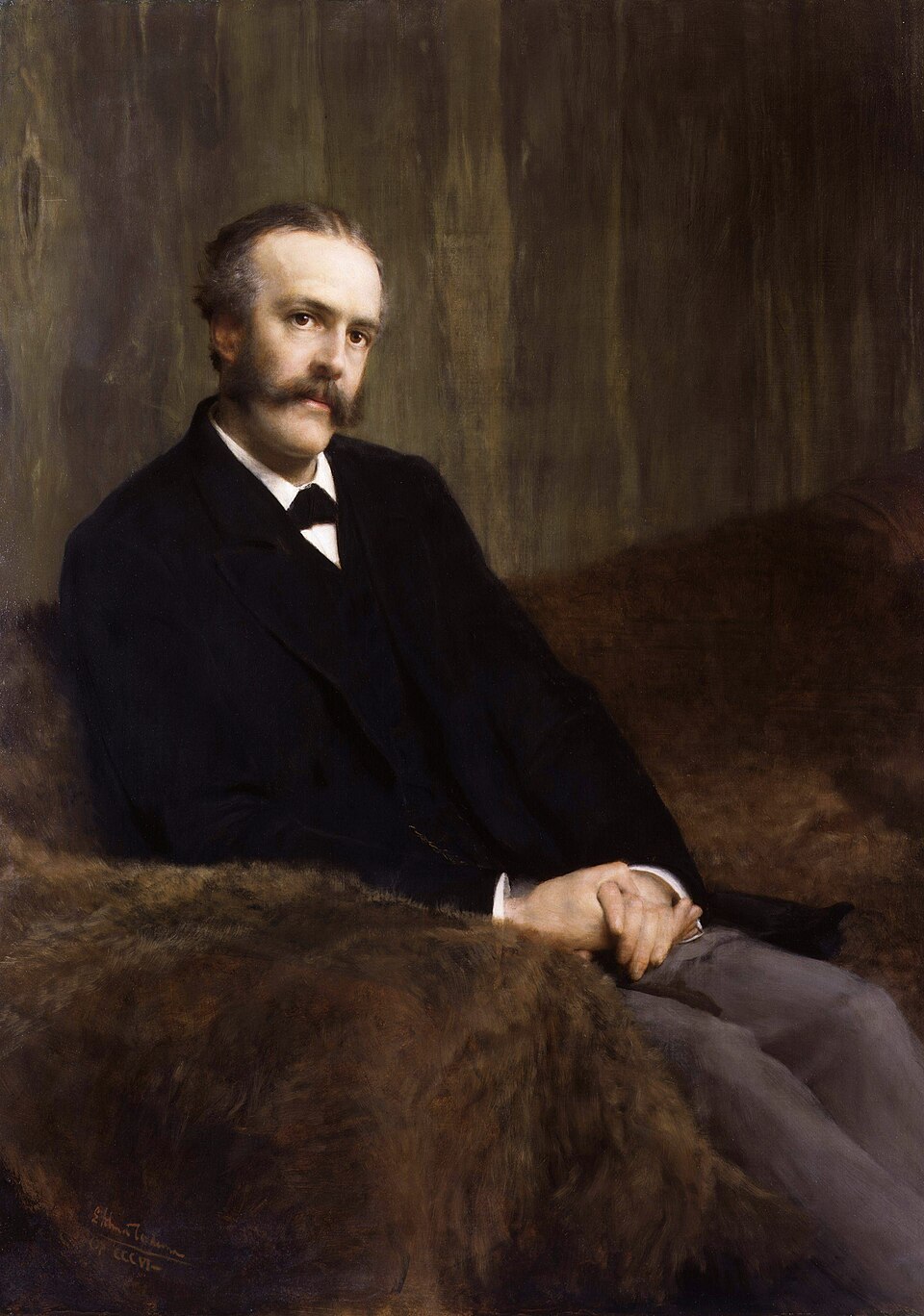
Lawrence Alma-Tadema, Public domain, via Wikimedia Commons
Arthur James
Balfour
Masonic hand sign |
- Arthur James Balfour, 1st Earl of Balfour (1848-1930), was a British statesman and Conservative politician who served as Prime Minister of the United Kingdom from 1902 to 1905.
- As foreign secretary in the Lloyd George ministry, he
issued the Balfour Declaration of 1917 on behalf of
the cabinet, which supported a 'home for the Jewish people' in
Palestine.
- He later issued the Balfour Declaration of 1926 as Lord of the Privy Council, which announced a co-equal relationship between the United Kingdom and its Dominions.
- This laid the groundwork for the Statute of Westminster 1931 which granted full independence to the former colonies.
|
Balfour primarily means "the village by the pasture" in Scottish Gaelic, from the words baile (village) and pùir (pasture). It is a Scottish surname and name for places in eastern Scotland, famously associated with Arthur Balfour, the British Prime Minister who issued the Balfour Declaration. The term can also refer to the 1917 Declaration supporting a Jewish state in Palestine or, in a less common usage, "good fortune" from a Hebrew origin. (Assistant)
|
War effort |
- In December 1916, Balfour became foreign secretary in David Lloyd George's coalition.
- He was frequently left out of the inner workings of foreign policy, although the
Balfour Declaration on a Jewish homeland bore his name.
- Arthur Balfour was not a Freemason; however, he was a
supporter of the Zionist cause, same difference!!!
- Some historians have linked his support for Zionism to the idea of a Jewish Homeland in Palestine, while others note it was a humanist cause.
- He continued to serve in senior positions throughout the 1920s, and died in 1930, aged 81, having spent a vast inherited fortune.
- He never married.
|
His conception of Christianity was a form of deism, as he sought to unite science and religion. (Assistant)
|
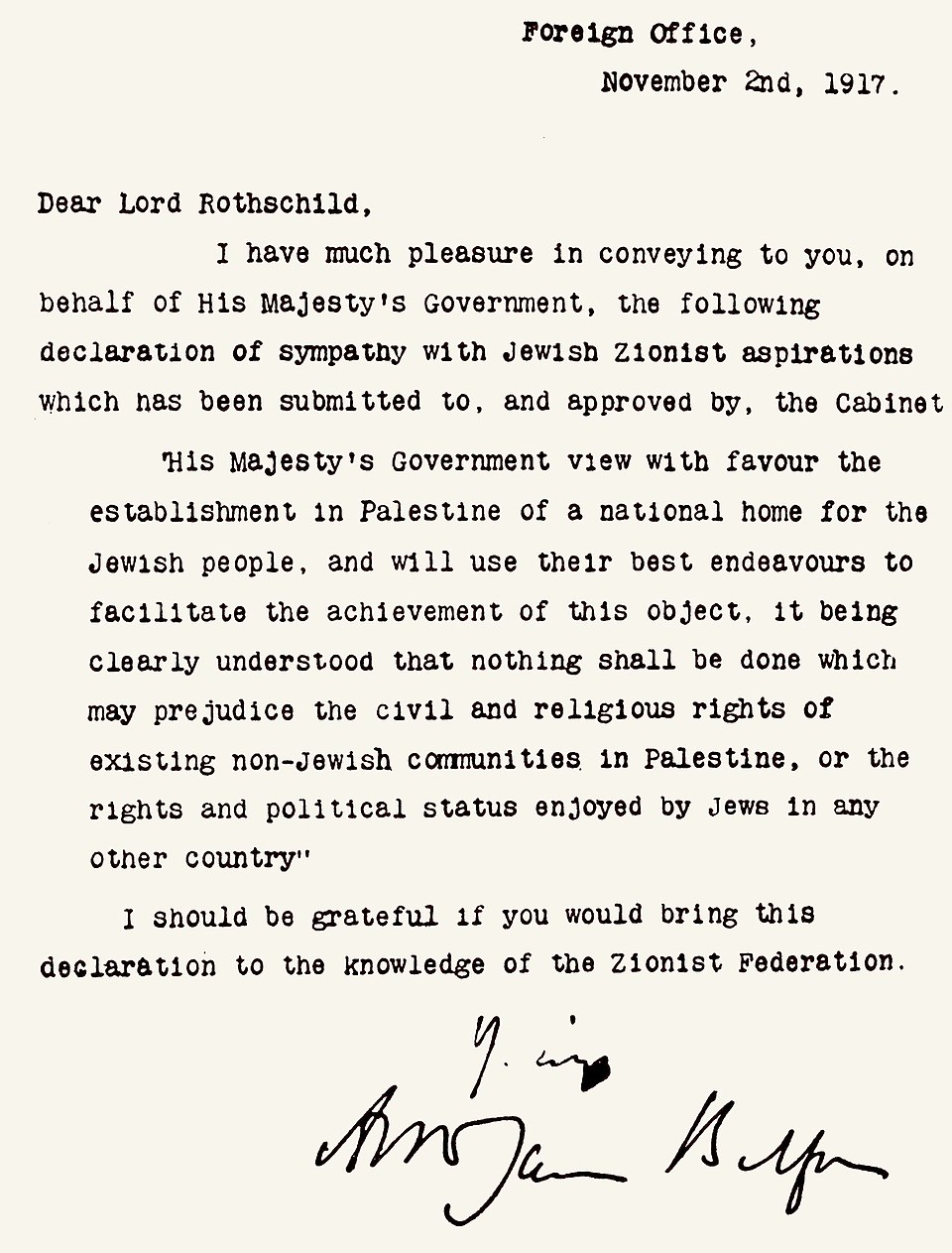
Balfour Declaration
November 2, 1917,
from Arthur Balfour |
- The Balfour Declaration was a public statement issued by the British Government in 1917 during the First World War announcing its support for the establishment of a
'national home for the Jewish people' in Palestine, then an Ottoman region with a
small minority Jewish population.
- To
Lord Rothschild, the crook, of all people.
- The declaration was contained in a letter dated November
2, 1917, from Arthur Balfour, the British foreign secretary, to Lord Rothschild, a leader of the British Jewish community, for transmission to the Zionist Federation of Great Britain and Ireland.
- The text of the declaration was published in the press on November
9, 1917.
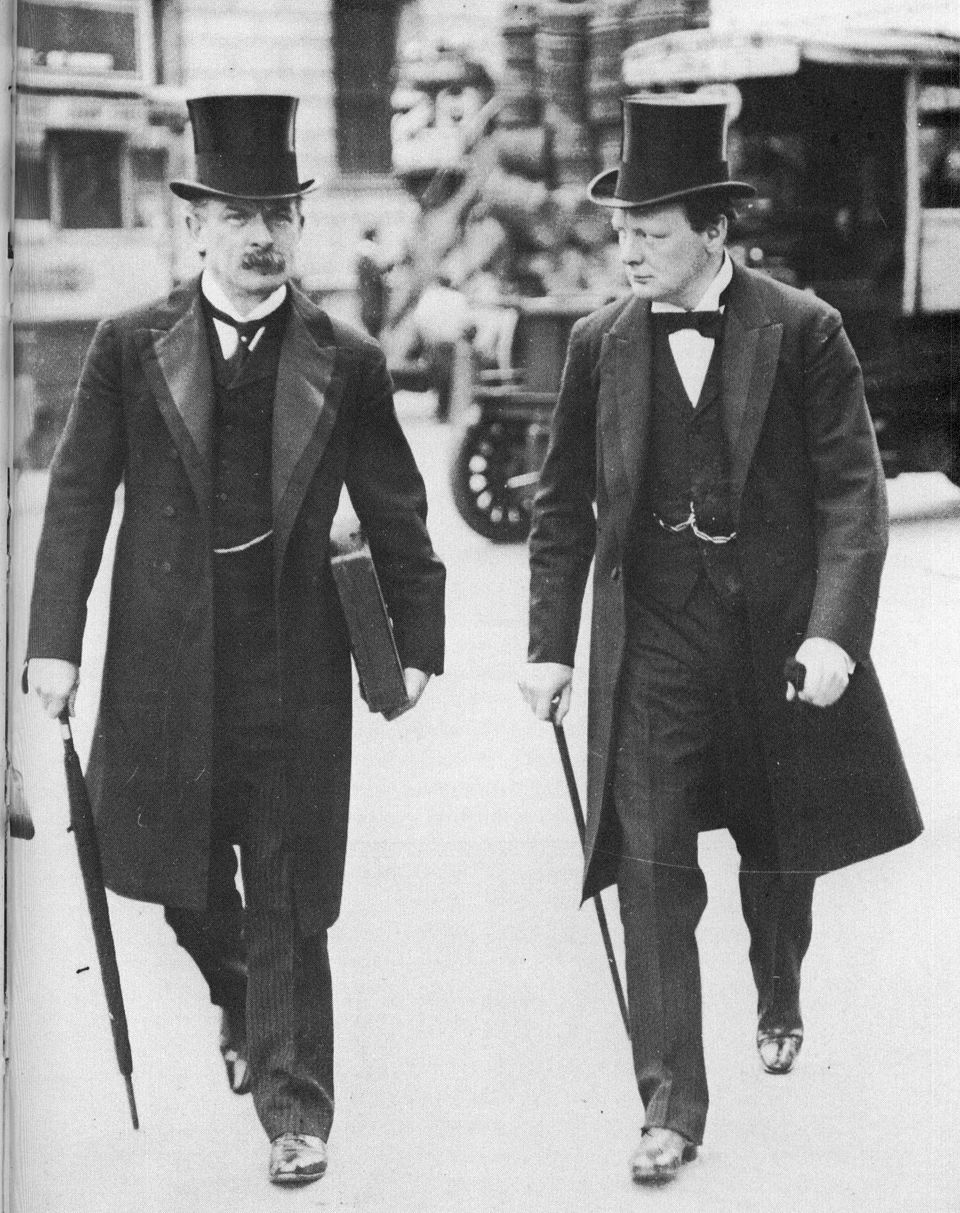
Scanned from
Krockow: Churchill,
Public domain, via
Wikimedia Commons
The
'Terrible Twins' David Lloyd George and Winston Churchill in 1907 during the peak of their
'radical phase' as social reformers. |
- David Lloyd George (1863-1945), 1st Earl Lloyd-George of
Dwyfor, was Prime Minister of the United Kingdom from 1916 to 1922.
- He was a member of the Liberal Party politician and came from Wales.
- Lloyd George is known for leading Britain during World War I, implementing social reforms that laid the foundation for the welfare state.
- Additionally, he was known for his role in the Paris Peace Conference that drafted the
Treaty of Versailles.
- He was also instrumental in negotiating the establishment of the Irish Free State.
|
Field Marshalls Kitchener and Haig were both important military leaders and both Freemasons. Kitchener had been the face on the recruitment posters as the most celebrated war hero of the age and Haig commanded the British armed forces from 1915 to the War’s end. Kitchener was killed on board the “Hampshire” in 1916 on his way to Russia to offer increased support to the Tsar when the ship was hit and almost all the men on board were killed. Haig was blamed for the great loss of life in the conflict but dedicated his life thereafter to the welfare of those who fell and those who returned. (ugle.org.uk)
|
Heads off to war |
- Churchill resigned from the government, picked up a gun and headed to the front lines in France as an infantry officer with the Royal Scots Fusiliers.
- After several brushes with death, he returned to politics in 1917 as the munitions minister in a new coalition government headed by Liberal Prime Minister David Lloyd George.
|
Churchill, however, remained haunted by Gallipoli for decades. “Remember the Dardanelles,” his political opponents taunted when he stood up to speak in the House of Commons. When running for Parliament in 1923, hecklers called out, “What about the Dardanelles?” The “British Bulldog” embraced Gallipoli as a brilliant failure. “The Dardanelles might have saved millions of lives. Don’t imagine I am running away from the Dardanelles. I glory in it,” he responded. (history.com)
|

Beachheads -
June 1940
We shall never surrender |
- Giant figure Winston Churchill, the Grinch who stole
Christmas.
- When the Balfour Declaration was issued in November 1917, Winston Churchill was Minister of Munitions in David Lloyd George’s War Cabinet.
|
We shall fight on the beaches, we shall fight on the
landing grounds, we shall fight in the fields and
streets and in the hills. We shall never surrender. (Winston
Churchill)
|
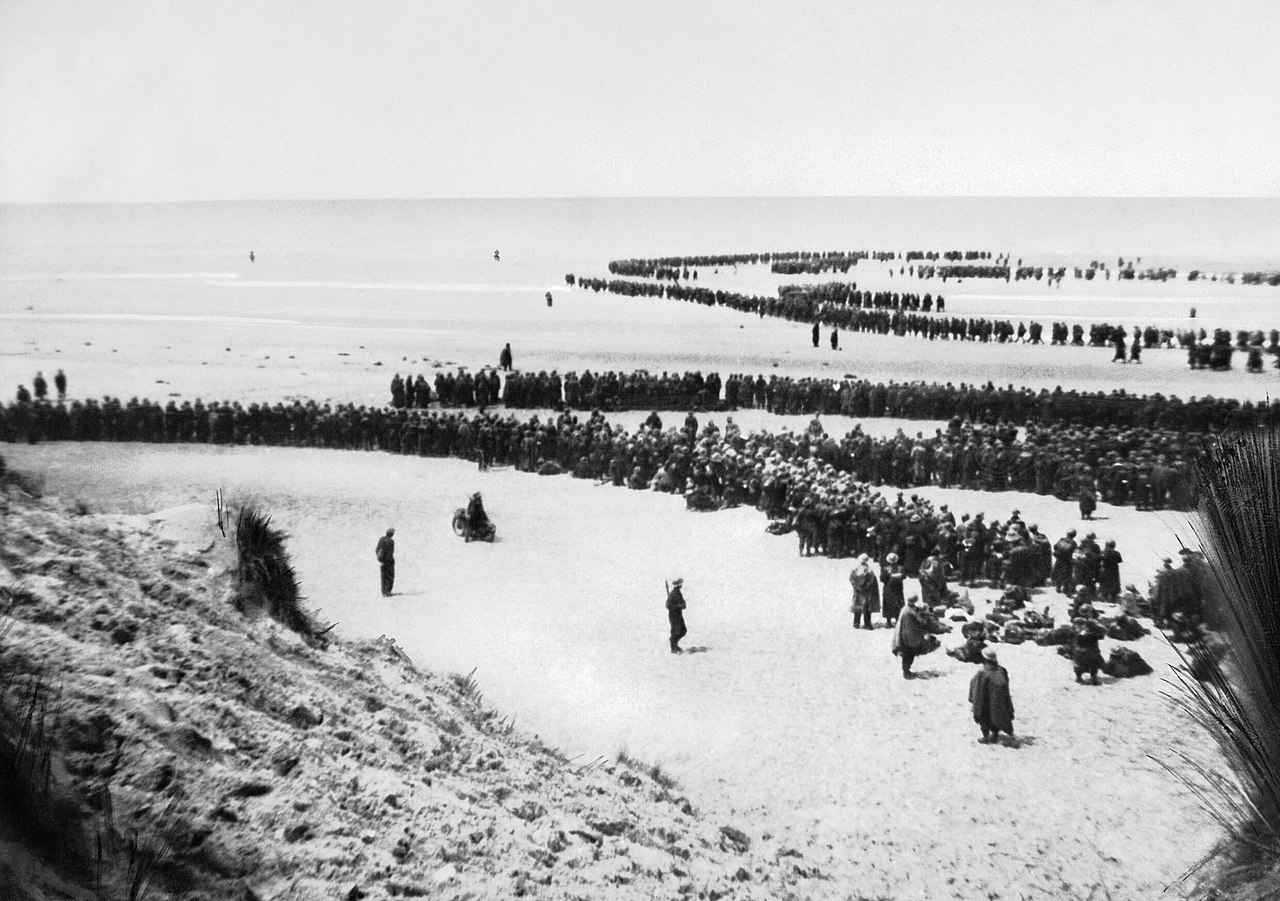
Public domain, via Wikimedia Commons |
- The Dunkirk evacuation, codenamed Operation Dynamo and also known as the
Miracle of Dunkirk, or just Dunkirk, was the evacuation of more than 338,000 Allied soldiers during the
Second World War from the beaches and harbor of Dunkirk, in the north of France, between 26 May and 4 June 1940.
- The operation began after large numbers of Belgian, British, and French troops were cut off and surrounded by German troops during the six-week
Battle of France.
- The British Expeditionary Force alone lost some 68,000 soldiers during the French campaign.
- Allowed Britain to stay in the war, influencing future strategies.
|
Herbert Louis Samuel |
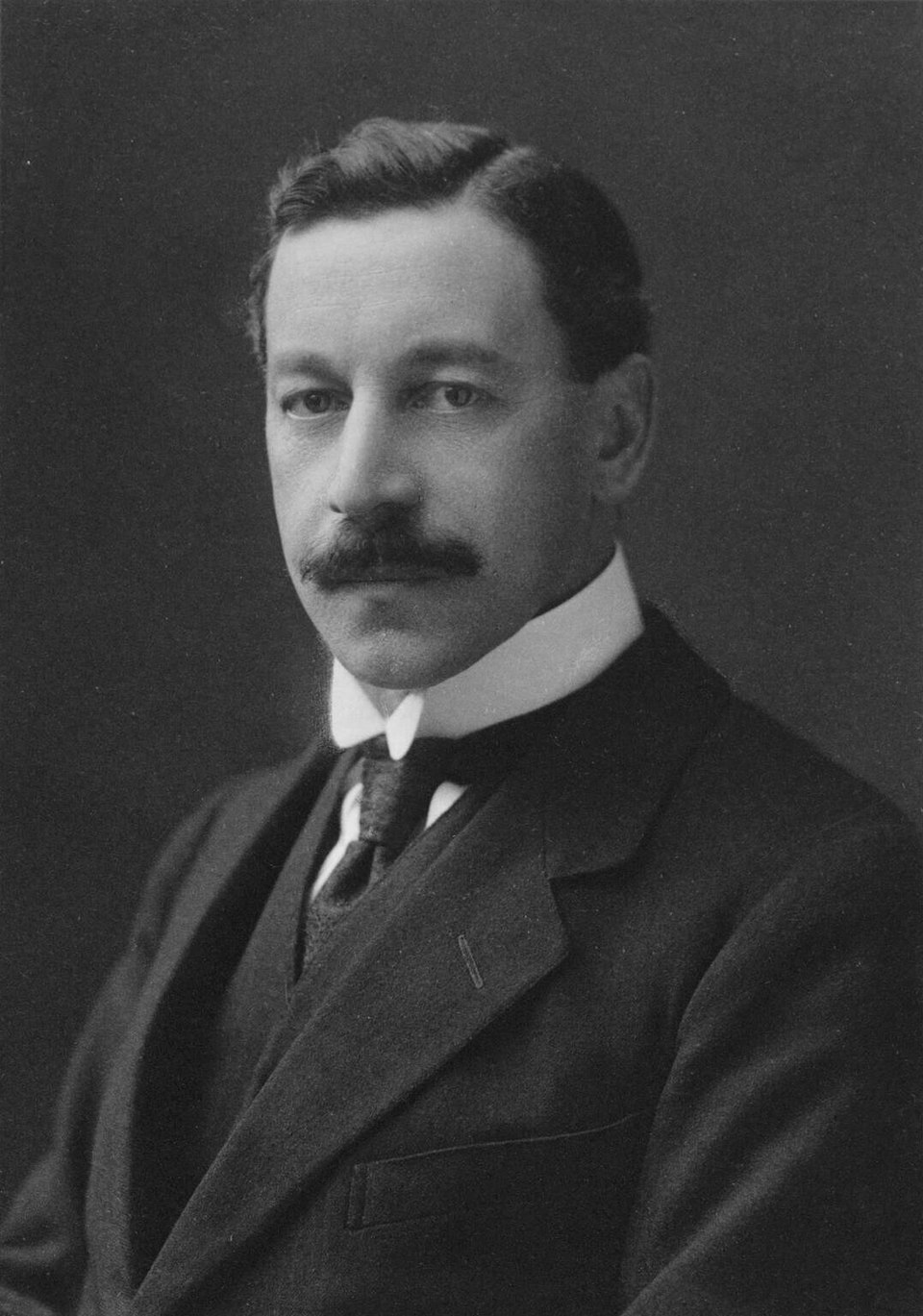
Public domain, via Wikimedia Commons
|
- Herbert Louis Samuel (1870-1963), 1st Viscount Samuel was a British Liberal politician who was the party leader from 1931 to 1935.
- One of the adherents of 'New Liberalism,' Samuel was on
the progressive wing of the Liberal Party.
- He helped to draft and present social reform legislation while he was serving as a Liberal cabinet member.
- Samuel led the party in both the 1931 general election and the 1935 general election, during which period the party's number of seats in parliament fell from 59 to 21.
|
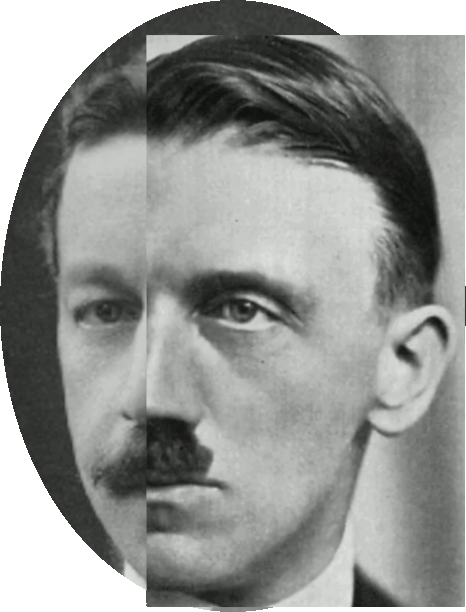
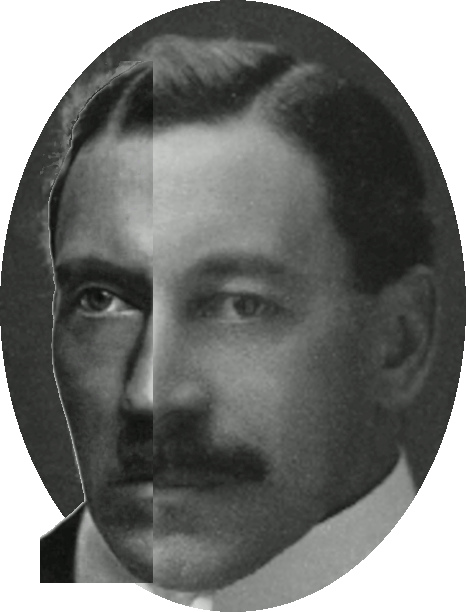
Herbert
Louis Samuel as Fred
Trump Sr.
|
Herbert Louis Samuel
1870-1963
1/17
3/26
Palestine |
Frederick Christ Trump Sr.
1905-1999
10/11
6/25
Real estates |
 |
 |
|
|
- Samuel was the first Jew to serve as a Cabinet minister, he became the leader of the Liberal Party, a major British political party.
- He promoted Zionism within the British Cabinet, beginning with his 1915 memorandum entitled
The Future of Palestine.
- In 1920 he was appointed as the first High Commissioner for Palestine, in charge of the administration of the territory.
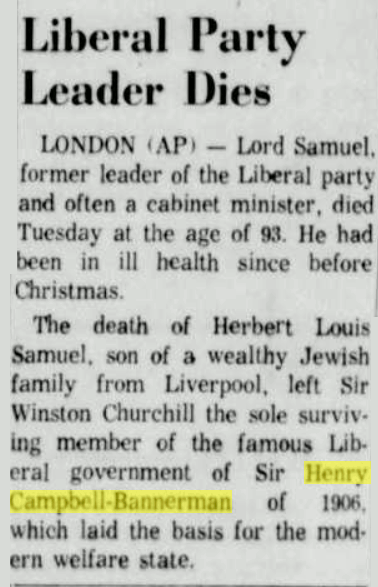
Humboldt Times -
February 6, 1963
Modern welfare state |
- Lord Samuel, former leader of the Liberal party and
often a cabinet minister died.
- He came out of the famous Liberal government of Sir Henry
Campbell-Bannerman of 1906, which laid the basis for the
modern welfare state.
- That is one of the main tenets
behind their Zionist plan, to turn everything into a needy,
broken down, welfare state propped up by them (with your
wallet of course).
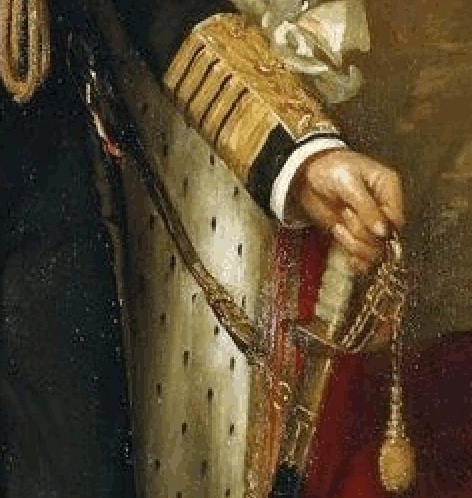
Pinched |
- During the financial negotiations carried out during the abdication of Edward VIII, it was revealed that George V had amassed a private fortune of approximately £3,000,000 by the time he died.
- Under the terms of his will, his 4 surviving younger children Albert, Mary, Henry and George each received £750,000.
|
£3,000,000 in 1910 is worth a staggering amount today, roughly $102 million to over $745 million in US dollars, depending on what you're measuring (simple inflation, wages, or wealth), with most calculators pointing to around $102 million for buying power (CPI) and significantly more when considering economic status or relative wealth. (Assistant)
|
King Edward
VIII of the United
Kingdom
1936-
1936
House of Windsor |
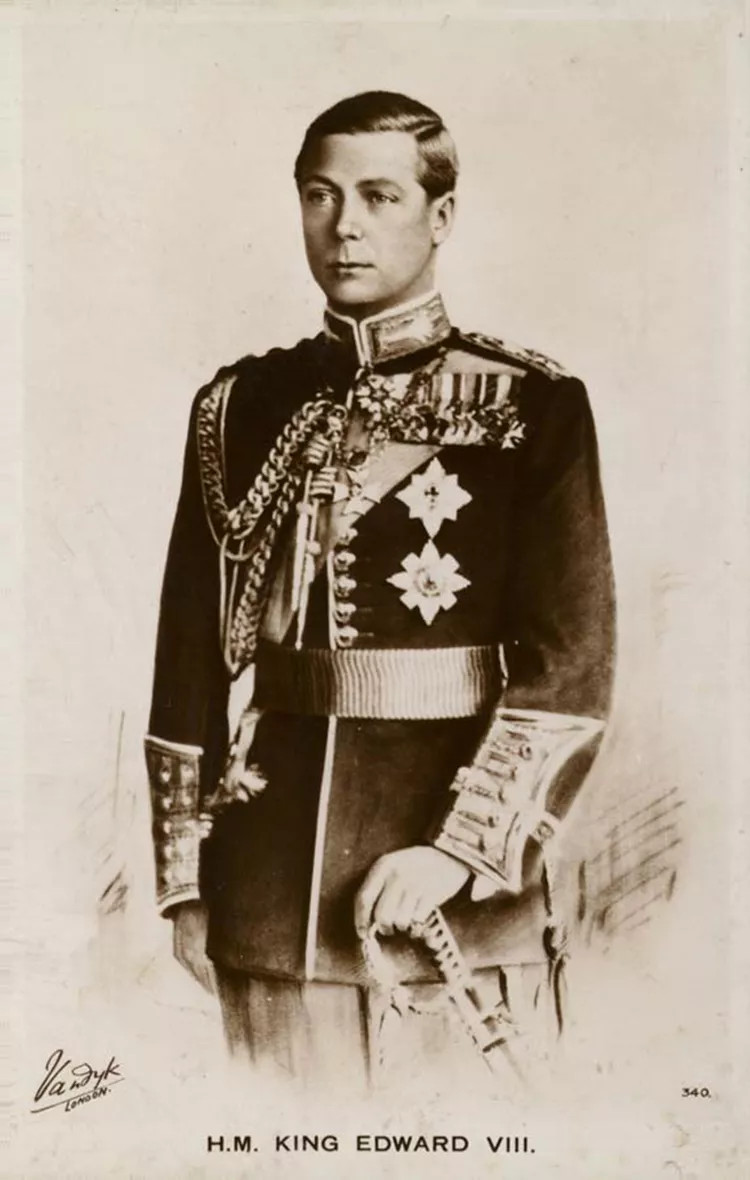
Vandyk, Public domain, via Wikimedia Commons |
- Edward VIII was born as Edward Albert Christian George
Andrew Patrick David (1894-1972), later known as the Duke of Windsor, was King of the United Kingdom and the British Dominions, and Emperor of India, from January
20, 1936, until his abdication on December 11, 1936.
-
Edward was born during the reign of his great-grandmother Queen Victoria as the eldest child of the Duke and Duchess of York, later King George V and Queen Mary.
-
King George V had severe reservations about Prince Edward, saying "After I am dead, the boy will ruin himself in twelve months" and "I pray God that my eldest son will never marry."
- It took 11 months.
|
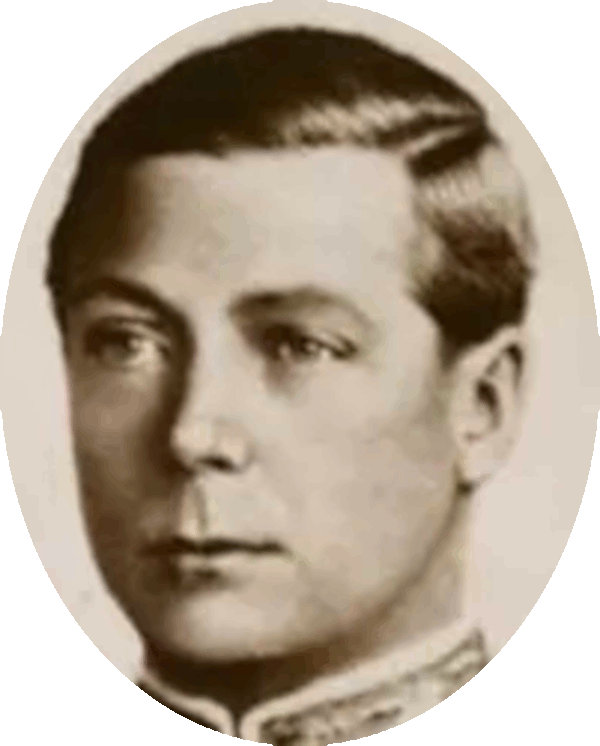
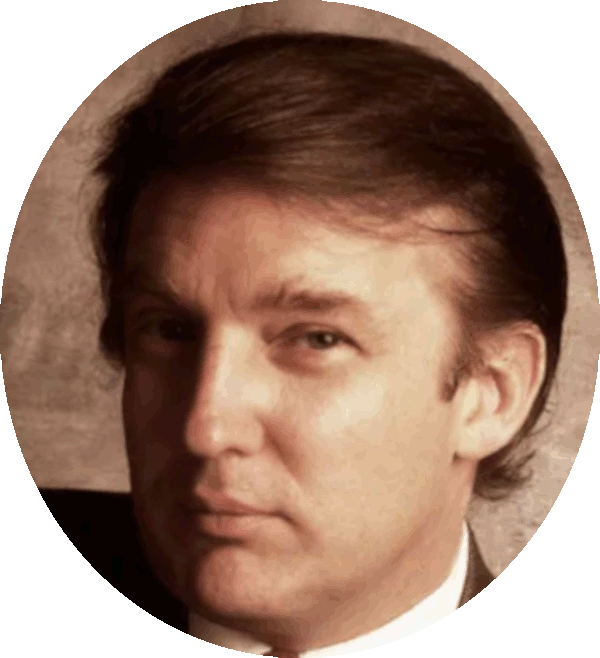
Edward VIII as Donald Trump |
 |
 |
Edward Albert Christian George Andrew Patrick
David
1894-1972
6/23
5/28 |
Donald Trump
1946
6/14
|
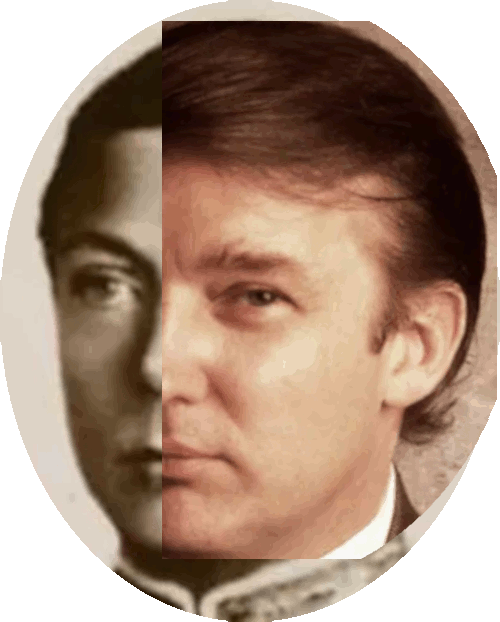 |
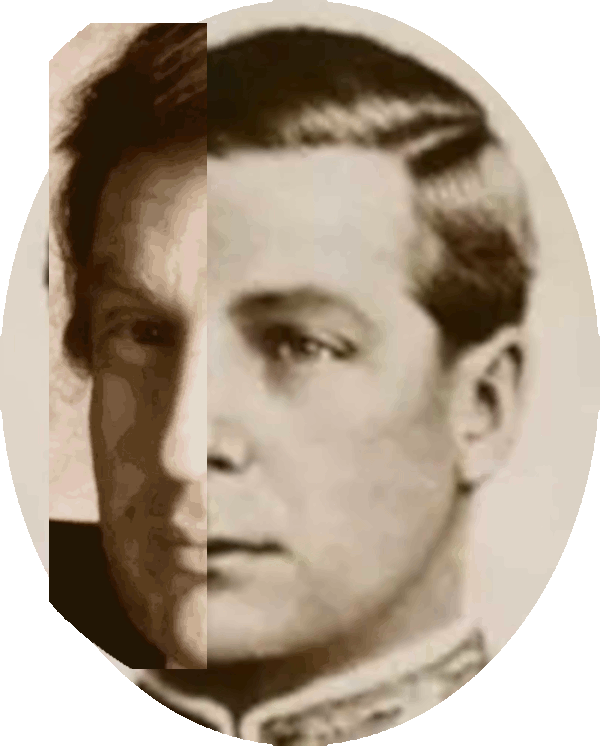 |
|
Constitutional crisis |
- Upon his father's death in 1936, Edward
VIII became the 2nd monarch of the House of Windsor.
- The new king showed impatience with court protocol, and caused consternation among politicians by his apparent disregard for established constitutional conventions.
War horse |
- Edward VIII
limited but significant roles in World War I, where he served in the and toured the front, and his controversial actions during
World War II as the Duke of Windsor, where his sympathies towards Germany and alleged Nazi contacts raised serious concerns, leading to his exile and a dubious wartime record.
- During World War I (1914-1918)
he was eager but restricted, as the Prince of Wales, he joined the Grenadier Guards but was forbidden from frontline combat by the War Secretary, Lord Kitchener, to prevent his capture.
- Limited Duty: He served in staff roles, acted as a liaison, and made several visits to the trenches, earning the Military Cross for his bravery in visiting the front!!!
- Abdication & Exile: After his abdication in 1936, he became the Duke of Windsor, and his pre-war flirtations with Germany and meeting with Hitler in 1937 fueled suspicions.
- After France fell in 1940, he fled to Spain and Portugal, where he had extensive contacts with German agents and was suspected of actively seeking to undermine the British war effort and facilitate a peace deal with Germany.
.jpg)
H. D. Girdwood, Public domain, via Wikimedia Commons
Edward in WWI - 1915 |
- Edward caused a constitutional crisis through his proposal to marry Wallis Simpson, an American who had divorced her
1st husband and was seeking a divorce from her second.
- When it became apparent he could not marry Simpson and remain on the throne, he abdicated.
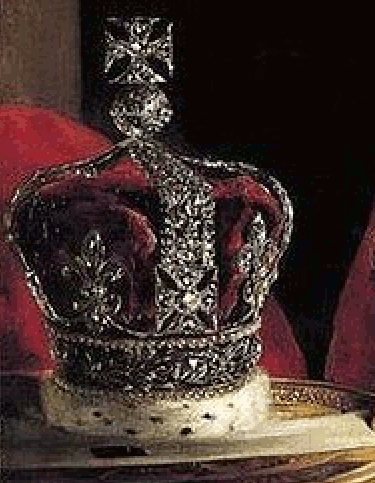
Shortest reigning |
- Edward VIII was succeeded by his younger brother, George VI.
- With a reign of 326 days, he was one of the shortest-reigning British monarchs to date.
- After his abdication, Edward
VIII was created Duke of Windsor. He married Simpson in France on June
3, 1937, after her 2nd divorce became final.
- Later that year, the couple toured Nazi Germany, which fed rumors that he was a Nazi sympathizer.
59th Prime
Minister of United
Kingdom
1935-1937 (3rd
term) |
|
Stanley
Baldwin as Elon Musk
|
Stanley Baldwin
1867-1947
8/3
12/14
Prime Minister |
Elon Reeve Musk
1971
6/28 |
|
|
|
59th Prime Minister
Uncle Stanley |
- Managed King Edward VIII's desire to marry Wallis Simpson, convincing the King to abdicate to avoid a constitutional crisis, which was seen as a success.
King George
VI of the United
Kingdom
1936-
1952
House of Windsor |
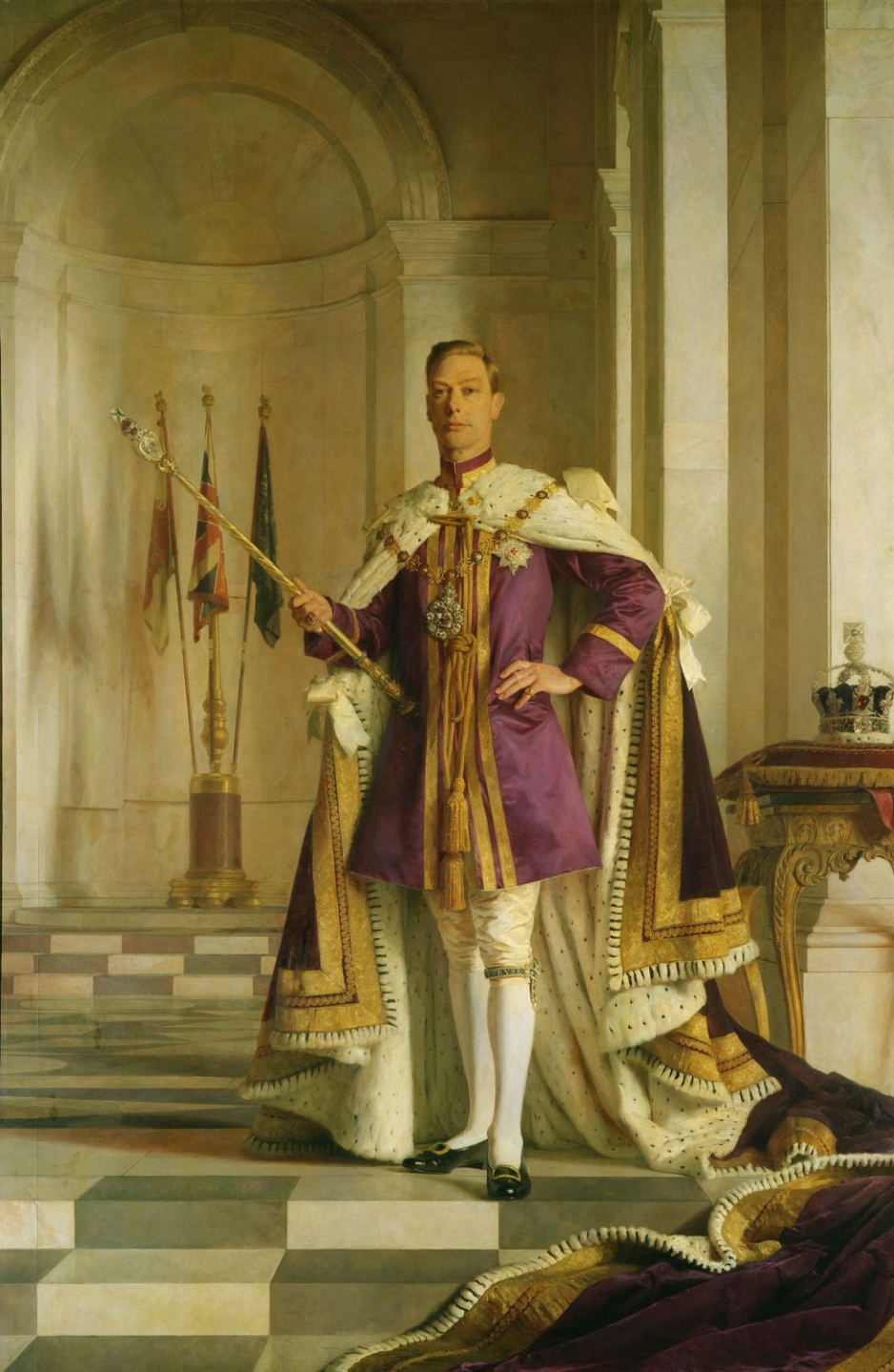
Gerald Kelly, Public domain, via Wikimedia Commons
Coronation robe |
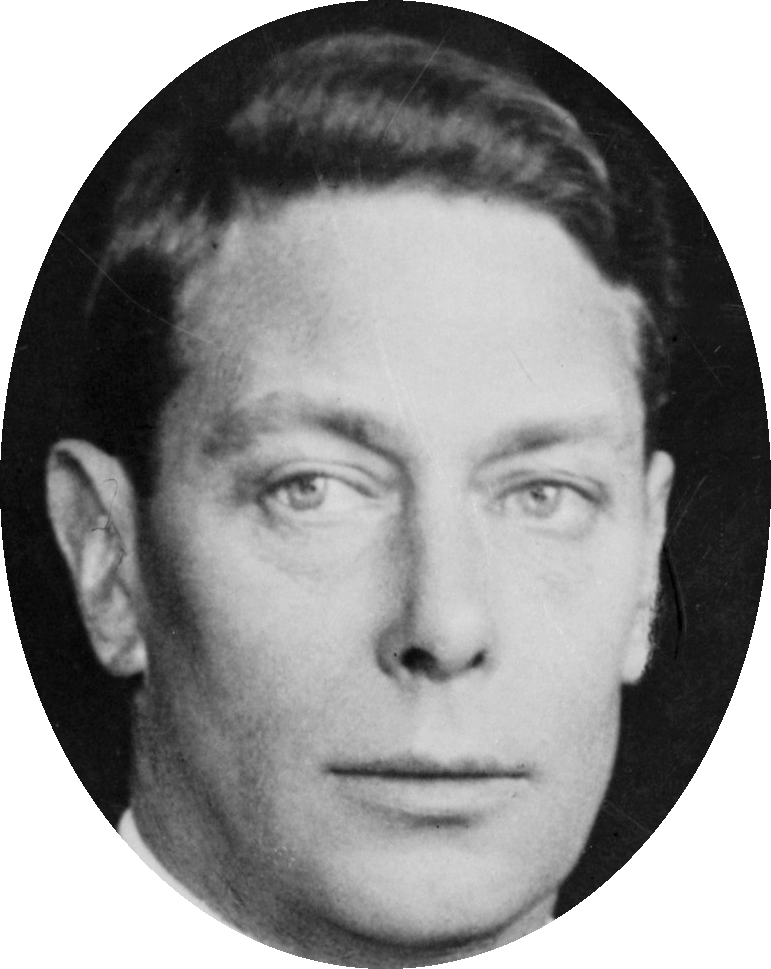
- George VI was born as Albert Frederick Arthur George (1895-1952) was King of the United Kingdom and the Dominions of the British Commonwealth from December
11, 1936, until his death on February 6, 1952.
- He was also the last Emperor of India from 1936 until the British Raj was dissolved in August 1947, and the first Head of the Commonwealth following the London Declaration of 1949.
|
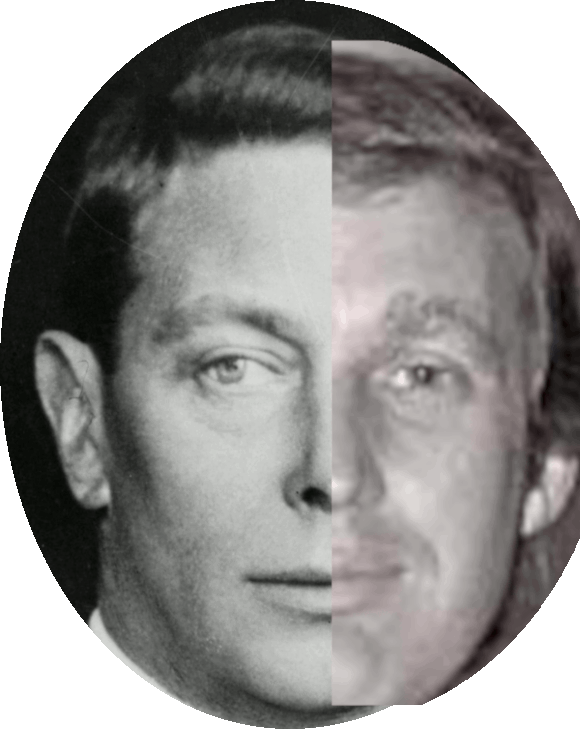
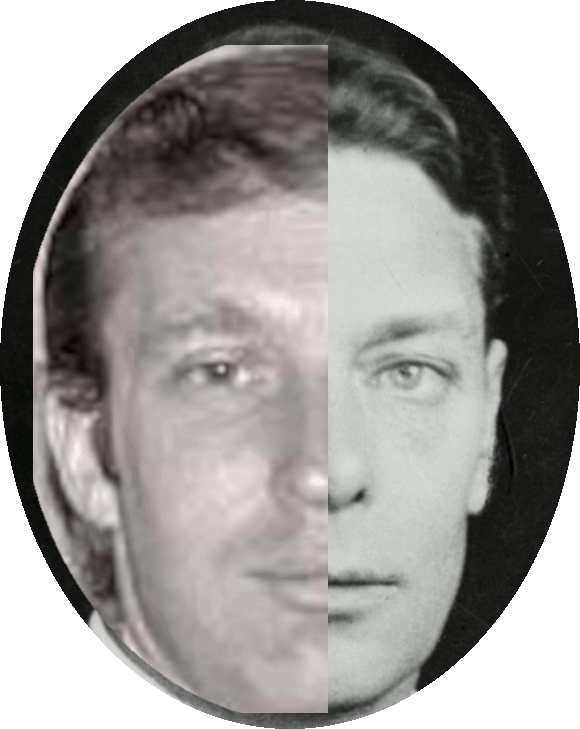
George VI as Donald Trump |
 |
|
Albert Frederick Arthur George
1895-1952
12/14 2/6
monarch |
Donald Trump
1946
6/14
|
 |
 |
|
Crybaby |
-
King George VI who was known as Albert was ill often and was described as easily frightened
and somewhat prone to tears.
- He had a stutter that lasted for many years.
- Father of Queen Elizabeth II.
War horse |
- He formally declared war on Germany on September 3, 1939, following the invasion of Poland.
- During World War II, King George VI served as a powerful symbol of British resolve, famously staying in London during the Blitz, visiting troops globally, and boosting morale, despite his personal reluctance and stammer.
- He declared war on Germany, worked closely with Prime Minister Churchill, and, alongside his wife Queen Elizabeth, embodied national unity and shared hardship, becoming a beloved figure who helped lead Britain through its darkest hours.
-
He made numerous trips to meet soldiers, including visiting troops in France (post-D-Day), North Africa (after El Alamein), Italy, and the Low Countries.
- He met weekly with Winston Churchill, fostering a strong working relationship.
|
"Blitz" refers to the WWII German bombing of Britain (a "lightning war"), stemming from the German word for "lightning" or "flash". A sustained aerial bombing campaign by Nazi Germany against the UK from September 1940 to May 1941, targeting cities and causing immense civilian casualties and damage. (Assistant)
|
60th Prime
Minister of United
Kingdom
1937-1940
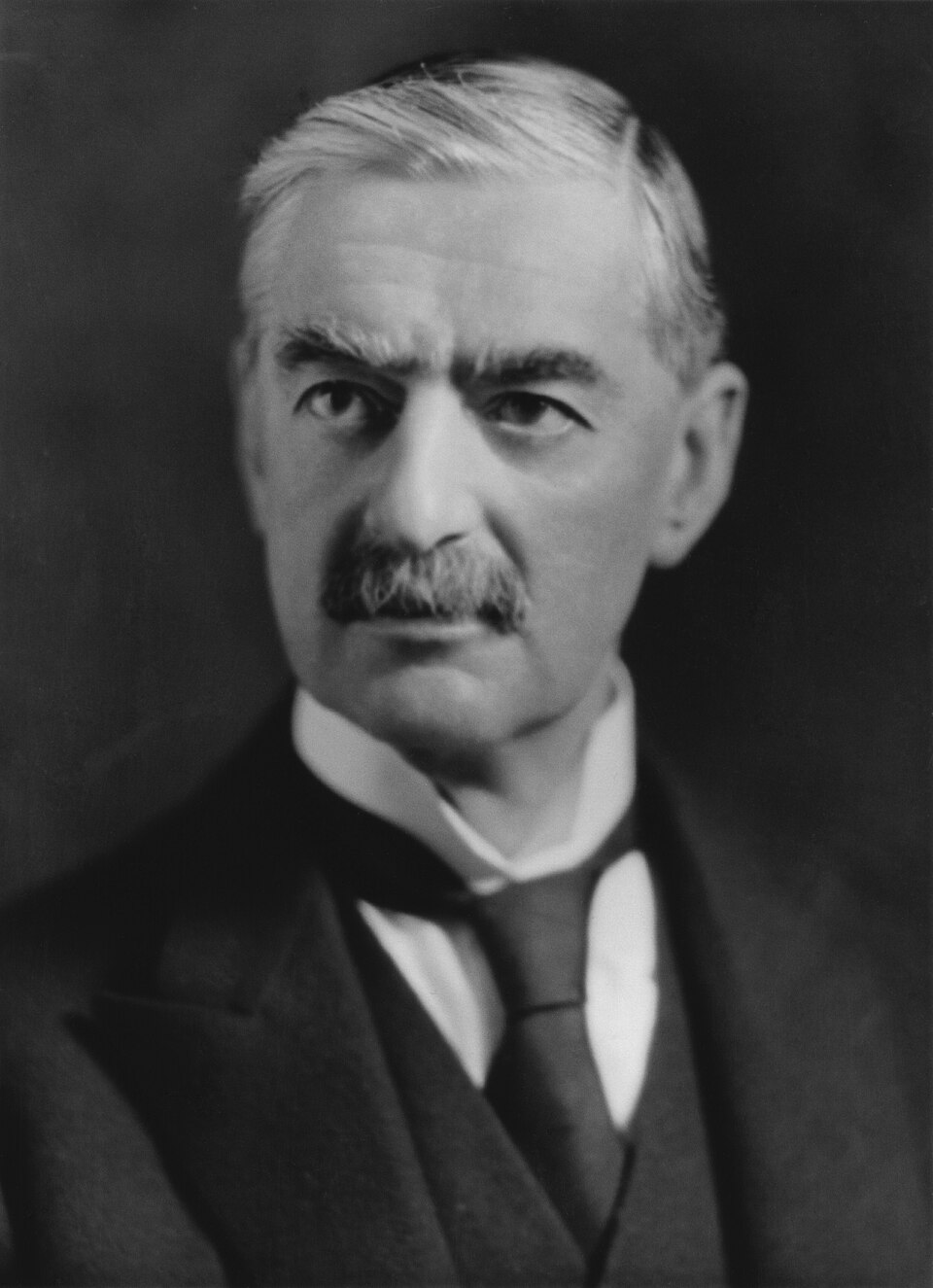
Arthur Neville
Chamberlain |
Bassano Ltd, Public domain, via Wikimedia Commons |
- Arthur Neville Chamberlain (1869-1940) was a British politician who served as Prime Minister of the United Kingdom from May 1937 to May 1940 and Leader of the Conservative Party from May 1937 to October 1940.
- He is best known for his foreign policy of appeasement, and in particular for his signing of the
Munich Agreement on September 30, 1938, ceding the German-speaking Sudetenland region of Czechoslovakia to Nazi Germany led by Adolf Hitler.
- Following the invasion of Poland on September 1, 1939, which marked the beginning of
World War II, Chamberlain announced the declaration of war on Germany
2 days later and led the United Kingdom through the first
8 months of the war until his resignation as prime minister on May
10, 1940.
|
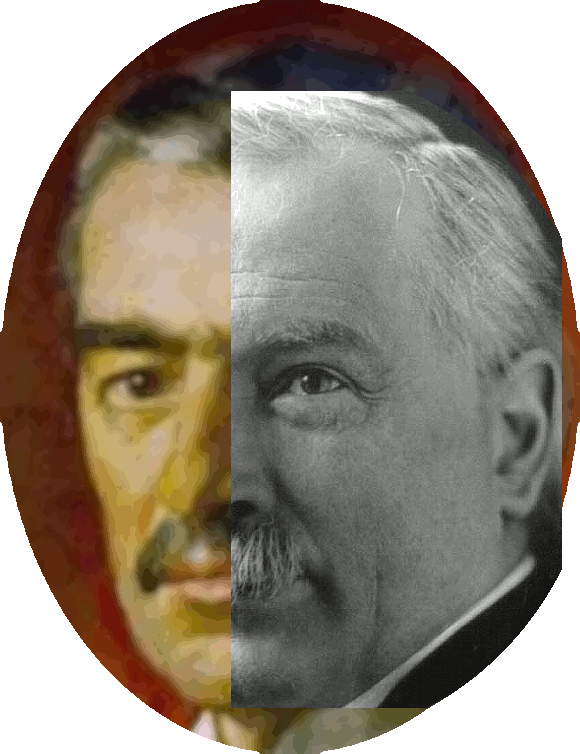
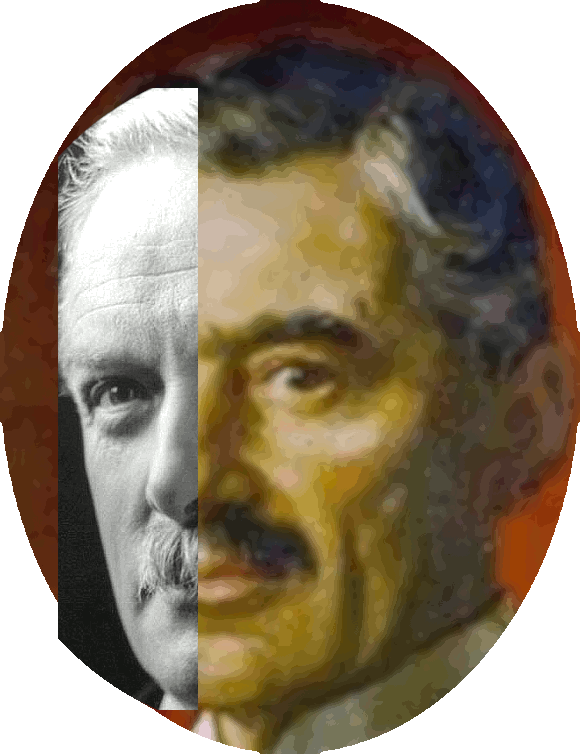
Arthur
Neville Chamberlain
as
David Lloyd George
|
Arthur Neville Chamberlain
1869-1940
3/18
11/9
Prime Minister |
David Lloyd George
1863-1945
1/17
3/26
Prime Minister |
 |
 |
60th Prime Minister
Monsieur J'aime Berlin (Mr. I am Berlin) |
-
Neville Chamberlain's main problems stemmed from his policy of appeasement, believing he could avoid war with Hitler through concessions, notably the 1938
Munich Agreement, but this failed when Hitler invaded Czechoslovakia, leading to WWII, making him synonymous with naiveté and misjudging Nazi aggression.
- His strategy of giving Hitler territory (like the Sudetenland) in exchange for peace proved disastrous, as Hitler broke his promises, leading to war.
61st Prime
Minister of United
Kingdom
1940-1945
(1st term)
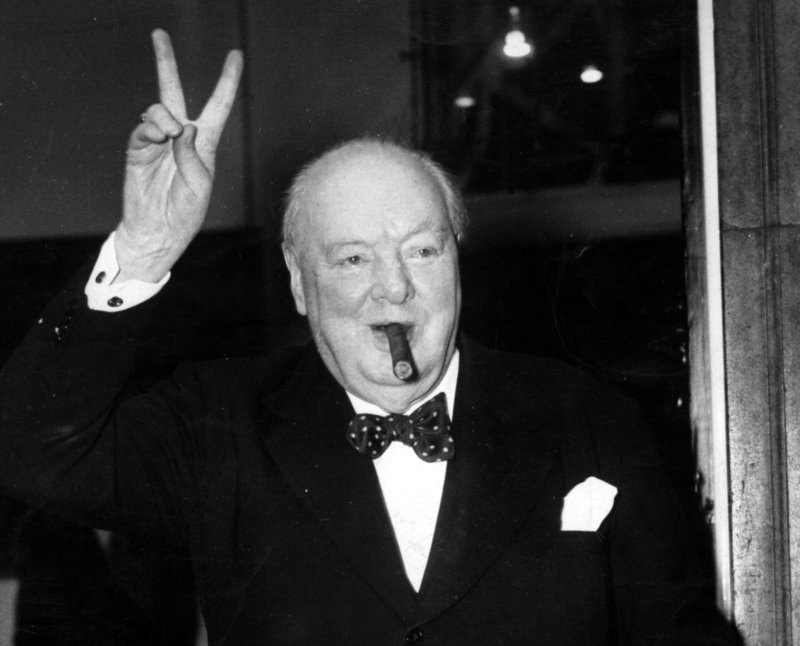
Winston Leonard
Spencer Churchill |
Masonic hand sign |
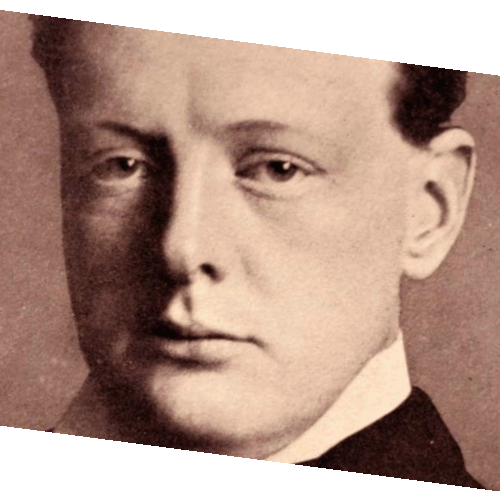
- Sir Winston Leonard Spencer Churchill
(1874-1965) was a British statesman, military officer, and writer who was Prime Minister of the United Kingdom from 1940 to 1945 and again from 1951 to 1955.
-
Although many shared the views of a political insider who in 1931 speculated that
'the ghosts of Gallipoli will always rise up to damn him anew,' Churchill became prime minister in 1940 with Britain once again embroiled in war.
- Upon taking office, he wrote, 'All my past life had been
a preparation for this hour and for this trial,' and that included Gallipoli.
|
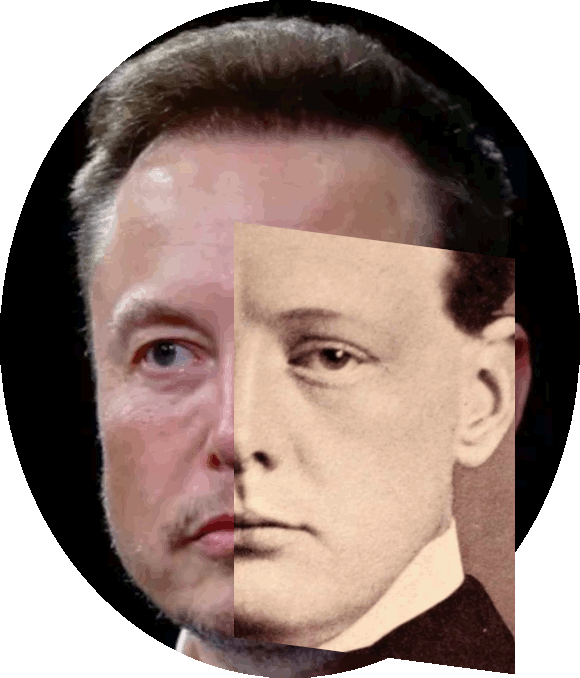
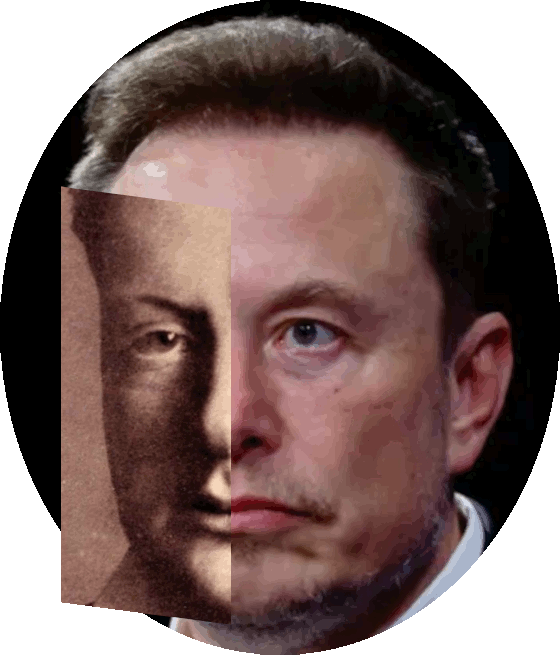
Winston
Churchill as
Elon Musk |
Winston Leonard Spencer Churchill
1874-1965
10/14
9/10
Prime Minister
|
Elon Reeve Musk
1971
6/28 |
 |
 |
61st Prime Minister
British Bulldog |
-
There is controversy surrounding Churchill's legacy, which is characterized by a mix of heroic leadership during
World War II and highly criticized imperialist, racial, and social views and actions.
-
Churchill was a staunch imperialist who believed in a hierarchy of races, viewing white, Anglo-Saxon Protestants as superior
and his statements, such as referring to Indians as a 'beastly people,' are widely condemned today.
- Bengal Famine (1943): At least
3 million people died in the Bengal famine, which many historians argue was exacerbated by, or even a direct result of, Britain's wartime policies and Churchill's refusal to divert adequate food relief ships to India.
- He reportedly blamed the famine on the Indians themselves
'breeding like rabbits.'
- Use of Force in Colonies: He advocated for the use of chemical weapons (specifically tear gas, but expressed openness to others) against
'uncivilized tribes' in Iraq and Afghanistan.
- He also approved brutal counter-insurgency tactics, including the use of concentration camps where torture occurred, during the
Mau Mau uprising in Kenya.
- As Home Secretary, he deployed troops to manage striking miners during the Tonypandy Riots in 1910 and later the 1926 General Strike, earning him long-lasting animosity in working-class communities.
- He was instrumental in deploying the notorious 'Black and Tans' paramilitary force during the Irish War of Independence, which gained a reputation for violence and atrocities against civilians.
- In 1945, immediately after the end of the Pacific War, British troops helped the French reestablish control in Southern Vietnam as part of
Operation Masterdom.
- All British troops were withdrawn from Vietnam by mid-1946.
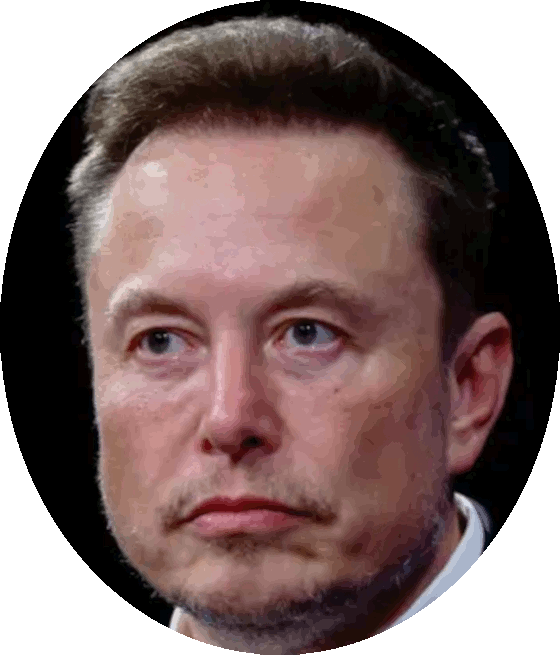
Musk is Satan |
-
Born into a wealthy family in Pretoria, South Africa, Musk emigrated in 1989 to Canada; his Canadian citizenship is congenital, his mother having been born there.
- Who better to ask about Canada and South Africa.
-
Has been shape-shifting since the very beginning and
originally came from an unknown galaxy before he settled in
Mars.
- He invaded Heaven and was kicked out and then led
the pack of fallen angels when they fell through the crevice
to Earth.
- Along with Lucifer, he built all the material
systems and the reincarnation fake trap here on Earth.
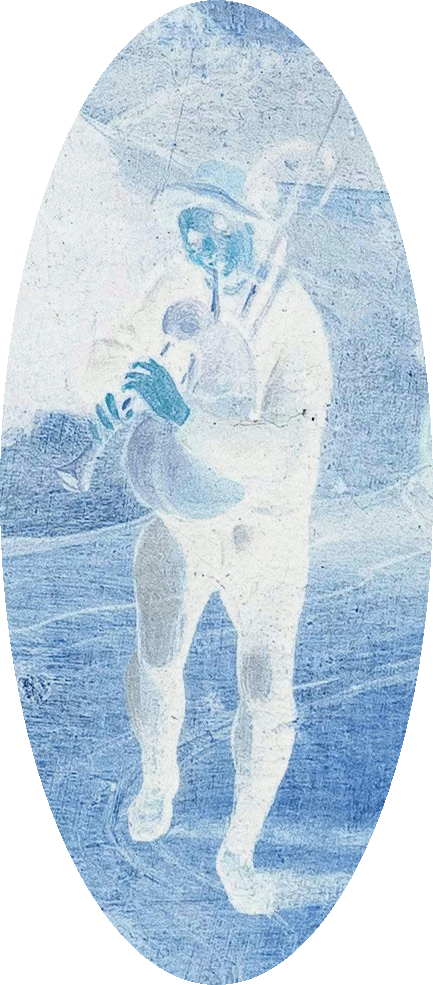
Ghost of Gallipoli |
- This appointment was a pivotal moment for Churchill, as he was transitioning from the Conservative party to the Liberal party and this position allowed him to build his political career under a new government.
- Remember, Hitler also changed sides, supposedly he was a
conservative but he also seemed to flip to liberal.
62nd Prime
Minister of United
Kingdom
1945-1951
Clement Richard
Attlee, 1st Earl
Attlee |
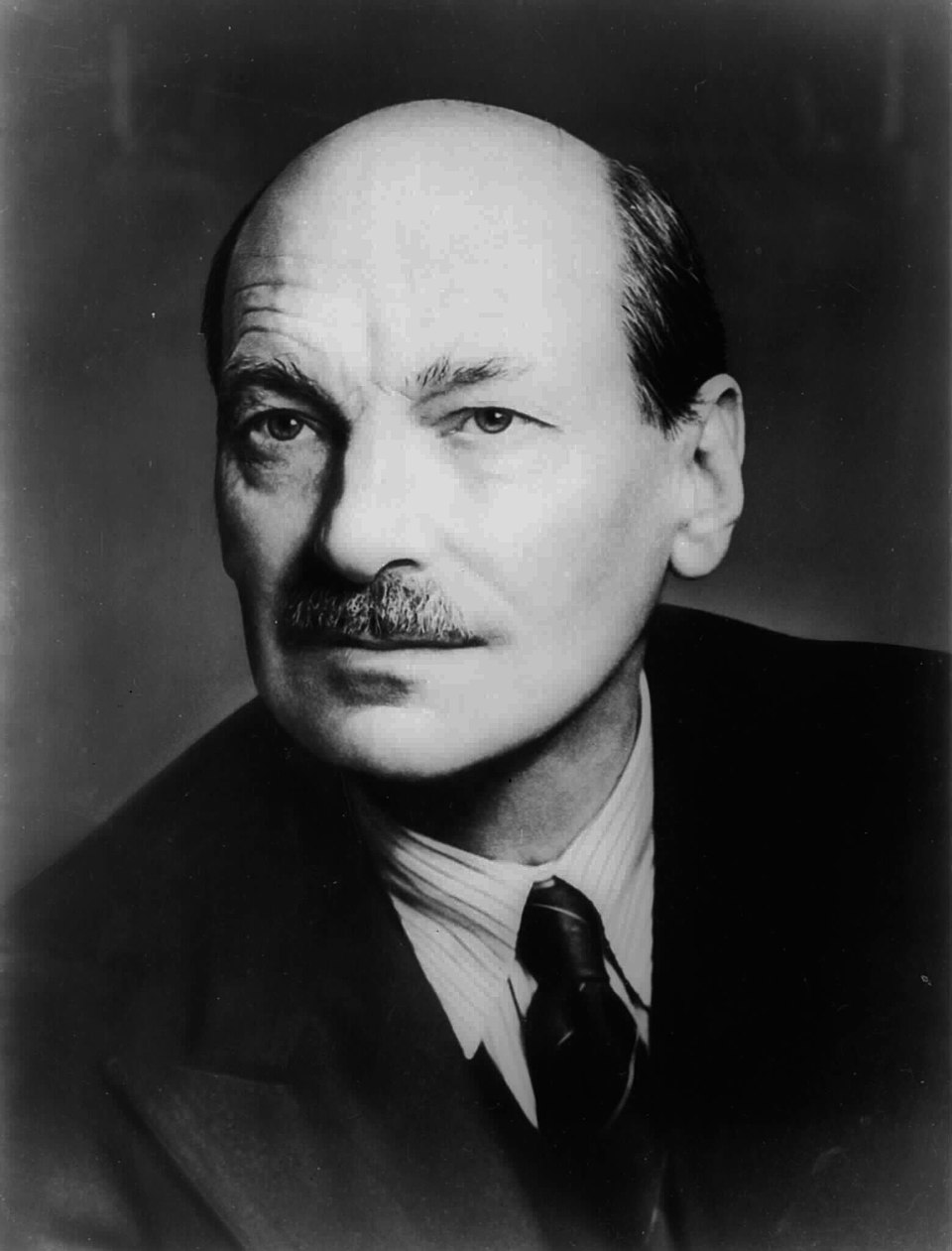
Yousuf Karsh, Public domain, via Wikimedia Commons |
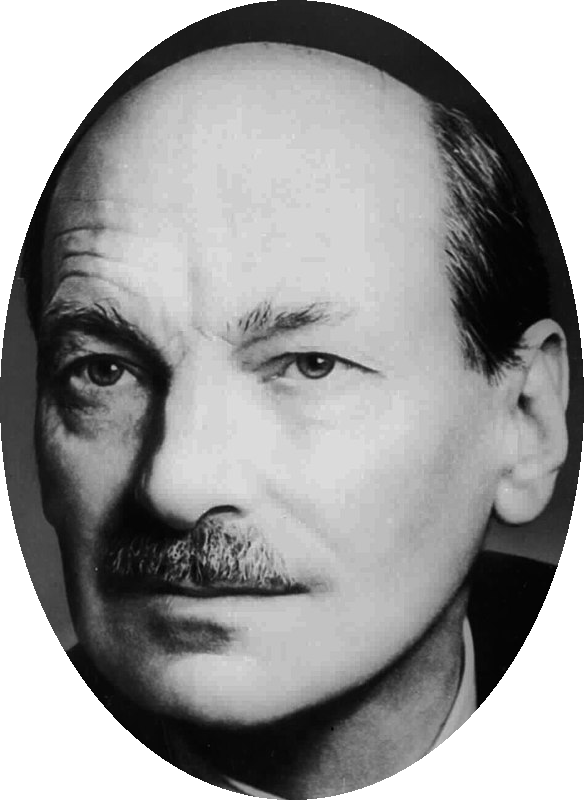
- Clement Richard Attlee, 1st Earl Attlee (1883-1967), was a British statesman who was Prime Minister of the United Kingdom from 1945 to 1951 and Leader of the Labour Party from 1935 to 1955.
- Attlee was Deputy Prime Minister during the wartime coalition government under Winston Churchill, and Leader of the Opposition on
3 occasions: from 1935 to 1940, briefly in 1945 and from 1951 to 1955.
- He remains the longest serving Labour leader.
|
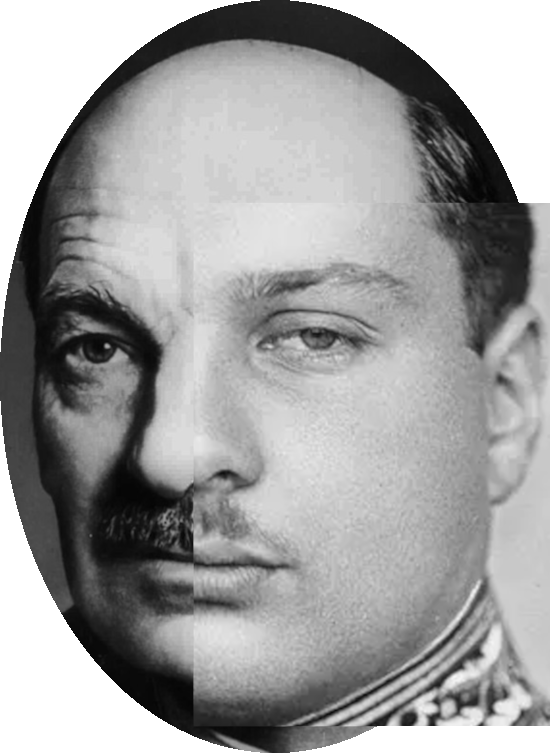
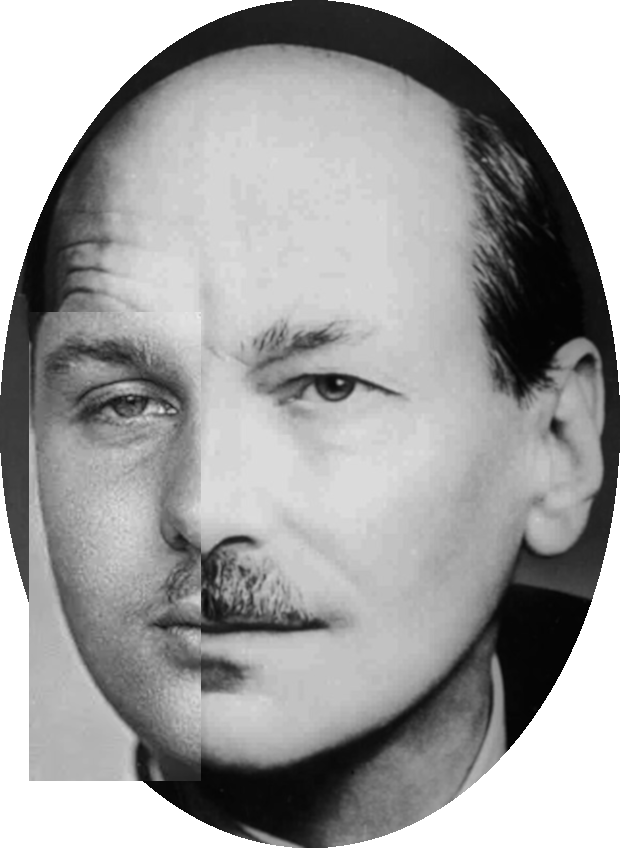
Clement Richard
Attlee as King
Farouk I |
Clement Richard Attlee
1883-1967
1/3
10/8
Prime Minister
|
Farouk I
1920-1965
2/11 3/18
Muhammad Ali dynasty |
 |
 |
62nd Prime Minister
A sheep in sheep's clothing
The mouse that thundered |
-
Clement Attlee is often ranked highly among UK prime ministers for creating the welfare state and the NHS, his post-war government faced significant economic difficulties, persistent austerity, and policy criticisms that are viewed as problematic by some historians and economists.
- Attlee's government inherited a country close to bankruptcy after
World War II. Rather than ending quickly, rationing was extended (bread was rationed for the first time in 1946) and the public experienced a
'grey' and drab existence with a shortage of consumer goods.
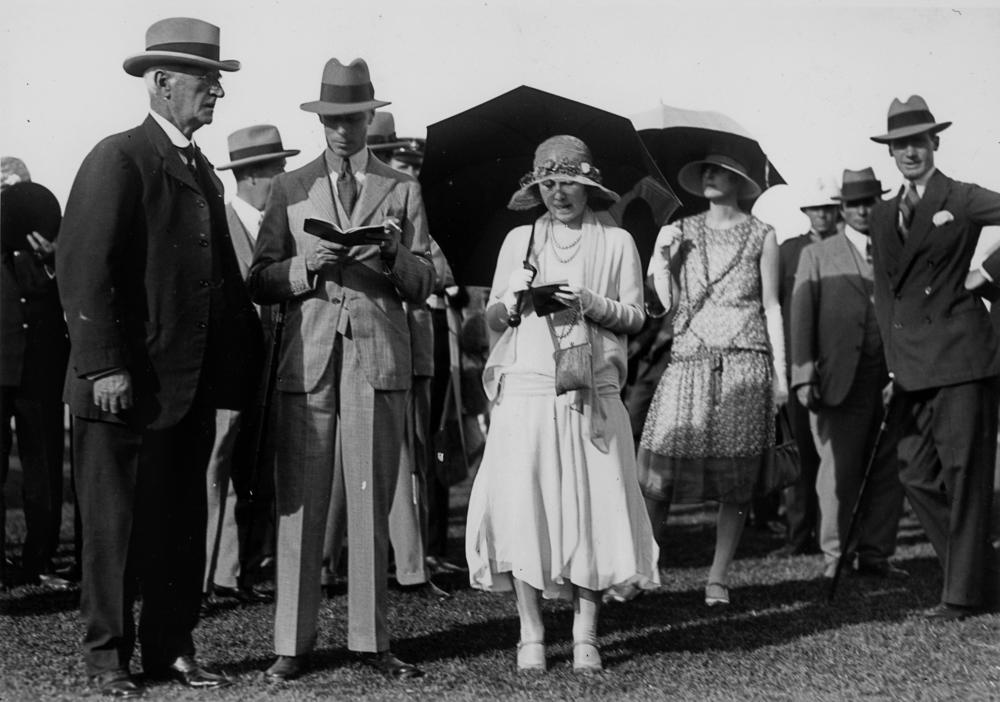
Queensland Newspapers Pty Ltd, Public domain, via Wikimedia Commons
The Duke and Duchess of York
- 1927
aka George
VI and Lady Elizabeth Bowes-Lyon |
- George VI was beset by smoking-related health problems in the later years of his reign and died at Sandringham House, aged 56, of a coronary thrombosis
on February 6, 1952.
- He was succeeded by his elder daughter, Elizabeth II.
Queen
Elizabeth II of the United
Kingdom
1952-
2022
House of Windsor |
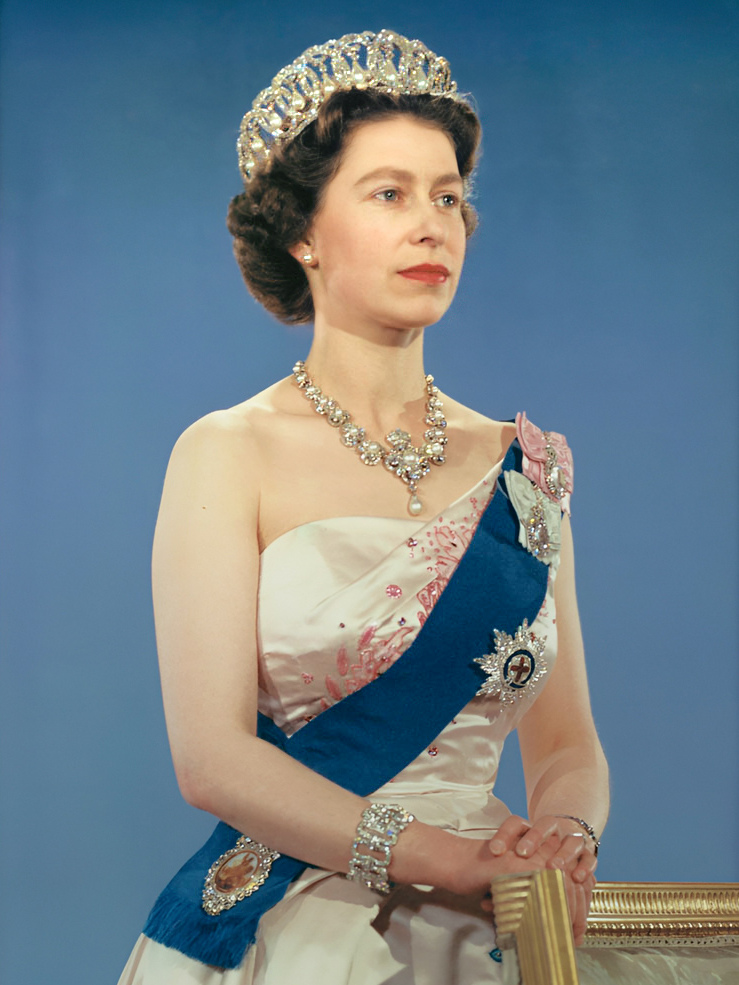
Donald McKague, Public domain, via Wikimedia Commons
1959 |
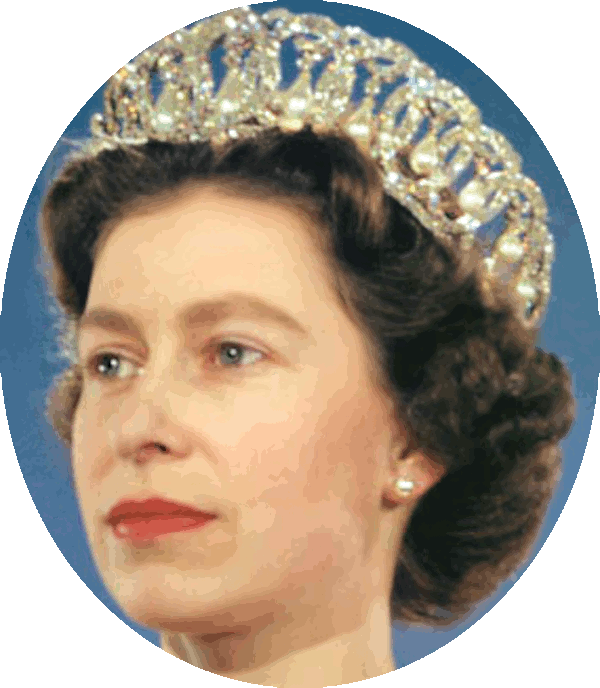
- Elizabeth II was born Elizabeth Alexandra Mary (1926-2022) was Queen of the United Kingdom and other Commonwealth realms from February
6, 1952, until her death
on September 8, 2022.
- She was queen regnant of 32 sovereign states during her lifetime and was the monarch of 15 realms at her death.
- Her reign of 70 years and 214 days is the longest of any British monarch, the second-longest of any sovereign state, and the longest of any queen regnant in history.
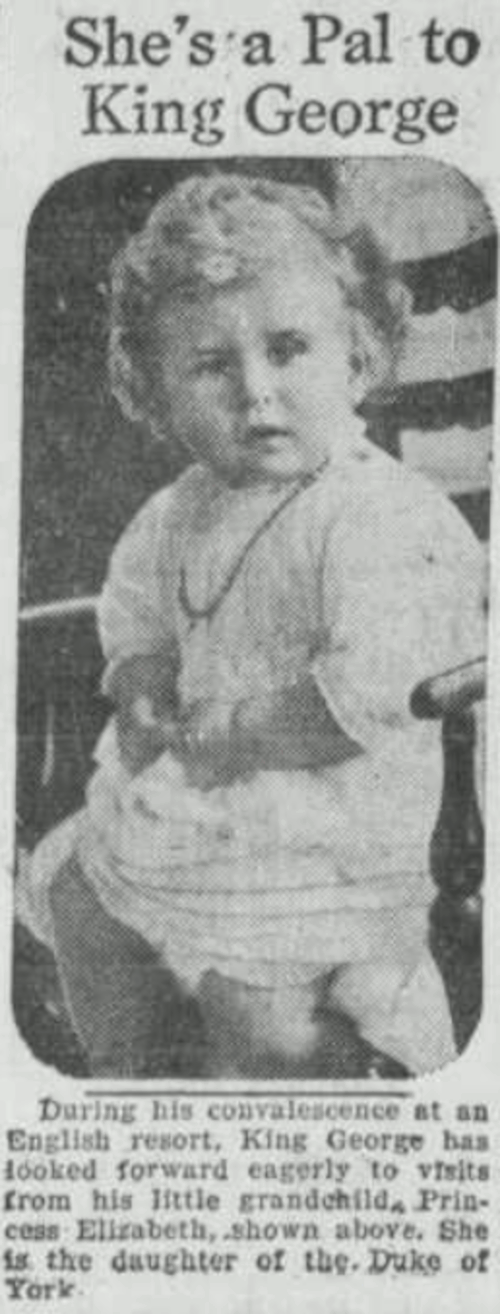
Simpsons Daily Leader
Times - April 13, 1929
Princess Elizabeth
looking concerned |
- Elizabeth was born in Mayfair, London, on April 21,
1926, during the reign of her paternal grandfather, King George V.
- She was the first child of the Duke and Duchess of York (later King George VI and Queen Elizabeth the Queen Mother).
|
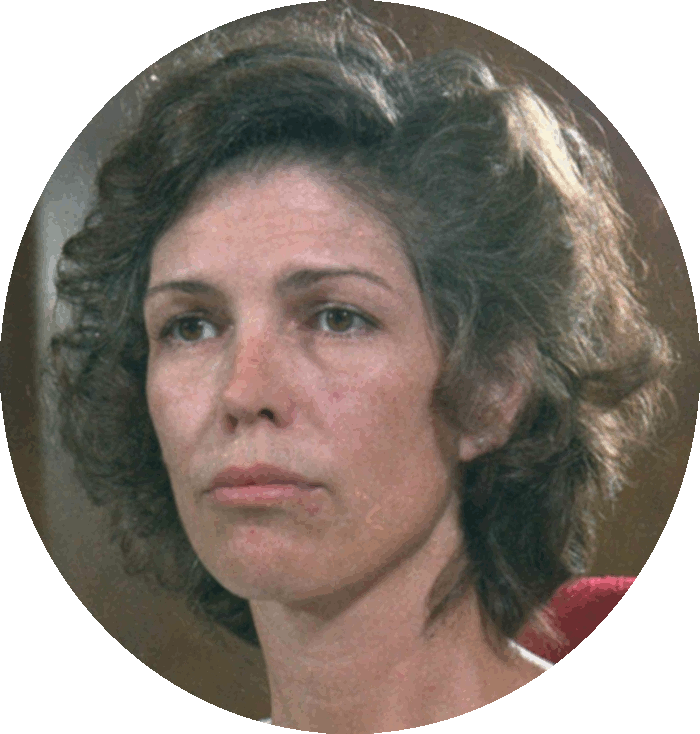
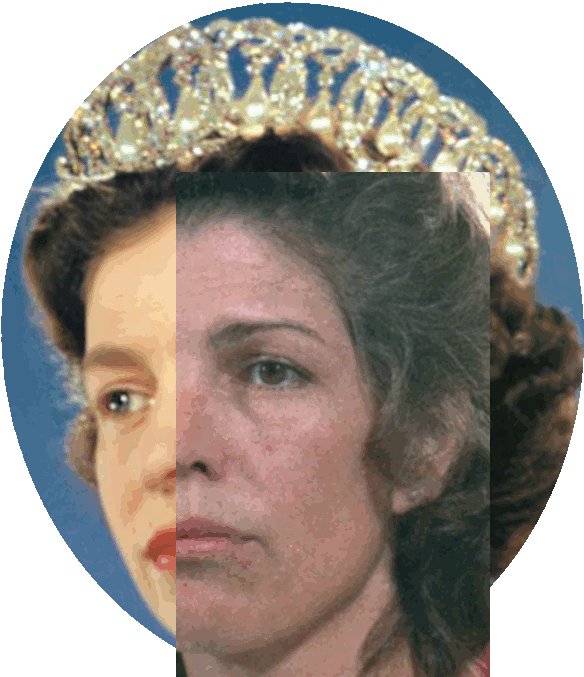
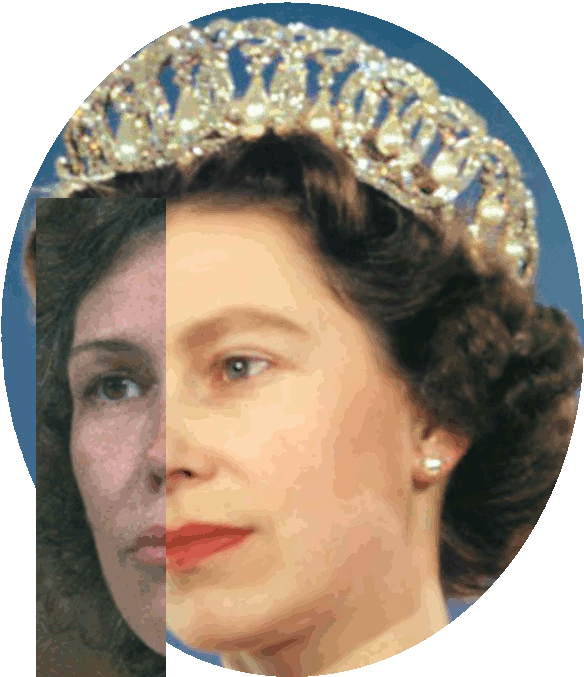
Elizabeth II as
Leslie Van Houten |
Elizabeth Alexandra Mary
1926-2022
4/21
9/8
|
Leslie Louise Van Houten
1949
8/23
Nice long male neck |
 |
 |
'Cabbage'
and 'Princess Auto Mechanic'
Manson killer
|
-The divorce and tragic death of Princess Diana created a major public relations crisis, particularly due to the Queen's delayed public response.
- The scandal surrounding Prince Andrew's association with Jeffrey Epstein cast a shadow on the monarchy.
- She struggled with prioritizing duty over family, leaving young children for long tours, which was scrutinized in the 1950s.
- Guided the monarchy through immense social changes,
including evolving gender roles and LGBTQ+ rights.
War horse |
- Queen Elizabeth II's involvement in war primarily centered on her service during
World War II, where she famously joined the Auxiliary Territorial Service (ATS) as a trainee mechanic and driver, becoming the first female royal to serve in the armed forces, learning to fix trucks and symbolizing resilience alongside her nation, though she did not serve in active combat roles.
- She also supported the war effort through public addresses, boosting morale, and carrying out duties as Head of State.
-
Her mechanical training remained a point of pride, and she famously continued to drive without a license for decades.
-
She reigned during the Korean War (1950-1953), with Britain sending significant troops to support the UN effort, and she spoke of continued UK involvement for a ceasefire, even during her 1953 coronation when British and Korean delegations attended.
- Her reign marked a strong bond with Korea, with later state visits, and the Queen's Korea Medal featured her effigy, symbolizing the enduring connection forged during the conflict.
- Queen Elizabeth II's reign overlapped significantly with the
Vietnam War (roughly 1955-1975), a conflict where Britain wasn't a direct combatant but navigated complex diplomatic waters, supporting the US while facing massive domestic anti-war protests, with the Queen remaining politically neutral but a symbol during this tumultuous era of Cold War divisions and shifting global power dynamics.
- The Queen's image appeared on the Vietnam Medal (issued to Commonwealth forces who served in Vietnam) and commemorative coins, symbolizing her role as Head of Commonwealth during the conflict.
- During the 1991 Gulf War, Queen Elizabeth II expressed national pride and concern for British troops in televised addresses, praying for swift success and minimal casualties, while also attending memorial services and a victory parade, embodying the monarch's role as a unifying figure during significant military actions, notably marking one of the few times she addressed the nation outside of family crises.
- She supported British involvement in the Afghanistan War, expressing pride in the troops and participating in commemorative services, while also famously wanting her grandsons, Princes William and Harry, to serve there, though William's role as future king prevented his deployment, unlike Harry who served two tours.
- She acknowledged the government's view that the war was crucial to preventing militant attacks on British streets.
63rd Prime
Minister of United
Kingdom
1951-1955
(2nd term) |
|
Winston
Churchill as
Elon Musk |
Winston Leonard Spencer Churchill
1874-1965
10/14
9/10
Prime Minister
|
Elon Reeve Musk
1971
6/28 |
|
|
|
63rd Prime Minister
British Bulldog |
-
Winston Churchill was not directly involved in the Vietnam War as a leader, dying in 1965, but his actions and views on colonialism, the rise of communism (especially in Asia after
World War II), and Anglo-American relations shaped the context, with his
World War II administration initially obstructing French re-colonization in Vietnam to focus on Japan and his later Cold War stance influencing Western anti-communism that underpinned U.S. involvement.
- During World War II, Churchill's government, focused on defeating Japan, supported the principle of self-determination (from the
Atlantic Charter) but worried about the collapse of empires, including the French in Indochina.
- His administration initially stalled French efforts to return to Vietnam post-1945, preferring to keep Japanese forces contained, inadvertently creating space for Ho Chi Minh's Viet Minh.
64th Prime
Minister of United
Kingdom
1955-1957
Robert Anthony Eden,
1st Earl of Avon |
.jpg)
Walter Stoneman, Public domain, via Wikimedia Commons |
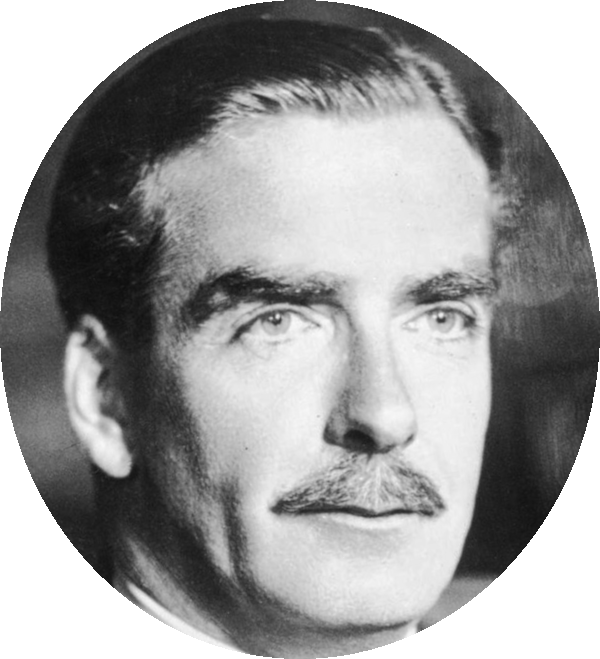
- Robert Anthony Eden, 1st Earl of Avon (1897-1977), was a British politician and military officer who served as Prime Minister of the United Kingdom and Leader of the Conservative Party from 1955 until his resignation in 1957.
- Achieving rapid promotion as a young Conservative member
of Parliament, he became foreign secretary aged 38, before
resigning in protest at Neville Chamberlain's appeasement
policy towards Benito Mussolini's Fascist regime in Italy.
- He again held that position for most of the Second World War, and a
3rd time in the early 1950s.
- Having been deputy to Winston Churchill for almost 15 years, Eden succeeded him as the leader of the Conservative Party and prime minister in 1955, and a month later won a general election.
|
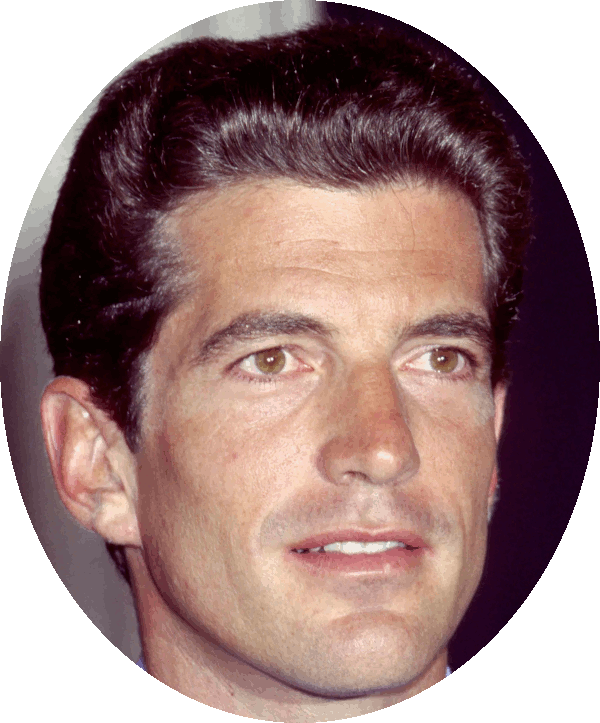
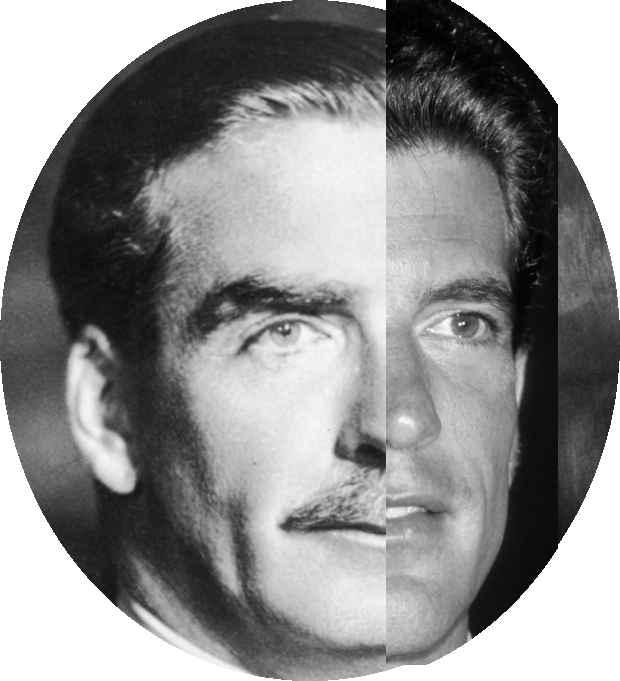
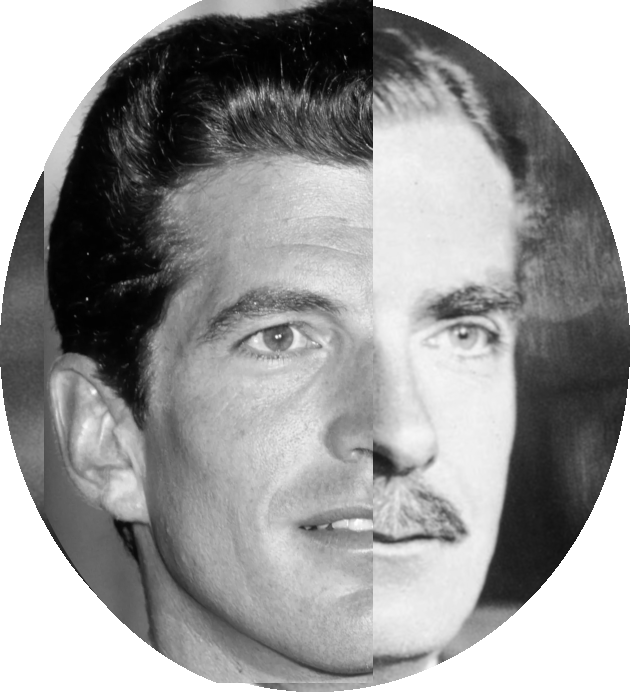
Robert
Anthony Eden as John
F. Kennedy Jr. |
Robert Anthony Eden
1897-1977
6/6
1/14
Prime Minister
|
John Fitzgerald Kennedy Jr.
1960-1999
11/20
7/16
|
 |
 |
64th Prime Minister
The
Glamour Boy |
-
Suez Crisis (1956): After Egypt's Nasser nationalized the Suez Canal, Eden secretly conspired with France and Israel to retake it, fearing oil supply disruption.
- The military action was condemned internationally, exposed Britain's diminished global power, and proved a political catastrophe.
-
Known by less flattering descriptions like 'a poor feeble little pansy' or being seen as
'half mad baronet, half beautiful woman' by contemporaries.
65th Prime
Minister of United
Kingdom
1957-1963
Maurice Harold
Macmillan, 1st Earl
of Stockton |
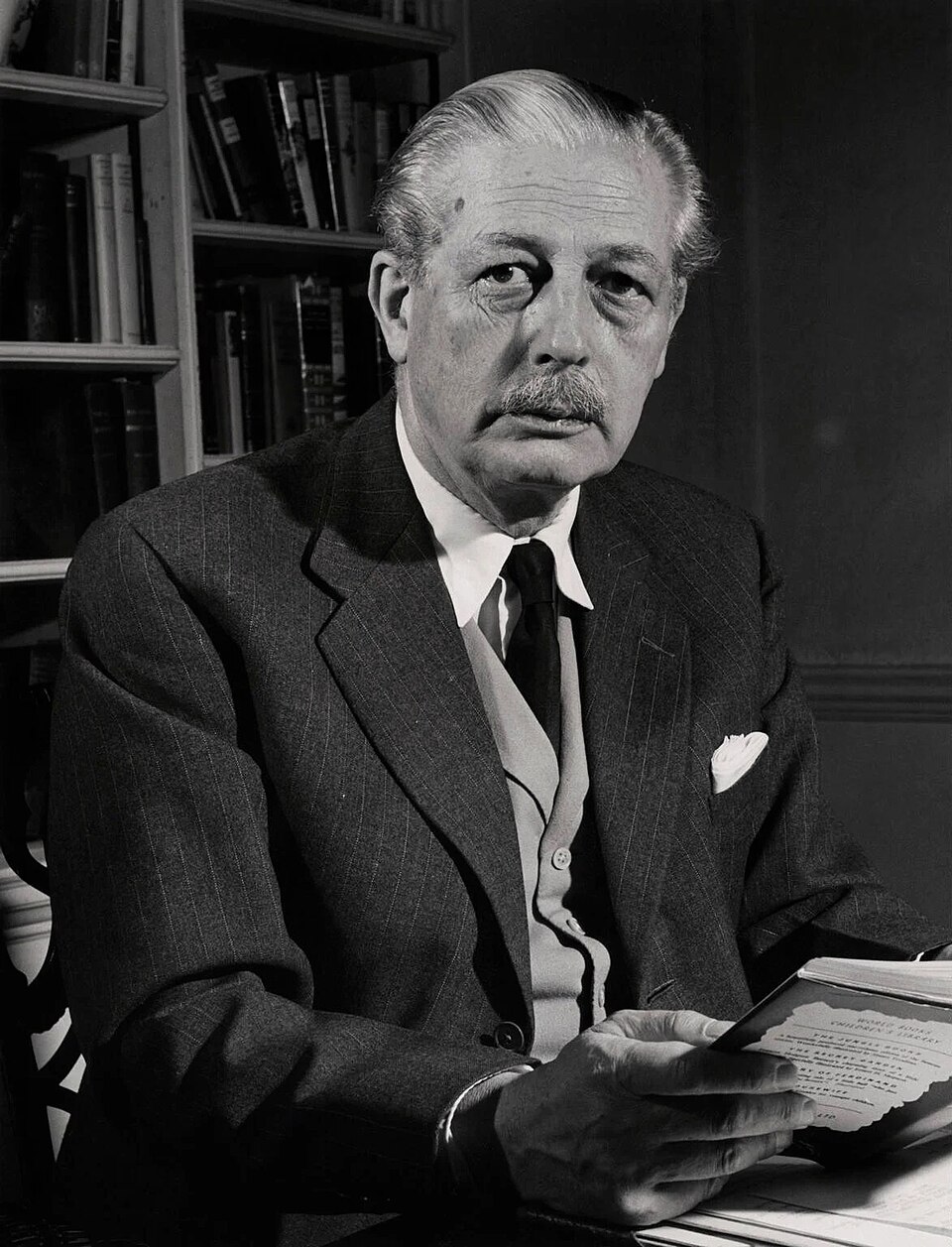
National Portrait Gallery, Public domain, via Wikimedia Commons |
- Maurice Harold Macmillan, 1st Earl of Stockton
(1894-1986), was a British statesman and Conservative
politician who was Prime Minister of the United Kingdom from
1957 to 1963.
- Nicknamed 'Supermac,' he was known for his pragmatism, wit, and unflappability.
- Macmillan was seriously injured as an infantry officer during the
First World War.
- He suffered pain and partial immobility for the rest of his life.
- After the war he joined his family book-publishing business, then entered Parliament at the 1924 general election for Stockton-on-Tees;
losing his seat in 1929, he regained it in 1931, soon after which he spoke out against the high rate of unemployment in Stockton.
- He opposed the appeasement of Germany practiced by the Conservative government.
- He rose to high office during the Second World War
as a protégé of Prime Minister Winston Churchill.
- In the 1950s Macmillan served as Foreign Secretary and Chancellor of the Exchequer under Anthony Eden.
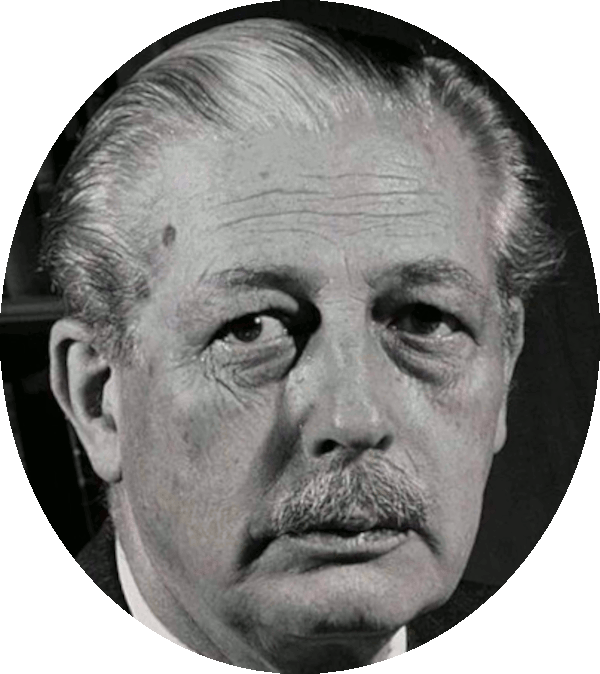
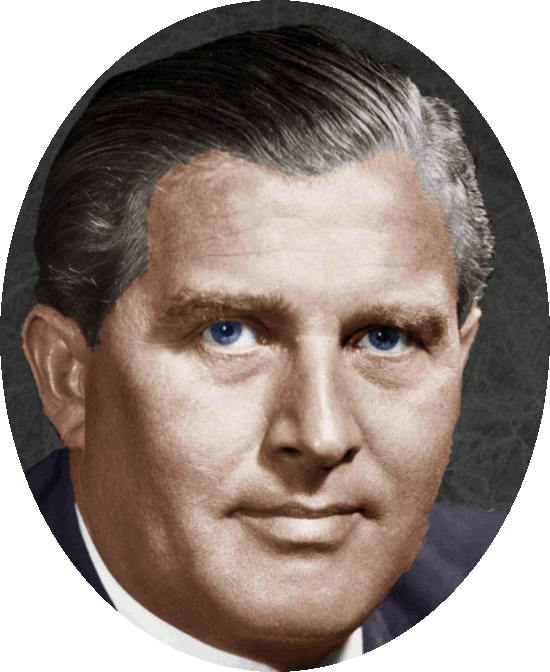
|
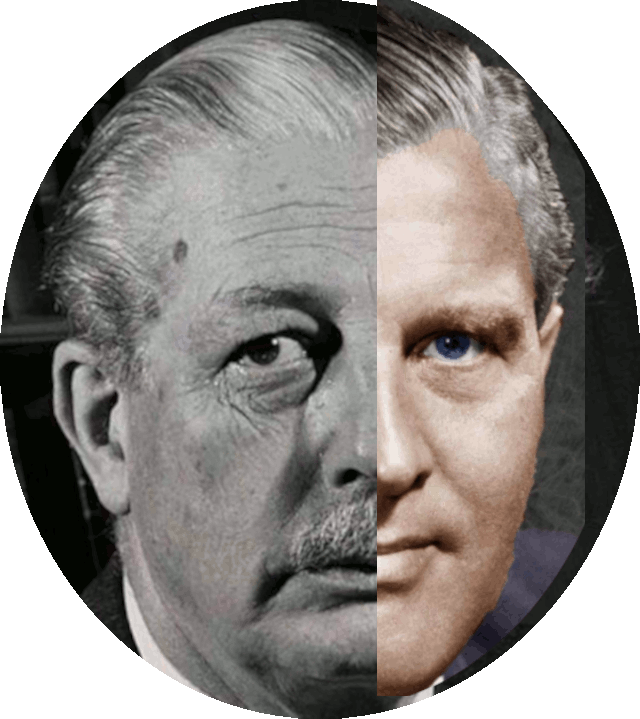
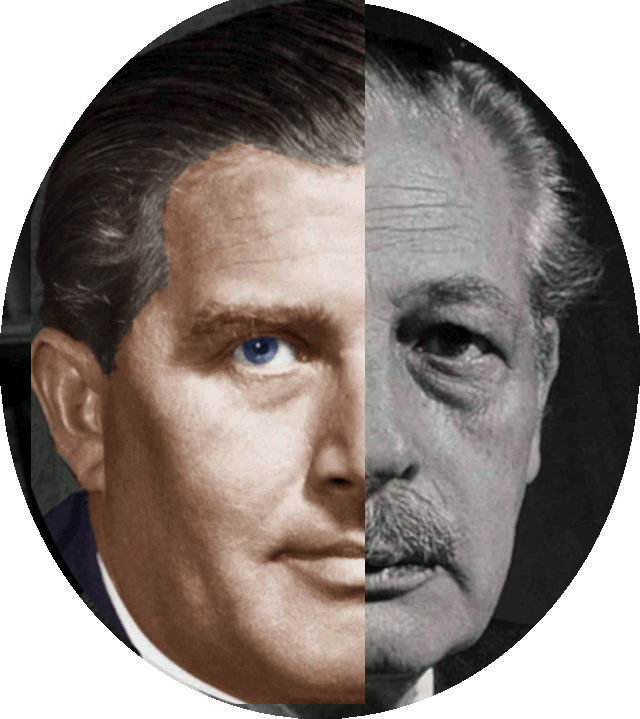
Harold
Macmillan as Wernher
Von Braun |
Maurice Harold Macmillan
1894-1986
2/10
12/29
Prime Minister
|
Wernher Magnus Maximilian Freiherr von Braun
1912-1977
3/23
6/16
|
 |
 |
65th Prime Minister
Supermac |
- Profumo Affair (1963): A major scandal involving his War Minister, John Profumo, who had an affair with Christine Keeler (a model with ties to a Soviet diplomat), leading to national embarrassment and security concerns.
- He endured lifelong pain and immobility from serious
World War I injuries and the stress of his wife Dorothy's affair with Robert Boothby, which may have contributed to a nervous breakdown in 1931.
66th Prime
Minister of United
Kingdom
1963-1964
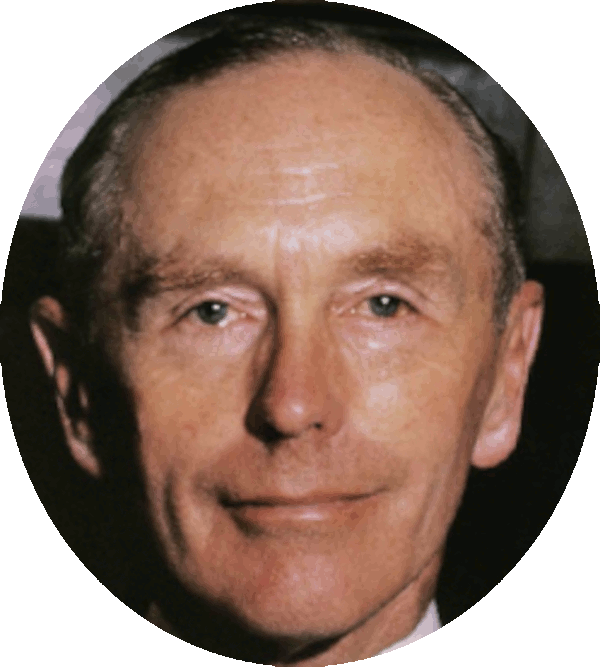
Alexander Frederick
Douglas-Home, Baron
Home of the Hirsel |
.jpg)
Unknown photographer for Anefo, CC0, via Wikimedia Commons |
- Alexander Frederick Douglas-Home, Baron Home of the Hirsel (1903-1995), known as Lord Dunglass from 1918 to 1951 and the Earl of Home from 1951 to 1963, was a British statesman and Conservative politician who served as Prime Minister of the United Kingdom from 1963 to 1964.
- He was the last prime minister to hold office while being a member of the House of Lords, before renouncing his peerage and taking up a seat in the House of Commons for the remainder of his premiership.
- His reputation, however, rests more on his 7 years over two stints as Foreign Secretary than on his brief premiership.
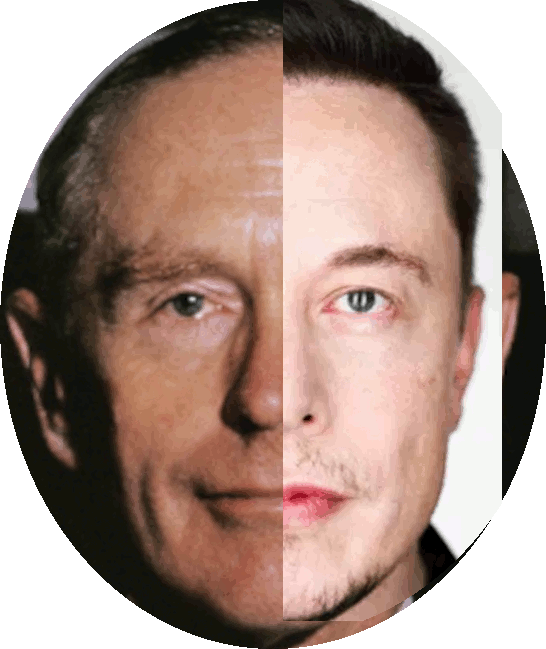
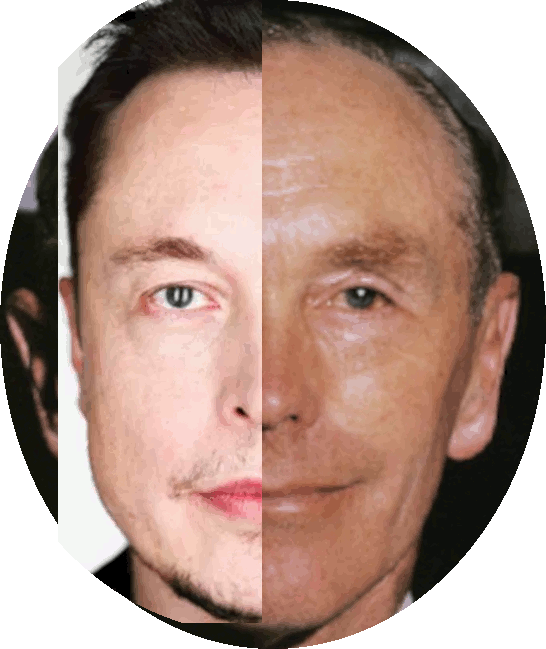
|
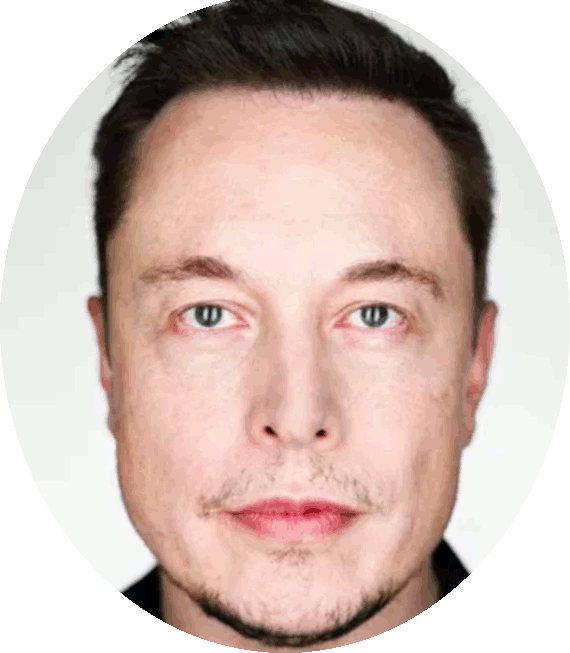
Alec
Douglas-Home as Elon
Musk |
Alexander Frederick Douglas-Home
1903-1995
7/2
10/9
Prime Minister
|
Elon Reeve Musk
1971
6/28
|
 |
 |
66th Prime Minister
Home Sweet Home |
- Douglas-Home's selection as Prime Minister by an informal, secretive
'magic circle' process rather than an open contest created controversy and left his legitimacy within the Conservative Party in dispute
and two cabinet ministers refused to serve under him.
- He was widely criticized for his poor public speaking skills and an inability to connect with the public.
- Labour leader Harold Wilson famously attacked him as an
'elegant anachronism' who was out of touch with ordinary families and unable to lead Britain's technological revolution.
- During his second term as Foreign Secretary under Edward Heath (1970–1974), he was unable to achieve a settlement in Rhodesia or convince Israel to give up territory acquired in the 1967 war.
|
A magic circle is a circle of space marked out by practitioners of some branches of ritual magic, which they generally believe will contain energy and form a sacred space, or will provide them a form of magical protection, or both. It may be marked physically, drawn in a material like salt, flour, or chalk, or merely visualised. (Assistant)
|
67th Prime
Minister of United
Kingdom
1964-1970
(1st term)
James
Harold Wilson, Baron
Wilson of Rievaulx |
.jpg)
Unknown photographer for Anefo, CC0, via Wikimedia Commons |
- James Harold Wilson, Baron Wilson of Rievaulx (1916-1995), was a British politician who twice served as Prime Minister of the United Kingdom, from 1964 to 1970 and from 1974 to 1976.
- He was Leader of the Labour Party from 1963 to 1976, Leader of the Opposition twice from 1963 to 1964 and again from 1970 to 1974, and a Member of Parliament (MP) from 1945 to 1983.
- Wilson is the only Labour leader to have formed governments following
4 general elections.
|
Harold
Wilson as Walt
Disney |
James Harold Wilson
1916-1995
3/11
5/23
Prime Minister
|
Walter Elias Disney
1901-1966
12/5 12/15
|
 |
 |
67th Prime Minister
Mickey Mouse
Wislon |
- Wilson's governments were consistently troubled by severe economic problems, which he described in his memoirs as
'living on borrowed time.'
- Despite initial efforts to avoid it, he was forced to devalue the pound in November 1967, which was a blow to his government's prestige.
- High inflation and increasing public expenditure in the 1970s created pressure, culminating in the need to apply for a loan from the International Monetary Fund (IMF) in 1976, which necessitated spending cuts.
- His stated goals of using the "white heat of technology" to modernize industry and substantially improve Britain's long-term economic performance were largely unfulfilled.
- A series of strikes, including a major Ulster Workers' Strike in Northern Ireland in 1974 that collapsed the power-sharing executive, continuously hampered his government.
68th Prime
Minister of United
Kingdom
1970-1974
Edward Richard
George Heath |
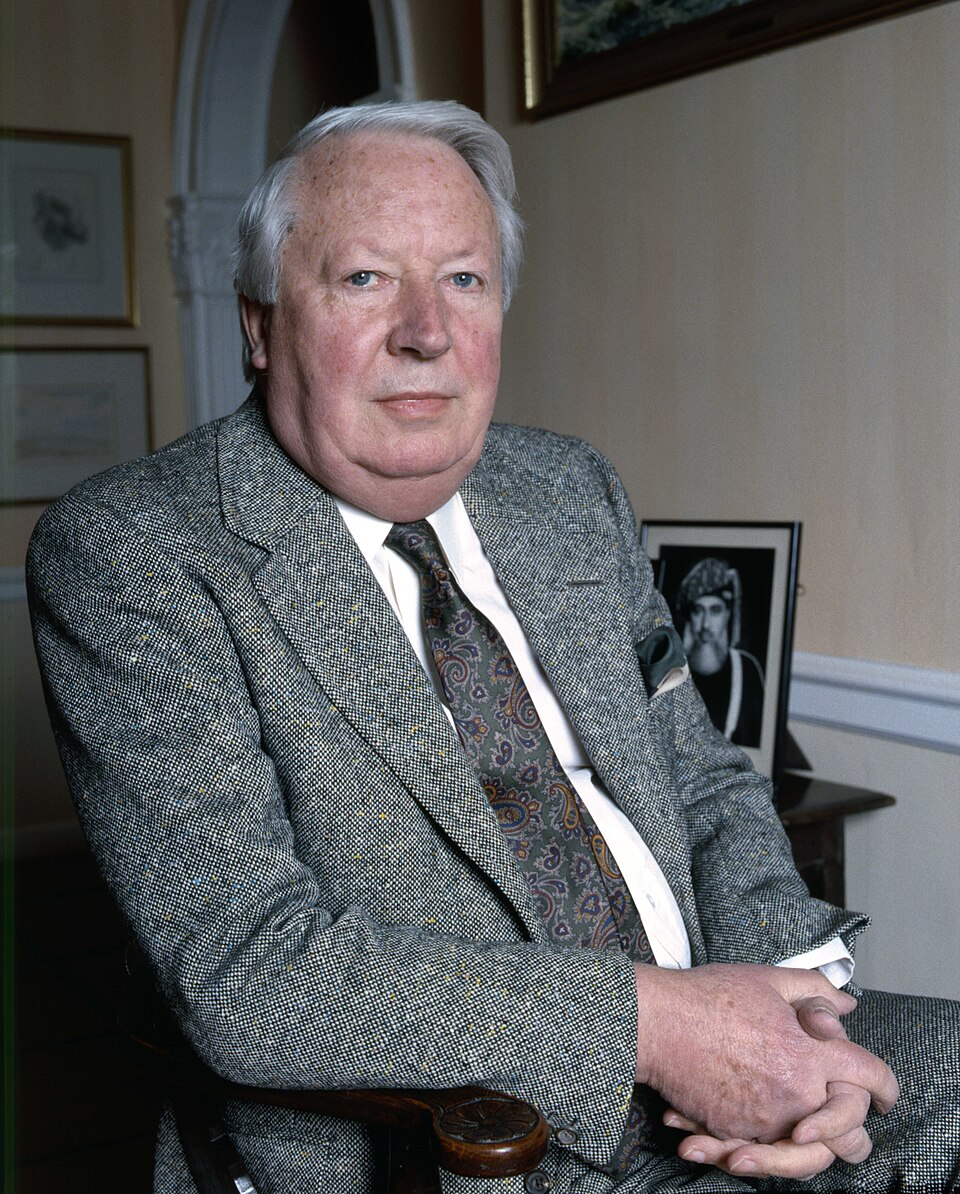
Allan Warren, CC BY-SA 3.0 , via Wikimedia Commons
Masonic hand sign |
- Sir Edward Richard George Heath (1916-2005) was a British politician who served as Prime Minister of the United Kingdom from 1970 to 1974 and Leader of the Conservative Party from 1965 to 1975.
- Heath also served for 51 years as a Member of Parliament from 1950 to 2001.
- Outside politics, Heath was a yachtsman, a musician, and an author.
|
Edward Heath
as Harold Wilson |
Edward Richard George Heath
1916-2005
7/9
7/17
Prime Minister
|
James Harold Wilson
1916-1995
3/11
5/23
Prime Minister
|
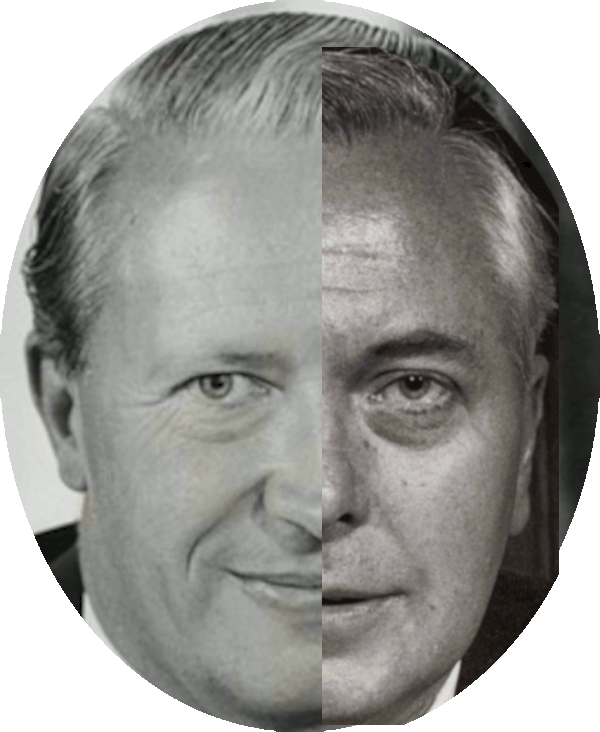 |
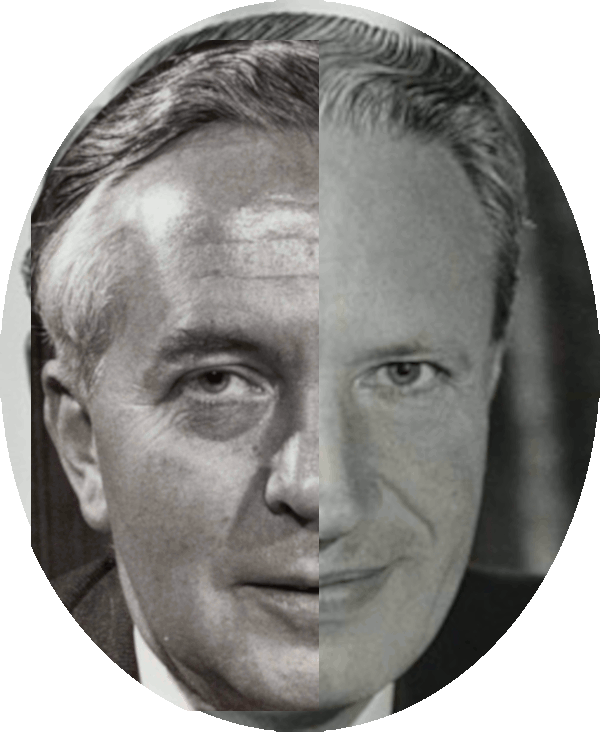 |
68th Prime Minister
Pedo
Bloody Sunday |
- Ten years after his death in 2005, numerous allegations of child sexual abuse were made against Sir Edward Heath, leading to a major police investigation called
Operation Conifer by Wiltshire Police.
- Over two years, police investigated 42 allegations relating to 40 individuals spanning from 1956 to 1992
and while the police concluded that while there was insufficient evidence to proceed with most claims, in
7 cases Heath would have been interviewed under caution had he been alive.
- The allegations included the alleged rape of an 11-year-old boy in 1961 and other instances of indecent assault against minors and adults.
- A major problem was his difficult relationship with trade unions. Attempts to control union power and inflation led to significant industrial strife, including two national miners' strikes in 1972 and 1974.
- The second strike led to the 'three-day week' policy, which restricted electricity use for commercial users to
3 days a week to conserve energy.
- The period was one of the most volatile of
'The Troubles,' with events like Bloody Sunday in 1972, while Heath introduced direct rule from Westminster and tried to broker a solution with the
Sunningdale Agreement in late 1973, which ultimately failed to secure lasting support from Unionists.
69th Prime
Minister of United
Kingdom
1974-1976
(2nd term) |
|
Harold
Wilson as Walt
Disney |
James Harold Wilson
1916-1995
3/11
5/23
Prime Minister
|
Walter Elias Disney
1901-1966
12/5 12/15
|
|
|
|
69th Prime Minister
Mickey Mouse
Wislon |
-Although the United Kingdom did not officially participate in the
Vietnam War, it provided de facto diplomatic support for the United States' war aims and it participated in international talks concerning the ongoing conflict.
- The UK co-chaired the 1954 Geneva Conference with the Soviet Union, overseeing the creation of the sovereign states of North Vietnam and South Vietnam in the final stages of the
First Indochina War.
- Prior to the 1964 Gulf of Tonkin Resolution, the United Kingdom began providing support to the South Vietnamese government in the form of advice on the use of police and paramilitary forces to combat a communist insurgency.
70th Prime
Minister of United
Kingdom
1976-1979
Leonard James
Callaghan, Baron
Callaghan of Cardiff |
.jpg)
© European Communities, 1975 / EC, Photo: Christian Lambiotte
Masonic hand sign |
- Leonard James Callaghan, Baron Callaghan of Cardiff (1912-2005),
was a British statesman and Labour Party politician who served as Prime Minister of the United Kingdom from 1976 to 1979 and Leader of the Labour Party from 1976 to 1980.
- Callaghan is the only person to have held all four Great Offices of State, having also served as Chancellor of the Exchequer from 1964 to 1967, Home Secretary from 1967 to 1970 and Foreign Secretary from 1974 to 1976.
- He was a Member of Parliament (MP) from 1945 to 1987.
|
James
Callaghan as Edward
Heath |
Leonard James Callaghan
1912-2005
3/27
3/26
Prime Minister
|
Edward Richard George Heath
1916-2005
7/9
7/17
Prime Minister
|
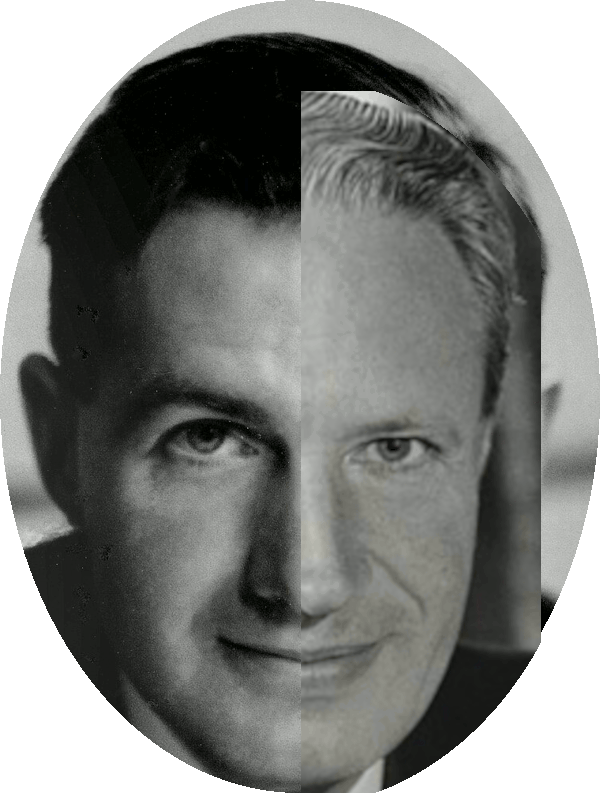 |
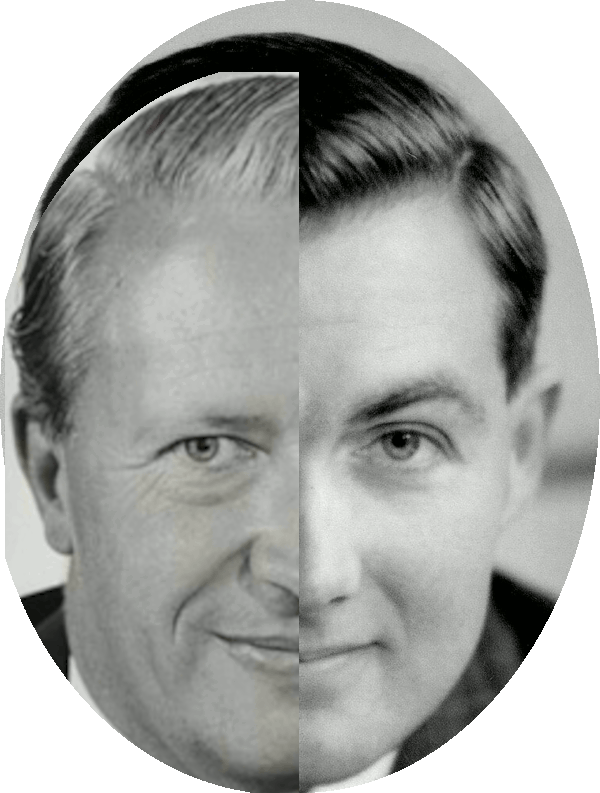 |
70th Prime Minister
Lucky Jim |
- Callaghan inherited a large deficit in 1964 and faced speculative attacks on the pound sterling.
- He resisted devaluation of the pound for 3 years, a delay widely believed to have damaged the economy.
- The government was finally forced to devalue the pound in November 1967, which Callaghan viewed as a personal and political defeat and offered to resign over.
- Callaghan had to deal with the escalation of sectarian violence in Northern Ireland, making the decision to deploy the British Army in 1969 after a request from the Northern Ireland government.
- His tenure was marked by ongoing economic problems, including double-digit inflation and growing unemployment.
- The government imposed strict spending cuts and secured an emergency loan from the International Monetary Fund (IMF) in 1976 to stabilize the economy.
- The government's attempts to control inflation through a policy of pay restraint for public sector workers led to widespread strikes across the winter of 1978-1979, a period known as the
'Winter of Discontent.' and public services, including hospital care and refuse collection, were severely disrupted, damaging the government's popularity.
71st Prime
Minister of United
Kingdom
1979-1990
Margaret Hilda
Roberts Thatcher,
Baroness Thatcher |
_(cropped).jpg)
Rob Bogaerts, CC0, via Wikimedia Commons |
- Margaret Hilda
Roberts Thatcher, Baroness Thatcher (1925-2013), was a British stateswoman who served as Prime Minister of the United Kingdom from 1979 to 1990 and Leader of the Conservative Party from 1975 to 1990.
- She was the longest-serving British prime minister of the 20th-century and the first woman to hold the position.
- As prime minister, she implemented policies that came to be known as Thatcherism.
- A Soviet journalist dubbed her the 'Iron Lady,' a nickname that became associated with her uncompromising politics and leadership style.
|
Margaret
Thatcher as
Elizabeth II |
Margaret Hilda Roberts Thatcher
1925-2013
10/13
4/8
Prime Minister
|
Elizabeth Alexandra Mary
1926-2022
4/21
9/8
|
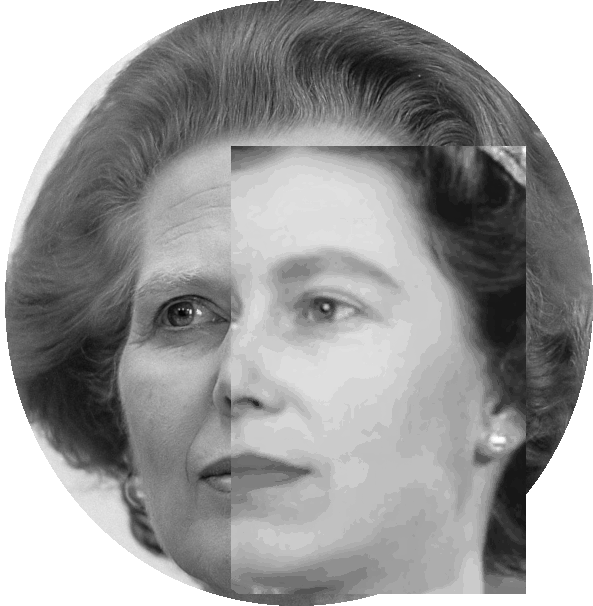 |
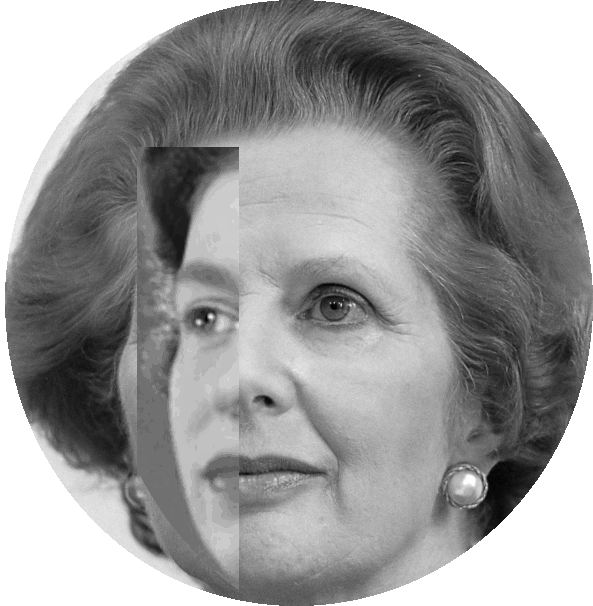 |
71st Prime Minister
Iron Lady |
- Thatcher's premiership was highly polarizing and generated significant criticism due to her radical reforms, which were seen by many as creating a more unequal, individualistic, and divided Britain.
- Thatcher's monetarist economic policies, aimed at controlling inflation (which reached 18% at one point), resulted in high interest rates and a severe recession in the early 1980s
which led to the rapid decline and closure of traditional heavy industries, such as coal mining and manufacturing, which caused mass unemployment in many parts of Northern Britain, Scotland, and Wales.
- The privatization of state-owned enterprises (like British Telecom, gas, and steel) was criticized as
'selling the family silver' at low prices. and while some benefited from wider share ownership, critics argue these policies and subsequent deregulation ushered in an era of materialist individualism that increased the gap between the rich and the poor.
- The 'Right to Buy' scheme allowed council tenants to buy their homes, which was popular at the time,
however, the failure to use the proceeds to build replacement social housing created a social housing shortage and housing crisis that is still felt today.
- The Community Charge, or
'poll tax,' was arguably her most unpopular policy and directly led to her downfall
and this flat-rate tax meant that a wealthy individual living alone paid the same amount as each person in a large, poorer family, which was widely seen as unfair and led to mass protests and rioting.
- Thatcher adopted a confrontational stance towards trade unions, culminating in the year-long miners' strike of 1984-85.
- Her government's decisive victory over the unions permanently reduced their power but was viewed as a vindictive assault on working-class communities.
- Her government's refusal to grant special category status (political prisoner status) to Irish Republican prisoners led to the 1981 hunger strikes, in which ten men died
and her steadfast refusal to compromise generated immense anger and international condemnation.
72nd Prime
Minister of United
Kingdom
1990-1997
Sir John Major |
.jpg)
Public domain, via Wikimedia Commons |
- Sir John Major (1943) is a British retired politician who served as Prime Minister of the United Kingdom and Leader of the Conservative Party from 1990 to 1997.
- He previously held various Cabinet positions under Margaret Thatcher. Major was Member of Parliament (MP) for Huntingdon, formerly Huntingdonshire, from 1979 to 2001.
- Since stepping down, Major has focused on writing and his business, sporting, and charity work, and commentating on political developments.
|
John Major
as Harold Wilson |
John Major
1943
3/29
Prime Minister
|
James Harold Wilson
1916-1995
3/11
5/23
Prime Minister
|
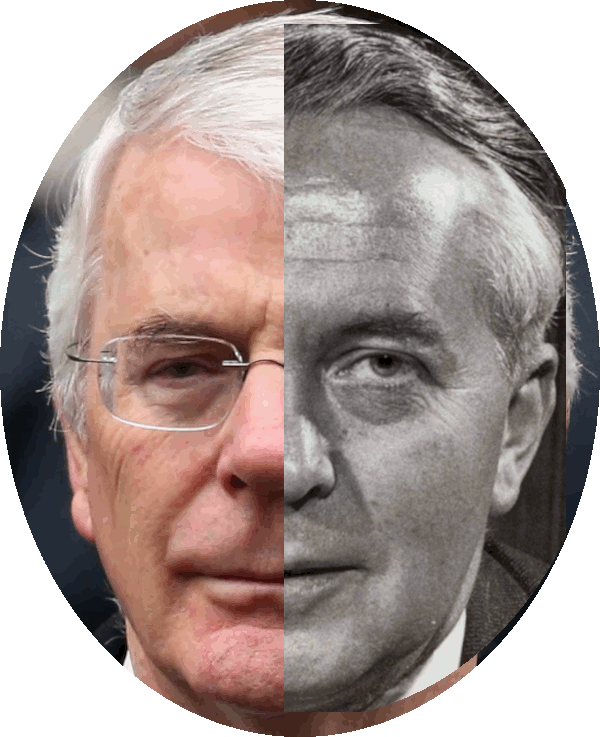 |
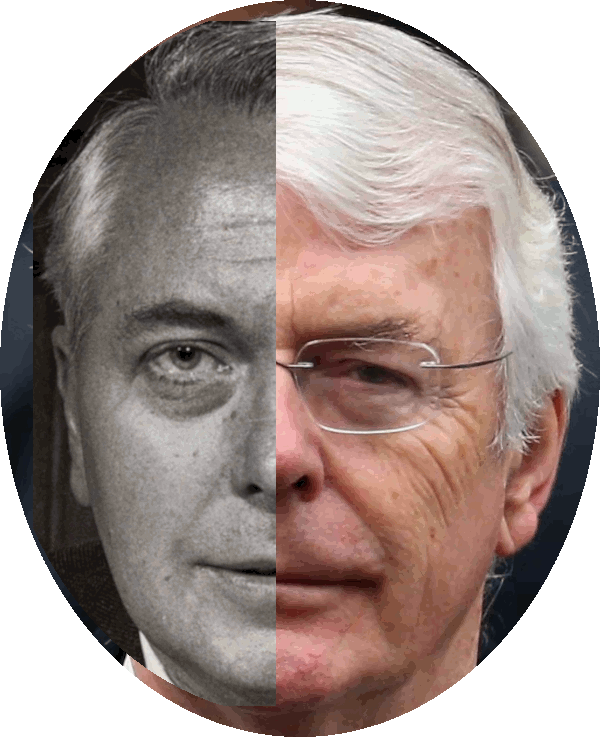 |
72nd Prime Minister
The Grey Man |
-
In September 1992, the government was forced to withdraw the pound from the European Exchange Rate Mechanism (ERM) after the markets forced the UK out despite the government spending billions to defend the currency
and although the economy later recovered and entered a long period of growth, the event shattered the Conservatives' long-standing reputation for economic competence and damaged public trust.
- Tory Sleaze: Major's government was plagued by a succession of sexual and financial scandals involving Conservative MPs, which the press labelled
'sleaze' and while Major himself was widely seen as an honest and decent man, his administration appeared unable to deal effectively with the crises, contributing to a public perception that the party had been in power for too long and had become complacent and corrupt.
73rd Prime
Minister of United
Kingdom
1997-2007
Anthony Charles
Lynton Blair |
.jpg)
Presidencia de Guatemala, Public domain, via Wikimedia Commons |
- Sir Anthony Charles Lynton Blair (1953-) is a British politician who served as Prime Minister of the United Kingdom from 1997 to 2007 and Leader of the Labour Party from 1994 to 2007.
- He was Leader of the Opposition from 1994 to 1997 and held various shadow cabinet posts from 1987 to 1994.
- Blair was Member of Parliament (MP) for Sedgefield from 1983 to 2007, and was special envoy of the Quartet on the Middle East from 2007 to 2015.
- He is the second-longest-serving prime minister in
post-war British history after Margaret Thatcher, the
longest-serving Labour politician to have held the office, and
the first and only person to date to lead the party to 3
consecutive general election victories.
|
Tony Blair
as George Bush Jr. |
Anthony Charles Lynton Blair
1953
5/6
Prime Minister
|
George Walker
Bush
1946
7/6
|
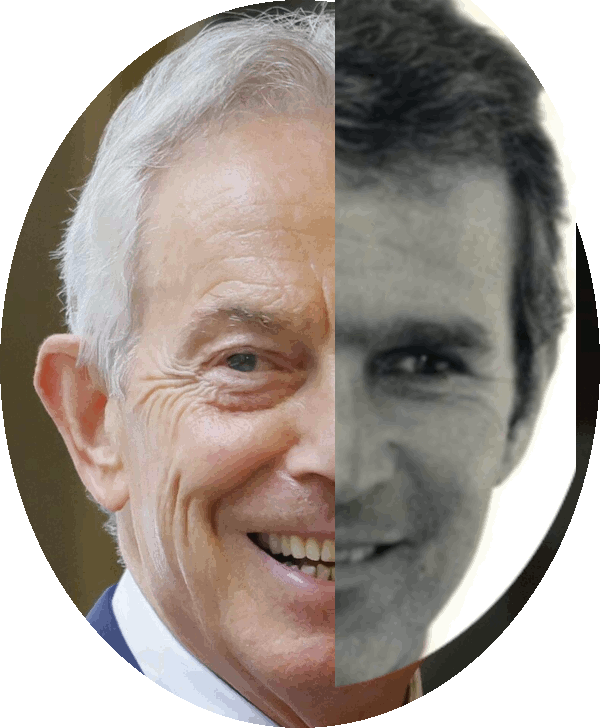 |
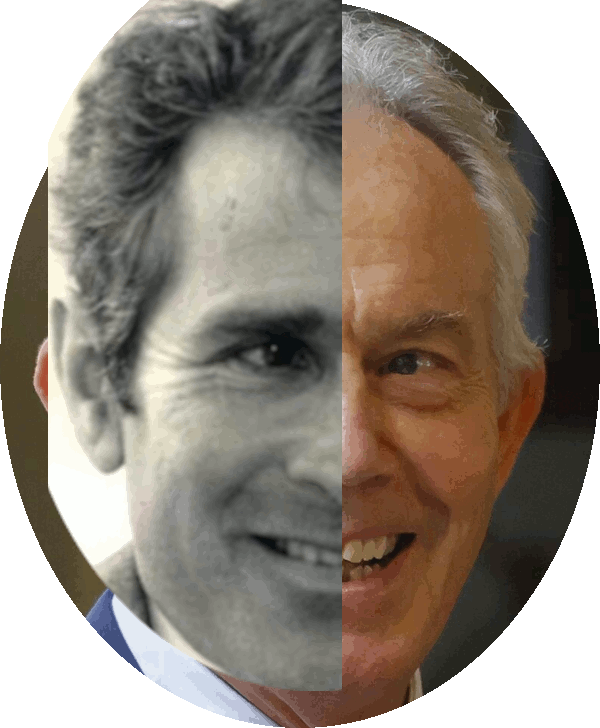 |
73rd Prime Minister
Bambi |
-
Blair founded the Tony Blair Institute for Global Change in
2016, and currently serves as its Executive Chairman.
- The most significant and defining issue of Blair's legacy is the
2003 invasion of Iraq alongside the U.S..
- The decision was based on flawed intelligence that claimed Saddam Hussein possessed weapons of mass destruction, which were never found
and the 2016 Chilcot Report concluded that the legal basis for the war was
'far from satisfactory,' and the war itself led to the deaths of numerous British service members and hundreds of thousands of Iraqi civilians, as well as an increased terrorist threat, including the 7/7 London bombings in 2005.
- The controversy over the war and the handling of intelligence led to a profound loss of public trust and respect, which were once the strongest elements of his political success.
- His close 'poodle' relationship with U.S. President George W. Bush was also a point of widespread criticism.
- His government was embroiled in scandals, including the "Cash for Honours" affair, where it was alleged that peerages were offered in exchange for loans to the Labour Party.
- Critics argue that some of his radical reforms, such as giving the Bank of England independence to set interest rates without a manifesto commitment, took power away from Parliament without direct democratic consent
- The Blair government was criticized for its handling of immigration, which saw net annual immigration quadruple and was later linked to the displacement of some British workers.
- After leaving office, Blair faced criticism for becoming 'fabulously wealthy' through lucrative yet obscure consultancy work, often advising authoritarian regimes, and for a perceived lack of humility.
- His continued involvement in Middle East peace plans has also been met with skepticism due to past failures.
74th Prime
Minister of United
Kingdom
2007-2010
James Gordon Brown |
.jpg)
Unknown photographer, OGL 3 , via Wikimedia Commons |
- James Gordon Brown (1951-) is a British politician who served as Prime Minister of the United Kingdom and Leader of the Labour Party from 2007 to 2010.
- Previously, he was Chancellor of the Exchequer from 1997 to 2007 under Tony Blair. Brown was Member of Parliament (MP) for Dunfermline East from 1983 to 2005 and for Kirkcaldy and Cowdenbeath from 2005 to 2015.
- He has served as United Nations Special Envoy for Global
Education since 2012, and he was appointed as World Health Organization Ambassador for Global Health Financing in 2021.
|
Gordon Brown
as George Bush Jr. |
James Gordon Brown
1951
2/20
Prime Minister
|
George Walker
Bush
1946
7/6
|
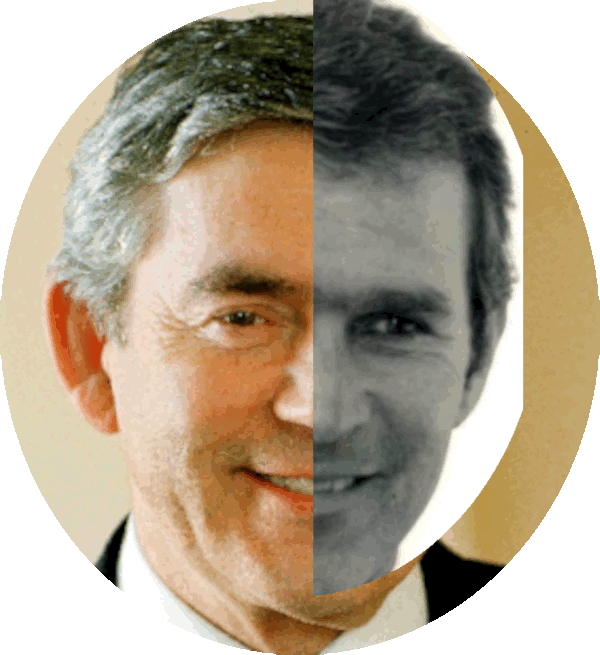 |
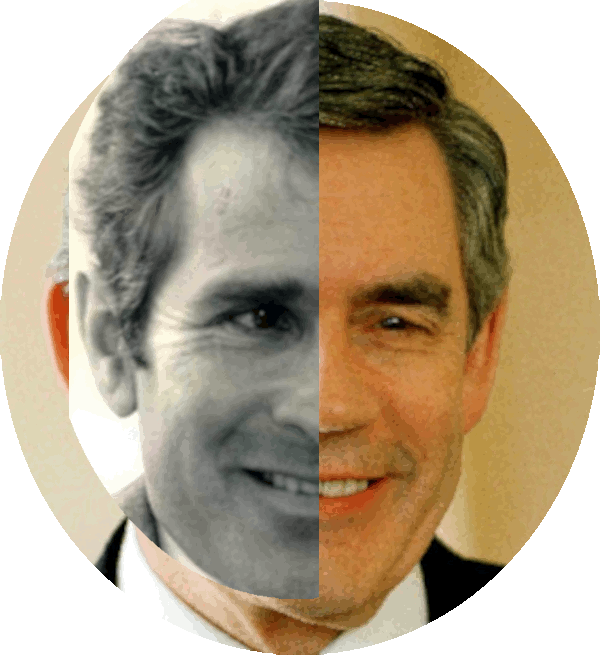 |
74th Prime Minister
Crash Gordon |
-
Brown was in office when the 2008 global financial crisis hit.
- While initially praised for his international leadership in preventing a depression, his government faced criticism for the subsequent rise in national debt and for regulatory oversights as Chancellor that potentially left the UK vulnerable to the downturn.
- He has since admitted it was a 'big mistake; to focus regulation on individual institutions rather than the entire financial system's interconnectedness.
- Specific policies that drew criticism included the sale of UK gold reserves between 1999 and 2002 at a historically low price (the
'Brown Bottom'), the abolition of the 10% starting rate of income tax (which increased taxes for
5 million low-to-middle income earners), and a general increase in overall taxation through various
'stealth taxes.'
75th Prime
Minister of United
Kingdom
2010-2016
David William Donald
Cameron, Baron
Cameron of Chipping
Norton |
.jpg)
Unknown photographer, OGL 3 , via Wikimedia Commons |
- David William Donald Cameron, Baron Cameron of Chipping Norton (1966-), is a British politician who served as Prime Minister of the United Kingdom from 2010 to 2016.
- Until 2015, he led the first coalition government in the UK since 1945 and resigned after a referendum supported the country's leaving the European Union.
- After his premiership, he served as Foreign Secretary in the government of prime minister Rishi Sunak from 2023 to 2024.
- Cameron was Leader of the Conservative Party from 2005 to 2016 and served as Leader of the Opposition from 2005 to 2010.
- He was Member of Parliament (MP) for Witney from 2001 to 2016, and has been a member of the House of Lords since November 2023.
- Cameron identifies as a one-nation conservative and has been associated with both economically liberal and socially liberal policies.
|
David
Cameron as Elon Musk |
David William Donald Cameron
1966
10/9
Prime Minister
|
Elon Reeve Musk
1971
6/28
|
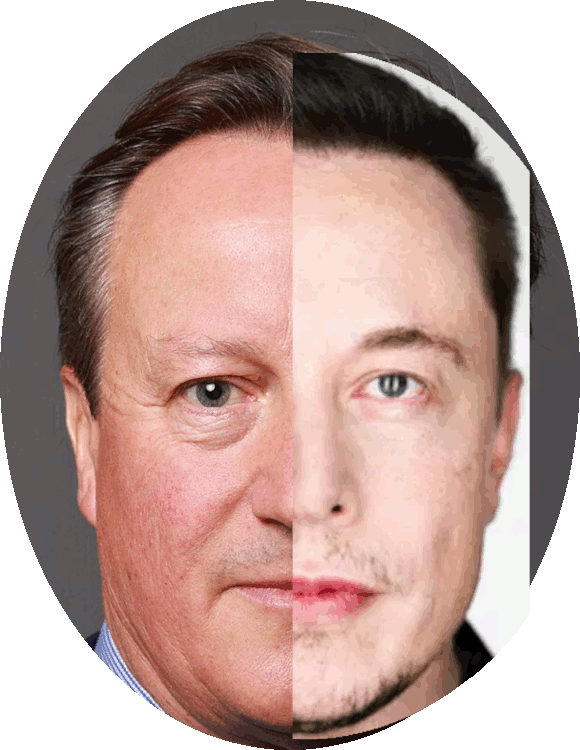 |
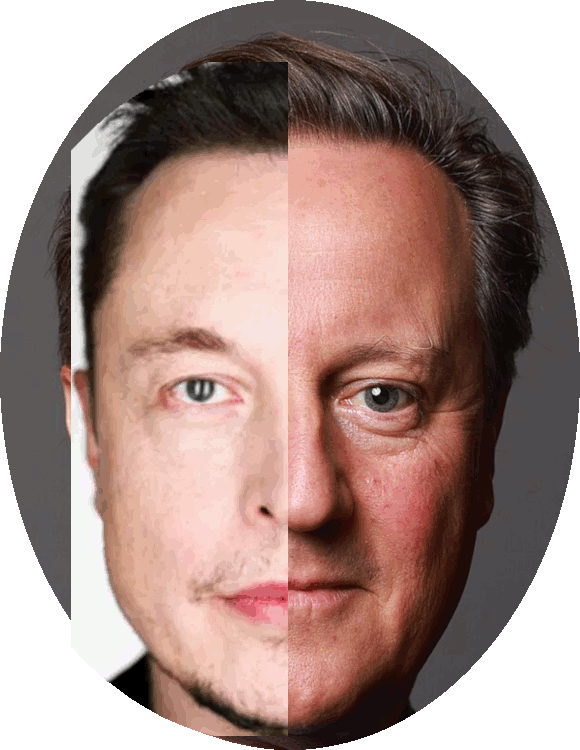 |
75th Prime Minister
Flashman |
- Brexit Referendum: This is widely considered the most significant and damaging issue of his career
after he called for a referendum on the UK's EU membership in 2016 to appease Eurosceptic members within his own Conservative Party, a gamble that backfired when the public voted to leave the EU.
- Critics argue he ran a poor 'Remain' campaign, didn't adequately prepare for a
'Leave' outcome, and then resigned immediately, leaving his successor to manage the ensuing political and economic chaos.
- Austerity Measures: His coalition government (2010-2015) and subsequent majority government (2015-2016) implemented a widespread austerity program in response to the 2008 financial crisis.
- These deep cuts to public spending and welfare benefits were blamed for damaging public services (like the NHS and justice system), increasing national debt, and exacerbating social inequalities, with critics saying the working and middle classes disproportionately bore the burden.
- Greensill Scandal: After leaving office, Cameron was embroiled in controversy over his lobbying activities for the collapsed finance company Greensill Capital.
- He faced significant criticism for repeatedly texting government ministers to request access to COVID-19 support schemes for the company, an action an MP committee accused him of a
'significant lack of judgement' for.
- Cameron struggled to shake off an image of being out of touch with ordinary people. This was fueled by gaffes such as not knowing the price of a loaf of bread, accidentally leaving his daughter in a pub.
76th Prime
Minister of United
Kingdom
2016-2019
Theresa Mary
Brasierr May,
Baroness May of
Maidenhead |
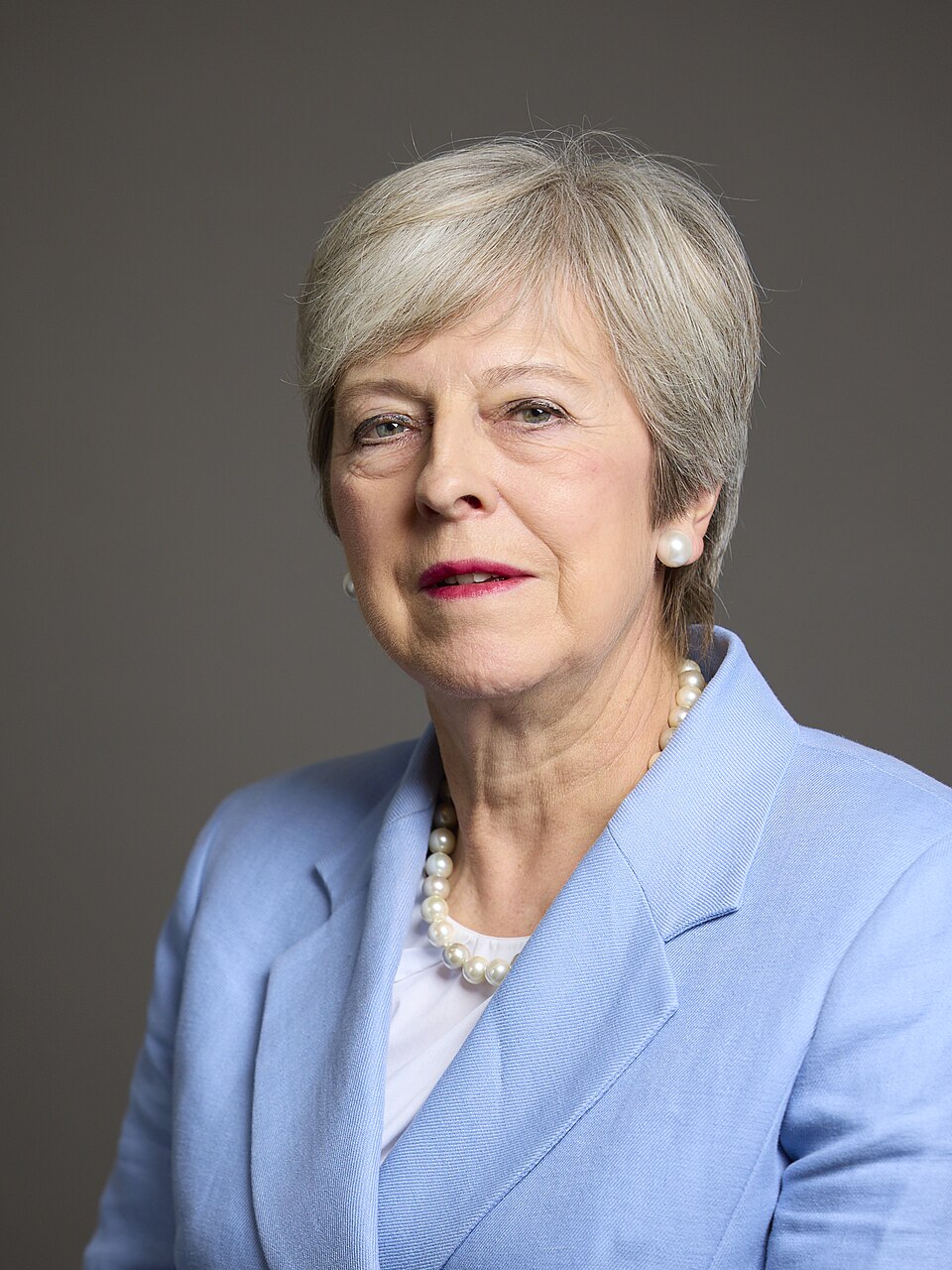
Roger Harris, CC BY 3.0 , via Wikimedia Commons |
- Theresa Mary Brasierr May, Baroness May of Maidenhead (1956-), is a British politician who served as Prime Minister of the United Kingdom and Leader of the Conservative Party from 2016 to 2019.
- She previously served as Home Secretary from 2010 to 2016.
- She was Member of Parliament (MP) for Maidenhead from 1997 to 2024, and has been a member of the House of Lords since August 2024.
- May was the second female British prime minister, after Margaret Thatcher, and the first woman to have held two of the Great Offices of State.
- May is a one-nation conservative.
|
Theresa May
as Princess Diana |
Theresa Mary Brasierr May
1956
10/1
Prime Minister
|
Diana Frances Spencer
1961-1997
7/1 8/31
|
 |
 |
76th Prime Minister
Theresa Maybe |
-
May’s legacy will be defined by failures, public humiliations and catastrophic political miscalculations
while some of these were out of her hands.
- Some were the result of poor advice from those she chose to surround herself with
and some were because of the unprecedented political crisis that would come to dominate her time in Downing Street.
- But much of it was her own fault and many of her decisions had a directly negative impact on her ability to lead.
- The problem for May wasn’t just that British politics
has been deadlocked for the best part of 3 years, but that she repeatedly engineered ways to erode her own authority.
- Brexit became a 'glass cliff' for Theresa May.
77th Prime
Minister of United
Kingdom
2019-2022
Alexander Boris de
Pfeffel Johnson |
.jpg)
Ben Shread / Cabinet Office |
- Alexander Boris de Pfeffel Johnson (1964-) is a British politician and writer who served as Prime Minister of the United Kingdom and Leader of the Conservative Party from 2019 to 2022.
- He was previously Foreign Secretary from 2016 to 2018 and the second mayor of London from 2008 to 2016.
- He was Member of Parliament (MP) for Henley from 2001 to 2008 and for Uxbridge and South Ruislip from 2015 to 2023.
|
Boris
Johnson as Donald
Trump |
Alexander Boris de Pfeffel Johnson
1964
6/19
Prime Minister
|
Donald John Trump
1946
6/14
|
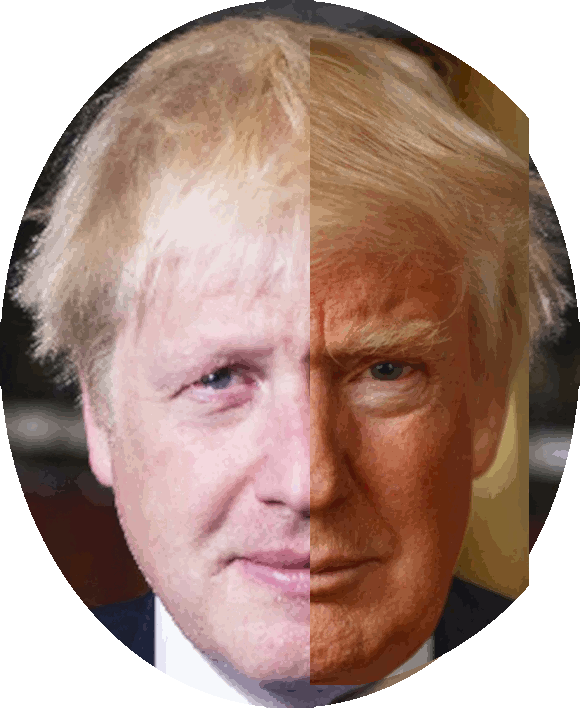 |
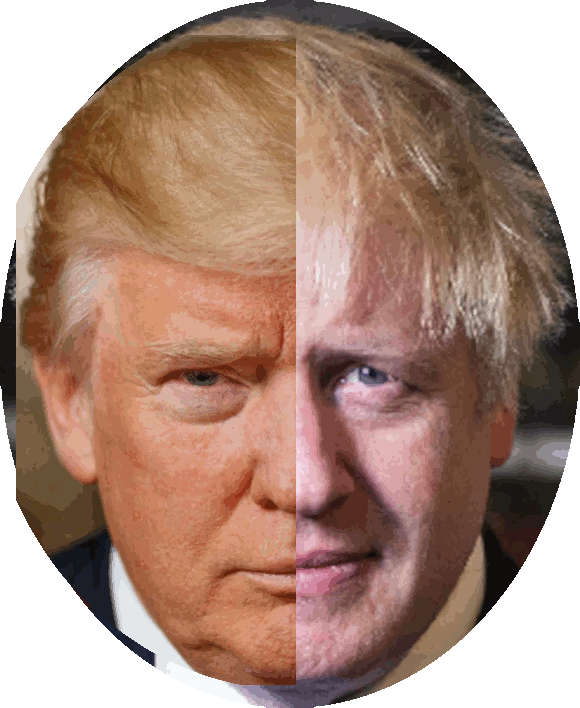 |
77th Prime Minister
Boris the Menace |
-
Partygate BoJo Johnson and his staff attended numerous alcohol-fueled gatherings in Downing Street government buildings in 2020 and 2021, while the rest of the UK was under strict COVID-19 lockdown rules.
- A police investigation resulted in 126 fines being issued, including one to Johnson himself, making him the first sitting Prime Minister to be sanctioned for breaking the law in office
and a subsequent parliamentary report concluded he had deliberately and repeatedly misled Parliament about the events.
- The Chris Pincher Affair The immediate trigger for Johnson's downfall in July 2022 was his handling of sexual misconduct allegations against MP Chris Pincher, whom he had appointed to a senior party position.
- Johnson initially denied knowledge of previous complaints against Pincher, but it later emerged he had been briefed on them.
- At the height of the Brexit crisis in 2019, the UK's Supreme Court ruled that Johnson's advice to Queen Elizabeth II to shut down Parliament for
5 weeks was unlawful.
- Throughout his career, Johnson has faced accusations of lying and making misleading statements, from his time as a journalist (for which he was fired from
The Times for making up a quote) to his political career
which led to a pervasive public image problem, with polls
showing voters frequently describing him as a 'liar' and
'untrustworthy.'
78th Prime
Minister of United
Kingdom
2022-2022
Mary Elizabeth Truss |
.jpg)
Ben Shread / Cabinet Office |
- Mary Elizabeth Truss (1975-) is a British politician who was Prime Minister of the United Kingdom and Leader of the Conservative Party from September to October 2022.
- On her fiftieth day in office, she stepped down amid a government crisis, making her the shortest-serving prime minister in British history.
- The member of Parliament (MP) for South West Norfolk from 2010 to 2024, Truss held various Cabinet positions under
3 prime ministers, David Cameron, Theresa May and Boris Johnson, lastly as foreign secretary from 2021 to 2022.
|
Liz Truss as
Hillary Clinton |
Mary Elizabeth Truss
1975
7/26
Prime Minister
|
Donald John Trump
1946
6/14
|
 |
 |
78th Prime Minister
Iron Weathercock |
-
During her time at the department Truss became notorious for leaking information.
- Dominic Cummings, Johnson's chief adviser, later wrote that Truss
committed 'compulsive pathological leaking.'
- Her plan for £45 billion of unfunded tax cuts led to economic panic, caused chaos on the financial markets, and she was forced to quit her job.
King Charles
III of the United
Kingdom
2022 -
Present
House of Windsor |
.jpg)
White House, Public domain, via Wikimedia Commons |
- Charles III
was born as Charles Philip Arthur George (1948-) is King of the United Kingdom and 14 other Commonwealth realms.
-
Charles was born during the reign of his maternal grandfather, King George VI, and became heir apparent when his mother, Queen Elizabeth II, acceded to the throne in 1952.
- He was created Prince of Wales in 1958 and his investiture was held in 1969.
- Charles was educated at Cheam School and Gordonstoun, and later spent
6 months at the Timbertop campus of Geelong Grammar School in Victoria, Australia.
- After completing a history degree from the University of Cambridge, he served in the Royal Air Force and the Royal Navy from 1971 to 1976.
- He married Lady Diana Spencer in 1981 and they had two sons, William and Harry.
- Charles and Diana divorced in 1996 after years of estrangement and well-publicised extramarital affairs.
- Diana died the following year from injuries sustained in a car crash.
- In 2005, Charles married his long-time partner, Camilla Parker Bowles.
War horse |
- King Charles III never served in active combat but completed extensive military training in the Royal Air Force (RAF) and Royal Navy during the 1970s, qualifying as a helicopter pilot and commanding a naval minesweeper, though he was never deployed to a war zone.
- He now serves as Head of the Armed Forces, leading remembrance ceremonies for war dead, like the recent Remembrance Sunday events, and advocates for peace and kindness amidst global conflicts like the war in Ukraine.
|
Charles III as
Boris Johnson |
Charles Philip Arthur George
1948
11/14
monarch
|
Alexander Boris de Pfeffel Johnson
1964
6/19
Prime Minister
|
 |
 |
|
King of Biscuits |
- Boris Johnson served as Prime Minister under both Queen Elizabeth II and briefly King Charles III (as Prince of Wales and then King).
-
Johnson's resignation honours list, which rewarded his allies, was approved by King Charles III in June 2023, though it drew some criticism as an act of alleged cronyism.
- Johnson reportedly warned Charles not to make a speech on the
'enduring impact' of slavery, cautioning that he might have to
'sell the Duchy [of Cornwall]' to pay for reparations.
- How Boris Johnson is related to King Charles III;
7th cousins 1st removed.
79th Prime
Minister of United
Kingdom
2022-2024
Rishi Sunak |
.jpg)
Ben Shread / Cabinet Office |
- Rishi Sunak (1980-) is a British politician and former investment banker who served as Prime Minister of the United Kingdom and Leader of the Conservative Party from 2022 to 2024.
- Following his defeat to Keir Starmer's Labour Party in the 2024 general election, he became Leader of the Opposition, serving in this role from July to November 2024.
- He previously held two Cabinet positions under Boris Johnson, latterly as Chancellor of the Exchequer from 2020 to 2022.
- Sunak has been Member of Parliament (MP) for Richmond and Northallerton, previously Richmond (Yorks), since 2015.
|
Rishi Sunak
as Barack Obama |
Rishi Sunak
1980
5/12
Prime Minister
|
Barack Hussein Obama II
1961
8/4
44th
President
|
 |
 |
79th Prime Minister
Rishi Rich |
- A primary challenge was the severe economic situation, including soaring inflation (which hit a 41-year high of 11% shortly after he took office), a cost of living crisis, and strained public finances.
- He raised taxes to stabilize the markets, which was unpopular with many voters and some Tory MPs.
- His flagship policy was the plan to deport illegal migrants to Rwanda
and this policy faced numerous legal and ethical challenges and was perceived as both
'cruel and ineffective' by critics.
- He was accused of having
'badly broken his promise' as migrant crossings continued.
- Despite his hard-working and 'technocratic' approach, Sunak often appeared out of touch with ordinary citizens due to his immense personal wealth.
80th Prime
Minister of United
Kingdom
2024-Present
Keir Rodney Starmer |
.jpg)
Simon Walker / No 10 Downing Street |
- Sir Keir Rodney Starmer (born 2 September 1962) is a British politician and lawyer who has served as Prime Minister of the United Kingdom since 2024 and as Leader of the Labour Party since 2020.
- He previously served as Leader of the Opposition from 2020 to 2024.
- He has been Member of Parliament (MP) for Holborn and St Pancras since 2015, and was Director of Public Prosecutions from 2008 to 2013.
|
Keir Starmer
as George Reeves |
Keir Rodney Starmer
1962
9/2
Prime Minister
|
George Reeves
1914-1959
1/5 6/16
Clark Kent
|
 |
 |
80th Prime Minister
Sir Softie |
-The government is dealing with a difficult fiscal situation, including inflation and slow economic growth
and there is speculation that a looming budget will raise income tax, a breach of an election manifesto pledge, which could further damage trust and trigger a leadership crisis.
- Initial decisions to cut the winter fuel allowance for pensioners, which angered some in the party.
- Starmer the Farmer Harmer or Farmer Harmer Starmer, a pejorative nickname used in the 2024–2025 farmers' protests against planned inheritance tax changes announced in the October 2024 budget delivered by Starmer's government.
- Queer Harmer, used by those opposed to his stance on LGBT
and particularly transgender rights.
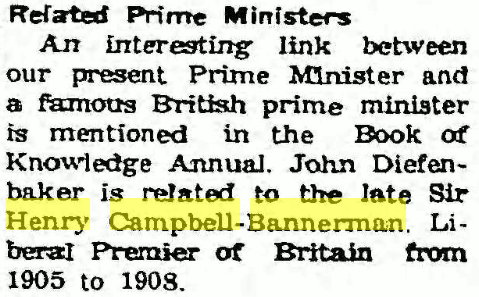
Carillon News,
Steinbach, Manitoba -
August 8, 1958
Blue bloods |
- Isn't it just amazing that they're all related?
-
Campbell-Bannerman was related to Prime Minister John
Diefenbaker (1895-1979) according to the Book of Knowledge Annual.
- He was the 13th Prime Minister of Canada serving from 1957 to 1963.
|
Charlie Kirk as
Prime Minister John Diefenbaker |
Charles James Kirk
1993-2025
10/14
9/10
Arlington Heights
|
John George Diefenbaker
1895-1979
9/18
8/16
Canada |
 |
 |
Dun Kirk
Setting up law that masquerades as freedom to
replace freedom
Bannerman
arms |
-
Diefenbaker appointed the first female minister in Canadian history to his cabinet (Ellen Fairclough), as well as the first Indigenous member of the Senate (James Gladstone).
- During his 6 years as prime minister, his government obtained passage of the
Canadian Bill of Rights and granted the vote to the First Nations and Inuit peoples.
- In 1962, Diefenbaker's government eliminated racial discrimination in immigration policy.
- In foreign policy, his stance against apartheid helped secure the departure of South Africa from the Commonwealth of Nations, but his indecision on whether to accept Bomarc nuclear missiles from the United States led to his government's downfall.
|
Dieffenbachia
commonly known as dumb cane or leopard lily, is a
genus of tropical flowering plants in the family
Araceae. It is native to the New World Tropics from Mexico and the West Indies south to Argentina. Some species are widely cultivated as ornamental plants, especially as houseplants, and have become naturalized on a few tropical islands (Wikipedia)
|
Gar Lunney, Public domain, via Wikimedia Commons
Another demon with
pen in hand |
- Diefenbaker was born on September 18, 1895, in Neustadt,
Ontario, to William Thomas Diefenbaker and Mary Florence
Diefenbaker, née Bannerman.
- His father was the son of
German immigrants from Adersbach (near Sinsheim) in Baden;
Mary Diefenbaker was of Scottish descent and Diefenbaker was
Baptist.
- Dieffenbachia (Dumb Cane) is poisonous to touch because its sap contains sharp, needle-like crystals called raphides that can cause skin irritation, burning, and swelling.

How sweet, and
perfectly fake
Done Kirk
the (Church-ill) |
- Symptoms of touching the sap.
- If sap is accidentally ingested, it can cause burning, swelling, and temporary loss of speech.
- Always wear gloves when pruning or handling the plant
and keep away from children and pets.
|
Dunkirk has two main meanings: a seaport in northern France and a noun referring to a desperate, last-ditch effort to avoid total defeat. The latter comes from the Dunkirk evacuation in 1940 during World War II, when over 330,000 Allied soldiers were rescued from the beaches under enemy fire. The name "Dunkirk" itself literally means "church in the dunes". (Assistant)
|
|