|
|
ABEL GRIMMER - TOWER OF BABEL - PAGE 9
|
Four
Families That Built
the Modern World |
Destiny or Fate? |
- Four families, Rothschild, Morgan, Rockefeller and
Warburg, shaped every empire you live under today.
-
Presidents, kings, even wars, or should we say, especially wars.
- They all
came to these bankers when gold ran out and empires bled dry.
- Today, we'll uncover how these secret bankers built modern
power and why their influence moves every market you touch.
Shattered |
-
When empires fell, their thrones shattered, but their debts
stayed alive.
- Someone had to own those debts.
-
Someone outside the flags, above the borders, beyond the
kings.
- The story begins in the smoke and steel of the
19th-century, a world built on blood and financial balance
sheets.
Kingdom |
- Europe is cracking under the weight of its own ambition.
- Britain rules the seas, France rebuilds from revolution,
Germany races toward unification, and America, young and
restless, starts to taste power.
- Every empire needs
capital, and every crown needs a banker willing to take the
risk no government can.
Information highway |
-
But this world doesn't run on gold alone, it runs on
information.
- The speed of a message decides the fate of
markets, even wars.
- In London, one family perfects this
idea, using couriers, coded letters, and carrier pigeons to
outpace armies.
- The Rothschilds, five brothers stationed
across five cities, bound by blood, secrecy, and an unspoken
rule.
- Trust the family, lend to the state, control the
flow.
Control |
- By 1815, they controlled more money than most
nations.
- Nathan Rothschild financed both the Duke of
Wellington and Britain's war chest against Napoleon.
- When
the Battle of Waterloo ended, his messenger reached London
first, before the British government did.
- He made
trades no one else dared, turning risk into empires.
-
Within days, his fortune multiplied, and Europe's future
shifted in silence.
Gilded Age |
- Then, comes America.
- Across the Atlantic, another
family sees opportunities, not in bonds, but in steel and oil.
- J.P. Morgan emerges from the smoke of the Gilded Age,
commanding capital, like a general commands troops.
-
Rockefeller builds the first industrial monopoly.
- Warburg
arrives from Hamburg with the blueprints for the modern
central bank.
Systems |
- These men don't compete for wealth, they build systems
that decide it.
- The governments they fund change, the
borders they draw move, but the families remain invisible,
indespensible, untouchable.
- And yet, as the world moves
toward modernity, one question burns quietly under every deal
they strike.
Runs |
- Who really runs the game, the rulers we elect or the
bankers they owe?
- Because before America had a president,
before Europe had peace, these families already had something
far more lasting.
- Control of credit itself.
Money Wise
The Rothschild Dynasty |
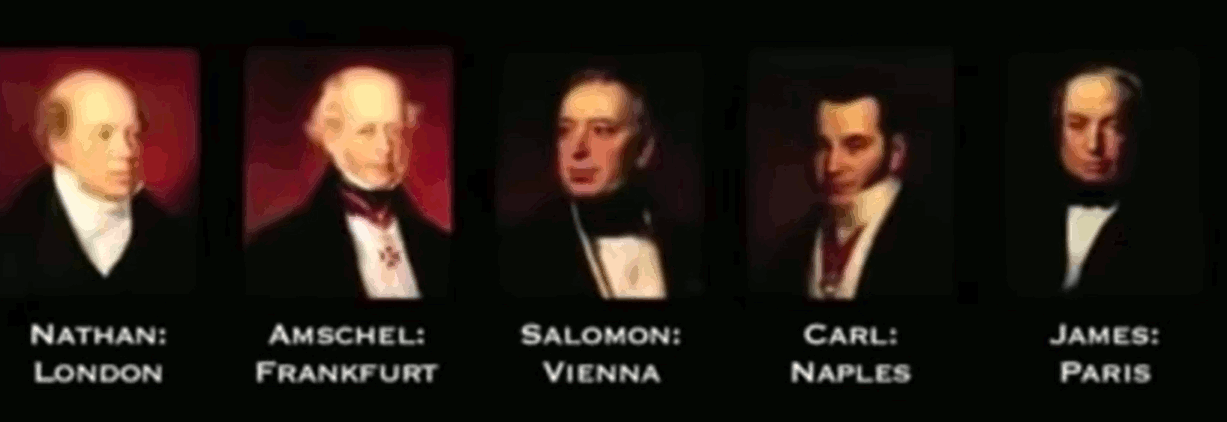
- It begins with five brothers, five cities, and one plan
that rewired global finance.
- Frankfurt, London, Vienna,
Naples and Paris; five capitals, one family network, moving
money faster than any government alive.
Public Domain via
Wikimedia Commons
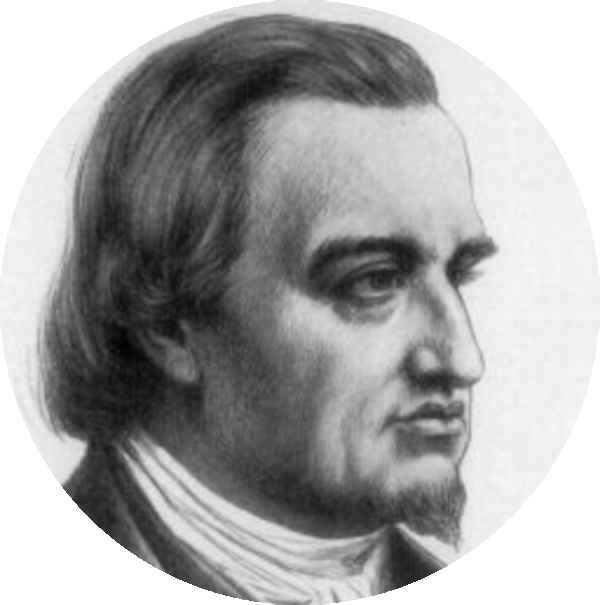
Mayer
Amschel Rothschild |
- Mayer Amschel Rothschild (1743-1812) started it all in
the late 1700s from a cramped house in Frankfurt's Jewish
ghetto.
- He trades rare coins an antiques to local nobles,
learning from what they value most, discretion and access.
|
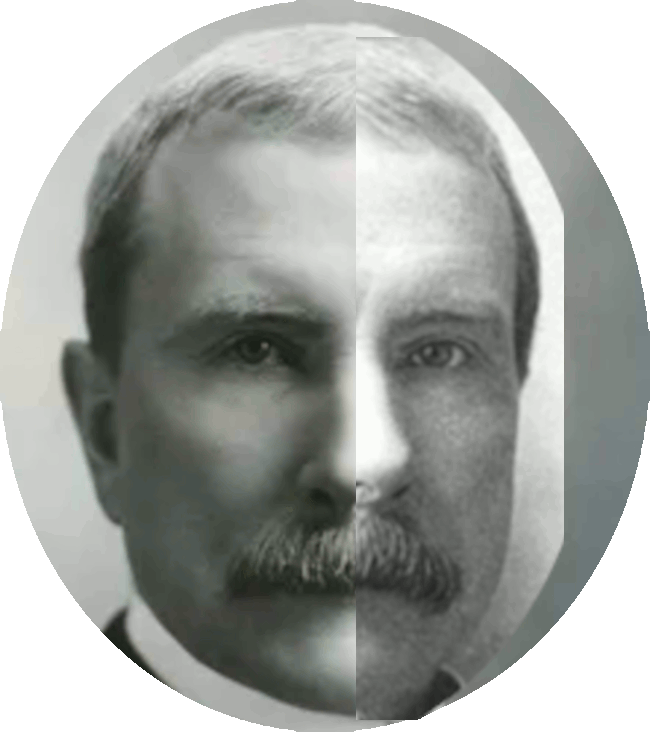
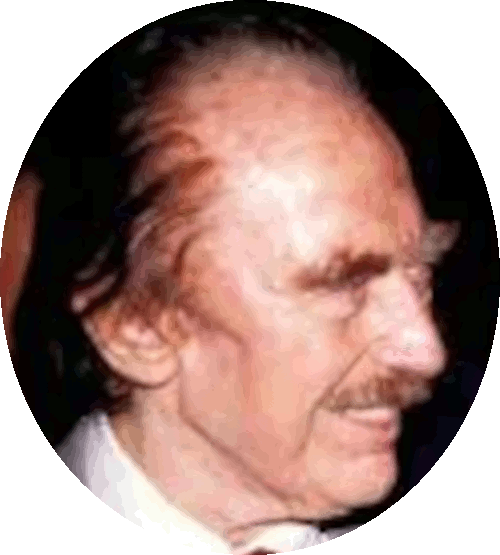
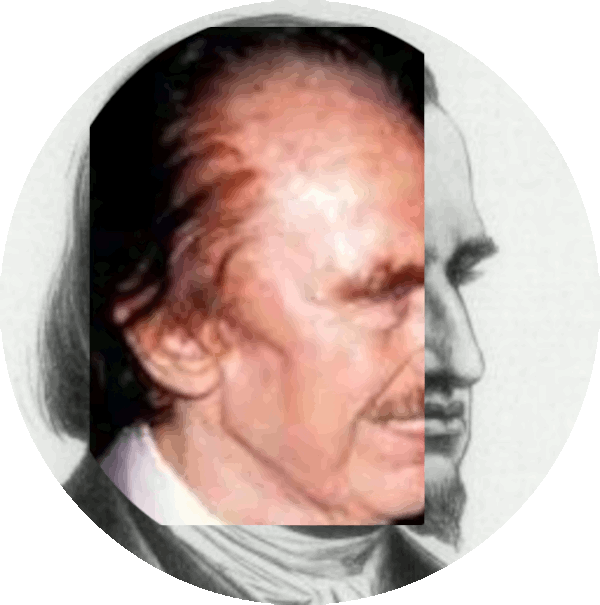
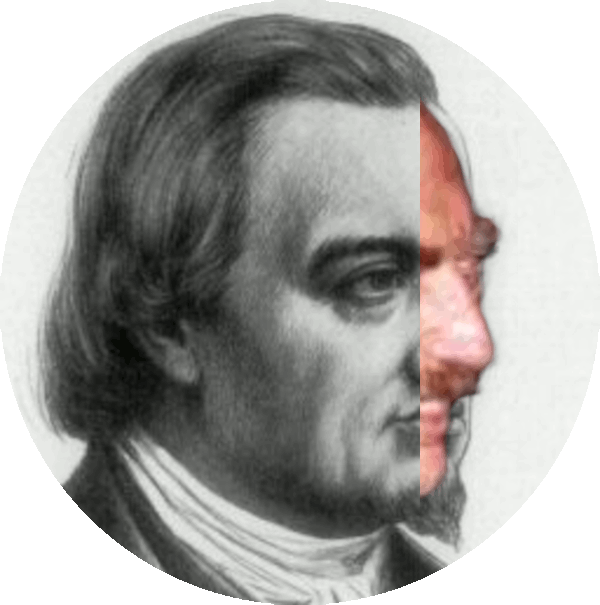
Fred Trump as
Mayer Amschel Rothschild |
 |
 |
Frederick Christ Trump Sr.
1905-1999
10/11 6/25
Real estates |
Mayer
Amschel Rothschild
1744-1813
2/23
9/19 |
 |
 |
|
Money changer |
- When he
begins lending to princes, he doesn't ask for payment in cash.
- Instead, he asks for favors, contacts, and inside
information and that becomes his family's true currency.
Five Arrows |
- Mayer Amschel Rothschild, the founder, had five sons who established the international banking dynasty: Amschel Mayer (stayed in Frankfurt), Salomon Mayer (Vienna), Nathan Mayer (London), Carl Mayer (Naples), and James Mayer (Paris).
- They were known as the 'Five Arrows,' each heading a key European financial center, though Amschel Mayer died childless, passing his share to his brothers' sons.
Tower of bricks |
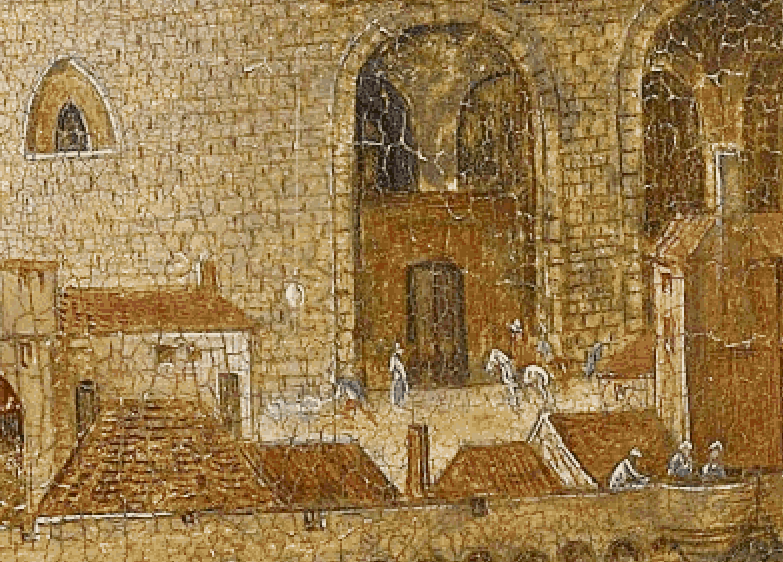
- By the early 1800s, his sons were sent across Europe,
each managing a branch of what would become the first
international
bank.
- They used coded letters, couriers, even carrier
pigeons.
Moritz Daniel Oppenheim, Public domain, via Wikimedia Commons
Nathan Mayer Rothschild |
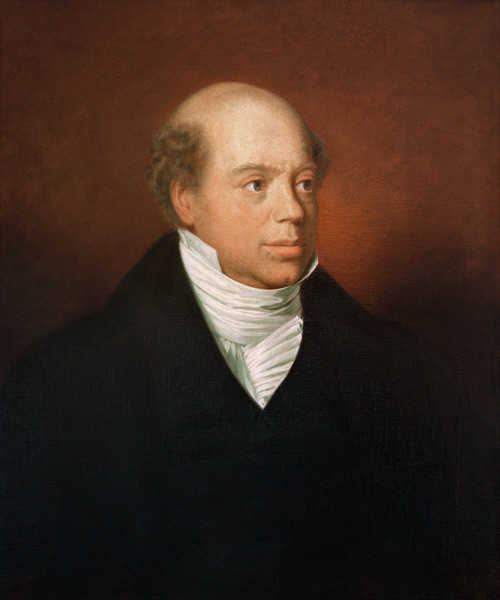
- Nathan Mayer Rothschild (1777-1836) was the boldest.
-
He built Britain's financial lifeline during the Napoleonic
Wars.
- In 1815, at Waterloo, his messenger reached London
24 hours before the government learned that Napoleon had lost.
- He quietly bought bonds, while everyone else sells in panic
because they thought he was selling.
- Two days later, when
the truth spread, the value of the bonds soared and he earned
what modern day economists estimate as the largest 1-day
fortune in history.
Canal |
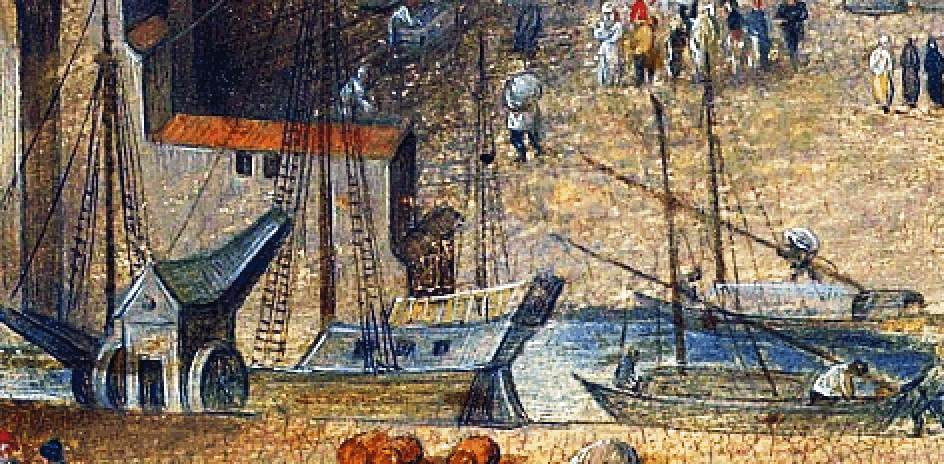
- From that point, the Rothschild network became Europe's
nervous system.
- They financed railroads, canals, and the
Bank of England gold reserves.
- Kings borrow from them
before going to war.
- Nations rely on their trust, even
more than their own treasuries.
- Even Karl Marx, who
despised financiers, called them, 'The bankers of kings.'
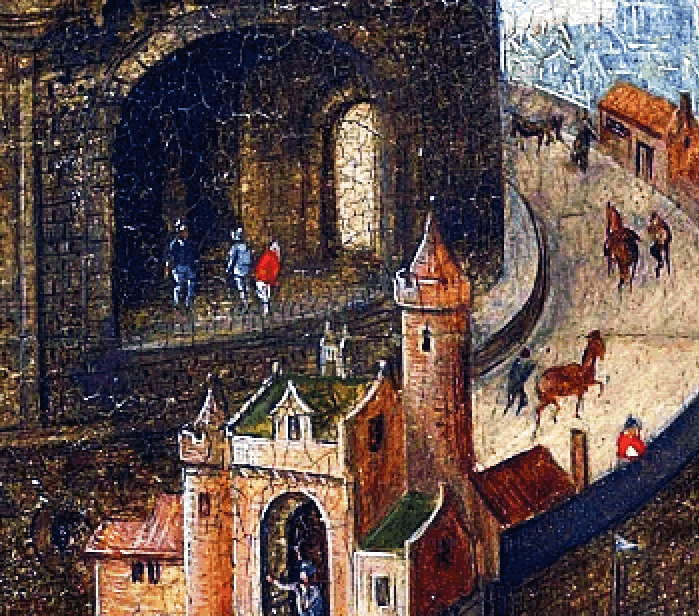
Family business |
- The family's influence spread beyond money.
- They
influenced peace talks, funded infrastructure from Egypt to
India, and stabilized currencies when industries fell apart.
- Yet through every upheaval, revolutions, crashes, wars, they
maintain one rule, the family never goes public, never separates
wealth from blood.
Combined GDP |
- By 1850, their combined fortune equaled the combined GDP of
several European nations.
- They aren't just bankers
anymore, they are the silent architects of modern finance.
- However, across the Atlantic, a new empire of credit is
forming, one built not on dynasties, but on industrial might.
|
GDP stands for Gross Domestic Product, which is the total monetary value of all final goods and services produced within a country's borders over a specific period (like a year or quarter) and is the key indicator of a nation's economic health and size, showing if it's growing or shrinking. It's calculated by summing consumption, investment, government spending, and net exports (exports minus imports).
(Assistant)
|
Lined up |
- Its architect won't wear a crown of inheritance, but a
suit of iron and smoke.
- So how does a single American
banker rise high enough to rival Europe's oldest fortune?
-
By 1924, New York trembled, stocks fall, banks fall, and
people line up on the streets demanding their savings.
-
There is no Federal Reserve, no government rescue plan, just
panic, and then one man steps in, J.P. Morgan.
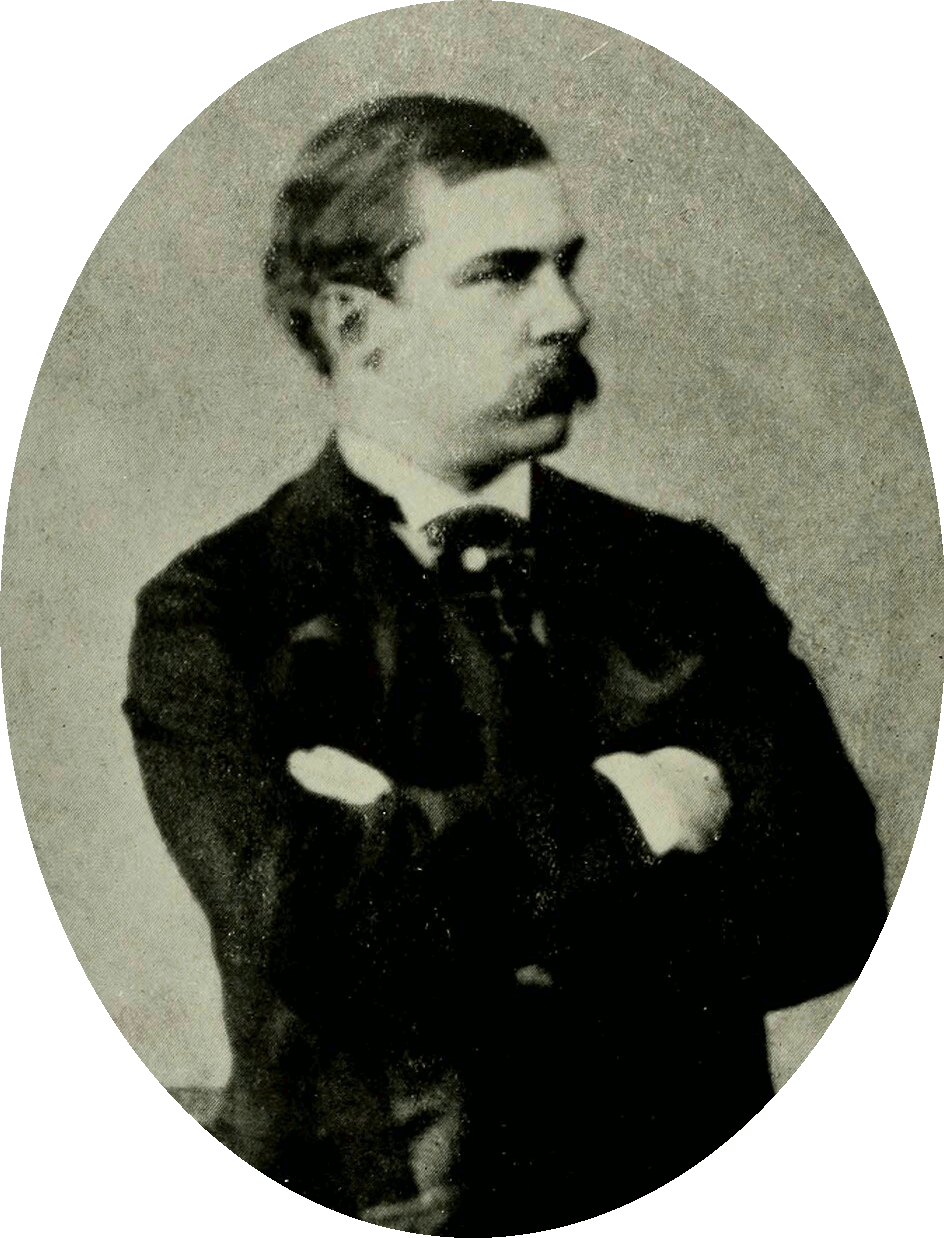
Internet Archive Book Images, No restrictions, via Wikimedia Commons
J. Pierpont Morgan -
1870 |
- J. Pierpont Morgan (1837-1913) at age 70, commanded
respect like a general in battle.
- He gathered America's
top bankers inside his library on Madison Avenue, locked the
doors, and told them they weren't leaving until the crisis was
over.
- For 2 sleepless nights, he moved millions between
collapsing banks, personally underwriting loans to keep credit
alive.
Panic |
- By morning, Wall Street breathes again and the press
calls it 'The Panic of 1907.'
- But the truth is much
simpler, one man just ran the U.S. financial system from his
home.
- Morgan's power began from precision, in the 1890s,
he merged railroads into giants, creating monopolies that knit
America together.
- He helped form General Electric, U.S.
Steel, and AT&T, companies that still define modern life.
Steel industry |
- In 1901, when Morgan bought Carnegie Steel for $480
million, it became the worlds first billion dollar
corporation.
- Even the U.S. Treasury kept its reserves in
his vaults, however, his dominance raised fear in Washington.
- Lawmakers whispered that one man held more money than the
U.S. government itself.
- In 1912, Congress launched the
Pujo Committee to launch what they call the 'money trust.'
|
The Pujo Committee was a United States congressional subcommittee in 1912–1913 that was formed to investigate the so-called "money trust", a community of Wall Street bankers and financiers that exerted powerful control over the nation's finances.
(Wikipedia)
|
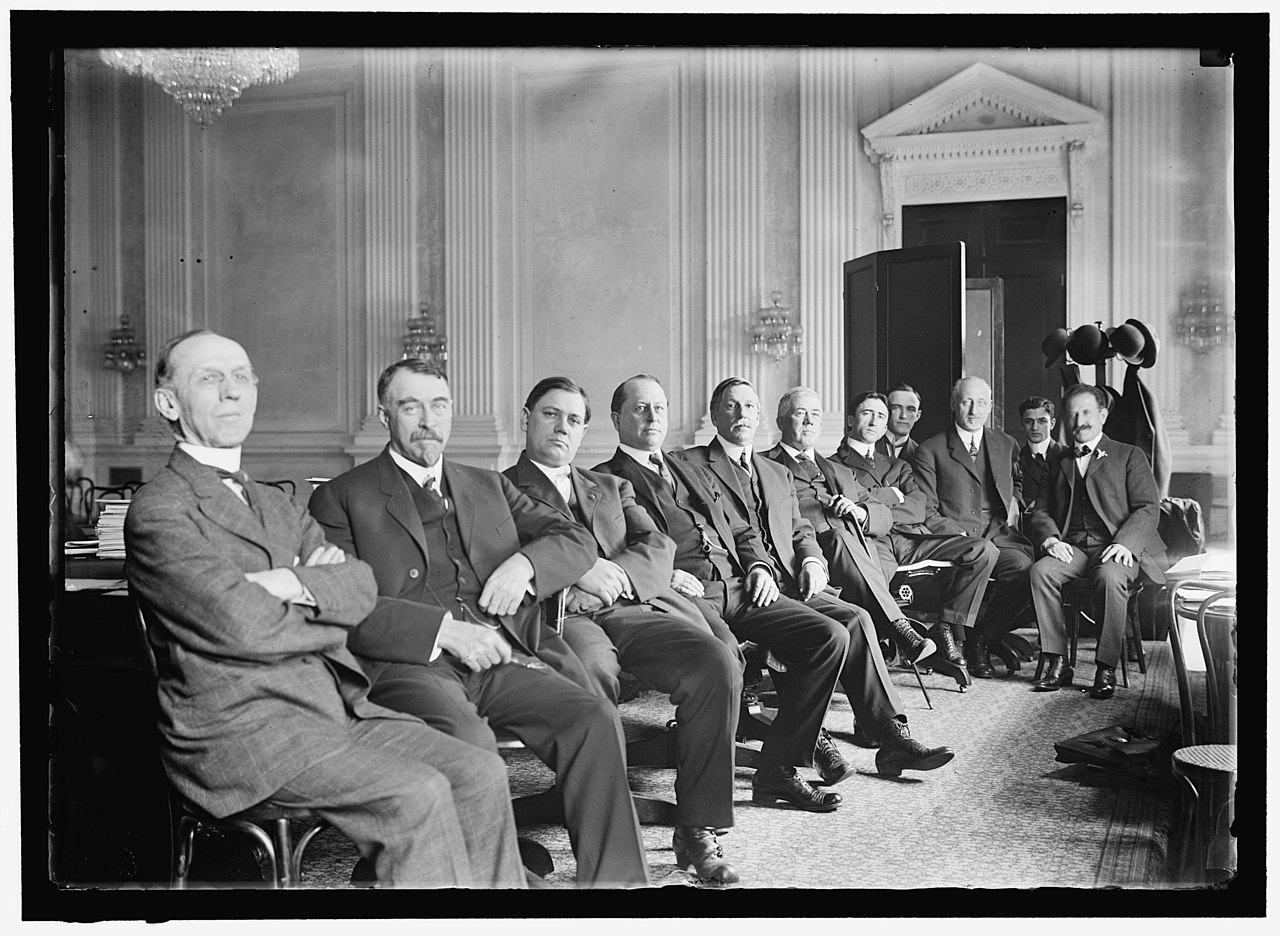
Harris & Ewing, photographer, Public domain, via Wikimedia Commons
House of
Representatives |
- The Pujo Commission was formed after a resolution introduced by congressman Charles Lindbergh Sr. for a probe on Wall Street power.
- Congressman Arsène Pujo of Louisiana was authorized to form a subcommittee of the House Committee on Banking and Currency.
- Testimonies in the Pujo investigation exposed how Morgan
and a handful of bankers controlled over $20 billion in
assets, roughly half the American economy at the time.
-
The scandal sparks reform and 2 years later, the Federal
Reserve Act passed, promising to alleviate future
financial panics.
Public Domain via
Wikimedia Commons
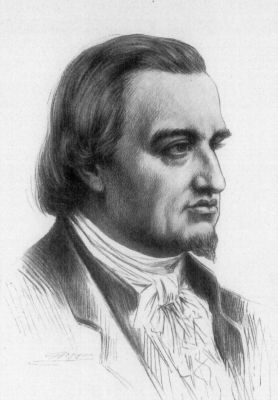
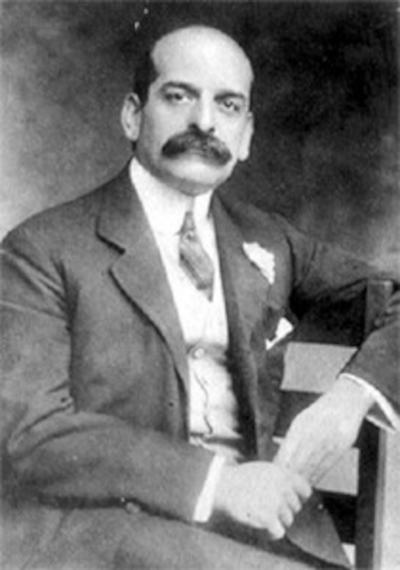
Paul Moritz Warburg
- German American
banker |
- Ironically, the system designed to limit bankers
influence was built by ideas shaped by bankers themselves.
- Including a banker from Germany named Paul Warburg
(1868-1932), who quietly drafts its framework in secret
meetings on Jekyll Island in Georgia.
- Morgan died in
1913, his personal fortune less than his reputation.
- His
art collection fills the Metropolitan Museum in New York, but
his true legacy lies in the laws that followed him.
Hamburg |
- After Morgan, banking no longer just funded the economy,
it designs it.
- And the next man to rewrite those designs
came from a European dynasty with a very different vision for
America's future.
- In 1902, Paul Warburg arrived in New
York from Hamburg
- He wasn't loud, he wasn't famous, but
he carried an idea that would change America forever.
Banking dynasty |
- Warburg came from a respected German banking dynasty and
he found America chaotic.
- Every state issued its own
currency and interest rates swung wildly, and banks collapsed
without warning.
- To Warburg, it looks medieval and he
felt Europe had something far smoother, a central system that
managed credit, set rates, and stopped panics before they
spread.
- America he believes, must have one too.
- But this is all money changer big banker smoke
and mirrors.
Georgia island |
- Warburg began writing, page after page of essays, plans
and letters, all arguing that America needed a central reserve
institution.
- Most politicians ignored him, but of course
some bankers listened.
- But the truth is, America did need
a central bank, just not run by private banks owned by wealthy
families like we ended up with.
- Then, in 1910, six men including
Warburg, Senator Nelson Aldrich and representatives from
Morgan's empire; Frank Vanderlip, Henry Davison, Charles
Norton and Benjamin Strong combined forces.
- They group secretly boarded a train
to Georgia and told reporters they were going duck hunting.
Public Domain via
Wikimedia Commons
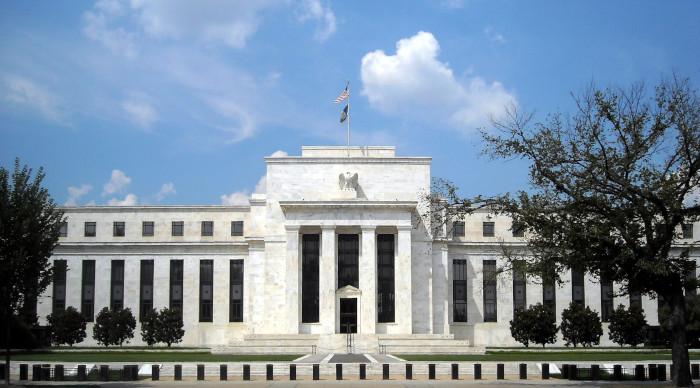
The Marriner S. Eccles Federal Reserve Board Building |
- In truth, they were headed to Jekyll Island to design
the most powerful financial system in history.
- Behind
closed doors, they drafted what became the blueprint for the
Federal Reserve, a network of private regional banks, guided
by a single central board of governors.
- It looked like
government oversight, but in reality, it tied the economy to
private banking expertise.
- Warburg's hand was everywhere
in the final design.
Congressional |
- By December 1913, President Woodrow Wilson signed the
Federal Reserve Act into law.
- In 1913–1914, the Pujo Committee findings inspired public support for ratification of the
16th Amendment that authorized a federal income tax, passage of the
Federal Reserve Act, and passage of the Clayton Antitrust Act.
- The U.S. now becomes fully immersed into the greedy money changers
system.
|
The Clayton Antitrust Act of 1914 (Pub. L. 63–212, 38 Stat. 730, enacted October 15, 1914, codified at 15 U.S.C. §§ 12–27, 29 U.S.C. §§ 52–53) is a part of United States antitrust law with the goal of adding further substance to the U.S. antitrust law regime; the Clayton Act seeks to prevent anticompetitive practices in their incipiency.
(Wikipedia)
|
Hard life |
- Within months, the Federal Reserve system is up and
running.
- When the First World War broke out in 1914, the
Federal Reserves ability to manage currency and credit
allowed America to fund both domestic growth and European
allies.
- It proved that Warburg's money changing model
worked, but it also fueled suspicion.
- By the 1920s many
Populists had figured out that a foreign banker controlled
America's money.
Their cause |
- Warburg withdrew from the public eye, but his system
remained as the foundation of every dollar printed ever since, and
now we are obligated to a huge federal banking debt owed to a
privately controlled central bank.
- Then
decades later, another family dynasty took the blueprint and
their empire grew through oil, politics, and 'philanthrophy'
(money they stole from you to fuud their causes).
- The
name Rockefeller became the symbol of wealth inself, their
abundance that is.
Thick and black |
- So what happens when one family's wealth becomes the
backbone of an entire global economy?
- It started with
oil, thick, black and buried under Pennsylvania soil.
- In
1859, the first well struck and within a decade, one man
turned it into an empire.
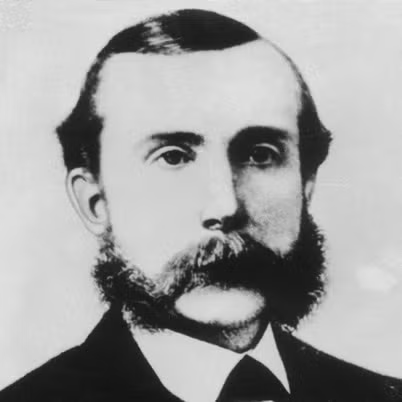
John D. Rockefeller |
- His name was John D. Rockefeller (1839-1937) and by the
age of 31, he controlled 90% of America's refining through his
company, Standard Oil.
- Every barrel that burned in a
lamp, every factory that ran at night, every train powered by
kerosene, all traced back to Rockefeller's refineries.
- By
1880, he earned more each day than most Americans do in a
lifetime.
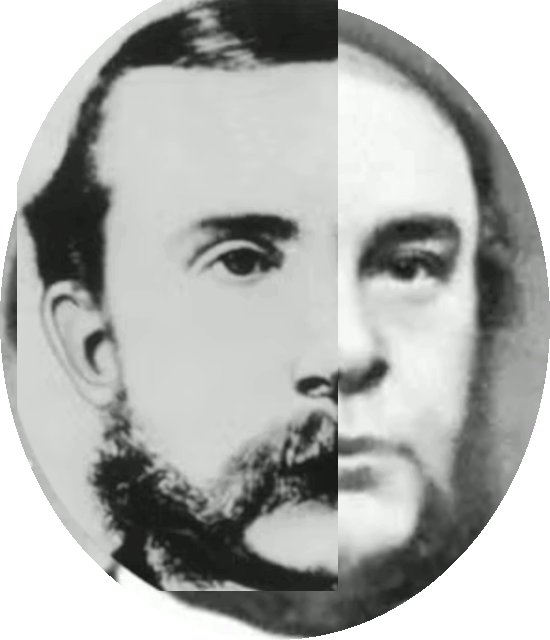
|
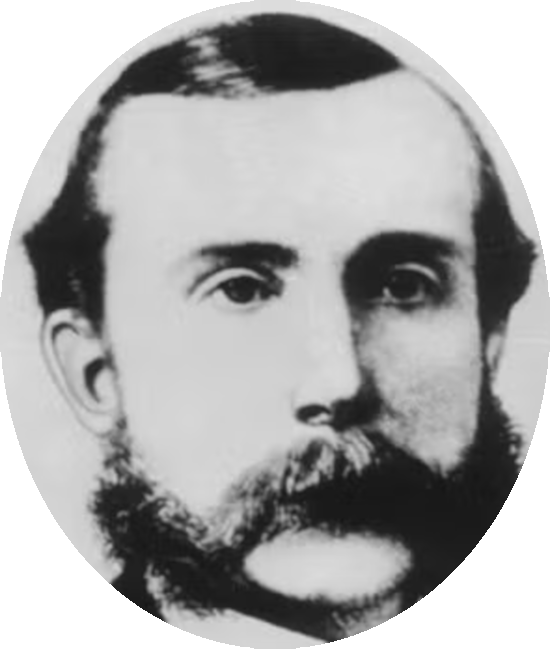
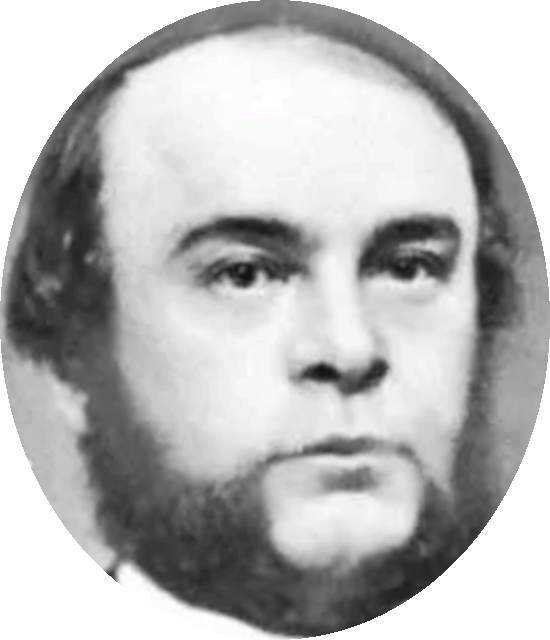
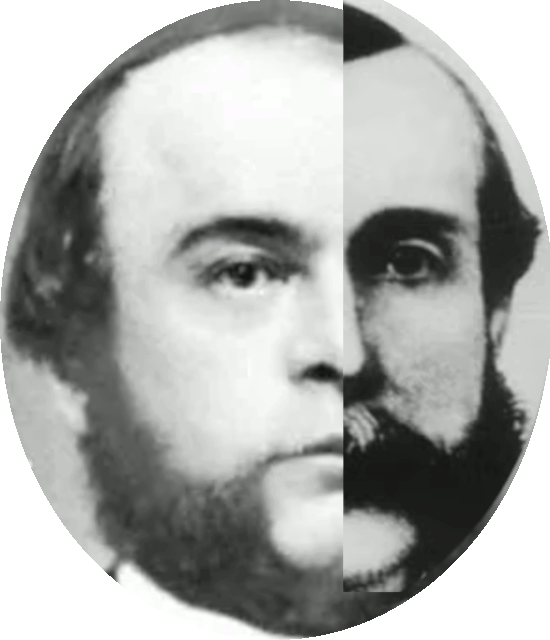
John D. Rockefeller as
Ausgust Belmont Sr. |
 |
 |
John Davison Rockefeller
1839-1937
7/8
5/23 |
Ausgust Belmont Sr.
1816-1890
12/8
11/24
German-born American banker |
 |
 |
|
Rocky Road |
-
Planning and
structure |
- What set him apart was structure, he built his empire
like a machine.
- Every part is efficient, every rival was
absorbed, and his motto was simple, 'Competition is a sin.'
- However, his success sparked outrage and muckrackers
published stories of crushing small refineries, fixing prices,
and using secret rebates with railroads.
|
Muckrakers were Progressive Era (1890s-1920s) investigative journalists and writers who exposed corruption, scandal, and social injustices in government, big business, and society, using detailed reports in popular magazines to spur reforms. Though President Theodore Roosevelt coined the term pejoratively, they embraced it as a badge of honor for tackling issues like child labor, unsafe conditions, political graft, and monopolistic practices, driving changes in laws and consumer protection.
(Assistant)
|
Monopolies |
- In 1911, after years of lawsuits, the U.S. Supreme Court
broke Standard Oil into 34 smaller companies.
- However,
that breakup backfired because those pieces, Exxon, Chevron,
Mobile, later became giants of their own, all feeding back
into Rockefeller's legacy.
- By then, the family wealth
reaches levels never seen before.
- Adjusted for inflation,
it equals over $400 billion in today's value.
Change direction |
- Yet the Rockefeller's weren't satisfied, they moved from
oil into banking, politics and philanthrophy.
- The Chase
National Bank merged into Chase Manhattan and their donations
funded the construction of universities, medical research
centers and the construction of the United Nations
headquarters in New York!!!
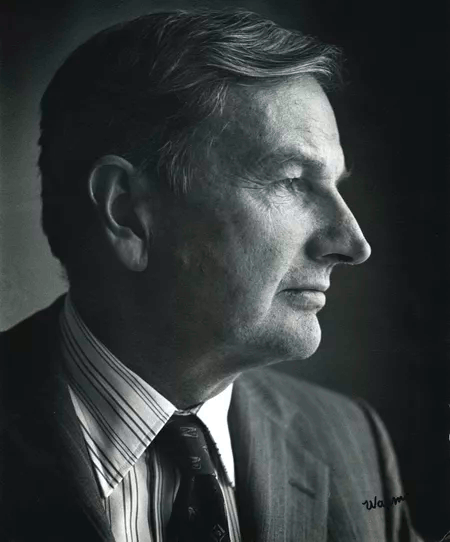
David Rockefeller |
- David Rockefeller (1915-2017) became the face of the
modern dynasty.
- Through the Council on Foreign Relations
and the Trilateral Commission, he connected diplomacy,
business and government.
- President's would seek his
advice and Prime Ministers would visit his office.
- When
he met China's Deng Xiaoping (1904-1997) in 1973, it helped
reopen trade between the two nations.
- Therefore, by the
late 20th-century, the Rockefeller name stood for both
capitalism and coordination.
- A blend of wealth and global
influence that few families ever reach.
|
The Trilateral Commission, founded in 1973 by David Rockefeller, is a private, non-governmental forum for leaders from North America, Europe, and the Asia-Pacific (originally Japan) to discuss global policy issues, promoting cooperation and understanding between these industrialized democracies, with members from business, politics, media, and academia influencing international affairs through policy study and discussion.
(Assistant)
|
Empires fell |
- But as one dynasty worked through open power, another
worked from the shadows, coordinating central banks, writing
unseen rules, and surviving every war untouched.
- So who
exactly built the system that now even empires must obey?
-
When the world went to war, their ledgers decided who survived
and between 1914 and 1945, borders changed, cities burned and
empires fell.
- However, the same families signed the
checks that kept the machine running.
Purchasing agents |
- In London, the Rothschilds organized Allied bonds worth
billions, helping Britain stay afloat through their First
World War.
- Across the Atlantic, J.P. Morgan & Company
became the official purchasing agent of war materials for the
British and French governments.
- They channeled nearly $3
billion in supplies before America even entered the fight.
- That made Morgan the single largest lender in world history
at that time.
Fueled |
- Meanwhile, oil flowed endlessly from Rockefeller's
Standard Oil subsideraries, some fueling Allied tanks, others
reaching Germany through neutral countries like Switzerland.
- Because finance never sleeps, especially in wartime.
- As
the saying went in those circles, 'money has no flag.'
Two-sided |
- Paul Warburg faced his own storm, while he advised the
U.S. Treasury, his brother, Max Warburg, advised the German
govenment.
- Two brothers, one helping Berlin, the other,
Washington, both shaping financial strategy on opposite sides
of the same battlefield.
- When peace finally came, over
$400 billion in war loans had been issued by private banks,
each with interest that stretched for decades.
- Every war
ended with a signature on their stationary.
Institutions |
- But what followed next, was far more lasting, the
transformation of family fortunes into institutions that would
outlive their founders.
- The Morgans merged into J.P.
Morgan Chase, and the Rothschild houses evolved into Rothschild
& Company, and the Warburgs helped build Deutsche Bank.
-
Rockefeller money expanded into global investment networks
from Chase Manhattan to massive philanthropic trusts.
Legacy |
- By the 1970s, these names no longer belonged to
individuals, but to systems, multinational structures run by
boards, algorithms and asset managers.
- Their wealth no
longer sat in vaults, but in porfolios spread across every
continent.
- Today, their legacy hides in plain sight.
-
When you swipe a bankcard, invest in a fund, or fill a tank,
fragments of those old empires still move silently through the
system.
Built banks |
- They built banks, then they built the rules those banks
followed.
- Because the real story isn't how they made
money, it's how they made money matter(s).
- And the real
story of how that idea evolved into something far smarter,
faster and harder to escape.
- History hides its architects
well, their systems built the world you live in.
|
|
|
All that glisters is not gold
Shakespeare,
The Merchant of Venice

|